

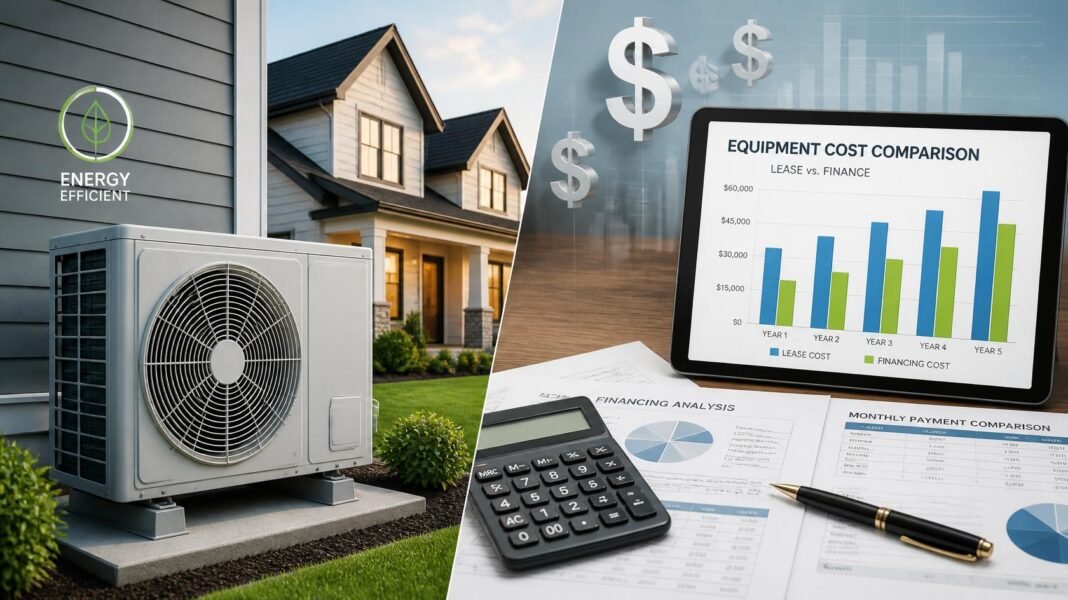
Replacing a residential heating, ventilation, and air conditioning (HVAC) system represents one of the largest capital expenditures an American homeowner will face.
According to market data from the National Association of Home Builders (NAHB), major mechanical systems like HVAC units are among the most expensive components to replace over a home’s life cycle.
Between 2024 and 2026, the average HVAC replacement cost in the United States escalated significantly.
Supply chain shifts, compliance with new environmental regulations, and inflation have driven the average price of a complete system installation—including a condenser, air handler, and minimal duct repair—to a range of $8,500 to $17,000, depending on capacity and efficiency ratings.
Compounding these cost increases are recent regulatory mandates. The U.S. Environmental Protection Agency (EPA) phase-down of hydrofluorocarbon (HFC) refrigerants, alongside the transition to low-Global Warming Potential (GWP) refrigerants like R-454B and R-32, has altered manufacturing standards.
Concurrently, the Department of Energy (DOE) enacted stricter minimum Seasonal Energy Efficiency Ratio (SEER2) standards. These regulatory updates have increased manufacturing costs, which are ultimately passed down to consumers.
Because a significant majority of American households lack the liquid reserves to cover a sudden five-figure home improvement expense, demand for specialized HVAC payment options has surged.
Homeowners facing an immediate system failure increasingly evaluate two primary paths: lease to own HVAC agreements (often marketed as rent-to-own HVAC) and traditional HVAC financing USA programs.
While both models convert a massive upfront cost into structured HVAC monthly payments, their underlying asset ownership structures, long-term costs, interest rates, and consumer protections diverge sharply.
This analytical report evaluates these two methods objectively, assessing real-world costs, credit parameters, maintenance implications, and tax incentive eligibility to help homeowners identify the most financially sound choice for their situation.
What Is Lease-to-Own HVAC?
A lease to own HVAC arrangement is structured as a lease-purchase agreement rather than an extension of credit. Under this model, a consumer does not borrow money to buy the heating and cooling equipment.
Instead, a third-party finance company purchases the system from a contractor, installs it in the consumer’s home, and retains legal ownership of the equipment throughout the duration of the contract.
The typical contract structure operates on a month-to-month or year-to-year renewal basis, frequently stretching over a total term of 60 to 84 months.
The homeowner makes a predetermined monthly payment for the use of the system.
Ownership transfer occurs only after the final scheduled payment is made, or if the consumer exercises an early purchase option.
These early buyout clauses typically allow the lessee to purchase the equipment outright after a set period (e.g., 90 days or 12 months) for a lump sum, which is usually calculated as a percentage of the remaining lease volume or a predetermined calculation outlined in the lease agreement.
Credit requirements for lease-to-own programs are notably accessible. Because these arrangements are structured as leases rather than loans, providers often utilize alternative credit data.
They focus more on verifiable income, stable residency, and utility payment history than on traditional FICO scores. This configuration makes them a common choice for HVAC financing for bad credit, serving individuals excluded by mainstream banking institutions.
Advantages of Lease-to-Own HVAC
- Low Barriers to Entry: High approval rates for individuals with poor or non-existent credit histories.
- Included Maintenance: Many lease agreements incorporate comprehensive annual maintenance, filter replacements, and repair coverage into the monthly fee.
- Preservation of Debt Capacity: Because it is not a traditional loan, a lease generally does not appear as a debt liability on standard credit reports, preserving the consumer’s debt-to-income (DTI) ratio.
Limitations of Lease-to-Own HVAC
- Exorbitant Lifetime Cost: Total payments over the full lease term can reach two to three times the original cash value of the equipment.
- No Initial Equity: The homeowner builds no equity in the mechanical asset until the final payment is cleared.
- Property Transfer Complications: If the home is sold before the lease completes, the homeowner must buy out the lease or attempt to legally transfer the contract to the homebuyer, which can complicate real estate transactions.
Understanding HVAC Financing
Traditional home HVAC financing relies on an extension of credit where the homeowner borrows funds to purchase the asset immediately.
Upon installation, ownership of the equipment vests directly with the homeowner, while the lender holds an unsecured or secured financial claim against the borrower.
Homeowners can access several distinct categories of HVAC loans and financing structures:
Personal Loans: Unsecured personal loans are offered by traditional banks, credit unions, and online peer-to-peer lenders.
Approval and interest rates are tied directly to the borrower’s credit profile. These loans provide fixed interest rates and predictable monthly payments, with terms generally ranging from 24 to 84 months.
Contractor Financing: Many HVAC businesses partner directly with specialized consumer finance companies (such as Wells Fargo Retail Services, Greensky, or Synchrony Bank) to offer point-of-sale HVAC installation financing.
These programs often include promotional terms, such as ‘deferred interest’ or ‘interest-free if paid in full within 12 months.’
Consumers must read the fine print carefully: under deferred-interest terms, if the balance is not paid in full before the promotional period ends, retroactive interest is calculated from the original purchase date and appended to the balance.
Home Improvement and Equity Loans: For extensive installations, homeowners can tap into their property equity through a Home Equity Loan or a Home Equity Line of Credit (HELOC). These options offer lower interest rates because they are secured by the residential property.
However, they carry processing timelines, appraisal fees, and the risk of property foreclosure if defaults occur.
Additionally, the FHA Title I program provides fixed-rate loans up to $25,000, making it a viable option for those with limited equity.
Manufacturer Financing: Major HVAC brands (such as Carrier, Trane, Lennox, and Daikin) frequently launch seasonal heating and cooling financing promotions through authorized dealer networks. These programs feature subsidized, low-interest APRs for qualifying tier-one credit profiles.
Table 1: HVAC Financing & Lease Structures Overview
| Financing Type | Ownership Structure | Security Requirement | Typical APR Range (2025-2026) |
| Personal Loan | Homeowner owns unit immediately | Unsecured | 7% – 24% |
| Contractor Promo | Homeowner owns unit immediately | Unsecured | 0% (Promo) / 18% – 29% (Standard) |
| Home Equity (HELOC) | Homeowner owns unit immediately | Secured by property | 6% – 11% |
| FHA Title I Loan | Homeowner owns unit immediately | Unsecured (<$7.5k) / Secured | Fixed market rates |
| Lease-to-Own | Leasing company owns unit | Equipment is leased | N/A (Fees imply 100%+ prem.) |
Cost Comparison: Lease-to-Own vs. Financing
To determine the best way to finance HVAC equipment from a purely financial perspective, we must evaluate a standardized scenario.
Consider a complete residential HVAC replacement—including a high-efficiency heat pump system compliant with current SEER2 requirements—with a total retail installation cost of $12,000. The following data models the projected lifecycle costs across a typical lease-to-own program compared against a 5-year and a 10-year traditional unsecured finance loan.
Table 2: Financial Scenario Matrix ($12,000 Base Asset Value)
| Financial Vector | Lease-to-Own Program | 5-Year Unsecured Loan (9% APR) | 10-Year Unsecured Loan (15% APR) |
| Monthly Payment | $315.00 | $249.10 | $193.71 |
| Contract / Loan Term | 84 Months (7 Years) | 60 Months (5 Years) | 120 Months (10 Years) |
| Total Cumulative Cost | $26,460.00 | $14,946.00 | $23,245.20 |
| Interest / Lease Fees Paid | $14,460.00 | $2,946.00 | $11,245.20 |
| Ownership Timeline | At month 84 (maturity) | Immediate ownership | Immediate ownership |
| Early Payoff Provisions | 90-day option; formulas thereafter | Permitted anytime; no penalty | Permitted anytime; no penalty |
| Contractual Flexibility | Can return equipment (with fees) | Debt must be fully satisfied | Debt must be fully satisfied |
In this scenario, the lease-to-own pathway results in a cumulative out-of-pocket expenditure of $26,460.
This represents an implied premium of 120.5% over the original cash price of the system. The 5-year unsecured loan at a prime rate of 9% APR demands a lower monthly payment profile ($249.10 vs. $315.00). Over 60 months, the financing route saves the consumer $11,514 relative to the lease program, and the debt is wiped clean two years earlier.
Even when comparing the lease to an extended 10-year loan structured for a lower credit tier at 15% APR, the traditional loan saves the consumer $3,214.80 in total lifetime costs. Because interest on traditional financing amortizes over time, any extra payments toward the loan principal directly mitigate the total interest paid.
Credit Score Requirements and Underwriting Frameworks
Underwriting guidelines differ fundamentally between these two acquisition options, influencing which solution is accessible based on a household’s credit tier:
Excellent to Good Credit (FICO 690 – 850): Homeowners within this tier qualify easily for prime retail loans, manufacturer promotions, and unsecured bank debt.
They can safely access low-interest options, including 0% APR introductory terms for 12 to 24 months or long-term fixed financing ranging from 6% to 10% APR. For these consumers, utilizing a lease-to-own program is mathematically disadvantageous.
Fair Credit (FICO 630 – 689): Borrowers in this tier face mid-tier interest rates, generally between 11% and 18% APR. While their monthly payments will be higher, they can still access conventional financing pathways, retaining direct equipment ownership and saving thousands over the life of the system compared to leasing.
Poor Credit (FICO 300 – 629): Homeowners with subprime credit profiles face significant barriers when seeking conventional HVAC replacement financing.
Traditional bank models yield high rejection rates for unsecured credit lines in this tier, or they counter with subprime interest rates scaling up to 29.99% APR.
For these individuals, a lease-to-own framework provides a realistic path to restore climate control to their homes during an emergency. Because approval relies heavily on income verified via bank statements and stable utility histories, it circumvents low FICO scores.
Repairs, Maintenance, and Warranty Mechanics
Under a Financing Framework: Because the homeowner owns the equipment, they bear full responsibility for its maintenance and repairs.
The equipment is protected by the manufacturer’s parts warranty (typically 5 to 10 years, provided the system was registered correctly within 60 days of installation). However, manufacturer warranties explicitly exclude labor costs.
If a compressor fails in year four, the replacement part is covered, but the homeowner must pay the contractor anywhere from $500 to $1,500 for recovery, labor, and refrigerant charging.
Under a Lease-to-Own Framework: The leasing corporation holds the title to the asset and typically assumes operational maintenance risk.
Many standard lease agreements dictate that the leasing firm must handle system breakdowns, equipment failures, and required annual maintenance calibrations.
If the system experiences a major malfunction, the leasing firm coordinates and pays for both parts and labor.
Homeowners should verify this in their specific contract, as some subprime lease providers attempt to shift minor maintenance obligations back to the lessee through complex fine print.
Energy Efficiency Incentives and Regulatory Frameworks
Through the Energy Efficient Home Improvement Credit (Section 25C), qualifying installations of energy-efficient HVAC financing systems can unlock substantial tax offsets.
For instance, qualifying Air Source Heat Pumps allow a tax credit up to 30% of the total installation cost, capped at an annual limit of $2,000.
High-efficiency furnaces and central air units are capped at $600. Furthermore, the Home Electrification and Appliance Rebates (HOMER) program provides state-administered point-of-sale rebates up to $8,000 for low- and moderate-income households transitioning to heat pump tech.
The Tax Incentive Catch for Lessees: According to IRS guidelines, federal energy tax credits are explicitly reserved for the taxpayer who owns the property and purchases the qualifying equipment.
Because a lease-to-own consumer does not hold legal title to the HVAC equipment at the time of installation, they cannot claim the Section 25C tax credit. The leasing corporation owns the equipment and can claim the commercial tax benefits, rarely passing those savings down to the consumer.
For homeowners choosing traditional financing, these credits can be used to pay down the loan principal within the first year, creating an additional cost-saving advantage.
Hidden Costs and Contract Fine Print to Watch
Lease-to-Own Contract Risks: De-installation Penalties: If a consumer terminates a lease early, the provider may demand thousands of dollars to decommission and remove the equipment from the property.
Compulsory Service Fees: Contracts may require administrative setup fees, account processing fees, and mandatory insurance premiums that add to the base monthly cost.
Inflated Purchase Options: The calculation used to compute a buyout after year two or three can be tied to an arbitrary valuation matrix, rather than the depreciated value of the hardware.
Financing Contract Risks: Deferred Interest Triggers: As noted previously, ‘No Interest’ promotional periods turn into high-interest obligations if even a small balance remains past the expiration deadline.
Origination Charges: Certain home improvement loans include upfront origination fees (ranging from 1% to 5% of the loan value) that are tacked directly onto the starting principal balance.
Which Homeowners Benefit Most? A Situational Analysis
First-Time Homebuyers: Operating with low cash reserves after a down payment, first-time buyers should prioritize traditional financing—specifically manufacturer promos or credit union loans—to keep long-term costs manageable and preserve their ability to claim federal tax credits.
Retirees on Fixed Incomes: Fixed-income seniors with strong credit profiles should opt for low-interest financing or equity lines to keep their monthly costs predictable.
If their credit profile is weak but they require immediate emergency replacements, a lease agreement that includes maintenance can offer peace of mind by eliminating unpredictable repair bills.
People with Poor Credit: For households with low FICO scores facing a non-functioning system in extreme weather, lease-to-own programs serve as an important safety net when traditional banks deny credit.
Homeowners Planning to Move Short-Term: Homeowners planning to sell their property within 2 to 4 years should avoid lease-to-own structures.
Mortgage underwriters and home buyers often reject assuming an existing equipment lease, forcing the seller to buy out the lease completely before closing. Traditional financing can be settled at closing using the home’s sale proceeds.
Table 3: Expert Decision Matrix by Household Context
| Household Context | Recommended Path | Strategic Justification |
| Emergency / FICO < 580 | Lease-to-Own | Overcomes strict banking rules, ensuring rapid system restoration during unsafe weather. |
| Emergency / FICO > 680 | Contractor Financing | Unlocks 0% APR or low-prime interest rates while avoiding high lease-tier markups. |
| Forever Home / Energy Focus | HELOC / Personal Loan | Maximizes financial returns by pairing lower interest rates with direct access to Section 25C tax credits. |
| Rental Property Investor | Traditional Loan | Allows the investor to claim immediate capital depreciation benefits and write off interest expenses. |
| Short-Term Ownership (<3 Yrs) | Unsecured Personal Loan | Elimitates contract transfer complications during a sale; the loan balance can be cleared cleanly at closing. |
Choosing between lease-to-own programs and traditional financing requires balancing immediate cash flow needs against the total long-term cost of ownership. Neither option represents a one-size-fits-all solution; each serves a distinct role within the consumer finance landscape.
Traditional HVAC financing remains the most mathematically efficient and cost-effective pathway for homeowners with fair, good, or excellent credit.
It delivers lower total lifecycle costs, creates immediate equity in your home’s mechanical systems, and allows you to claim valuable federal tax credits and energy rebates.
Conversely, lease-to-own programs function as a critical emergency option for households excluded from conventional credit markets due to subprime credit profiles.
While the long-term cost is significantly higher, the inclusion of maintenance coverage and accessible approval requirements can make it a viable choice when restoring heating or cooling to a home is an immediate safety priority.
Before signing any contract, homeowners should carefully review the total cost of ownership, look for hidden de-installation fees, calculate the implied financing premium, and choose the path that aligns best with their long-term financial health.
Frequently Asked Questions
Q: Does lease-to-own HVAC build credit?
A: In most cases, no. Because lease-to-own agreements are structured as consumer leases rather than extensions of credit, providers rarely report on-time payments to major bureaus like Equifax, Experian, or TransUnion. However, delinquent accounts that go to collections will be reported and can negatively impact your credit profile.
Q: Can I buy out a lease-to-own HVAC contract early?
A: Yes, most legitimate lease-to-own providers include early purchase options within their contracts. These typically feature a 90-day cash buyout option where you pay the original cash price plus a small administrative fee. After the 90-day window, early buyout costs are calculated using specialized formulas based on the remaining lease term.
Q: Is interest charged on a lease-to-own HVAC program?
A: Technically, no. Lease-to-own programs do not use an Annual Percentage Rate (APR) because they are not loans. Instead, the cost of financing is built directly into the rental payments through lease fees. This blend of fees results in a total payment amount that is often significantly higher than a standard loan’s interest expense.
Q: What happens if I sell my home before finishing my HVAC payments?
A: If you used traditional financing, the loan stays with you as a personal obligation, or it must be cleared using the cash proceeds from your home sale. If you chose a lease-to-own contract, you must either buy out the equipment completely or get the homebuyer to sign an agreement to take over the remaining lease payments.
Q: Are lease-to-own programs eligible for ENERGY STAR rebates?
A: No, the occupant cannot claim federal tax credits or state energy efficiency rebates on leased equipment. Under the Inflation Reduction Act, those incentives belong strictly to the system’s legal owner, which is the leasing firm.
Q: Can a contractor repossess a financed HVAC system if a buyer defaults?
A: If you use an unsecured personal or contractor loan, the lender cannot easily repossess the equipment without a court judgment. However, under a lease-to-own agreement, the leasing firm owns the hardware. If you stop making payments, the contract allows them to enter the property to recover their equipment, subject to state laws.
Also Read
7 Warning Signs Your HVAC System Needs Immediate Repair (Before It’s Too Late)
How regular air duct cleaning improves HVAC efficiency

- From Operator to Algorithm: Bedrock Puts Autonomous Excavators to Work on Live Construction Sites - September 7, 2026
- Built For The Rough Stuff: Inside Titan’s new ForestEDGE™ Tyre Line - September 4, 2026
- South Africa Has R395 Billion in Infrastructure Projects — But Can the Industry Deliver Them? - August 26, 2026
