
Nigerian billionaire Aliko Dangote has publicly shifted his preferred location for a proposed East African oil refinery from Tanzania’s Tanga port to Kenya’s Mombasa, in a development that could rank as the single largest private industrial investment ever proposed in the region.
Speaking in an interview with the Financial Times published on 10 May 2026, Dangote cited Mombasa’s maritime infrastructure and Kenya’s market size as the decisive factors — and placed the final decision firmly in the hands of President William Ruto.
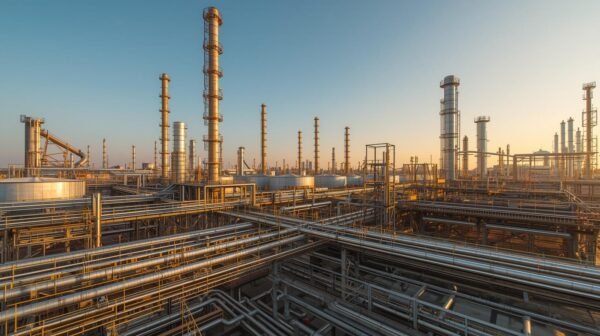
The proposed facility would replicate the capacity of Dangote’s flagship Lagos operation: 650,000 barrels of crude oil per day, making it one of the largest single-train refineries on the planet.
The price tag is equally staggering — Dangote has put the cost at between $15 billion and $17 billion, a figure that dwarfs virtually every infrastructure project currently under construction anywhere in Sub-Saharan Africa.
Why Mombasa Beat Tanga
Dangote’s case for Mombasa rests on two pillars: port depth and market pull. “I’m leaning more towards Mombasa because Mombasa has a much larger, deeper port,” Dangote told the Financial Times, drawing a direct contrast with Tanzania’s Tanga.
A 650,000-barrel-per-day facility requires the kind of VLCC (Very Large Crude Carrier) draft clearances that Tanga, still a developing port, struggles to offer.
Mombasa’s Kilindini Harbour, by contrast, is East Africa’s busiest deep-water terminal and already handles the bulk of the region’s petroleum imports.
Beyond port infrastructure, Dangote pointed to economic scale. “Kenyans consume more.
It’s a bigger economy,” he said — a reference to Kenya’s position as East Africa’s largest economy by GDP and its established petroleum distribution network, which already serves Uganda, Rwanda, and South Sudan through the Port of Mombasa pipeline system.
A refinery sited in Mombasa would slot directly into this existing logistics chain.
The Ball Is in Ruto’s Court
Despite his clear preference, Dangote has been careful to position Ruto as the project’s ultimate decision-maker.
“The ball is in the hands of President Ruto. Whatever the president says is what I’ll do,” he said.
This framing is significant — it signals that Dangote is ready to move, but that the Kenyan government must now deliver the policy certainty, land allocation, and regulatory framework that a $15–17 billion investment demands.
Ruto himself first floated the refinery concept publicly during the Africa We Build Summit, hosted by the Africa Finance Corporation in Nairobi in April 2026, alongside Uganda’s President Yoweri Museveni.
At the time, the project was described as a regional joint refinery to be sited at Tanga — with a pipeline connecting it to Mombasa.
Dangote’s latest comments suggest that arrangement has been reconsidered, with the refinery itself now potentially moving to the Kenyan side of the border.
Tanzania Caught Off-Guard — Again
The diplomatic fallout from the original Tanga announcement has added an awkward backdrop to Dangote’s repositioning.
Tanzanian President Samia Suluhu Hassan publicly revealed she had not been consulted before Ruto announced the refinery at Tanga — a breach of protocol that created visible regional tension.
The two leaders’ meeting in Dar es Salaam on 4 May 2026 was marked by Suluhu’s public rebuke of Ruto over the unilateral announcement.
Dangote’s shift toward Mombasa may, in part, reflect a pragmatic reading of those tensions.
A project requiring inter-governmental coordination across countries where diplomatic friction already exists is a harder commercial case to make.
Concentrating the refinery on Kenyan soil — where Ruto has shown the most enthusiasm — simplifies the governance architecture, even if it narrows the regional ownership story.
What It Means for Kenya’s Energy Sector
East Africa currently imports every litre of refined petroleum it consumes, predominantly sourced from the Middle East.
That structural dependency has left regional economies exposed to the supply disruptions and price spikes triggered by geopolitical events — most recently, the volatility associated with the US-Iran conflict.
A domestically sited refinery of this scale would fundamentally alter Kenya’s position in the regional energy supply chain.
The feedstock question is also central to the project’s logic. Ruto has stated the refinery would process crude from the Democratic Republic of Congo, Kenya, South Sudan, and Uganda — landlocked producers for whom Mombasa is the natural export gateway.
Kenya’s own Turkana oil fields, stalled for years by infrastructure and policy uncertainty, could gain fresh commercial momentum if a domestic refinery were to come online.
For Kenya’s construction and heavy equipment sector, the implications are direct.
A refinery project of this scale generates years of civil engineering work — site preparation, marine dredging and jetty construction at Mombasa Port, pipeline fabrication, tank farm construction, and the associated utilities and access roads.
Dangote’s Lagos refinery, for context, required years of complex construction involving hundreds of contractors and tens of thousands of workers.
Dangote’s African Playbook
Aliko Dangote’s Lagos refinery — which processes 650,000 barrels per day and cost approximately $20 billion to build — is already reshaping West Africa’s fuel markets.
The Dangote Group is now applying the same model to East Africa, positioning a new refinery as both a commercial investment and a structural solution to the region’s energy vulnerability.
Whether in Mombasa or elsewhere, a Dangote-backed East African refinery would represent a significant extension of African private capital into critical infrastructure — a model President Ruto has openly championed as central to his industrialisation agenda.
For now, the project remains at the announcement stage, with no formal agreements signed and no site officially confirmed.
But the signals from Africa’s wealthiest industrialist are pointing squarely at Mombasa — and the construction industry is watching closely.
Also Read
Kenyans Sue BP Over Oil Exploration That Allegedly Killed 500 People and Thousands of Livestock
Iran War Hits UK Construction: Output to Fall 2.5% This Year

- PV Guangzhou 2027 to Highlight Solar and Energy Storage Technologies - October 22, 2026
- Accurate and Reliable Measurement and Monitoring of Industrial Plant Water Treatment - October 21, 2026
- SODECA Highlights Industrial Ventilation Technology at Mega Clima Expo Kenya 2026 - October 14, 2026