

At Steinexpo 2026, Metso demonstrated how automation, connectivity, predictive maintenance and more efficient crushing and screening technologiescan help quarry operators increase production consistency, reduce unplanned downtime and make better-informed operating decisions.
For quarry operators, the future is being shaped not only by the physical performance of individual machines, but also by the ability to manage production more predictably across the complete process.
At Steinexpo 2026, Metso presented a portfolio of crushing and screening technologies that highlighted this shift, combining equipment development with automation, connectivity, real-time data and predictive maintenance.
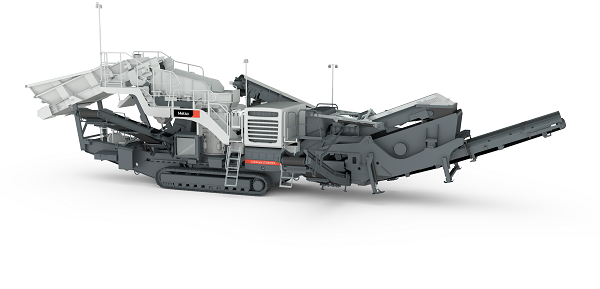
The company’s key presence at the event included the new Lokotrack® LT400RS mobile impact crusher and the Lokotrack® LT200HPX mobile cone crusher with integrated screening.
Both models are compatible with Metso digital services, including Production Performance and AI-powered Predictive Maintenance.
Metso also showcased the new GFF Series™ screen. Together, these technologies showed how Metso is addressing customer priorities across the production process: improving visibility, automating routine functions and giving operators better information to manage performance.
Across the portfolio, the common starting point is the customer’s operating challenge: how to deliver the required output and product quality with greater predictability, lower disruption and more effective use of people, energy and equipment.
Metso’s digital Production Performance and AI-powered predictive maintenance solutions are designed to turn operational data into actionable insights.
Instead of information simply being collected for later analysis, data can increasingly influence decisions while the plant is operating.
This has implications for productivity as well as maintenance. Operators can identify developing problems earlier, while process controls can help maintain more consistent production.
For operations with multiple machines or sites, connectivity extends this visibility beyond an individual plant.
Metso’s MyMetso portal provides a single channel through which equipment information can be accessed remotely.
Connected technologies can also allow customers to monitor fleets operating at different locations, compare performance and identify operating practices that can be applied elsewhere.
The result is a shift towards fleet-wide management rather than machine-by-machine monitoring.
Predictive Maintenance Targets Downtime
Maintenance is another area where digitalisation is changing quarry operations. Traditional maintenance strategies can involve scheduled servicing or responding after a machine develops a fault.
Condition monitoring and predictive maintenance introduce a more proactive approach.
By continuously tracking machine condition and performance, digital systems can identify early warning signs that may indicate an emerging problem.
This gives operators an opportunity to plan maintenance before a failure results in unplanned downtime.
The benefits extend beyond the machine itself. Planned maintenance can allow spare parts to be arranged in advance and reduce the risk of a major failure disrupting the wider production circuit.
This is particularly relevant in markets where spare-parts availability and lead times can make unexpected equipment failures costly.
Metso highlighted the importance of planning maintenance activities ahead in Africa, where parts availability can contribute to extended interruptions when unexpected breakdowns occur.
Hardware Still Matters
While digital technologies were an important part of Metso’s message at Steinexpo, the company also demonstrated that intelligent quarrying depends on advances in the underlying machinery.
The machines have been designed around uptime, serviceability and application flexibility.
Metso is continuing the transition towards more energy-efficient mobile crushing through hybrid and diesel-electric solutions.
The Lokotrack LT400RS is an example. The 70-tonne diesel-electric mobile impact crusher is designed for recycling and demolition waste applications, processing concrete, asphalt and mixed demolition waste.
It combines a Nordberg® NP1213MR impact crusher with a large two-deck product screen, wind sifter and electromagnet.
The diesel-electric drive can also be connected to external grid power, offering an alternative to operating solely on the machine’s diesel power source.
The machine incorporates production recipes and an automation system designed to simplify troubleshooting.
Screening Becomes Part of the Equation
The intelligence of a crushing circuit cannot be separated from screening performance.
Poor separation can create bottlenecks, affect product quality and limit the performance of crushers operating elsewhere in the circuit.
Metso’s GFF Series™ screen was developed for applications involving difficult materials, including wet, sticky and clay-rich feed.
Its hybrid flip-flow technology is designed to reduce blinding while maintaining fine-screening accuracy.
According to Metso, the approach can support reliable material separation, higher throughput and reduced maintenance requirements while lowering reliance on water.
The Lokotrack LT200HPX represents another approach to process optimisation. The mobile cone crusher combines the Nordberg® HP200e™ cone crusher with onboard screening options.
Depending on configuration, Metso says the machine can increase capacity by up to 40% compared with its predecessor while improving fuel efficiency and integrating screening into the mobile plant provides operators with additional process configurations without necessarily requiring the same number of separate units.
From Machines to Complete Circuits
Perhaps the most important development is the move from intelligent individual machines towards intelligent production circuits.
Metso’s Lokotrack mobile machines can operate individually or as part of multi-stage trains, typically involving three to five units.
For these more complex configurations, process design becomes critical. Metso’s Bruno simulation tool can be used to assess plant configurations and help optimise throughput, uptime and end-product quality before the physical process is established.
Automation can also operate across the crushing train. Remote IC enables the complete train to be operated wirelessly from the excavator cabin, while Adaptive Feed Control automatically adjusts feeder speed to maintain a stable feed rate.
Metso says Adaptive Feed Control can improve throughput by up to 15% by maintaining a more consistent process.
This illustrates an important change in the way equipment is being developed. Rather than optimising each machine independently, technology is increasingly being used to coordinate the performance of several machines as one production system.
Relevance for African Quarries
The developments showcased at Steinexpo have particular relevance for African aggregates producers.
Many operations across the continent are seeking higher productivity while dealing with energy costs, skills shortages, maintenance challenges and demanding operating conditions.
Metso identifies high-efficiency crushing technologies, electrification and services designed to maximise uptime among the solutions with significant potential for African markets.
The requirements vary between regions. In North Africa, Metso points to investment in advanced crushing technologies such as the Nordberg HPe Series to increase throughput and reduce energy consumption.
In West Africa, equipment availability, local service support, operator training and preventive maintenance are important considerations, alongside growing interest in electrified solutions.
Automation can also help reduce the gap between highly experienced operators and newer teams by providing guided workflows, diagnostics and easier access to operational information.
The Connected Quarry
The technology demonstrated by Metso at Steinexpo points towards a quarry in which machines increasingly communicate, monitor themselves and support decisions across the production process.
The ultimate objective is not simply greater automation. It is a more predictable and integrated operation in which data from equipment and processes can be used to improve production, maintenance and resource efficiency.
Metso’s digital portfolio already extends beyond individual machine automation into plant-wide process optimisation through digital Production Performance.
The company expects automation, AI-driven process optimisation and predictive maintenance to become increasingly widespread over the coming years, supporting more autonomous and reliable operations.
What Steinexpo demonstrated, therefore, was not simply a new generation of crushers and screens. It was a glimpse of how the quarry itself is changing.
The machines remain at the heart of production, but increasingly they are connected to a wider digital environment in which information, automation and human decision-making work together.
For the quarry of the future, intelligence may ultimately be measured not by how little human involvement remains, but by how effectively people and machines can work together to keep the entire production process running.
Also Read
- Liebherr: From Intelligent Assistance to Connected Quarry Machines
- Pump Technologies Supporting Quarry Expansion and Infrastructure Growth in Africa
- Inside a Modern Quarry Crushing Plant: Where Rock Meets Precision Engineering

With years of experience covering infrastructure projects, equipment, and engineering solutions, Yvonne brings in-depth analysis and practical insights to contractors, engineers, and industry stakeholders.
She is passionate about highlighting sustainable construction practices and the latest advancements that drive efficiency and safety on worksites.
- Metso Shows How Intelligent Machines Are Reshaping Crushing and Screening - November 27, 2026
- Why America’s Grid Expansion Is Creating a New Construction Boom - July 31, 2026
- U.S. Housing Starts Surge 19% in June, Signalling Strong Construction Activity Despite Decline in Building Permits - July 23, 2026