

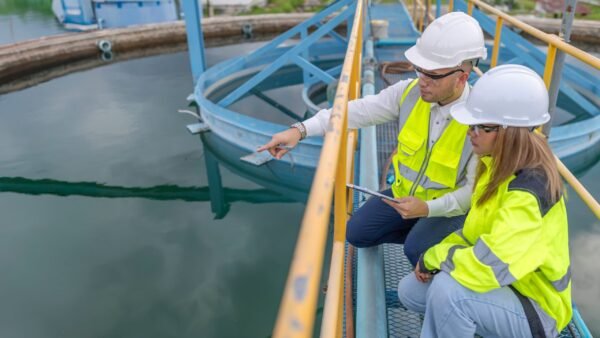
For much of Africa’s recent water history, wastewater has been something to be treated and discharged, a final stage in the water cycle rather than a starting point for a new one. That view is changing.
Municipalities, industries and utilities across the continent are increasingly looking at treated wastewater as a source of supply in its own right, capable of supporting irrigation, industrial processes and, in some cases, municipal water systems.
The shift is being driven less by policy ambition than by necessity.
Population growth, rapid urbanisation, industrial expansion and ageing water infrastructure are placing sustained pressure on conventional freshwater supplies in many African markets.
Water reuse is emerging as one of the more practical responses, not because it is new, but because the pressures making it necessary are no longer occasional.
Yet the more important story is not that water-reuse technology exists. It is that having proven technology and having a working reuse system at scale are two very different things.
Turning wastewater into a dependable resource requires treatment, system integration, pumping and long-term operational reliability to function as a single infrastructure chain rather than a set of separate purchases.
The Water Gap
Africa’s water pressures are not uniform, but the underlying trend is consistent. Cities are growing faster than the infrastructure built to serve them.
Industrial and mining operations are expanding in locations where freshwater availability is already constrained.
Agriculture, still the largest consumer of water across most African economies, is competing for supply with urban and industrial users. And in many markets, ageing pipes, treatment works and distribution networks are losing water long before it reaches a customer.
These pressures are converging in a way that makes conventional supply-side solutions, such as new dams, boreholes or bulk transfer schemes, increasingly expensive and, in some cases, impractical.
Wastewater, by contrast, is already present within the system. It arrives continuously, in predictable volumes, close to the point of demand. The question is less whether it can be reused and more whether the surrounding infrastructure can be built to reuse it reliably.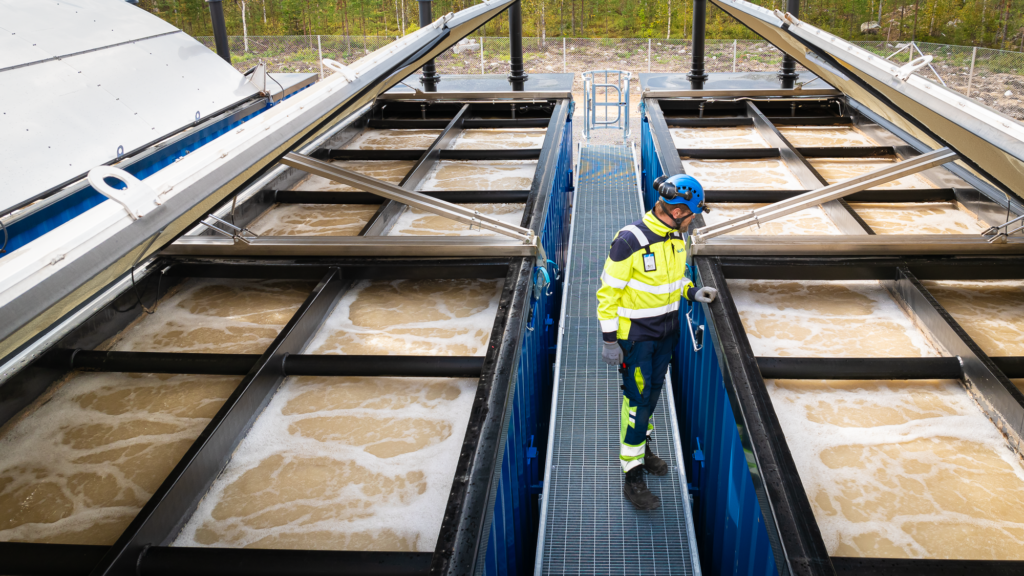
From Water Treatment to Water Reuse
Water reuse is often discussed as though it were simply an extension of water treatment. In practice, the two require a different design logic.
Chetan Mistry, Regional Strategy and Marketing Director for Water Solutions and Services Growth Markets at Xylem, argues that most of the technologies needed to recycle and reuse water are already commercially available and proven.
The bigger obstacle, he says, is integrating those proven solutions into larger, economically viable systems.
That distinction matters because there is no single specification for reused water. Water destined for irrigation, industrial cooling or process use requires a different treatment pathway than water intended for municipal supply.
Sulzer’s Paul Gueran, Global Segment Lead for Industrial Water and Wastewater Treatment, makes a related point: reuse projects need to start with the intended end use and the water quality it requires, rather than with a predetermined treatment technology.
“The objective should be fit-for-purpose water, not maximum treatment complexity,” Gueran says.
That principle has direct implications for capital cost, energy use and long-term reliability.
A treatment configuration built for potable reuse, requiring multiple barriers and continuous verification, is a fundamentally different undertaking to a system designed to supply non-potable water for industrial cooling or irrigation.
The Scale Challenge
If the technology already exists, the harder question is why water reuse across Africa remains concentrated in isolated projects rather than mainstream infrastructure.
Mistry’s view is that the barrier is integration rather than invention.
A pilot project can operate with limited financial pressure and in relative isolation from the wider water system.
A large-scale reuse system has to meet regulatory requirements, deliver consistent water quality and justify its economics over its full operating life, while also fitting into existing infrastructure that was rarely designed with reuse in mind.
“While adoption is increasing, many experts believe it is not yet scaling quickly enough to address Africa’s growing water security challenges,” Mistry says.
Mistry is also cautious about identifying a single sector where reuse holds the greatest promise.
Mining, municipalities, industry and agriculture each have different water requirements and different reasons to pursue reuse, from production continuity for mines to peak-demand reliability for industrial users and population pressure for municipalities.
Treating reuse as a specialist response to acute scarcity, rather than a standard planning tool available across sectors, has arguably slowed its adoption.
Public perception adds a further constraint, particularly where reused water is intended for higher-value or potable applications.
Overcoming what Mistry describes as a lingering stigma around recycled water will require greater transparency about how that water is treated, verified and monitored, alongside the technical case for reuse itself.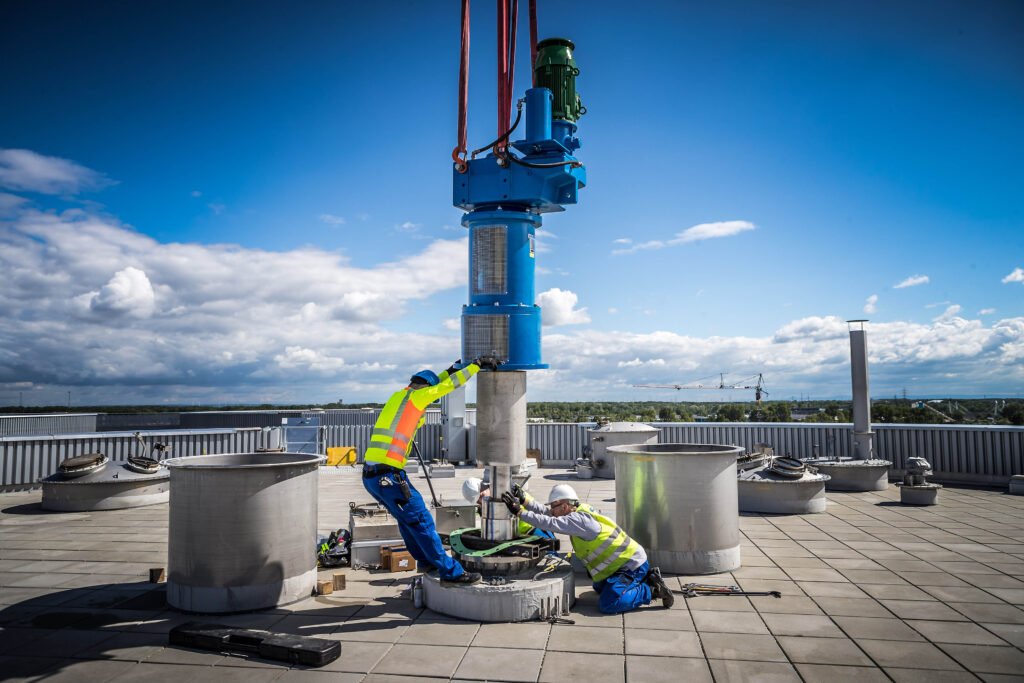
Complete Systems Matter
Sulzer’s contribution to this discussion centres on a different kind of scale challenge: the way individual treatment plants are designed.
Gueran argues that a wastewater treatment facility should not be understood as a collection of separate products, screens, pumps, mixers, aeration equipment, clarifiers and filters, each performing an isolated task. Instead, these components need to function as a single process.
Screening protects downstream equipment, pumping and equalisation influence hydraulic loading, aeration supplies oxygen to biological treatment, and clarification prepares water for later stages. Poor interfaces between these steps, he notes, tend to increase energy consumption and reduce reliability.
This has particular relevance for Africa, where much of the near-term opportunity lies not in building new treatment plants but in upgrading existing infrastructure.
Restoring tanks, buildings and process stages while modernising mechanical equipment, controls and aeration can offer a more practical route to reuse than full replacement, provided the underlying biological treatment process is stabilised first.
Adding sophisticated polishing technology to an unstable base process, Gueran cautions, tends to shift the problem downstream rather than resolve it.
Reliability, rather than technological sophistication, is the recurring constraint. Skilled personnel, consistent maintenance funding, stable energy supply and regulatory clarity all shape whether a technically capable plant performs as designed.
“Reuse is about consistent quality, not average quality,” Gueran says.
That standard requires instrumentation to be maintained and operators to have both the skills and the authority to act on what monitoring systems tell them.
Moving Water Is Part of the Solution
Treatment technology tends to dominate discussion of water reuse, but moving water through a reuse system is just as consequential for its success. Sebastian Werner, Managing Director of Werner SA Pumps & Equipment, describes pumps as central to the entire process.
“Pumps are essentially the heart of any water treatment or recycling system,” Werner says.
Water moves through collection, filtration, treatment, storage and eventual reuse, with each stage presenting its own hydraulic demands.
That role is complicated by the nature of recycled water itself. Wastewater and recovered water can contain suspended solids, sand, grit, fibres and chemical contaminants that vary considerably between applications and can change during operation.
Pump and material selection therefore has to reflect actual operating conditions rather than a nominal flow and pressure specification. Incorrect selection, Werner notes, can increase energy consumption, accelerate wear and raise maintenance requirements, all of which affect whether a reuse project delivers its expected return.
Werner’s own experience, drawn from supplying water-recycling equipment for sewer and stormwater cleaning operations, illustrates a broader principle: water reuse only makes sense if the recycled water can maintain the pressure, flow and performance required for its intended task.
Reducing consumption without compromising productivity is, in his view, the real measure of a successful reuse system, one that applies equally to municipal, industrial and mining applications.
Mistry makes a similar point from the treatment side, noting that the wrong pump selection can waste energy and cause pipeline damage, underlining that pumping decisions carry consequences well beyond the immediate cost of the equipment.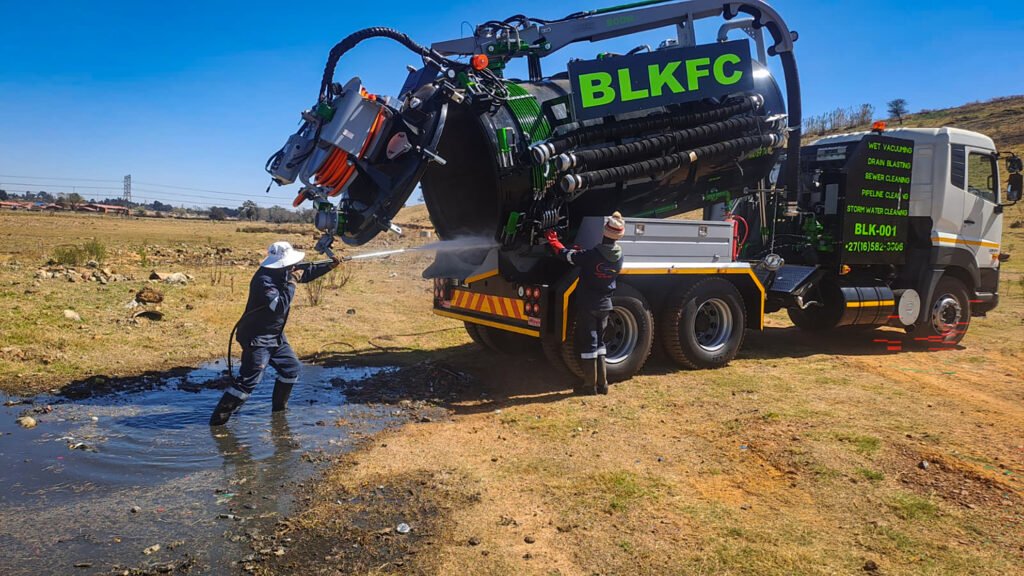
The Economics of Reuse
Underpinning all three contributions is a shared conclusion: the economics of water reuse are decided over the life of a system, not at the point of installation. Energy consumption is a recurring theme.
Aeration is frequently cited as one of the largest electricity demands in wastewater treatment, making blower efficiency and dissolved oxygen control significant factors in overall plant performance.
Pumping carries similar weight, with correctly sized pumps, variable-speed drives and optimised hydraulics all contributing to lower operating costs without compromising output.
Werner frames this as a total cost of ownership question. Oversized equipment raises both capital and energy costs, while undersized equipment risks poor performance and premature failure.
The more relevant measure, in his view, is not the purchase price of a pump but its combined cost of energy, maintenance, downtime and serviceability across its operating life, a calculation that carries particular weight in African markets where downtime can be costly and spare parts are not always close at hand.
Digital monitoring adds a further layer to this economic picture.
Tracking flow, pressure, energy use and water quality allows operators to identify developing equipment problems before they cause failures, and gives utilities and industrial users the confidence to expand reuse because performance can be verified continuously rather than assumed.
Where the Opportunity Is
The reuse opportunity is not confined to a single application. Industrial facilities, with defined and often continuous water demands, are well positioned to benefit, using treated water for process operations, cooling, washing and other non-potable functions.
Mining faces a related case, where water availability constraints can directly affect production, making recovery and reuse both an environmental and an operational priority.
Municipal systems, meanwhile, are contending with population growth and ageing networks that make reclaimed water an increasingly attractive complement to conventional supply.
Agriculture, as the largest consumer of water across much of the continent, represents an obvious avenue for reuse, and Sulzer’s Al Mahsama project in Egypt, designed to treat and reuse agricultural wastewater at a scale of roughly one million cubic metres a day, is one of the more significant examples of what that can look like in practice.
A similar logic applies in Bahrain, where a Nordic Water system was designed to recycle around 250,000 cubic metres a day of wastewater for irrigation.
Both projects, while outside Africa, illustrate the scale at which reuse infrastructure can operate once treatment, pumping and system integration are aligned around a defined end use.
Africa already has examples closer to home. Windhoek has operated potable water reclamation for decades, while reuse systems in Cape Town and eThekwini point to a growing base of municipal experience within South Africa.
“What these examples have in common is that they stopped treating reuse as an emergency measure and started planning for it as part of mainstream water supply,” Mistry says.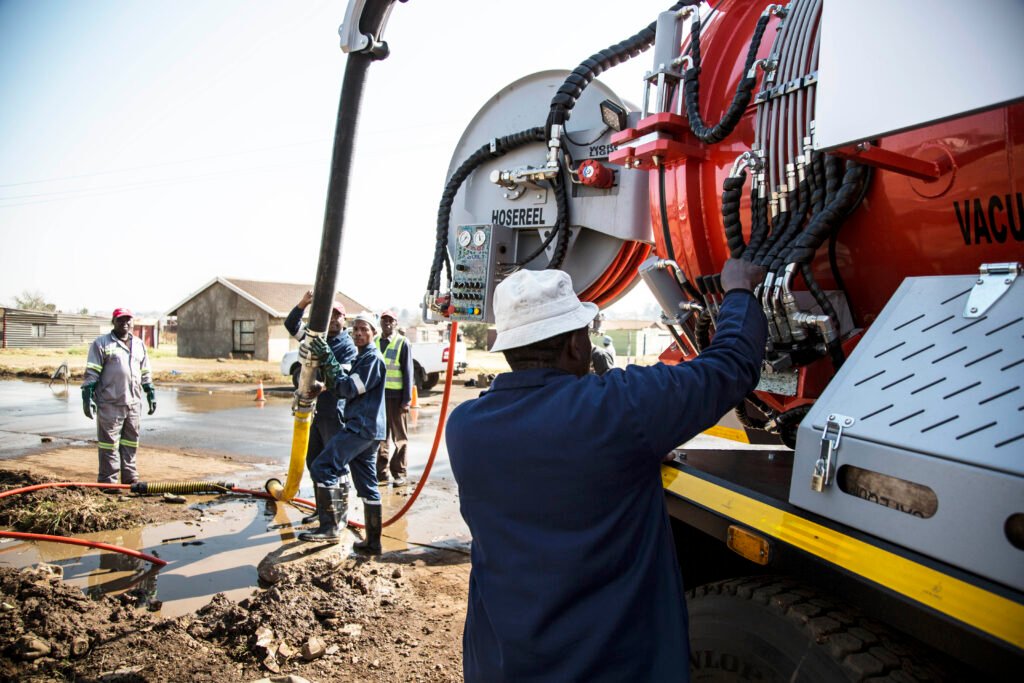
Building Africa’s Reuse Infrastructure
Bringing these perspectives together points to a common conclusion: water reuse in Africa will not scale through treatment innovation alone.
It requires system design that treats a plant as a single process rather than a series of components, pumping infrastructure selected for the specific demands of recovered water, and digital monitoring capable of verifying performance on an ongoing basis.
It also requires the less visible groundwork of stable energy supply, adequately funded maintenance, trained operators and a defined customer for the water being produced.
None of these elements works in isolation. A well-designed treatment plant with unreliable pumping wastes energy and undermines water quality.
A robust pump specification attached to a poorly integrated treatment process inherits that process’s instability. Even the most sophisticated monitoring system cannot compensate for operators who lack the authority or training to act on what it reports.
CCE NEWS TAKE:
Africa’s water-reuse opportunity is not held back by a shortage of viable technology. Treatment processes, pumping systems and monitoring tools capable of supporting reuse at scale already exist and have been proven in markets across Africa and beyond.
What remains unresolved is whether these elements can be brought together consistently: designed as integrated systems, financed with their full operating life in mind, and built around genuine demand for the water they produce.
The infrastructure decisions made over the next decade, more than any single technology choice, will determine how much of that opportunity Africa is able to capture.
Also Read
- Why Water Reuse Is Becoming a Business Imperative for African Industry
- Africa’s Water Reuse Opportunity: Why Treatment Plants Must Be Designed as Complete Systems
- Africa’s Water Reuse Challenge: Why Scaling Matters More Than Technology

- SODECA Highlights Industrial Ventilation Technology at Mega Clima Expo Kenya 2026 - October 14, 2026
- How They Were Built: Inside the Engineering of the Lesotho Highlands Water Project - October 11, 2026
- Africa’s Water Reuse Opportunity: Building the Infrastructure for a Water-Secure Future - September 28, 2026