

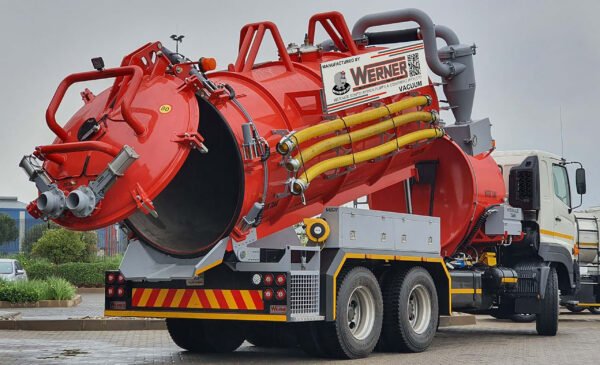
Water scarcity is increasingly forcing African industries and infrastructure operators to rethink how they use, recover and manage one of their most important resources.
For companies operating in mining, manufacturing, municipalities, agriculture, construction and other water-intensive sectors, the traditional model of taking in clean water, using it once and discharging it is becoming increasingly difficult to justify.
Rising water costs, pressure on municipal infrastructure, environmental requirements and unreliable supply are creating a stronger business case for recovering and reusing water within operations.
For Sebastian Werner, Managing Director of Werner SA Pumps & Equipment, the driver is straightforward: water is becoming too valuable to treat as a single-use resource.
“The biggest driver is undoubtedly water scarcity,” Werner says. Across South Africa and other African markets, he says, industry, mining, municipalities and agriculture continue to require reliable access to water while the cost of obtaining, treating and disposing of it increases.
That is changing how businesses view wastewater.
“Instead of seeing it purely as something that needs to be discharged, there is a growing recognition that water can often be treated, recovered and reused within the operation,” he says.
The shift has implications well beyond environmental compliance. For industrial operators, water reuse can become a way of controlling operating costs, improving resilience and reducing dependence on external water supplies.
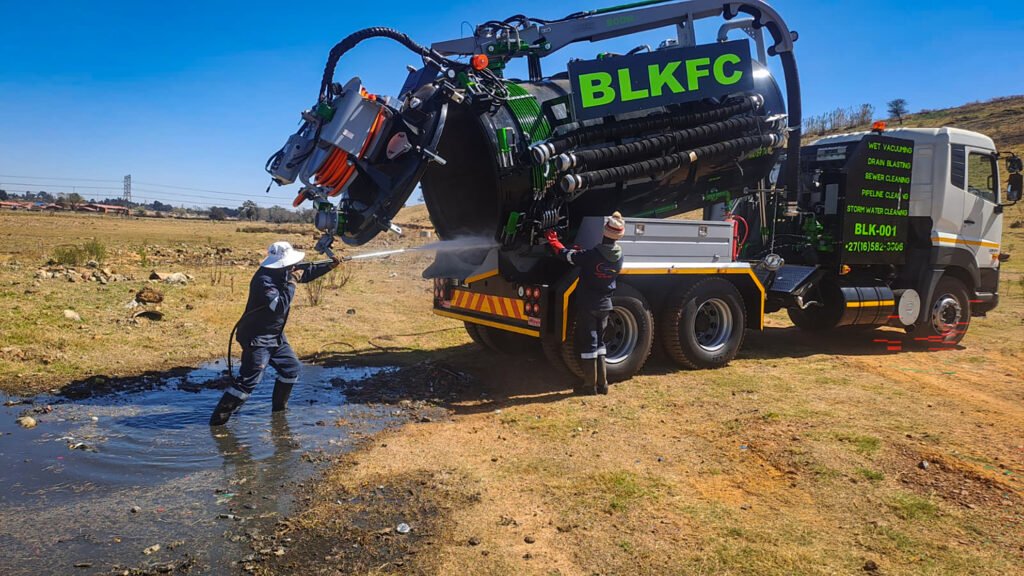
Pumps at the centre of water reuse
While water reuse is often associated with treatment technologies, filtration and recycling systems, the movement of water through those systems is equally important.
Werner describes pumps as central to the entire process.
“Pumps are essentially the heart of any water treatment or recycling system,” he says.
Water may need to move through collection, filtration, treatment, storage and eventual reuse, with each stage presenting different operating requirements.
This means pump selection cannot simply be based on flow and pressure.
The characteristics of the liquid being handled also matter, as does the design of the wider system. Incorrect equipment selection can increase energy consumption, accelerate wear, create blockages and increase maintenance requirements.
For water-reuse systems, where operating economics are critical, those factors can determine whether a project delivers the expected return over its lifetime.
Recycled water is not always the same water
One of the technical challenges of water reuse is that the composition of recovered water can vary considerably.
Wastewater and recycled water may contain suspended solids, sand, grit, fibres, chemicals and other contaminants. These characteristics can affect pump performance and equipment life.
“Recycled and wastewater applications can contain suspended solids, sand, grit, fibres, chemicals and other contaminants,” Werner explains.
Abrasion becomes an important consideration where sand and grit are present, while chemical composition and pH can influence the selection of materials, seals and other components.
Solids concentration and particle size can also affect the choice of pumping and filtration equipment.
Importantly, water quality may change during operation. Equipment therefore needs to be designed around realistic operating conditions rather than an idealised specification.
For African operators, this application-specific approach is particularly relevant because infrastructure can be required to operate under demanding conditions with limited tolerance for downtime.
From individual pumps to complete systems
Werner SA Pumps & Equipment has traditionally specialised in high-pressure water jetting, sewer cleaning, vacuum and combination equipment.
Those technologies have a direct connection to wastewater infrastructure, particularly the maintenance and cleaning of sewer and stormwater networks.
The company’s approach, however, extends beyond supplying an individual pump.
Werner says the company has experience integrating pumps, tanks, filtration systems, vacuum systems and related equipment into complete engineered solutions.
That can include truck-mounted, trailer-mounted and specialised custom-built equipment.
The distinction is important as water-reuse projects become more complex.
A pump may be one component of a larger system, but the performance of the entire system depends on how pumping, filtration, storage, controls and other elements work together.
Werner says the company increasingly sees water recycling as an important opportunity, particularly where equipment can recover and reuse water instead of continually consuming clean potable water.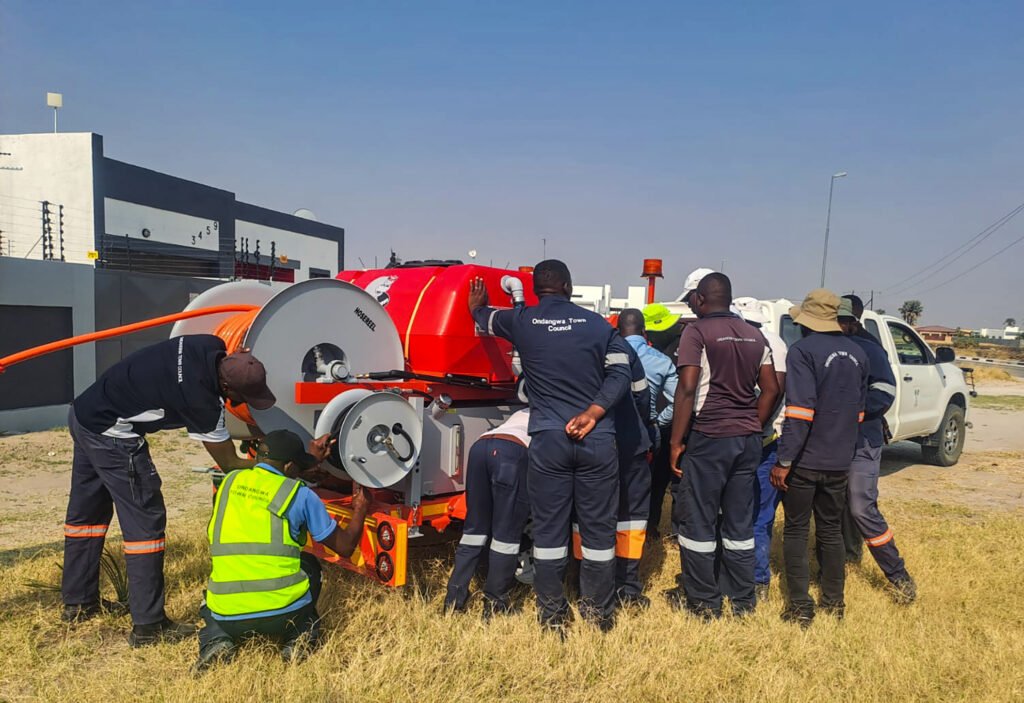
A practical example of water recycling in action
One of the strongest examples Werner provides comes from its sewer and stormwater cleaning equipment.
The company has supplied water-recycling cleaning machines to a number of customers. These systems can recover dirty water from sewer or stormwater operations, process and filter it, and then reuse it for high-pressure cleaning.
The significance is that the recycled water does not simply replace potable water without consideration for equipment performance.
The cleaning operation still needs sufficient pressure, flow and reliability to perform its primary function.
“Water recycling only makes sense if you can maintain the pressure, flow and overall cleaning performance required to do the job properly,” Werner says.
That creates a useful way of looking at water reuse: the objective is not simply to reduce water consumption, but to do so without compromising productivity.
The operational benefits can extend beyond water savings.
By recycling water on site, operators can work for longer periods without repeatedly leaving a job site to refill with clean water. Werner says this can reduce potable-water consumption, travelling time, fuel usage and downtime while increasing the productive hours of the machine.
In this application, water reuse becomes part of an equipment-productivity strategy.
The total cost of ownership matters
The economic case for water reuse also depends on how equipment is selected and operated.
Werner says companies should avoid simply installing the largest available pump.
Oversizing equipment can increase both capital and energy costs, while undersizing can result in poor performance and premature component failure.
Instead, equipment should be configured according to factors such as flow, pressure, operating hours, pipework, filtration requirements and the characteristics of the liquid being handled.
This approach puts total cost of ownership at the centre of equipment decisions.
For operators, the cheapest equipment to purchase is not necessarily the cheapest equipment to own.
Energy consumption, maintenance, component life, downtime and serviceability can all have a significant effect on the final cost of a water-reuse system.
That consideration becomes particularly important in African markets, where equipment may operate in demanding environments and downtime can be expensive.
“We therefore place considerable emphasis on robust design, serviceability, component selection and after-sales support,” Werner says.
Mining, municipalities and industry
The potential market for water reuse extends across multiple sectors.
Werner identifies mining, industrial manufacturing and municipal wastewater infrastructure as particularly important areas.
Mining operations can consume substantial quantities of water while often operating in locations where water availability is constrained. Recovering and reusing water can therefore offer both environmental and economic benefits.
Municipalities face another set of pressures, including ageing sewer and wastewater infrastructure, population growth and increasing pressure on available water resources.
Manufacturing, food processing and construction can also provide opportunities where significant volumes of water are used once and then discharged.
The common denominator is economic exposure to water.
“We expect water reuse to become increasingly relevant wherever water represents either an operational constraint or a significant operating cost,” Werner says.
The next generation of pumping technology
Technology will continue to influence the efficiency of water-reuse systems.
Werner expects automation and intelligent control to become increasingly important, particularly through variable-speed drives, sensors and automated control systems.
Rather than continuously operating at maximum capacity, pumps can respond to actual demand, potentially reducing energy consumption and mechanical wear.
Remote monitoring and preventative maintenance can provide another layer of efficiency.
Monitoring pressure, flow, temperature, operating hours and other parameters can allow operators to identify developing problems before they become equipment failures.
Filtration technology will also remain important because removing contaminants reliably while avoiding excessive maintenance is fundamental to many reuse applications.
Werner sees the direction of the industry moving toward increasingly integrated systems in which pumps, filtration, controls and monitoring operate as a single solution rather than as disconnected components.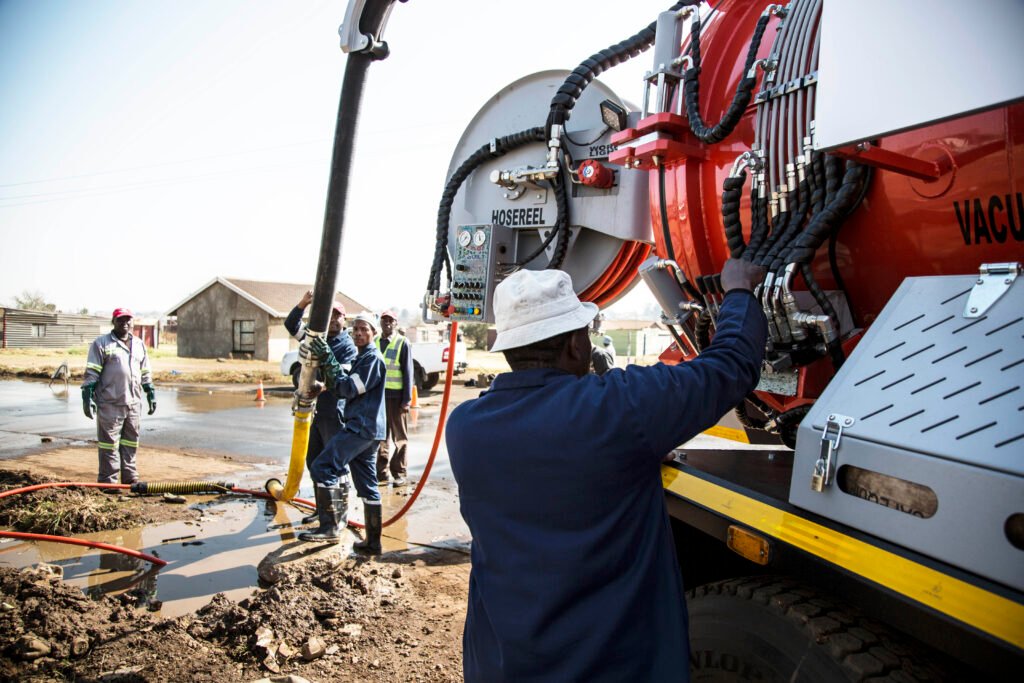
Turning water from a cost into a resource
For African businesses, the opportunity may begin with a simple exercise: understand where water enters an operation, where it is used and where it leaves.
Once that water balance is established, companies can identify opportunities to capture, treat and reuse water.
Not every application requires potable-quality water.
Recovered water could potentially be used for washing, process operations, dust suppression, equipment cleaning, irrigation or other secondary applications, depending on its quality and the requirements of the end use.
This creates opportunities to reduce municipal water consumption and wastewater discharge volumes while also potentially reducing transport costs and improving operational resilience.
The financial case can therefore extend beyond the value of the water itself.
For businesses operating in markets where reliable water supply cannot always be taken for granted, the ability to recover and reuse water can become a competitive advantage.
Designing for African conditions
The success of water-reuse infrastructure will ultimately depend on whether equipment can perform reliably in the environments where it is deployed.
Werner SA Pumps & Equipment positions its South African engineering and manufacturing capabilities around specialised pumping, high-pressure jetting, vacuum and combination equipment, with an emphasis on customisation.
The company says it can develop equipment around specific customer applications rather than relying exclusively on standard catalogue products.
That approach is particularly relevant where water quality, operating conditions and infrastructure requirements differ significantly from project to project.
“We also understand African operating conditions,” Werner says. Equipment needs to be robust, serviceable and capable of operating reliably in demanding environments.
As water recovery becomes more important, Werner sees an opportunity to combine pumping, high-pressure water, vacuum technology, filtration, equipment integration and specialised vehicle manufacturing to develop practical solutions for African customers.
For engineers, contractors and industrial operators, his advice is to involve equipment specialists early.
“If we understand the application, the water characteristics and what the customer ultimately wants to achieve, we can work together to develop a solution that is practical, reliable and suited to African conditions,” he says.
Africa’s water challenge is increasingly becoming an operational challenge for business.
The companies best positioned to respond may not simply be those that consume less water, but those that can recover it, treat it, move it efficiently and put it back to work.
For Werner Pumps, that means approaching water reuse not as a standalone environmental initiative, but as an engineering and productivity opportunity—one in which the right combination of pumping, filtration, recycling and system design can turn recovered water into a valuable operational resource.
Also Read
- Africa’s Water Reuse Challenge: Why Scaling Matters More Than Technology
- World’s best pumps manufacturers
- Wastewater Infrastructure in Africa: The Equipment Driving Next-Gen Utilities

- SODECA Highlights Industrial Ventilation Technology at Mega Clima Expo Kenya 2026 - October 14, 2026
- How They Were Built: Inside the Engineering of the Lesotho Highlands Water Project - October 11, 2026
- Africa’s Water Reuse Opportunity: Building the Infrastructure for a Water-Secure Future - September 28, 2026


[…] Why Water Reuse Is Becoming a Business Imperative for African Industry – September 28, 2026 […]