
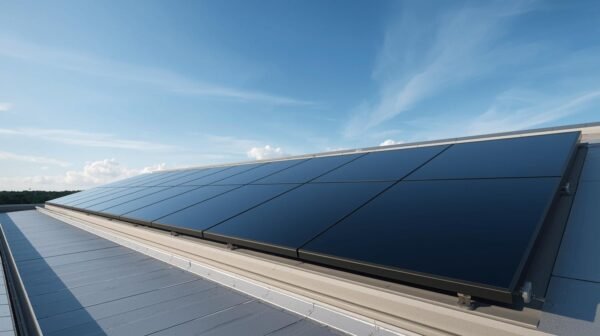
The solar energy landscape in South Africa is experiencing a remarkable transformation, with new compliance regulations making renewable energy more accessible than ever before.
For homeowners who have been on the fence about going solar, 2025 presents an unprecedented opportunity to make the switch at significantly reduced costs.
New Compliance Rules Slash Administrative Costs
The most significant development in South Africa’s solar sector is the introduction of streamlined compliance regulations that are set to dramatically reduce installation costs.
Under the forthcoming regulations, Certificate of Compliance (CoC) registration costs could plummet to approximately R1,500 – a standardized fee that provides much-needed cost certainty for homeowners.
Previously, CoC costs varied widely, with standard Electrical Certificates of Compliance ranging from R850 to R2,500 depending on property size and complexity. The new standardized approach eliminates this uncertainty while ensuring installations remain safe and compliant.
Exemptions Continue to Benefit Residential Users
South African homeowners continue to benefit from generous exemptions introduced in recent years. Since March 2023, Eskom has waived registration fees and Smart Meter costs for household installations up to 50kVA – covering virtually all residential solar systems.
This exemption is currently set to continue until March 2026, providing a clear window of opportunity for cost-conscious homeowners.
These regulatory changes mean that the administrative burden – often a significant hidden cost in solar installations – has been substantially reduced, making the economics of going solar even more attractive.
Equipment Costs at Historic Lows
Beyond compliance savings, solar equipment costs have reached historic lows. Complete off-grid solar systems for typical South African homes now cost between R143,000 and R381,000 as of July 2024 – substantially cheaper than at the beginning of the year.
Small residential systems start from as low as R70,000, while backup power systems can be installed from R40,000 with the option to add solar panels later.
The dramatic price reduction reflects global trends in solar technology costs and increased competition in the South African market.
Africa’s solar panel imports hit a record 15,032 MW in the 12 months to June 2025, representing a 60% increase that has driven down equipment costs through economies of scale.
Government Incentives Sweeten the Deal
The South African government continues to support solar adoption through tax incentives. Homeowners can claim a 25% tax rebate on new solar panel installations, up to a maximum of R15,000.
Combined with the reduced compliance costs and lower equipment prices, this rebate significantly improves the return on investment for solar installations.
Market Growth Indicates Long-term Viability
Industry projections suggest this is just the beginning of solar’s growth trajectory in South Africa. The country’s solar market is expected to expand by $3.74 billion between 2023 and 2028, driven by decreasing technology costs and supportive regulatory frameworks.
This growth indicates a mature, stable market with ongoing innovation and cost reductions.
The Perfect Storm of Savings
Several factors are converging to create optimal conditions for solar adoption:
Regulatory Support: Streamlined compliance processes with standardized costs and continued exemptions for residential installations.
Technology Costs: Historic lows in solar equipment prices due to global supply chain improvements and increased competition.
Energy Security: With ongoing electricity supply challenges, solar provides energy independence and protection against future tariff increases.
Financial Incentives: Government tax rebates of up to R15,000 combined with reduced administrative costs.
Market Maturity: A well-established solar industry with competitive pricing and proven track record.
What This Means for Homeowners
For the average South African household, these developments translate into several key advantages:
The total cost of going solar has decreased significantly, with compliance costs now predictable and capped at reasonable levels.
The payback period for solar investments has shortened due to the combination of lower upfront costs and rising electricity tariffs. Energy security has improved, providing protection against load shedding and future tariff increases.
Installation processes have become more streamlined with clearer regulatory frameworks and reduced bureaucratic obstacles.
Long-term savings are enhanced through the combination of immediate tax benefits and ongoing electricity cost avoidance.
Taking Action
For homeowners considering solar installation, the current regulatory environment provides a clear incentive to act. The combination of standardized compliance costs at R1,500, continued exemptions until March 2026, and historic low equipment prices creates a unique window of opportunity.
The key is working with certified Installation Electricians or Master Installation Electricians who can ensure proper compliance with safety standards while taking advantage of the new cost structure.
While a Certificate of Compliance remains mandatory for safety reasons, the reduced and standardized costs make this requirement far less burdensome than in previous years.
Looking Forward
As South Africa continues to refine its renewable energy regulatory framework, early adopters of solar technology are positioned to benefit from the most favorable conditions the market has seen.
With equipment costs at historic lows, compliance costs capped, and government incentives in place, 2025 represents the convergence of multiple factors that may not align as favorably in future years.
The message is clear: for South African homeowners considering solar energy, the optimal time to make the investment is now.
The combination of new compliance rules, reduced equipment costs, and supportive government policies creates an unprecedented opportunity to achieve energy independence while maximizing financial returns.
The solar revolution in South Africa is no longer a question of “if” but “when” – and for savvy homeowners, that answer is increasingly pointing to right now.
Also Read
Top 10 Solar Battery Storage Solutions to Watch in 2025
Next-Gen Battery Technologies Changing the Solar Storage Game

- SODECA Highlights Industrial Ventilation Technology at Mega Clima Expo Kenya 2026 - October 14, 2026
- How They Were Built: Inside the Engineering of the Lesotho Highlands Water Project - October 11, 2026
- Africa’s Water Reuse Opportunity: Building the Infrastructure for a Water-Secure Future - September 28, 2026