

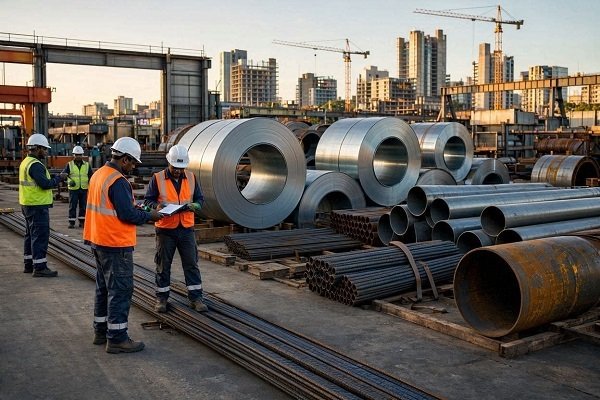
Kenya’s construction industry continues to expand, driven by major investments in affordable housing, roads, industrial parks, energy projects and transport infrastructure.
Yet behind the cranes and construction sites lies a surprising reality: the country’s steel industry is operating at only 36% of its installed production capacity, leaving millions of tonnes of manufacturing potential untapped.
Industry leaders say the situation presents both a major challenge and an enormous opportunity for Kenya’s manufacturing sector.
While local steel mills have the capacity to produce far more, manufacturers argue that high production costs, cheap imports, regulatory uncertainty and the influx of substandard products continue to prevent the industry from reaching its full potential.
An Industry with Untapped Potential
According to the Kenya Association of Manufacturers (KAM), Kenya’s steel industry has evolved dramatically over the past seven decades.
What began with the manufacture of simple steel products such as nails in the late 1940s has grown into a diversified industry producing hot-rolled and cold-rolled steel, reinforcement bars, wire products, tubes, pipes, fabricated steel components and aluminium products.
Today, the sector contributes approximately 13% of Kenya’s manufacturing output and generates around Ksh34 billion in taxes annually, making it one of the country’s most important industrial sectors.
Despite this growth, the industry’s productive capacity remains significantly underutilized.
KAM Chief Executive Tobias Alando says the industry has an installed production capacity of 4.2 million tonnes, yet factories are currently operating at only about one-third of that level.
“This means nearly two-thirds of Kenya’s steel manufacturing capacity remains idle despite rising domestic demand,” Alando noted during the East African Steel Summit held in Nairobi.
Construction Demand Continues to Rise
The timing is particularly striking because Kenya’s demand for steel continues to grow.
Steel remains one of the most critical construction materials used in:
- Affordable housing projects
- High-rise commercial buildings
- Roads and bridges
- Railways
- Ports
- Energy infrastructure
- Industrial parks
- Water projects
Government infrastructure investments, together with private real estate developments, continue to fuel demand for reinforcement bars, structural steel, roofing materials and fabricated products.
As Kenya pursues industrialization and urbanization, steel consumption is expected to increase steadily over the coming years.
Kenya Still Relies Heavily on Imports
One of the biggest concerns raised by manufacturers is Kenya’s continued dependence on imported steel.
Industry data shows that in 2025 Kenya imported approximately 1.66 million tonnes of iron and steel products, while exports amounted to only about 197,000 tonnes.
For manufacturers, these figures demonstrate that local production capacity is available but not being fully utilized.
Increasing domestic production could reduce import dependence, strengthen local supply chains and retain more value within Kenya’s economy.
Why Are Local Mills Operating Below Capacity?
Manufacturers point to several factors limiting competitiveness.
High Energy Costs
Steel production is one of the most energy-intensive manufacturing activities.
Electricity prices remain a significant operating cost for rolling mills, furnaces and fabrication plants.
Higher industrial power tariffs increase production costs, making locally produced steel less competitive against imported alternatives.
Expensive Raw Materials
Although Kenya has deposits of iron ore and other minerals, the country still relies heavily on imported raw materials and scrap metal to feed many steel plants.
Global commodity price fluctuations, transport costs and exchange rate pressures continue to raise manufacturing expenses.
Cheap Imports
Manufacturers say imported steel products, particularly lower-cost materials entering the Kenyan market, place enormous pressure on local producers.
When imported products sell below locally manufactured alternatives, domestic mills often struggle to maintain production levels despite having available capacity.
Regulatory Uncertainty
Frequent tax changes and unpredictable industrial policies also affect investor confidence.
Steel manufacturers argue that long-term investments require stable regulations that allow companies to plan expansion, upgrade equipment and increase production.
Substandard Products
Industry stakeholders have also called for stronger enforcement against substandard steel products entering both Kenyan and regional markets.
Poor-quality construction materials present safety risks while unfairly competing against manufacturers that comply with national quality standards.
Steel Is Central to Kenya’s Industrialization
A strong domestic steel industry extends beyond construction.
Locally produced steel supports numerous sectors including:
- Engineering
- Automotive assembly
- Manufacturing
- Energy
- Agriculture
- Mining
- Transport equipment
- Infrastructure development
Greater local steel production can shorten supply chains, reduce import bills, create skilled employment and improve resilience during global supply disruptions.
Manufacturers believe expanding domestic value addition would help Kenya capture a larger share of the economic benefits generated by its growing infrastructure sector.
Regional Markets Offer New Opportunities
Beyond domestic demand, Kenyan manufacturers see growing opportunities across Africa.
Trade agreements including the African Continental Free Trade Area (AfCFTA), COMESA, and the Kenya-European Union Economic Partnership Agreement provide access to significantly larger export markets.
If production costs can be reduced and competitiveness improved, Kenyan steel producers could expand exports to neighbouring countries while strengthening East Africa’s manufacturing base.
Industry Calls for Policy Reforms
During the East African Steel Summit, manufacturers urged government and industry stakeholders to work together to improve the business environment.
Among the key proposals are:
- Lower industrial energy costs.
- Stronger enforcement against substandard imports.
- More predictable tax and regulatory policies.
- Improved access to affordable industrial financing.
- Greater support for local value addition.
- Harmonized standards across the East African Community.
Industry leaders argue these measures would encourage investment, increase production and improve Kenya’s competitiveness in regional and global markets.
Looking Ahead
Kenya’s steel industry finds itself at an important crossroads.
On one hand, infrastructure investment continues to drive robust demand for steel products.
On the other, manufacturers are operating far below their installed capacity while the country continues to import large volumes of steel.
Closing this gap could deliver significant economic benefits, including higher industrial output, new employment opportunities, stronger local supply chains and reduced dependence on imports.
With billions of shillings set to flow into housing, transport and energy projects over the coming years, the challenge for policymakers will be ensuring that a greater share of the steel used to build Kenya’s future is produced within Kenya itself.
Also Read
- Three Sectors Driving Global Construction Growth in 2026
- Global Construction Industry on Track to Hit $22 Trillion by 2030

She brings insightful analysis and in-depth reporting to the sector, highlighting innovations and developments that shape Africa’s built environment.
- Moldtech: Engineering Africa’s Next Generation of Precast Concrete Production - September 23, 2026
- How They Were Built: Inside the Construction of the Grand Ethiopian Renaissance Dam - September 4, 2026
- CNH Construction Sales Rise 12% as North American Demand Offsets Tariff Headwinds - August 3, 2026