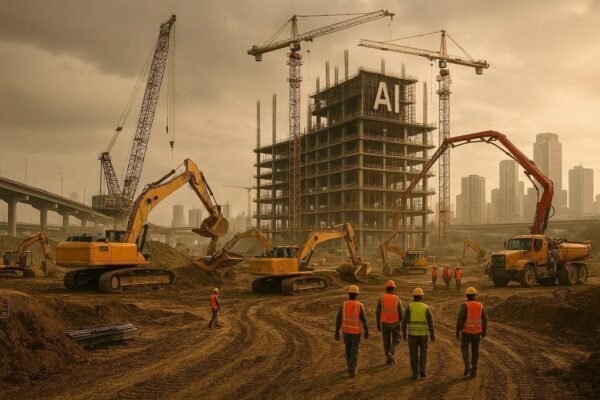
The United States is running the largest construction buildout in a generation, and it is happening on two tracks at once.
One is familiar: houses, offices, roads and bridges rising and falling with mortgage rates, tariffs and municipal budgets.
The other is new: a nationwide race to pour concrete for the artificial intelligence economy, from gigawatt-scale data center campuses to semiconductor fabs that did not exist as a category of American construction five years ago.
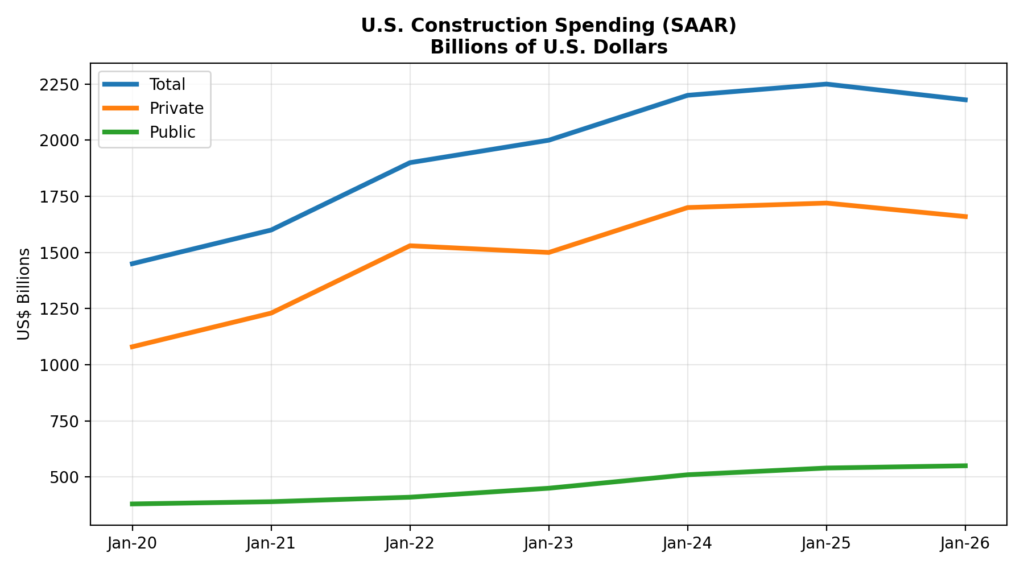
2026 is the year those two tracks collided. Census Bureau figures put total construction spending at a seasonally adjusted annual rate above $2.2 trillion, yet the sectors driving that number are no longer the ones a contractor from a decade ago would recognize.
Data center construction alone has roughly quadrupled since 2021, and it is now the single biggest reason non-residential building is still expanding while office and multifamily segments cool.
Meanwhile, the Infrastructure Investment and Jobs Act, the CHIPS and Science Act, and a wave of manufacturing reshoring continue to work through the pipeline, even as tariffs, immigration enforcement and a tight labor market complicate delivery.
For contractors, equipment dealers, developers, engineers and investors, understanding where the money is actually flowing in 2026 matters more than the industry’s decades-old reputation as a steady, cyclical business.
This guide breaks down the market size, spending patterns, growth drivers, major projects, equipment trends and labor dynamics defining U.S. construction this year, drawing on official data from the U.S. Census Bureau, the Bureau of Labor Statistics, the Associated General Contractors of America (AGC), Dodge Construction Network, the National Association of Home Builders (NAHB) and Engineering News-Record (ENR).
How Large Is the US Construction Industry in 2026?
Construction remains one of the largest sectors of the American economy, and the latest Census Bureau Value of Construction Put in Place survey shows total spending running at a seasonally adjusted annual rate of roughly $2.2 trillion through the first half of 2026, essentially flat to slightly higher than a year earlier.
Of that total, private construction accounts for the large majority, at roughly $1.64 trillion annualized, while public construction spending sits at around $532 to $541 billion, according to Census data reported in the spring and summer 2026 releases.
That headline stability masks a market in transition. Reuters and Yahoo Finance coverage of the Census Bureau’s March 2026 release described an industry moving away from the rapid, broad-based growth of the post-pandemic years and into what analysts called a more selective expansion phase, where strength in infrastructure, energy and data centers is offsetting softness in several commercial real estate categories.
Strip out data center spending, and non-residential construction actually contracted slightly in early 2026, underscoring how concentrated the current growth really is.
Where Is Construction Spending Going in the US?
Residential construction spending stood at a seasonally adjusted annual rate of about $922 billion in April 2026, a small monthly gain supported by tight housing supply, resilient multifamily development and a steady renovation market, per the Census Bureau’s Value of Construction Put in Place survey.
Non-residential construction totaled roughly $1.25 trillion annualized, essentially unchanged from the prior month.
Within non-residential activity, the split between growth and stagnation is stark. Manufacturing and data center-related categories continue to expand on the back of the CHIPS Act and AI infrastructure spending, while office construction remains structurally depressed by hybrid work patterns, and traditional retail construction stays muted outside of a handful of high-growth Sun Belt metros.
Public construction, covering highways, streets, education and water and sewer systems, is growing modestly but steadily as Infrastructure Investment and Jobs Act funds continue to flow through state departments of transportation.
| Sector | Spending (SAAR, 2026) | Trend |
| Total construction | ~$2.2 trillion | Roughly flat year-over-year |
| Private construction | ~$1.64 trillion | Modest growth |
| Public construction | ~$532–541 billion | Steady, IIJA-supported growth |
| Residential | ~$922 billion | Multifamily up, single-family soft |
| Non-residential | ~$1.25 trillion | Flat overall; data centers driving growth |
| Data center construction | ~$41 billion (2025 actual) | Up 32% from 2024; fastest-growing segment |
Table 1: U.S. construction spending by category. Source: U.S. Census Bureau Value of Construction Put in Place survey, 2026 releases; GlobalData data center tracking cited by Reuters/Yahoo Finance.
What Is Driving Growth in the US Construction Industry?
Four forces are shaping where construction dollars land in 2026. The Infrastructure Investment and Jobs Act continues to fund highway, bridge, transit and water projects years after its 2021 passage, including Megaprojects Grant awards for the Hudson Tunnel Project and the Brent Spence Bridge Corridor.
The CHIPS and Science Act, alongside company-funded expansions that now dwarf the original federal incentives, is driving the semiconductor fab boom in Arizona, Ohio and Texas.
The Inflation Reduction Act’s clean-energy incentives continue to support battery and renewable energy construction, even as some projects face headwinds from shifting federal energy policy.
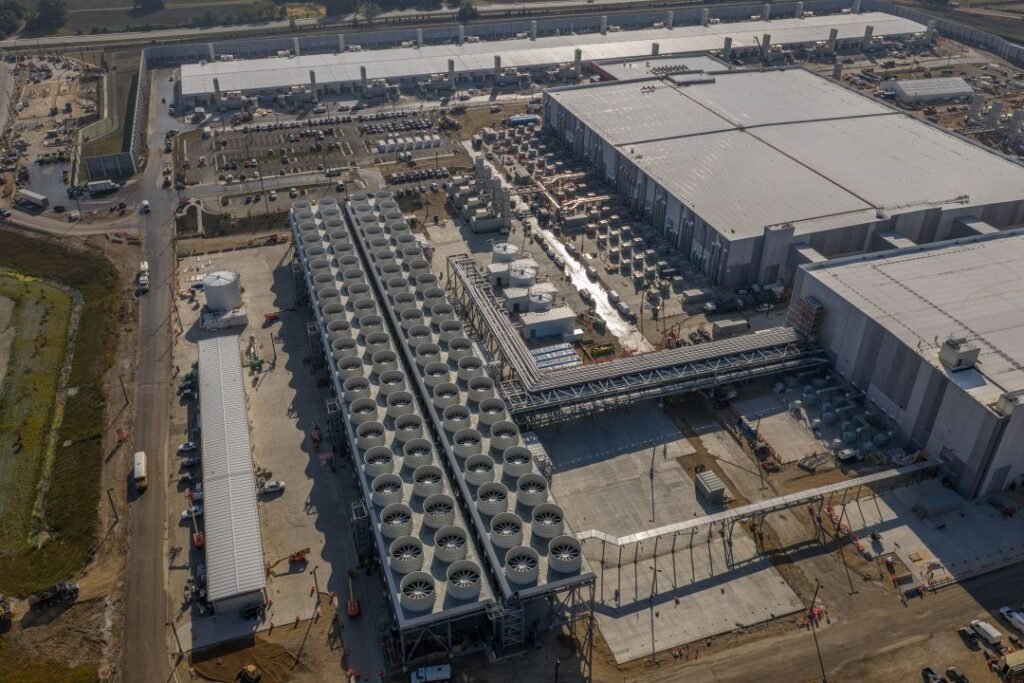
The dominant new driver, however, is artificial intelligence. Hyperscale data center construction has gone from a niche category to the single largest swing factor in non-residential spending, with GlobalData tracking 681 data center projects above $25 million in the national pipeline as of early April 2026.
Layered on top of that is a broader manufacturing reshoring wave spanning semiconductors, pharmaceuticals, EV batteries and food processing, plus steady population growth in Sun Belt states that keeps residential and infrastructure demand elevated even as the housing market cools nationally.
Is Residential Construction Growing in 2026?
Housing construction in 2026 is a story of two very different markets. NAHB’s February 2026 outlook projects single-family starts rising only modestly, to about 940,000 units, while multifamily starts are expected to fall roughly 5% to an annualized pace near 392,000 units after a strong 2025 rebound.
Dodge Construction Network’s own forecast, cited in ENR’s 2026 outlook coverage, calls for single-family construction to decline again in 2026 after a steep drop in 2025, while overall residential spending edges up on the strength of multifamily and renovation work.
Mortgage rates, hovering in the 6.1% to 6.5% range for most of the year, remain the central constraint on single-family demand.
NAHB chief economist Robert Dietz has pointed to 2027 as the more realistic window for rates to sustainably fall below 6%.
In the meantime, builders are leaning on accessory dwelling units, which now account for roughly 15% of new single-family construction in states like California, and on a persistent national housing shortfall estimated near 1.5 million units, which continues to support long-term builder confidence even amid short-term softness.
Which Commercial Construction Sectors Are Growing?
Commercial construction in 2026 is bifurcated by asset class. Traditional office construction remains depressed, a lingering effect of hybrid work and elevated vacancy in downtown cores, while healthcare, education and warehousing/logistics facilities continue to see steadier demand.
AGC’s 2026 Construction Hiring and Business Outlook survey found contractor sentiment on non-hospital healthcare construction posted a net positive reading of 24%, among the strongest of any traditional commercial category, while water and sewer infrastructure posted a net reading of 16%.
Hotel and retail construction remain largely flat outside high-growth metros, and mixed-use development continues in Sun Belt cities where population growth supports new density.
The standout commercial category by far is data centers, where AGC’s survey recorded a net positive reading of 57%, the most bullish of any of the 17 segments tracked, reflecting sustained hyperscaler capital spending from operators building out AI training and inference capacity.
Why Is Industrial Construction Booming in America?
Industrial construction is where the CHIPS Act’s legacy is most visible. Semiconductor fabrication plants, or fabs, represent some of the largest single construction commitments in American history.
TSMC’s Arizona campus has grown from an initial $12 billion investment announced in 2020 to $165 billion for six wafer fabs, two advanced packaging facilities and an R&D center, and the company announced a further $100 billion expansion in 2026 for four additional fabs at the same site, according to remarks by TSMC chairman C.C. Wei during the company’s second-quarter earnings call.
Intel is pressing ahead with $32 billion for two new fabs in Chandler, Arizona, targeting 2nm production, while its long-delayed $20 billion Ohio project has slipped years behind its original schedule, though an April 2026 partnership with Tesla, SpaceX and xAI on a planned Terafab AI chip complex signals renewed momentum.
Samsung’s Taylor, Texas plant began limited operations in February 2026 after its CHIPS Act award was trimmed alongside a reduction in total planned investment, and Texas Instruments is mid-way through a $60 billion, seven-fab buildout spanning Texas and Utah.
Beyond semiconductors, battery plants, food processing facilities and distribution centers continue to expand, though EV-related manufacturing has cooled in several states as automakers scale back electrification timelines.
| Project | Company | Investment | Status (2026) |
| Arizona campus | TSMC | $165B + $100B expansion | Fab 1 in production; Fab 2 structure complete; Fab 3 under construction |
| Chandler fabs (52 & 62) | Intel | $32B | Fab 52 construction complete; Fab 62 progressing |
| Ohio One campus | Intel | $20B (scalable to $100B) | Delayed; targeting 2030–31 production |
| Taylor plant | Samsung | $37B (scaled down) | Limited operations began Feb. 2026 |
| Sherman & multi-site fabs | Texas Instruments | $60B across 7 fabs | Sherman Fab 1 in production; further fabs phased to 2030 |
Table 2: Major U.S. semiconductor construction megaprojects. Source: Company disclosures, SEC filings, ENR and industry tracking reports, 2026.
Which Construction Equipment Is Most in Demand in 2026?
Equipment buying decisions in 2026 are being reshaped by three converging trends: electrification, connectivity and autonomy.
At CONEXPO-CON/AGG 2026, manufacturers including CASE, Hyundai, Takeuchi, Volvo Construction Equipment and LiuGong all expanded electric excavator, mini-excavator and wheel loader lineups, with Construction Equipment magazine’s 2026 trends coverage noting that electric machines now deliver diesel-comparable performance while cutting fuel costs by an estimated 70% and maintenance costs by around 40% for contractors running controlled urban sites.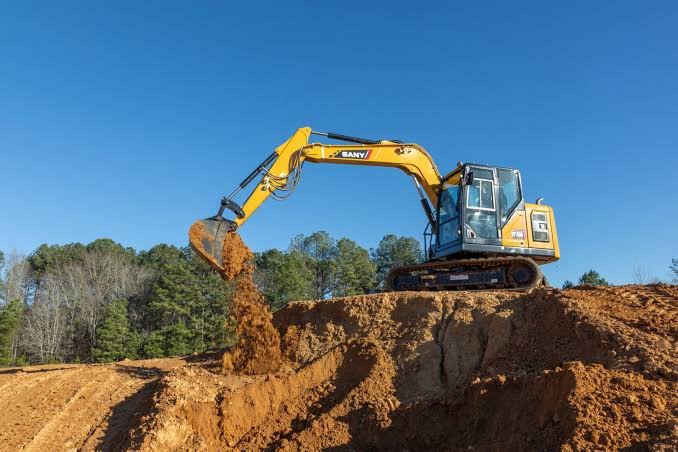
Telematics has moved well past simple GPS tracking. Systems are converging around the AEMP 2.0 (ISO 15143-3) data standard, letting fleet managers pull mixed-brand equipment data into a single dashboard; Caterpillar’s tie-up with Geotab, folding on-highway trucks into its VisionLink platform, is one example.
Grade control, once a premium option reserved for large earthmoving fleets, is becoming a standard feature even on compact machines, exemplified by Komatsu’s tight-tail-swing PC158USLCi-12 excavator with Intelligent Machine Control 3.0.
Compact equipment continues to dominate unit sales, with mini excavators and compact track loaders together holding more than 45% of the compact-equipment market.
On the autonomy front, Caterpillar, Komatsu and Volvo are all expanding self-driving dozer, excavator and haul truck programs aimed squarely at offsetting the industry’s persistent labor shortage.
| Category | Key 2026 Trend | Example |
| Electric equipment | Diesel-comparable performance, lower operating cost | Volvo EC230 Electric, CASE TL100EV |
| Telematics | Standardizing on AEMP 2.0 (ISO 15143-3) | Cat VisionLink + Geotab integration |
| Grade control / GPS | Moving from premium option to standard | Komatsu PC158USLCi-12 with IMC 3.0 |
| Autonomous machines | Self-driving dozers, excavators, haul trucks | Cat, Komatsu, Volvo autonomous haulage |
| Compact equipment | >45% share of compact-equipment market | Mini excavators, compact track loaders |
| Predictive maintenance / AI fleet tools | AI-driven diagnostics reducing downtime | OEM and third-party fleet platforms |
Table 3: Construction equipment trends for 2026. Source: Construction Equipment magazine, For Construction Pros CONEXPO-CON/AGG 2026 coverage.
What Are the Biggest Construction Projects in the United States?
Several megaprojects illustrate the scale of activity underway.
The Hudson Tunnel Project, the centerpiece of the broader Gateway Program between New Jersey and New York, carries an estimated cost above $16 billion, with roughly $12 billion in federal funding secured and a federal court ruling in 2026 permanently blocking the government from withholding the project’s grant funds; the Gateway Development Commission has since awarded a $711 million construction contract, as reported by Construction Dive.
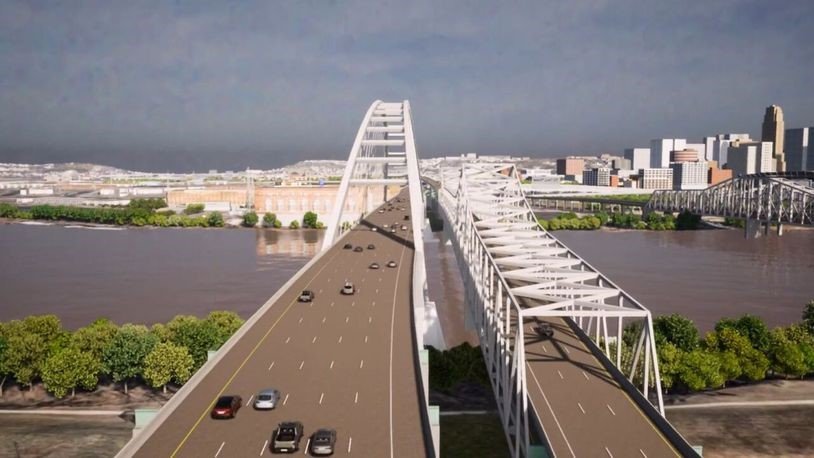
In Ohio and Kentucky, the Brent Spence Bridge Corridor project saw its price tag rise to $4.4 billion, up $700 million from earlier estimates, as the design-build team led by Walsh Kokosing moved toward a spring 2026 groundbreaking on a new companion bridge requiring an estimated 95 million pounds of steel.
California’s High-Speed Rail Authority, meanwhile, dropped its lawsuit seeking to recover roughly $4 billion in terminated federal grants and pivoted toward state and private-sector funding, while a joint venture was selected for a $3.5 billion construction package on the Central Valley segment, which remains the only portion under active construction toward a targeted 2030 opening between Merced and Bakersfield.
| Project | Location | Est. Value | Significance |
| Hudson Tunnel Project | NJ–NY | $16B+ | New Hudson River rail tunnel; core of the Gateway Program |
| Brent Spence Bridge Corridor | Cincinnati, OH / Covington, KY | $4.4B | New companion bridge on a top national freight bottleneck |
| California High-Speed Rail (Central Valley) | Merced–Bakersfield, CA | $3.5B (current CV package) | Only actively-constructed segment of the statewide system |
| TSMC Arizona campus | Phoenix, AZ | $165B + $100B expansion | Largest foreign direct investment in U.S. history |
| Hyperscale data center pipeline | Nationwide | $41B annual spend (2025) | Fastest-growing construction category in the country |
Table 4: Selected major U.S. construction projects active in 2026. Source: Construction Dive, ENR, company and agency disclosures.
Did You Know?
AI data center spending has nearly quadrupled since 2021, making data center construction one of the fastest-growing segments of the U.S. construction industry. Massive investments in AI infrastructure are driving demand for new facilities, electrical systems, cooling technologies, and specialized construction services nationwide.
Which State Has the Most Construction Activity?
Arizona has emerged as the epicenter of semiconductor-driven construction, anchored by TSMC’s Phoenix campus and Intel’s Chandler fabs, with the Greater Phoenix Economic Council estimating tens of thousands of construction jobs tied to the buildout.
Texas leads on sheer volume and diversity, combining Texas Instruments’ and Samsung’s fab investments with a booming data center pipeline and steady population-driven residential demand.
The Southeast, including Georgia, North Carolina and Tennessee, has become the preferred landing zone for automotive, battery and pharmaceutical manufacturing projects, according to industrial megaproject tracking cited by Westside Construction Group.
Ohio’s fortunes are tied closely to Intel’s delayed but still-significant campus and to the Brent Spence Bridge Corridor, while Virginia continues to anchor the nation’s largest concentration of data center construction in its Northern Virginia “Data Center Alley.”
California and Florida remain the largest markets by overall construction spending given their population size, even as each faces its own headwinds, from California’s high-speed rail funding fight to Florida’s exposure to insurance and climate-related cost pressures.
| State | Primary Growth Driver |
| Texas | Semiconductor fabs, data centers, population growth |
| Arizona | TSMC and Intel semiconductor campuses |
| Virginia | Data center concentration (Northern Virginia) |
| Ohio | Intel campus, Brent Spence Bridge Corridor |
| Georgia / North Carolina / Tennessee | Automotive, battery and pharmaceutical manufacturing |
| California / Florida | Population-driven residential and infrastructure demand |
Table 5: Leading U.S. states for construction activity in 2026 and their primary drivers. Source: Company disclosures, GPEC analysis, industry megaproject trackers.
Why Is the Construction Industry Facing a Labor Shortage?
Labor remains the industry’s most persistent constraint.
AGC estimates the sector needs approximately 499,000 additional workers in 2026, up from 439,000 in 2025, as spending growth continues to outpace the available workforce; the trade group’s research suggests every additional billion dollars in construction spending requires roughly 3,550 new workers.
More than 80% of contractors planning to hire in 2026 report difficulty finding both hourly craft workers and salaried staff, according to the AGC/Sage 2026 Construction Hiring and Business Outlook survey.
The demographic backdrop is unforgiving. NCCER projects that around 41% of the current construction workforce will retire by 2031, with roughly one in five workers already over age 55 and just 10% under 25.
Immigration enforcement has compounded the shortage, directly or indirectly affecting more than a quarter of construction firms surveyed, in an industry where foreign-born workers make up a larger share of the labor force than the U.S. economy overall.
Average hourly earnings for construction workers reached $40.97 in April 2026 on a preliminary basis, per Bureau of Labor Statistics data, with wage growth running at 3.1% year-over-year, as firms compete harder for a shrinking pool of skilled trades and lean more heavily on apprenticeships, training partnerships and automation to protect productivity.
How Is Sustainability Changing Construction?
Sustainability has moved from a marketing point to an operational necessity for many contractors, driven partly by green building incentives worth an estimated $15,000 to $50,000 per project and partly by hyperscale data center clients who impose their own sustainability requirements on builders.
Low-carbon concrete, LEED certification and net-zero design standards are increasingly common requirements in institutional and corporate RFPs, while electric machinery adoption, though still a minority of total fleets, is accelerating fastest on urban and environmentally sensitive job sites where noise and emissions restrictions apply.
Renewable energy construction, supported by Inflation Reduction Act incentives, continues to add solar, wind and battery storage capacity even as some project timelines have been affected by shifting federal energy policy.
Data center developers, facing enormous power demands, are increasingly bundling on-site or co-located renewable and grid-scale power projects directly into their construction programs, further blurring the line between commercial building and energy infrastructure work.
How Is AI Transforming the Construction Industry?
Beyond equipment, digital technology is reshaping how projects are planned and delivered. Building Information Modeling (BIM) and digital twins are now standard on large commercial and industrial projects, used to coordinate complex mechanical, electrical and plumbing systems on tightly scheduled megaprojects like semiconductor fabs.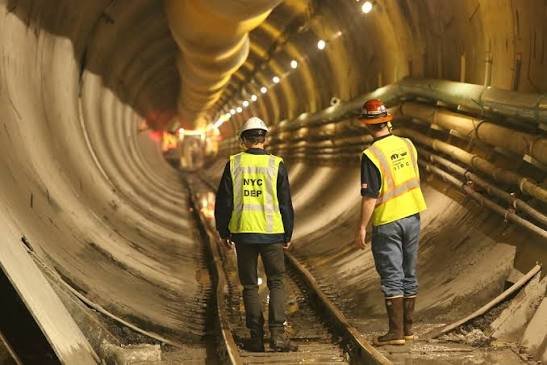
Cloud-based project management platforms have become the default for tracking budgets, submittals and RFIs across dispersed teams, while drones and LiDAR scanning are now routine for site surveying, progress monitoring and as-built documentation.
Artificial intelligence is showing up throughout the construction technology stack, from AI-assisted design review to predictive maintenance on equipment fleets to jobsite safety monitoring via computer vision.
Robotics and 3D printing remain earlier-stage technologies in the U.S. market, deployed selectively for repetitive tasks like rebar tying, layout and bricklaying, while wearables and connected personal protective equipment are gaining traction as firms look for new ways to protect an aging, harder-to-replace workforce.
What Are the Biggest Challenges Facing US Construction?
Despite strong pockets of demand, contractors face a difficult operating environment in 2026.
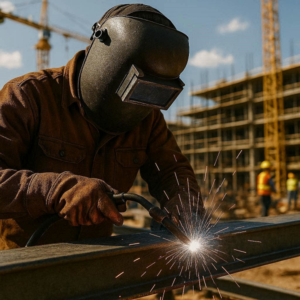
Construction input prices rose 4.8% year-over-year as of March 2026, the largest annual increase since January 2023, according to Associated Builders and Contractors’ analysis of producer price data, driven substantially by tariff-related cost increases on steel, aluminum and other imported materials.
Interest rates, while off their post-pandemic peaks, remain high enough to keep single-family housing and some commercial financing constrained.
Labor shortages, detailed above, remain the single most cited operational challenge, with AGC and NCCER’s workforce survey finding that workforce shortages are now the leading cause of project delays, cited by 45% of contractors.
Permitting timelines and environmental review processes continue to slow infrastructure and energy projects, and supply chain disruptions, while less severe than during the pandemic, still periodically affect the availability of transformers, specialized mechanical equipment and other long-lead items critical to data center and industrial construction.
What Is the Outlook for the US Construction Industry?
Most major forecasters expect 2027 to bring a modest reacceleration rather than a dramatic boom.
NAHB projects single-family starts climbing toward 984,000 units in 2027 as mortgage rates are expected to finally settle more consistently below 6%, while Dodge Construction Network’s sector-by-sector modeling points to continued strength in data centers, healthcare and water infrastructure, alongside a slow, uneven recovery in office and traditional retail construction.
The semiconductor buildout should also reach a new phase in 2027, with several TSMC, Intel and Texas Instruments fabs transitioning from construction to production, freeing up specialized labor and equipment for the next wave of projects even as new fabs break ground behind them.
The biggest swing factor remains the AI data center cycle: if hyperscaler capital spending stays on its current trajectory, data centers could continue to be the single largest driver of non-residential construction growth into 2027 and beyond; any slowdown in AI infrastructure investment would remove the market’s primary source of momentum at a moment when housing and traditional commercial construction are still finding their footing.
The U.S. construction industry is no longer defined solely by roads, bridges, and housing. The rapid expansion of artificial intelligence infrastructure, semiconductor manufacturing, clean energy, and digital technologies is reshaping where capital flows and how projects are delivered.
Contractors that invest in automation, skilled labor, and connected equipment will be best positioned to capitalize on the next decade of growth.
Editor’s Insight
Traditional office construction is slowing, while AI infrastructure has emerged as one of America’s fastest-growing construction segments. Surging investment in hyperscale data centers is reshaping the industry, driving demand for specialized contractors, advanced cooling systems, high-capacity power infrastructure, and mission-critical building expertise.
Frequently Asked Questions
- How big is the U.S. construction industry in 2026?
Total U.S. construction spending is running at a seasonally adjusted annual rate of roughly $2.2 trillion in 2026, according to the U.S. Census Bureau’s Value of Construction Put in Place survey.
- What is driving growth in U.S. construction spending?
The biggest growth drivers are AI-related data center construction, semiconductor fab investment under the CHIPS and Science Act, ongoing Infrastructure Investment and Jobs Act funding, and manufacturing reshoring, even as housing and office construction remain comparatively soft.
- Is the U.S. housing market growing or shrinking in 2026?
It is mixed. NAHB projects single-family starts rising only modestly to around 940,000 units in 2026, while multifamily starts are expected to decline after a strong 2025, as elevated mortgage rates keep many buyers on the sidelines.
- How much is being spent on data center construction in the U.S.?
Data center construction spending reached about $41 billion in 2025, up 32% from 2024 and nearly four times the $9.9 billion spent in 2021, according to Census Bureau figures cited by Reuters and Yahoo Finance.
- What are the biggest active construction projects in the U.S.?
Major projects include TSMC’s $165 billion-plus Arizona semiconductor campus, the Hudson Tunnel Project between New Jersey and New York, the $4.4 billion Brent Spence Bridge Corridor, and California’s Central Valley High-Speed Rail segment.
- How severe is the construction labor shortage?
AGC estimates the industry needs about 499,000 additional workers in 2026, and more than 80% of contractors planning to hire report difficulty finding qualified staff, a shortage compounded by an aging workforce and tighter immigration enforcement.
- What equipment trends matter most for contractors in 2026?
Electrification, standardized telematics (AEMP 2.0), grade control moving into compact machines, and expanding autonomous haulage and excavation programs from Caterpillar, Komatsu and Volvo are the trends with the most immediate purchasing impact.
- Which U.S. states are leading construction activity in 2026?
Arizona and Texas lead on semiconductor and data center investment, Virginia dominates data center construction specifically, Ohio is anchored by the Intel campus and Brent Spence Bridge project, and Georgia, North Carolina and Tennessee lead in automotive and battery manufacturing.
- Why are construction material costs still rising in 2026?
Construction input prices rose 4.8% year-over-year as of March 2026, the largest increase since January 2023, driven largely by tariffs on imported steel, aluminum and other materials, according to Associated Builders and Contractors.
- What is the construction industry outlook for 2027?
Most forecasters expect a modest reacceleration, with single-family housing improving as mortgage rates ease, several major semiconductor fabs shifting from construction to production, and data center construction remaining the primary growth engine if AI infrastructure spending stays strong.
Also Read
- Three Sectors Driving Global Construction Growth in 2026
- Global Construction Industry on Track to Hit $22 Trillion by 2030
- Caterpillar’s $100 Million Workforce Bet Targets the Skills Crisis Squeezing Construction
- US Warehouse Construction Bottoms Out

- SODECA Highlights Industrial Ventilation Technology at Mega Clima Expo Kenya 2026 - October 14, 2026
- How They Were Built: Inside the Engineering of the Lesotho Highlands Water Project - October 11, 2026
- Africa’s Water Reuse Opportunity: Building the Infrastructure for a Water-Secure Future - September 28, 2026