

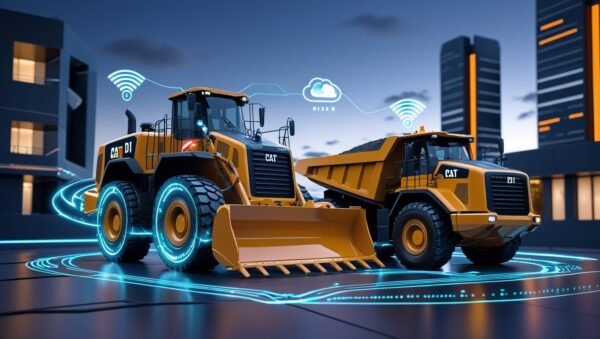
In the popular imagination, Caterpillar is still the symbol of brute industrial force: the rumble of yellow bulldozers on construction sites, the growl of mining trucks moving mountains of earth.
But behind that rugged image, the $100-billion giant has been undergoing a transformation few outside the industry have noticed.
Today, Caterpillar is not just a machinery manufacturer—it’s a technology company, wielding data, artificial intelligence, autonomy, and electrification in ways that quietly position it as a key player in the global tech ecosystem.
From Steel and Diesel to Data and AI
Caterpillar’s shift began with a simple realization: its machines weren’t just moving dirt—they were generating data.
Every engine vibration, hydraulic pump cycle, and fuel burn rate contained information about efficiency, performance, and risk of failure. Instead of leaving that value untapped, Caterpillar built a digital empire around it.
The company’s Helios cloud platform now connects more than 1.5 million assets worldwide, capturing over 50 billion data points per month.
Through tools like VisionLink and Cat Inspect, Caterpillar can remotely monitor machine health, predict failures, and schedule repairs before downtime strikes.
For customers, this means productivity gains of 20–30% and maintenance costs slashed by half.
For Caterpillar, it means a lucrative services stream expected to hit $28 billion by 2026—a number that rivals the revenue of many pure tech firms.
Autonomy: Turning Iron into “Smart Iron”
Mining and construction are industries plagued by safety risks and inefficiency. Caterpillar saw an opening. Its MineStar suite, powered by AI and autonomy, enables trucks to drive themselves, shovels to dig with precision, and fleets to operate as seamlessly as logistics networks.
Partnerships with LiDAR innovators like Luminar have pushed Caterpillar’s equipment closer to full autonomy.
The integration of advanced sensors allows bulldozers and excavators to “see” their environments much like self-driving cars.
In effect, Caterpillar is building the backbone of autonomous industrial operations—quietly competing in the same space as Silicon Valley’s robotics startups, but with real-world scale and decades of operational know-how.
The AI Gold Rush and Caterpillar’s Role
The rise of artificial intelligence has created an energy crisis of sorts: data centers require immense power to function.
Here, Caterpillar’s generators and backup power systems have become essential infrastructure for AI’s explosive growth.
With engine capacities ranging from 1,000 to 6,000 horsepower, Caterpillar’s energy and transportation unit recorded $28 billion in 2024 sales—almost half of the company’s machinery revenue.
In other words, while companies like NVIDIA design the chips that power AI, Caterpillar ensures the lights stay on.
It has become a hidden but critical enabler of the AI economy, positioning itself as the equivalent of a “picks and shovels” supplier during the gold rush—except this time, the gold is data.
Sustainability and the Future of Heavy-Tech
Beyond digital and AI, Caterpillar is also reinventing itself for a low-carbon world. Its R1700 XE battery-powered loader has redefined underground mining, reducing the need for ventilation and slashing emissions.
The company’s Dynamic Energy Transfer system, tested with BHP in Chile, allows mining trucks to recharge while driving—a breakthrough in electrified heavy transport.
Partnerships with recyclers like Redwood Materials close the loop on battery life, ensuring sustainability is embedded into the business model rather than tacked on as an afterthought.
Why Caterpillar’s Tech Transformation Matters
Caterpillar’s metamorphosis is more than a corporate makeover. It signals a broader shift: the world’s most traditional “iron and diesel” industries are digitizing at scale.
While flashy Silicon Valley startups make headlines, companies like Caterpillar are proving that industrial tech is the next frontier of innovation.
With AI-driven services, autonomous fleets, critical infrastructure for data centers, and sustainable machinery, Caterpillar now operates at the intersection of industry, technology, and climate solutions.
The transformation is quiet, but it’s profound—turning a century-old machinery icon into a tech powerhouse shaping the future of work, energy, and global infrastructure.
Also Read
Top Auction Platforms for Used Construction Equipment
Top 5 Trends in Construction Equipment Sales in the GCC (2025)

- SODECA Highlights Industrial Ventilation Technology at Mega Clima Expo Kenya 2026 - October 14, 2026
- How They Were Built: Inside the Engineering of the Lesotho Highlands Water Project - October 11, 2026
- Africa’s Water Reuse Opportunity: Building the Infrastructure for a Water-Secure Future - September 28, 2026