

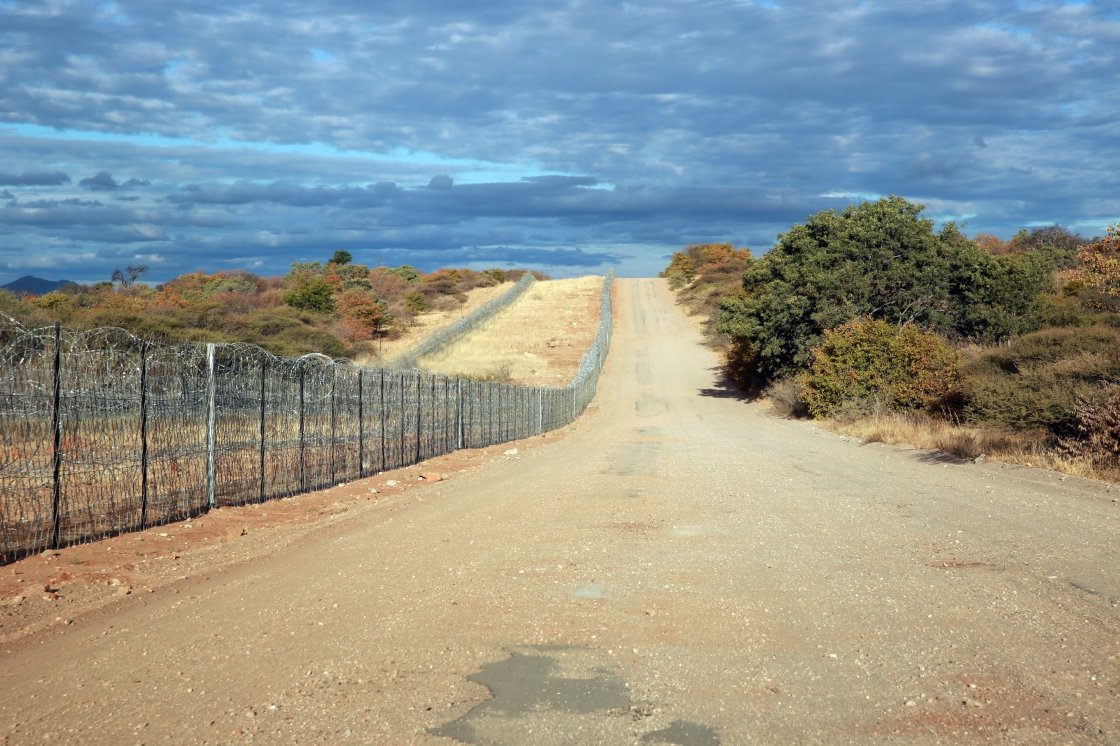
South Africa’s apex court has delivered its final word on one of the country’s most notorious COVID-19 procurement scandals — the collapse of a R40 million razor mesh fence along the Beit Bridge border with Zimbabwe that fell apart almost as soon as it was built.
The Constitutional Court this week dismissed applications for leave to appeal by two construction contractors, Profteam CC and Caledon River Properties (trading as Magwa Construction), ruling that their applications “did not engage the court’s jurisdiction.”
The decision ends years of protracted litigation and leaves the companies with no further legal avenues to pursue.
The R40.4 million contract was awarded by the Department of Public Works and Infrastructure in March 2020 — at the height of the COVID-19 National State of Disaster — to construct a 40-kilometre razor mesh fence separating South Africa from Zimbabwe.
The contract was issued without a competitive bidding process, in direct violation of Section 217 of the Constitution, which requires all public procurement to be fair, equitable, transparent, competitive and cost-effective.
The contractors received advance payments of approximately R21.8 million before substantial work was even completed.
When the fence was finally built, it began falling apart almost immediately. Illegal border crossings, which the structure was meant to deter, continued unabated — leaving taxpayers with nothing to show for the tens of millions spent.
The Special Investigation Unit (SIU), mandated by President Cyril Ramaphosa through Proclamation R.23 of 2020 to probe COVID-era procurement, uncovered the irregularities.
In March 2022, the Special Tribunal declared the contracts invalid and ordered the contractors to be stripped of all profits.
Tribunal Judge Lebogang Modiba found that the state and the public had been deprived of the economic and social benefits that should have flowed from a functional border installation.
The contractors fought back through every available court. The High Court dismissed their initial appeal in December 2023.
The Supreme Court of Appeal refused special leave to appeal in April 2024, and further dismissed a reconsideration application in January 2026. The Constitutional Court’s ruling this week is the final nail in the coffin for their legal campaign.
“The SIU welcomes the Constitutional Court’s refusal of leave to appeal as a final affirmation of accountability in this matter,” the unit said in a statement.
“These judgments reinforce the principle that no party may profit from irregular and unlawful procurement, and they vindicate the SIU’s mandate to protect public resources.”
The SIU confirmed that contractors are entitled only to reimbursement of reasonable and proven expenses — subject to audited accounts — and not to retain any profits derived from the unlawful agreements.
The unit added that evidence of criminal conduct uncovered during the investigation will be referred to the National Prosecuting Authority (NPA) for further action, and that civil proceedings to recover the state’s full financial losses remain an option.
The Beit Bridge fence saga has become a defining symbol of procurement failure during South Africa’s COVID-19 emergency period — a cautionary tale about what happens when oversight is suspended in the name of urgency.
For the construction and infrastructure sector, the case delivers a clear message: courts will not shield contractors who benefit from constitutionally invalid state deals, no matter how long they fight.
Also Read
Lesotho’s R2.4bn Senqu Bridge Opens
Mulilo pledges nearly R15bn for new renewable energy projects in South Africa

- SODECA Highlights Industrial Ventilation Technology at Mega Clima Expo Kenya 2026 - October 14, 2026
- How They Were Built: Inside the Engineering of the Lesotho Highlands Water Project - October 11, 2026
- Africa’s Water Reuse Opportunity: Building the Infrastructure for a Water-Secure Future - September 28, 2026