

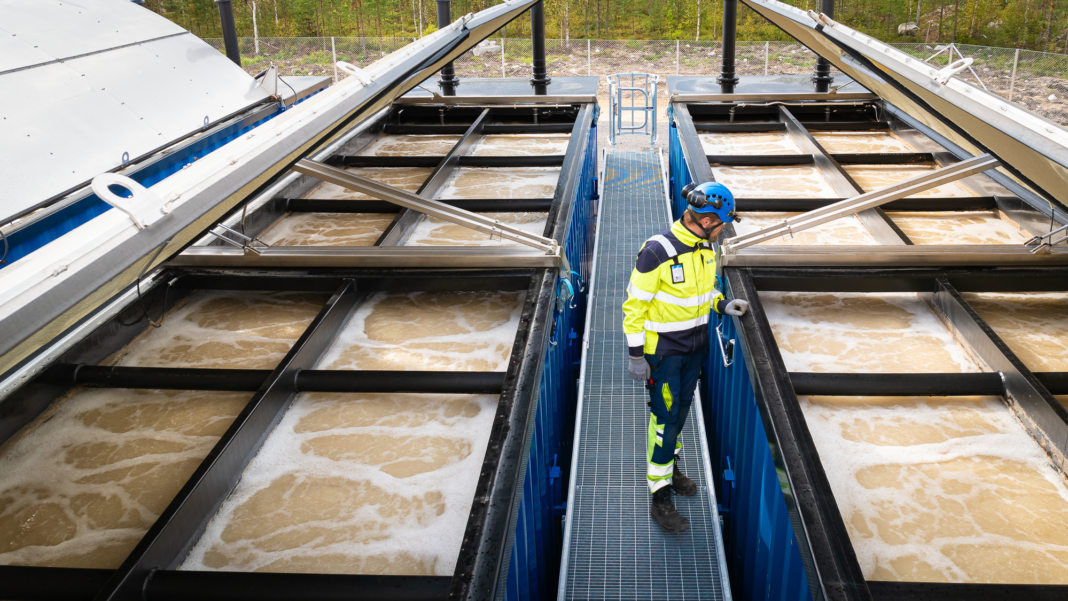
Africa’s growing water pressures are changing the way wastewater is viewed. What was once largely considered a waste stream is increasingly being recognised as a potential source of water for agriculture, industry, municipalities and other applications.
For Paul Gueran, Global Segment Lead for Industrial Water and Wastewater Treatment at Sulzer, the starting point is straightforward: “Wastewater is also a potential water resource.”
But turning that resource into a reliable source of supply requires more than installing advanced treatment equipment. It requires wastewater infrastructure to be designed and operated as an integrated system.
The quality of reclaimed water required also depends entirely on where it will be used. Irrigation, industrial cooling, process water and potable applications have very different treatment requirements.
Successful reuse projects therefore need to begin with the intended end use rather than with a predetermined technology.
From Wastewater to Water Resource
Water reuse can reduce pressure on freshwater supplies while also limiting the environmental impact of wastewater discharges.
For industries operating in water-stressed regions, it can provide greater resilience and reduce dependence on increasingly constrained freshwater sources.
However, Gueran cautions against treating reuse as a standalone solution to Africa’s water challenges. It needs to sit alongside demand management, leakage reduction, catchment protection and improved sanitation.
The appropriate solution will also differ considerably between a major metropolitan wastewater plant, a smaller municipal system and a remote industrial operation.
That makes the design philosophy particularly important.
Rather than automatically pursuing the most sophisticated treatment available, projects should establish what quality of water is actually required and then develop a treatment process capable of delivering that quality consistently.
As Gueran puts it, “The objective should be fit-for-purpose water, not maximum treatment complexity.”
That distinction has significant implications for capital cost, energy consumption, operational requirements and long-term reliability.
Technology Is Available — Reliability Is the Bigger Challenge
Modern wastewater treatment can combine biological treatment, clarification, filtration, membrane processes, reverse osmosis, activated carbon, oxidation and disinfection.
The technologies themselves are increasingly available. The harder question is whether the surrounding infrastructure can operate them reliably over the long term.
Gueran identifies a combination of challenges that can undermine technically sophisticated projects: unreliable operations, shortages of skilled personnel, inadequate maintenance funding, unstable energy supplies, regulatory uncertainty and limited access to finance.
There is another factor that can be overlooked when reuse projects are conceived: who will actually use the reclaimed water?
A treatment plant can produce high-quality recycled water, but if there is no reliable customer, distribution system or economic case for that water, the investment may struggle to deliver its intended value.
For this reason, Gueran argues that reuse projects need to be built around actual demand.
The question should not simply be how much wastewater can be treated, but where the resulting water will go, what quality is required and whether there is a viable economic case for using it.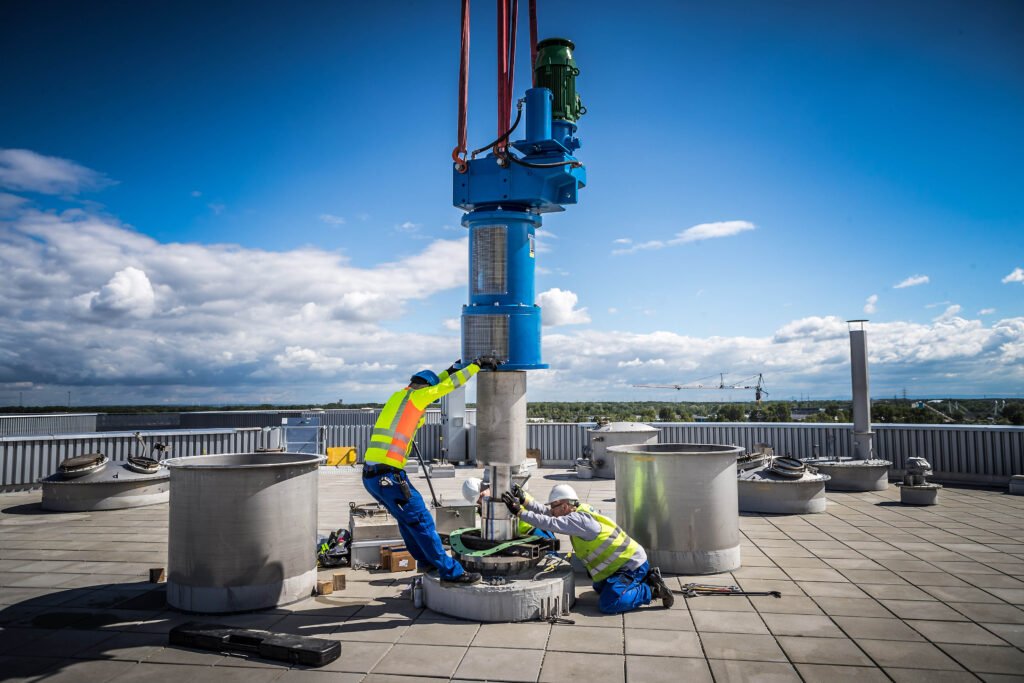
The Treatment Plant as One Process
One of the strongest themes in Sulzer’s perspective is the importance of integration.
A wastewater treatment plant should not be viewed simply as a series of separate products — pumps, screens, mixers, aeration equipment, clarifiers and filters — each performing an isolated function.
Instead, the systems need to work together as a single process. Screening protects downstream equipment. Pumping and equalisation influence hydraulic loading.
Mixing supports chemical and biological processes. Aeration supplies oxygen to biological treatment, while clarification and filtration prepare the water for subsequent treatment stages.
Poor interfaces between these processes can increase energy consumption, reduce reliability and create operational problems.
For Gueran, “The real opportunity is in treating the plant as one process rather than a collection of individual products.” That systems approach becomes particularly important when existing wastewater infrastructure is upgraded for reuse.
Africa Does Not Always Need New Treatment Plants
One of the significant opportunities may lie in existing wastewater infrastructure.
Rather than constructing completely new plants, some facilities can be rehabilitated by restoring existing tanks, buildings and process stages while upgrading mechanical equipment, controls, aeration systems and tertiary treatment.
But the sequence matters.
If the underlying biological treatment process is unstable, adding sophisticated polishing equipment further downstream may simply transfer the problem rather than solve it.
The priority should therefore be to establish a stable baseline treatment process before adding additional treatment stages required for reuse.
For older plants, this can create a more practical pathway towards water reuse while also improving the performance and energy efficiency of existing infrastructure.
Structural condition or capacity may nevertheless justify new infrastructure.
Energy Efficiency Must Be Designed Into Reuse
Water reuse can deliver significant resource benefits, but treatment itself consumes energy.
Sulzer points particularly to aeration as an area where major efficiency gains can be achieved.
Aeration can represent one of the largest electricity demands in wastewater treatment, making blower efficiency, diffuser condition, dissolved oxygen control and air distribution important components of overall plant performance.
Pumping also needs to be assessed as part of the wider system.
Correct pump selection, operating points, hydraulics and, where appropriate, variable-speed drives can help reduce unnecessary energy consumption while maintaining required process performance.
The key, however, is to measure the plant as a whole. Energy consumption needs to be considered alongside flow, pollutant loading and the volume of compliant water produced. Replacing one inefficient component may help, but whole-system optimisation can produce greater gains.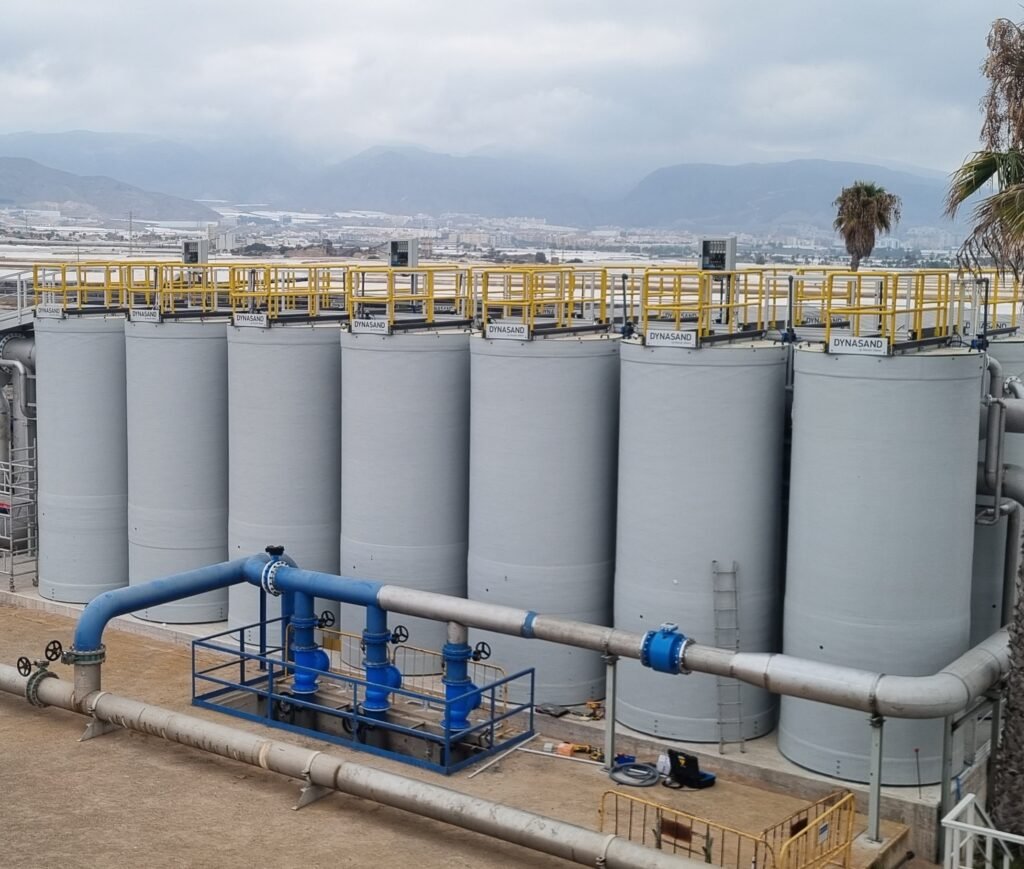
Digital Monitoring: Consistent Quality, Not Just Average Quality
Digitalisation is becoming increasingly important as wastewater moves towards reuse because reclaimed water must meet defined quality requirements consistently.
Monitoring systems can track parameters such as flow, pressure, energy consumption, dissolved oxygen, turbidity and conductivity.
Condition monitoring can also help identify developing equipment problems before they result in failures.
But technology alone cannot guarantee reliable operation.
As Gueran stresses, “Reuse is about consistent quality, not average quality.” That means instrumentation must be maintained, alarms must trigger an appropriate response and operators need the skills and authority to act on the information being generated.
This is particularly important in Africa, where treatment plants may operate under very different conditions.
The scale and risk profile of a large metropolitan wastewater facility may justify more sophisticated treatment.
Operating such a system reliably may require on-site testing and specialist operators to maintain the required water quality and meet applicable regulatory requirements.
A smaller municipality may require a simpler and more robust solution.
A remote industrial facility may need greater attention to power resilience, spare parts and the handling of sludge, concentrate and other residual streams.
There is therefore no single African model for water reuse.
Industrial Water Reuse Is a Major Opportunity
Industrial facilities are particularly well positioned to benefit from water reuse because many already have defined water-intensive processes.
Mining and minerals, food and beverage, pulp and paper, chemicals, refining, textiles and other manufacturing operations can potentially reuse treated water for process operations, cooling make-up, washing, rinsing and other non-potable requirements.
But even here, the concept of a completely closed-loop system needs to be treated carefully.
Most industrial water systems will still require some make-up water and will generate evaporation, blowdown or residual streams.
The goal is therefore not necessarily to eliminate freshwater consumption completely, but to reduce it while improving operational resilience.
Pumping and fluid handling remain important components, particularly where wastewater contains solids or other challenging materials.
Equipment must be selected for actual hydraulic duty and operating conditions rather than simply nominal flow and pressure requirements.
Lessons From Global Reuse Projects
International experience demonstrates that successful reuse depends on more than treatment technology.
Sulzer points to examples from Europe, the Middle East, Asia and Australia where clear end uses, defined water-quality requirements, accountable operators and customer or public confidence have helped support reuse programmes.
Africa also has important examples of its own. Windhoek in Namibia has operated potable water reclamation for decades, demonstrating that advanced treatment can become part of a city’s long-term water-supply strategy.
Elsewhere, reclaimed wastewater has been directed towards industrial users, demonstrating that water does not necessarily need to be treated to potable standards to create significant value.
Sulzer’s project experience also illustrates the range of applications.
At Egypt’s Al Mahsama project, designed to treat and reuse up to 1 million m³ of agricultural wastewater per day, Sulzer supplied pumping and mixing equipment, including VMS pumps for disc-filter installations, XFP pumps and Scaba agitators.
In Bahrain, Nordic Water, a Sulzer brand, supported a system designed to recycle 250,000 m³/day of wastewater for irrigation using DynaSand filtration and DynaDisc pre-filtration.
At an Ardo frozen-vegetable plant in Belgium, Sulzer’s OKI aerator-mixers and HST turbocompressor helped reduce power consumption in an upgraded biological basin by 35%, while addressing uneven oxygenation and sedimentation.
These projects demonstrate that wastewater treatment and water reuse can involve very different treatment challenges, but the underlying principle remains the same: the treatment system must be designed around the actual application and operating environment.
Building Confidence in Reclaimed Water
Public confidence will become increasingly important as reuse expands, particularly when treated water is considered for potable applications.
Potable reuse requires multiple treatment barriers, robust source control, monitoring, laboratory verification, operating procedures and independent oversight.
Technology therefore needs to be accompanied by transparency and clear communication. People also need to understand what happens if the required water quality is not achieved.
The same principle applies to industrial and agricultural reuse. Users need confidence that reclaimed water will meet the required quality consistently and that the treatment system will remain reliable over time.
This makes operational capability just as important as the equipment installed.
Global Segment Lead for Industrial Water and Wastewater Treatment, Sulzer
What Africa Needs Over the Next Decade
Looking ahead, Gueran sees a significant opportunity to improve existing wastewater assets while expanding the use of reclaimed water.
Three areas stand out.
First, existing wastewater infrastructure needs to be rehabilitated and made more energy efficient.
Many plants may be able to deliver significantly better performance through mechanical upgrades, improved controls, aeration optimisation and targeted tertiary treatment rather than complete replacement.
Second, reclaimed municipal water can be connected more deliberately to industrial demand.
Where industries require non-potable water, wastewater treatment plants can potentially become a dependable source of supply rather than simply a disposal point.
Third, industrial facilities can increase internal water reuse where there is a clear economic and operational case.
But all three require stronger coordination between technology providers, water utilities, industrial customers, regulators and financiers.
Investment must also fund instrumentation, laboratories, operator skill, maintenance and service capability throughout the assets’ lifetime.
The most successful projects are likely to be those where water quality, volumes, responsibilities and economics are established before the treatment technology is selected.
From Treatment Plants to Circular Water Systems
Africa’s water-reuse opportunity is ultimately bigger than wastewater treatment alone.
It is about creating a more circular approach to water in which wastewater is treated as a resource, existing infrastructure is used more effectively, energy consumption is managed, and reclaimed water is matched to applications that genuinely need it.
For Sulzer, the path forward begins with three priorities: clear and enforceable rules for each reuse application; properly funded, dependable wastewater operations supported by maintenance, energy management and skilled operators; and reuse projects built around real demand.
In Gueran’s view, the next phase of Africa’s water-reuse development will therefore depend less on whether the technology exists and more on whether the different parts of the system can be brought together.
The technology is already available. The greater opportunity is to connect it to reliable infrastructure, capable operators, appropriate regulation and a real customer for the water being produced.
That is what can turn water reuse from an isolated treatment project into a meaningful component of Africa’s long-term water-security strategy.
About Sulzer
Sulzer is a global leader in critical applications for core infrastructure and processes serving essential industries worldwide.
Headquartered in Winterthur, Switzerland, since 1834, the company supports energy security, natural resource management and efficiency across process industries, with solutions focused on energy efficiency, emissions and pollution reduction and the transition towards a circular economy.
In 2025, Sulzer employed approximately 13,500 people and generated revenues of CHF 3.6 billion through a global network of manufacturing facilities and service centres. Its shares are traded on the SIX Swiss Exchange under the symbol SIX: SUN.
Expert: Paul Gueran, Global Segment Lead for Industrial Water and Wastewater Treatment, Sulzer.
Also Read
- Africa’s Water Reuse Challenge: Why Scaling Matters More Than Technology
- South Africa Has R395 Billion in Infrastructure Projects — But Can the Industry Deliver Them?
- U.S. Construction Prices Jump 2.2% in July as Building Costs Accelerate

- Africa’s Water Reuse Opportunity: Why Treatment Plants Must Be Designed as Complete Systems - September 22, 2026
- From Operator to Algorithm: Bedrock Puts Autonomous Excavators to Work on Live Construction Sites - September 7, 2026
- Built For The Rough Stuff: Inside Titan’s new ForestEDGE™ Tyre Line - September 4, 2026
