

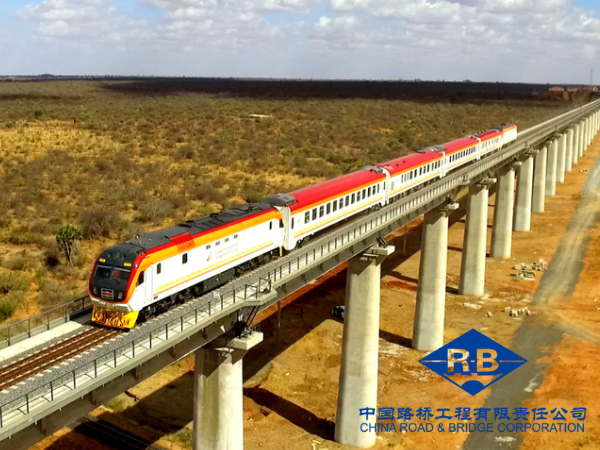
Africa’s infrastructure landscape has been transformed by Chinese construction giants over the past two decades.
From the towering skyline of Egypt’s New Administrative Capital to the iron rails of Kenya’s Standard Gauge Railway and the humming turbines of Uganda’s Karuma Dam, the fingerprints of Chinese engineering are visible across the continent’s most ambitious projects.
In 2024, the gross annual revenues of Chinese companies from engineering and construction projects in Africa totalled US$40 billion, representing 24% of these companies’ global revenues.
The top five African recipient countries — Algeria (US$5.3 billion), Nigeria (US$3.4 billion), Egypt (US$3.3 billion), Guinea (US$3.0 billion), and the Democratic Republic of the Congo (US$2.7 billion) — together accounted for 44% of all revenues from Chinese contracted projects on the continent.
What is especially remarkable is that Chinese companies continue to thrive even as Chinese state lending has sharply contracted.
Between 2000 and 2019, Chinese funders committed nearly US$50 billion to African transport projects alone.
Since 2019, however, that figure has fallen to just US$6 billion — yet the companies themselves have adapted, building trust-based networks with governments, multinationals, and local partners.
Today, they compete on merit, win tenders against Western and Turkish rivals, and operate as market leaders in Ethiopia, Ghana, Kenya, Nigeria, and beyond.
This report profiles the seven most influential Chinese construction companies currently operating in Africa, examining their major projects, strategic strengths, and lasting footprint on the continent.
1. China Communications Construction Company (CCCC) / China Road and Bridge Corporation (CRBC)
Africa’s Largest International Contractor
China Communications Construction Company Limited (CCCC) is arguably the single most consequential construction group on the African continent. Formed in December 2005 through the merger of China Harbour Engineering Company (CHEC) and China Road and Bridge Corporation (CRBC), CCCC has since become the largest international contractor operating in Africa. It has invested in and constructed over 1,600 infrastructure projects across the continent, spanning more than 7,000 kilometres of roads, over 100 bridges, 80 major ports, and more than 30 water and hydroelectric projects.
Major Projects in Africa
- Mombasa–Nairobi Standard Gauge Railway (Kenya) — A US$3.6 billion, 472 km railway built by CRBC and financed largely by China Exim Bank. It is Kenya’s largest infrastructure project since independence, and the first phase of an intended corridor stretching to Uganda.
- Nairobi–Naivasha Railway Extension (Kenya) — An extension of the SGR westward to Naivasha, completed in October 2019, bringing the total SGR length to approximately 578.8 km.
- Nigeria’s Lekki Deep Sea Port (Nigeria) — A landmark port project developed in Lagos State, designed to relieve congestion at Apapa Port and transform Nigeria’s maritime trade capacity.
- Addis Ababa–Adama Highway (Ethiopia) — One of CCCC’s most prominent Ethiopian investments, this highway was the first expressway built in Ethiopia, reshaping logistics in the Horn of Africa.
- Maputo–Katembe Bridge (Mozambique) — Sub-Saharan Africa’s longest suspension bridge at 2.8 km, connecting Maputo city to the Katembe peninsula.
- Tema Port Expansion (Ghana) — CCCC’s subsidiary CHEC is involved in expanding Ghana’s principal commercial port, deepening its presence in West Africa.
- Kigali Urban Road Upgrading Project (Rwanda) — CRBC has constructed approximately 70% of Rwanda’s asphalt roads since 1974, reshaping the capital’s urban mobility.
- Lamu Port — LAPSSET Corridor (Kenya) — CRBC was contracted to build new berths at Lamu, a key node in the ambitious Lamu Port–South Sudan–Ethiopia Transport (LAPSSET) corridor.
Why It Stands Out
CCCC’s enduring dominance in Africa stems from decades of market embeddedness. In Kenya alone, CRBC opened its Nairobi headquarters in 1984 — long before the SGR era — slowly building institutional credibility with government ministries and anticipating infrastructure needs before tenders were issued. This relationship-driven strategy, combined with CCCC’s sheer technical breadth across ports, rail, roads, and bridges, makes it uniquely positioned across sub-Saharan and North Africa.
2. China State Construction Engineering Corporation (CSCEC)
World’s Largest Contractor — Now Shaping Africa’s Urban Skylines
China State Construction Engineering Corporation (CSCEC) is the world’s largest construction firm by revenue, ranking 14th on the Fortune Global 500 as of 2024 with reported revenues exceeding approximately US$300 billion.
Founded in 1957 and headquartered in Beijing, it employs over 360,000 staff across nearly 100 countries.
While its African footprint was initially smaller than CCCC’s, CSCEC has made spectacular inroads in Egypt, South Africa, Côte d’Ivoire, and the Republic of Congo, and is now forming a strategic alliance with Egypt’s Arab Contractors to expand project reach across the entire continent.
Major Projects in Africa
- Egypt New Administrative Capital — Central Business District (Egypt) — CSCEC is the main contractor for the US$3.8 billion CBD megaproject, delivering 10 office towers, five residential skyscrapers, four hotels, and the 385.8-metre Iconic Tower — the tallest building in Africa. In June 2025, CSCEC also signed a landmark agreement to operate and maintain the CBD going forward.
- Abidjan Ring Road — Section 3, Y4 (Côte d’Ivoire) — CSCEC completed Section 3 of the critical Abidjan ring road in 2024–2025, improving urban traffic flow in one of West Africa’s busiest cities.
- EB Cloete Interchange Upgrade (South Africa) — As CSCEC’s first public infrastructure contract in South Africa, this project widens and upgrades the key Durban interchange connecting the N2 and N3 highways, expanding it from 8 lanes to 12–14 lanes and building seven new overpasses.
- 1 National Highway — Republic of Congo (Congo-Brazzaville) — A 535-kilometre highway described as the best-quality road built in Congo, and the largest-ever cooperation project between China and the Republic of Congo.
- Mahalapye Water Treatment Plant (Botswana) — CSCEC doubled the plant’s daily water purification capacity from 16,000 to 34,000 cubic metres, dramatically improving water supply in central Botswana.
- Zambia Road Upgrade (Zambia) — A 103-kilometre road upgrade completed in phases through 2024, enhancing rural connectivity and local employment.
- COMESA Headquarters (East Africa) — CSCEC signed a framework agreement to build the regional COMESA headquarters, expanding its institutional construction presence in East Africa.
- Nairobi Pinnacle Towers (Kenya) — CSCEC won a rigorous international tender against European, Turkish, and other Chinese rivals to build the twin Pinnacle Towers in Nairobi’s CBD, with the taller reaching 320 metres.
Why It Stands Out
CSCEC’s pivot to Africa is both commercial and strategic. Its 2025 decision to operate and maintain Egypt’s CBD — moving beyond pure construction into long-term asset management — signals a deeper integration model that could redefine how Chinese firms embed themselves in African economies.
Its growing presence in South Africa, where local construction firms have retreated, positions it for a series of large-scale public infrastructure awards in the years ahead.
3. China Railway Construction Corporation (CRCC)
The Backbone of Africa’s Rail Corridors
China Railway Construction Corporation Limited (CRCC), headquartered in Beijing and tracing its heritage to China’s People’s Liberation Army Railway Engineering Corps, is one of the world’s most powerful construction conglomerates.
With business operations in over 130 countries and total investments of approximately US$83 billion globally between 2005 and 2022, CRCC has invested heavily across Africa’s rail, road, housing, and energy sectors.
Its subsidiary China Civil Engineering Construction Corporation (CCECC) has been particularly active across sub-Saharan Africa, while CRCC’s broader network has reshaped Nigeria’s transport backbone.
Major Projects in Africa
- Addis Ababa–Djibouti Standard Gauge Railway (Ethiopia/Djibouti) — A US$4.5 billion, 752-kilometre electrified railway — the first modern electrified transnational railway in East Africa — built by a joint CCECC and China Railway Engineering Corporation consortium. The railway was handed over to the Ethiopia-Djibouti Railway Share Company in 2024 after six years of Chinese operation, during which 2,840 local workers were trained.
- Lagos–Ibadan Railway (Nigeria) — Built by CCECC and financed by China Exim Bank, this 157-kilometre double-track standard gauge railway is the first modern standard gauge double-track line in West Africa and the longest on the continent at the time of opening. It links Lagos, Africa’s largest city, with Ibadan at a design speed of 150 km/h.
- Abuja–Kaduna Railway (Nigeria) — A key intercity rail corridor connecting Nigeria’s capital to the commercial hub of Kaduna.
- Nigerian Eastern Railway Rehabilitation (Nigeria) — A US$3.02 billion contract for the rehabilitation and reconstruction of the railway from Port Harcourt to Maiduguri.
- Algeria East–West Expressway (Algeria) — One of Africa’s largest road infrastructure investments, CRCC completed both the middle and western segments of this major trans-Maghreb highway.
- Benguela Railway (Angola) — CRCC rehabilitated and delivered the historic Benguela Railway, restoring a critical trade corridor across Angola to the DRC border.
- Dapilon–Santou Railway (Guinea) — Completed and opened to traffic, this railway supports Guinea’s extractive sector exports.
- Badagry Expressway — Iyana Iba Overpass (Nigeria) — CCECC is delivering this critical Lagos expressway project, a key component of Nigeria’s West African transit network.
Why It Stands Out
CRCC’s approach in Africa involves more than laying tracks. In Mozambique, its subsidiary CR20G has operated China’s largest rice planting project in Africa for over four years, providing agricultural technology and modern machinery to local farmers.
This multi-sector presence — from railways to agribusiness — makes CRCC a uniquely integrated Chinese actor on the continent.
4. China Railway Group Limited (CREC / China Railway Engineering Corporation)
Engineering Precision Across Transport and Urban Infrastructure
China Railway Group Limited (CREC), headquartered in Beijing, is one of China’s largest state-owned construction enterprises with diversified operations spanning engineering design, construction, equipment manufacturing, real estate development, and resource exploration.
CREC’s roots go back to 1950 under the Ministry of Railways. It played a co-lead role in building the Addis Ababa–Djibouti Railway alongside CRCC’s subsidiary, and has since expanded its African footprint through urban infrastructure, road construction, and industrial projects.
Major Projects in Africa
- Addis Ababa–Djibouti Railway (Ethiopia/Djibouti) — Co-builder of the US$4.5 billion electrified transnational railway alongside CCECC. CREC handled key sections of this landmark project.
- Addis Ababa Light Rail Transit (Ethiopia) — CREC constructed Addis Ababa’s city-wide light rail system, the first urban light rail network in sub-Saharan Africa, which has transformed daily commuting in the Ethiopian capital.
- Roads and Urban Infrastructure (Multiple Countries) — CREC has delivered urban road projects, industrial parks, and buildings across multiple African nations, leveraging its full EPC capability.
- New Administrative Capital — Supporting Works (Egypt) — CREC has been involved in associated infrastructure works connected to Egypt’s massive capital relocation project.
- Railway Projects in East and West Africa — CREC continues to pursue rail tenders as African governments invest in expanding internal connectivity.
Why It Stands Out
CREC occupies a quieter but strategically vital niche: urban transport systems. Its construction of Addis Ababa’s light rail — Africa’s first — was a defining moment for Chinese construction in urban Africa and established CREC as a go-to partner for city-scale transit infrastructure on the continent.
5. PowerChina (China Power Construction Corporation / Sinohydro)
Powering the Continent — Hydropower, Wind, and Solar
PowerChina, the brand name of China Power Construction Corporation, was formed through the merger of Sinohydro and HydroChina Corporation.
It is the world’s largest hydropower engineering and construction group, with a global market share estimated at approximately 50% in international hydropower construction.
Across Africa, PowerChina/Sinohydro has built more dams, power plants, and transmission lines than any other single contractor — reshaping the energy supply of dozens of countries.
Major Projects in Africa
- Karuma Hydropower Project, 600 MW (Uganda) — Built by Sinohydro at a cost of US$1.7 billion, largely financed by China Exim Bank, the Karuma project raised Uganda’s national power generation capacity to 2,000 MW upon full commissioning.
- Bui Dam, 400 MW (Ghana) — Sinohydro constructed and operated this major roller-compacted concrete gravity dam under an EPC turnkey contract, bringing 400 MW to Ghana’s northern grid when commissioned in 2013.
- Soubre Hydroelectric Power Plant (Côte d’Ivoire) — Completed in 2017, this project significantly boosted Côte d’Ivoire’s installed hydropower capacity.
- Gribo-Popoli Hydroelectric Power Plant (Côte d’Ivoire) — All three generating units came online by November 2024, adding further hydropower capacity to the Sassandra River cascade in Côte d’Ivoire.
- Adama Wind Power Project (Ethiopia) — Built by HydroChina (a PowerChina subsidiary) and financed by China Exim Bank at a total cost of approximately US$460 million, the Adama wind farm has been a landmark in Ethiopia’s renewable energy push.
- Kafue Gorge Lower Hydropower Project (Zambia) — PowerChina developed this major hydropower station on the Kafue River, strengthening Zambia’s electricity supply.
- Busanga Hydropower Project, 240 MW (DRC) — PowerChina Resources is developing this BOT project in the Democratic Republic of Congo.
- Ethiopia–Kenya Power Interconnection Line — Supporting Chinese-built transmission infrastructure linking the two countries’ grids.
Why It Stands Out
PowerChina’s dominance in African energy is built on a combination of competitive pricing enabled by Chinese state financing, advanced dam-building expertise, and decades of experience in difficult terrain.
As Africa’s energy transition accelerates, PowerChina is also pivoting into wind and solar, positioning itself at the forefront of the continent’s clean energy build-out.
6. China Gezhouba Group Corporation (CGGC)
From Hydropower to Mining Infrastructure — A Diversified Giant
China Gezhouba Group Corporation (CGGC) is a member of China Energy Engineering Group Co., Ltd. and one of the most prolific dam builders on the African continent.
CGGC is active across Angola, Ethiopia, the DRC, Tanzania, Guinea, and Kenya, where it has won competitive tenders against both Chinese and international rivals. Its activities span hydropower, road construction, water infrastructure, and airport development.
Major Projects in Africa
- Caculo Cabaça Hydropower Plant, 2,172 MW (Angola) — The most powerful Chinese-built dam currently under construction in Africa, the Caculo Cabaça plant is expected to be commissioned in 2026 and will significantly transform Angola’s power landscape.
- Luachimo Hydropower Station Upgrade (Angola) — CGGC led the US$212 million modernisation and expansion of the Luachimo station from 8.8 MW to 34 MW, commissioned in May 2024.
- Genale Dawa III Hydropower Project, 254 MW (Ethiopia) — Built at approximately US$450 million, CGGC served as EPC contractor for this plant in southeastern Ethiopia.
- Finchaa Amerti Neshe Hydropower Project (Ethiopia) — CGGC served as EPC contractor for this project, which forms part of Ethiopia’s Abay River power development.
- Rumakali Hydropower Project (Tanzania) — CGGC was contracted by Tanzania’s national power company TANESCO for this major hydro project on the Ruvuma River.
- Souapiti Hydroelectric Project (Guinea) — A major hydropower project in Guinea forming part of CGGC and CCCC’s footprint in West Africa’s energy sector.
- Major Dam Construction Bids in Kenya — CGGC contested the award of Kenya’s multimillion-dollar dam tender, demonstrating its active pipeline for new East African infrastructure contracts.
- Airport and General Infrastructure (Multiple Countries) — CGGC is involved in airport projects and general civil works across multiple African nations.
Why It Stands Out
CGGC is notable for its willingness to take on technically demanding projects in difficult environments — from Angola’s remote river basins to Ethiopia’s highlands.
The Caculo Cabaça project, with its 2,172 MW capacity, will upon completion stand as one of the largest Chinese-built power infrastructure investments in sub-Saharan Africa, and a defining benchmark for Chinese engineering on the continent.
7. China Harbour Engineering Company (CHEC)
The Port Master of Africa
China Harbour Engineering Company (CHEC) is a subsidiary of CCCC and one of the world’s foremost port design, construction, and marine engineering specialists.
Across Africa, CHEC has built or expanded a remarkable array of ports, harbours, and coastal infrastructure, and has earned a reputation for entering new African markets through government-to-government financing frameworks before diversifying into commercially tendered projects. Its work in Ghana’s Tema Port expansion typifies this strategy.
Major Projects in Africa
- Tema Port Expansion (Ghana) — CHEC entered Ghana’s market through a Chinese-financed port agreement in the 2010s and has since been integral to the expansion of Tema Port, Ghana’s principal commercial harbour and one of the busiest in West Africa.
- Kribi Deep Water Port — Container Terminal (Cameroon) — In July 2017, CHEC was part of the consortium — alongside France’s Bolloré and CMA CGM — awarded a landmark 25-year concession for the operation of the Kribi deepwater container terminal, one of the most significant port concessions in Central Africa.
- Lamu Port Development (Kenya) — CHEC has been involved in port infrastructure at Lamu, a key component of the LAPSSET corridor.
- Djibouti Port and Maritime Works — Supporting marine infrastructure in Djibouti, the region’s principal gateway port.
- West African Maritime Infrastructure — CHEC leveraged its regional networks built through the Ghana project to pursue and win additional port and coastal works across West Africa during gaps in Chinese-financed projects.
- 19 Berth, Mombasa Port (Kenya) — The first new port berth project in Kenya since 1984, built by CRBC/CHEC at the nation’s primary port.
- New Oil Terminal, Mombasa Port (Kenya) — CHEC/CRBC won the US$398 million contract in 2018 to raise Mombasa’s oil handling capacity from 20,000 to 100,000 dead weight tonnes, enabling the port to accommodate four ships simultaneously.
Why It Stands Out
CHEC’s trajectory in Africa underscores a broader lesson about Chinese construction companies: state-backed entry provides a launchpad, but long-term success depends on forming genuine partnerships with international operators and African governments.
Its involvement in the Kribi container terminal alongside Western shipping majors represents a new generation of Chinese port involvement — one defined less by bilateral finance and more by multi-stakeholder commercial concessions.
A Shifting But Durable Presence
The seven companies profiled in this report collectively represent the dominant force in African construction.
Whether it is CCCC laying rail across Kenya, CSCEC raising glass towers in Cairo, CRCC electrifying Nigerian freight corridors, PowerChina damming rivers in Uganda, or CGGC constructing Angola’s largest-ever power plant, Chinese companies have embedded themselves into the physical and economic architecture of the continent.
The model is changing. The era of massive, state-funded loan-and-build megaprojects is giving way to a more competitive, commercially driven, and locally integrated form of engagement.
Chinese firms are now competing against each other, against Western multinationals, and against an increasingly capable cohort of African contractors.
They are forming alliances, hiring local workers, winning tenders without government-directed finance, and even entering into long-term operational concessions.
For African governments, this evolution brings both opportunity and responsibility. The continent has genuine infrastructure needs across transport, energy, water, and urban development — estimated at over US$130 billion per year.
Chinese companies, with their cost competitiveness, technical depth, and willingness to work in frontier markets, will remain central to meeting that demand.
The story of Chinese construction in Africa is not simply one of debt, dependency, or geopolitics.
It is, increasingly, the story of companies that have built themselves into the fabric of African development — and show no signs of retreating.
Also Read
North America’s Only Cobalt Sulfate Refinery Back on Track as Construction Resumes
Caterpillar (CAT): What the Q4 Earnings Tell Us About Construction in 2026

- Africa’s Water Reuse Opportunity: Building the Infrastructure for a Water-Secure Future - September 28, 2026
- Why Water Reuse Is Becoming a Business Imperative for African Industry - September 28, 2026
- Africa’s Water Reuse Opportunity: Why Treatment Plants Must Be Designed as Complete Systems - September 22, 2026
