

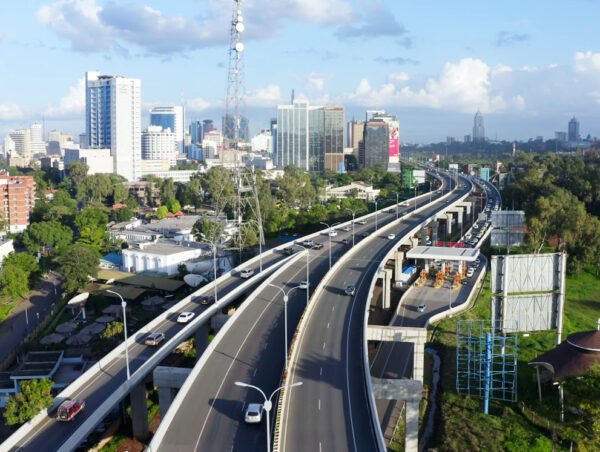
NAIROBI| March 25, 2026 — In a pivotal move for Kenya’s infrastructure future, the Kenya National Highways Authority (KeNHA) has secured World Bank funding to craft a comprehensive Expressway Network Masterplan.
Announced on March 23, 2026, this initiative under the Horn of Africa Gateway Development Project promises to unlock multi-billion shilling investments in high-speed highways, easing congestion, boosting trade, and propelling economic growth.
As consulting firms race to submit Expressions of Interest by April 10, 2026, Kenya stands on the cusp of a transformative road revolution.
The funding targets a nine-month consultancy to map viable expressway routes, forecast demand, and devise implementation strategies aligned with national goals.
“This masterplan will not only identify priority corridors but also pave the way for public-private partnerships (PPPs) to deliver world-class infrastructure,”
KeNHA stated in its procurement notice. With Kenya’s road network straining under urban sprawl and regional trade demands, this World Bank-backed blueprint could redefine connectivity from Nairobi to Mombasa and beyond.
Project Origins and Scope
The Horn of Africa Gateway Development Project, spearheaded by the World Bank, aims to enhance transport links across Kenya, Ethiopia, and Djibouti. Kenya’s slice focuses on expressways to support the Africa Great North Road corridor, including potential upgrades along Moyale routes and Dire Dawa connections.
KeNHA’s masterplan consultancy will involve transport modeling, economic analysis, and policy reviews to prioritize routes like Nairobi-Thika extensions and the long-awaited Nairobi-Mombasa superhighway.
Procurement follows World Bank’s Quality and Cost-Based Selection rules, inviting global and local firms to bid.
The scope spans demand forecasting, alignment studies, and environmental safeguards, culminating in a blueprint for sustainable, high-capacity highways. Deadline pressures are high: EOIs close April 10, signaling rapid momentum post-announcement.
This isn’t just planning—it’s a catalyst for KSh hundreds of billions in construction, as past projects like the Sh88 billion Nairobi Expressway demonstrate.
Industry observers hail the timing. “KeNHA’s World Bank funding boost aligns perfectly with President Ruto’s infrastructure agenda, positioning Kenya as East Africa’s logistics hub,” said a transport analyst familiar with the project, speaking on condition of anonymity.
Recent Rift Valley plans for 403 km of highways, also World Bank-financed, underscore the multi-pronged approach to rural-urban links.
Economic Ripple Effects
Expressway development promises seismic shifts for Kenya’s economy. Freight costs along Nairobi-Mombasa could drop 20-30% with tolled, elevated routes, slashing logistics expenses for exporters.
The masterplan emphasizes PPPs, drawing private capital to fund multi-billion shilling builds amid public budget constraints. In December 2025, Kenya approved a National Infrastructure Fund to mobilize KSh 5 trillion, complementing World Bank inflows.
Job creation looms large. Consultancy alone will engage hundreds, but full rollout could generate thousands in construction, engineering, and operations.
Regional trade surges: enhanced corridors to Ethiopia and Uganda will streamline cross-border commerce, vital for Horn of Africa integration.
“This is about more than roads—it’s socio-economic transformation, opening markets for Rift Valley producers,” KeNHA highlighted in announcements.
Yet challenges persist. Financing diversification is key, as seen in stalled projects funded by African Development Bank loans.
Critics question toll affordability, recalling Nairobi Expressway debates where China Road & Bridge Corporation recouped via user fees. Still, the masterplan’s focus on resilient designs promises long-term gains, targeting congestion relief in booming cities like Nairobi.
Key Routes and Priority Corridors
While specifics await the masterplan, early indicators point to strategic alignments. Nairobi-Mombasa remains a crown jewel, potentially expanding to eight lanes with flyovers and smart tolling.
Thika Highway extensions could link to northern trade routes, while Rift Valley’s 403 km network—covering six counties—forms a logistics backbone.
The Horn of Africa focus elevates Moyale-Isiolo and Ethiopia-Kenya links, part of the Cape-to-Cairo vision.
“Consultants will model these for viability, ensuring expressways boost GDP through faster goods movement,” per project outlines. Sustainability integrates green tech: drainage, pedestrian paths, and seismic-resistant builds to weather climate risks.
This table highlights prioritized corridors, blending current plans with masterplan potential.
Stakeholder Reactions and Next Steps
Business lobbies applaud the push. “KeNHA’s expressway masterplan is a game-changer for logistics, reducing trade volatility via real-time corridors,” echoed sentiments from industry players.
Social media buzzes: “KeNHA receives World Bank funding for multi-billion expressway projects—boosting connectivity!” trended on X.
Government voices are bullish. Transport Principal Secretary Mohamed Daghar previously noted, “Roads are central to our economic growth strategy,” aligning with this blueprint. Consulting firms must now act: nine months to deliver analysis, strategy, and investment roadmaps.
Risks include procurement delays or funding shortfalls, but World Bank’s oversight mitigates these. As Kenya eyes 2030 Vision goals, this KSh multi-billion expressway push cements its infrastructure ascent.
Broader Implications for East Africa
Beyond borders, the project fortifies Kenya’s gateway role. Dire Dawa-Dewele expressways in Ethiopia tie in, creating seamless North-South flows.
For logistics firms, it’s a boon: automated compliance and dashboards will thrive on faster highways.
Challenges like climate adaptation persist—World Bank projects in arid lands already tackle this. Yet optimism prevails. “Kenya to map expressway future,” as Mwanzo TV captioned, capturing national fervor.
In sum, KeNHA’s World Bank funding boost isn’t mere planning—it’s the blueprint for a connected, prosperous Kenya.
With EOIs due soon, the race to realization accelerates. Stay tuned to CCE News for updates on Kenya expressway masterplan 2026, KeNHA World Bank funding, and Horn of Africa infrastructure.
Also Read
Construction projects in Kenya that are changing the face of the country
Turner & Townsend Joins Consortium for $3.6 Billion Nairobi–Mombasa Expressway PPP

- From Operator to Algorithm: Bedrock Puts Autonomous Excavators to Work on Live Construction Sites - September 7, 2026
- Built For The Rough Stuff: Inside Titan’s new ForestEDGE™ Tyre Line - September 4, 2026
- South Africa Has R395 Billion in Infrastructure Projects — But Can the Industry Deliver Them? - August 26, 2026
