

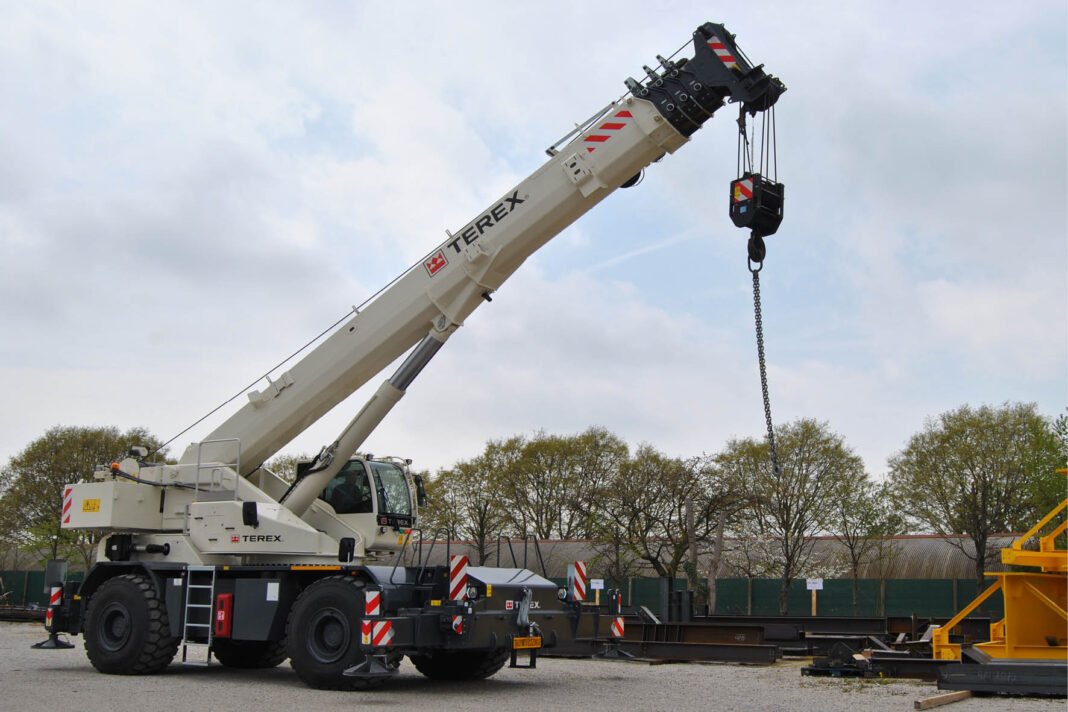
NORWALK, Connecticut – Terex has raised its full-year 2026 financial outlook after reporting a strong second quarter, signaling that global demand for construction and infrastructure equipment remains resilient despite persistent economic uncertainty and higher tariff costs.
The equipment manufacturer, whose portfolio includes aerial work platforms, materials processing machinery, utility equipment and specialty vehicles, reported second-quarter sales of $2.2 billion, a 50.5% increase from the same period last year.
On a comparable pro forma basis, sales grew 8.5%, while bookings climbed 25.2% to $2.0 billion, reflecting continued investment across infrastructure, quarrying, utilities and emergency services markets.
The results prompted Terex to raise its full-year guidance, with the company now expecting 2026 sales of between $7.9 billion and $8.2 billion and adjusted EBITDA of $960 million to $1.0 billion, supported by a strong order backlog and improving operational momentum.
Infrastructure investment continues to support equipment demand
Terex’s latest performance suggests that infrastructure spending remains one of the strongest drivers of heavy equipment demand worldwide.
While several industrial sectors continue to face slower economic growth and geopolitical uncertainty, governments and private developers are maintaining investment in roads, utilities, aggregates production and large-scale construction projects.
These activities continue to generate demand for mobile crushing equipment, aerial work platforms and utility vehicles.
Chief Executive Officer Simon Meester said the company’s second-quarter performance reflected healthy demand across much of its portfolio, supported by strong execution and increasing operational momentum.
He added that improving backlog visibility and positive demand indicators gave the company confidence to raise its full-year outlook.
Mobile crushers benefit from road construction activity
One of the strongest performances came from Terex’s Materials Processing division.
The segment recorded 11.1% pro forma sales growth, driven by increasing demand for mobile crushers in the United States.
According to the company, orders were supported by road construction programmes, infrastructure investment and selected commercial building projects.
Profitability also improved significantly as higher equipment volumes, favourable pricing and improved product mix helped offset rising transportation costs.
The results indicate that aggregate producers and contractors continue investing in equipment despite broader economic headwinds, reflecting sustained demand for crushed stone, sand and recycled construction materials.
Mega projects fuel aerial equipment sales
Terex also reported solid growth in its Aerials business, where sales increased 10.9% year-on-year.
The company attributed the growth to higher shipments to national customers involved in mega projects, together with favourable foreign exchange movements.
Although profitability in the segment was affected by tariff-related costs and inflation, demand remained healthy, underscoring the continued need for access equipment across large industrial developments, infrastructure construction and commercial projects.
Stronger order book points to sustained momentum
Beyond quarterly revenue growth, one of the strongest indicators in Terex’s report was the continued expansion of its order pipeline.
The company ended the quarter with a $6.9 billion backlog, an increase of nearly 4%, while bookings rose by more than 25% compared with the previous year.
A growing backlog provides manufacturers with improved production visibility and suggests contractors remain willing to commit to future equipment purchases despite uncertainty surrounding global trade policies and input costs.
Tariffs remain a challenge
Despite the positive performance, Terex acknowledged that higher tariffs continue to weigh on margins.
The Aerials division experienced lower profitability due primarily to tariff-related costs and inflationary pressures, although price increases and operational improvements helped offset part of the impact.
Chief Financial Officer Jennifer Kong-Picarello noted that the company’s second-quarter adjusted earnings also included tariff refunds and customs-related adjustments, illustrating how evolving global trade policies continue to influence equipment manufacturers’ financial performance.
Confidence grows for the second half of 2026
Perhaps the strongest signal from Terex’s earnings was management’s confidence in the months ahead.
The company expects stronger second-half performance, supported by healthy demand, operational efficiencies, integration synergies and continued investment across infrastructure-related sectors.
With infrastructure spending remaining robust, particularly in transportation, utilities and aggregates, Terex believes its diversified portfolio is well positioned to benefit from long-term construction activity.
What it means for the construction industry
Terex’s results provide another indication that the global construction equipment market is being shaped less by residential building activity and more by long-term infrastructure investment.
Demand for mobile crushers, aerial work platforms and utility equipment continues to be supported by government infrastructure programmes, energy projects and large commercial developments.
While manufacturers still face inflationary pressures, tariffs and supply chain risks, the combination of rising bookings, expanding backlogs and an upgraded outlook suggests construction equipment demand remains fundamentally healthy heading into the second half of 2026.
Also Read
- U.S. Housing Starts Surge 19% in June, Signalling Strong Construction Activity Despite Decline in Building Permits
- US Construction Industry in 2026: Market Size, Spending, Equipment Trends and Major Projects

- Africa’s Water Reuse Opportunity: Building the Infrastructure for a Water-Secure Future - September 28, 2026
- Why Water Reuse Is Becoming a Business Imperative for African Industry - September 28, 2026
- Africa’s Water Reuse Opportunity: Why Treatment Plants Must Be Designed as Complete Systems - September 22, 2026
