

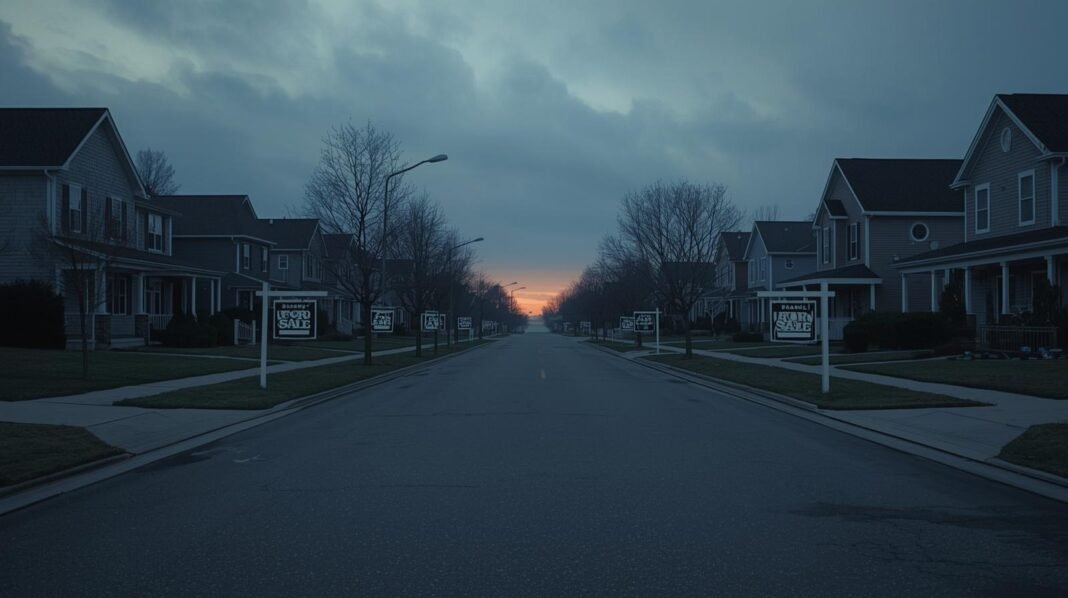
WASHINGTON,MARCH 20,2026 — For millions of Americans sitting on the housing sidelines, February 26, 2026 felt like a turning point.
That was the day the average 30-year fixed mortgage rate slipped to 5.98% — its first reading below 6% since late 2022 and a milestone that real estate economists had long said could unlock a wave of long-delayed home purchases just in time for the all-important spring buying season.
That moment lasted less than three weeks.
On Thursday, Freddie Mac reported that the 30-year fixed-rate mortgage climbed to 6.22% — the highest reading in nearly four months — erasing much of the progress that had been building since the Federal Reserve began cutting rates in late 2024.
The culprit: the U.S.-Israeli military campaign against Iran, which began on February 28 and has since sent oil prices surging, reignited inflation fears, and thrown the housing market’s most hopeful season in years into serious doubt.
How the War Rewrote the Housing Outlook
The chain reaction was swift and brutal for prospective homebuyers. When U.S. and Israeli forces struck Iranian nuclear facilities on February 28, crude oil — already sensitive to Middle East tensions — spiked dramatically.
Within days, the 10-year Treasury yield, which mortgage rates closely track, climbed from roughly 3.96% to above 4.27%, dragging borrowing costs up with it.
The Federal Reserve, which held rates steady at its March 17–18 meeting, offered little comfort.
Fed Chair Jerome Powell acknowledged the uncertainty created by the conflict but signaled that the central bank would not rush to cut rates while energy-driven inflation remains a concern.
For mortgage rates — which respond more to bond markets than to Fed decisions — that means the ceiling may be higher than buyers hoped.
A Season Built on Hope — Now Under Threat
The timing of the rate spike couldn’t be worse. Spring — typically spanning March through June — accounts for roughly 40% of all annual home sales in the United States.
Buyers and sellers alike had been preparing for what many in the industry expected to be the most active season since 2021.
The optimism was grounded in real data. Purchasing power had surged by $30,302 year-over-year entering 2026, according to Zillow. Active listings were up nearly 8% from a year prior.
Home price growth had slowed to just 1.1% annually — well below the wage growth many buyers had been experiencing. And touring activity was up 23% since January, while Google searches for ‘homes for sale’ hit their highest level since last summer.
Kara Ng, senior economist at Zillow Home Loans, had described the sub-6% milestone as “an important psychological threshold” that could prompt many sidelined buyers to re-enter the market.
For lenders, it was already showing up in the numbers: United Wholesale Mortgage reported strong January and February pipelines, with refinance activity rising sharply alongside steady purchase demand.
Now that momentum is at risk.
What a 6.22% Rate Actually Costs American Buyers
The difference between 5.98% and 6.22% may look small on paper. In practice, on a $400,000 home with a 20% down payment, the rate increase adds approximately $59 per month to a buyer’s mortgage payment — or more than $700 per year. Over the life of a 30-year loan, that compounds to over $21,000 in additional interest.
For first-time buyers — already stretching budgets to qualify — that margin can determine whether a purchase is feasible.
Data from Redfin shows the typical home spent 66 days on the market in February, up from 58 days the year before and the slowest February pace in a decade, suggesting buyers were already hesitant even before the latest rate increase.
Not All Bad News: Context Still Matters
Economists are careful to note that 6.22% — while a three-month high — is still nearly half a percentage point below where rates stood a year ago. A buyer taking out a $500,000 mortgage today pays more than $300 less per month than they would have in spring 2025.
Inventory is also better positioned than in previous years. The National Association of Realtors reported active listings up 4.9% year-over-year in February.
In Sun Belt markets like Houston, Phoenix, and Dallas — where inventory has rebounded sharply — buyers are beginning to reclaim leverage in negotiations.
The Big Question: Will Buyers Pull Back?
What worries housing economists most is not the rate itself — it is the uncertainty surrounding it.
Markets hate unpredictability, and the Iran conflict has introduced a level of economic turbulence not seen since the early pandemic years.
Smith at Realtor.com warned that “elevated uncertainty could once again sideline both buyers and sellers, echoing the hesitant market conditions seen last year.”
Some real estate agents, however, are encouraging clients not to wait. “The home you looked at for $500,000 in early spring may go to $550,000 later in the year if competition increases,” said Jeremy Schachter, branch manager at Fairway Home Mortgage. “Buy the home now and refinance later if rates fall.”
That advice reflects a growing consensus among housing professionals: rates in the 3% range are not returning, and buyers who keep waiting for the perfect conditions may find themselves priced out as inventory tightens and prices stabilize.
The question is whether war-driven volatility will shake the confidence buyers have been slowly rebuilding since 2024.
What is clear is that the spring of 2026 is no longer the story the housing market thought it was writing. Three weeks ago, it looked like a comeback. Today, it looks like a cliffhanger.
KEY FIGURES AT A GLANCE
30-year fixed mortgage rate (Mar 19): 6.22% | One week ago: 6.11% | One year ago: 6.67%
15-year fixed mortgage rate (Mar 19): 5.54% | One week ago: 5.50%
Recent low: 5.98% (Feb 26, 2026) — first sub-6% rate since 2022
10-year Treasury yield: ~4.27% | Days on market (Feb avg): 66 days
Active listings: +4.9% year-over-year (NAR, February 2026)
Also Read
Best Mortgage Lenders in Florida: 2026 Comprehensive Guide for Homebuyers
Mortgage Lenders: Complete Guide to Choosing the Best Home Loan Provider

With years of experience covering infrastructure projects, equipment, and engineering solutions, Yvonne brings in-depth analysis and practical insights to contractors, engineers, and industry stakeholders.
She is passionate about highlighting sustainable construction practices and the latest advancements that drive efficiency and safety on worksites.
- Why America’s Grid Expansion Is Creating a New Construction Boom - July 31, 2026
- U.S. Housing Starts Surge 19% in June, Signalling Strong Construction Activity Despite Decline in Building Permits - July 23, 2026
- 10 Benefits of Smart Buildings: How Intelligent Buildings Are Transforming Commercial Real Estate - July 21, 2026
