

As America continues to invest in its aging infrastructure and expand capacity for growing populations, 2026 marks the beginning of several transformative construction projects across the nation.
From coast to coast, billions of dollars in federal, state, and local funding will bring to life ambitious initiatives that promise to reshape how Americans travel, work, and connect with one another.
Here are seven major construction projects set to break ground in 2026.
1. Interstate 5 Bridge Replacement (Oregon-Washington)
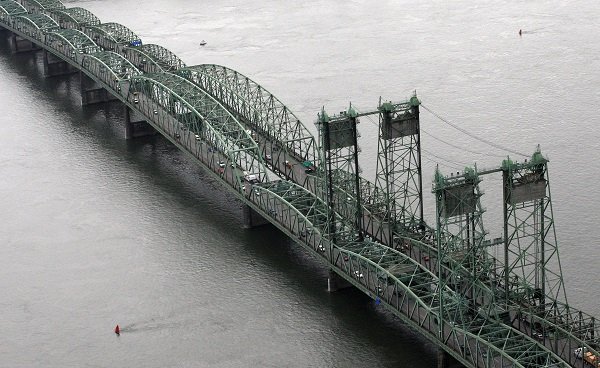
The most ambitious infrastructure project on this list, the Interstate 5 Bridge Replacement represents a multi-billion dollar effort to replace a critical river crossing that has connected Portland, Oregon, with Vancouver, Washington, for over a century.
With construction anticipated to begin in early 2026, this megaproject addresses one of the most significant bottlenecks along the entire West Coast transportation corridor.
The current bridge consists of two separate spans—the oldest dating back to 1917 and resting on wooden pilings, with the newer section completed in 1958. Both structures are considered vulnerable to major seismic events and lack the capacity to handle modern traffic demands.
The replacement project, estimated to cost between $5 billion and $7.5 billion, extends far beyond simply building a new bridge.
The five-mile modernization corridor encompasses seven interchanges and approximately 39 additional bridges.
The proposed design includes a fixed-span bridge rising 116 feet above the Columbia River, eliminating the lift span that currently disrupts traffic an average of 250 times annually.
The project will also extend light rail service from Portland’s Expo Center to Evergreen Boulevard in Vancouver, creating the first interstate light rail connection in the Pacific Northwest.
Federal funding has already provided $600 million toward the project, while Oregon and Washington have each committed $1 billion. Additional financing will come from tolling, which is expected to begin on the existing bridges in 2027, generating $1.2 billion to $1.5 billion in bond funding.
Construction of the new bridge itself is projected to take five to six years, with the overall project spanning up to a decade.
2. Austin-Bergstrom International Airport Concourse B (Texas)
Austin’s explosive growth has pushed its airport beyond capacity, and 2026 marks the beginning of one of the most significant aviation infrastructure projects in Texas history. Construction on Concourse B is scheduled to commence in 2026, with an estimated price tag exceeding $1 billion.
This new midfield concourse will add at least 20 gates to the airport, with structural capacity for 20 additional gates in future phases.
The facility will connect to the existing Barbara Jordan Terminal through an underground pedestrian tunnel spanning 518 feet, equipped with moving walkways for efficient passenger flow. The tunnel will also house critical baggage handling infrastructure.
Design work is currently underway through 2026, with construction activities ramping up later in the year and continuing through 2030. The project has already secured more than $96 million in federal funding from the FAA’s Airport Terminal Program, with additional competitive grants being pursued.
Beyond gates and operational space, Concourse B will feature expanded dining options, retail spaces, lounges, and live music venues—delivering an authentic Austin experience to travelers.
The project is part of the larger “Journey With AUS” expansion program, a $4 billion initiative that will nearly double the airport’s gate capacity from 33 to more than 60 gates, positioning Austin to handle its role as one of America’s fastest-growing metropolitan areas.
3. Suncoast Parkway Phase 3B Extension (Florida)
Florida’s continued population growth and development in its central and northern regions has created demand for expanded highway capacity. The Suncoast Parkway Phase 3B project will extend the toll road three miles north in Citrus County, with construction set to begin in early 2026.
Valued at approximately $315 million, this project represents more than simple road construction.
The extension will include new interchange construction, improvements to local road connections, and a three-mile extension of the popular Suncoast Trail for cyclists and pedestrians. This multi-use trail component reflects modern transportation planning’s emphasis on providing alternatives to automobile travel.
The Suncoast Parkway serves as a critical north-south corridor along Florida’s Gulf Coast, relieving congestion on Interstate 75 and U.S. Highway 19 while providing hurricane evacuation capacity for coastal communities.
Phase 3B continues the systematic northward extension of this vital transportation artery, supporting economic development in previously rural areas of the region.
4. Mid County Parkway Ramona Expressway (California)
Riverside County’s rapid growth has strained its existing road network, prompting the ambitious Mid County Parkway project. This 16-mile transportation corridor is scheduled to begin construction in early 2026, with an estimated cost of $184 million for key segments currently planned.
The project will expand the Ramona Expressway to a four-lane divided highway, significantly improving east-west connectivity across Riverside County.
Currently, the corridor experiences severe congestion during peak hours, limiting economic development and creating lengthy commutes for residents working in the region’s employment centers.
The Mid County Parkway represents a critical link in Southern California’s efforts to manage growth while improving quality of life.
By providing a modern, high-capacity route across the county, the project will reduce travel times, improve freight movement, and support continued economic expansion in one of California’s fastest-growing regions.
5. I-64/I-264 Interchange Improvements Phase III-A (Virginia)
Hampton Roads, Virginia’s densely populated southeastern region, faces persistent traffic congestion at key highway junctions.
The I-64/I-264 Interchange Improvements Phase III-A project addresses one of the most critical bottlenecks, with construction scheduled to begin in summer 2026.
This $520 million initiative will expand I-64 eastbound between Norfolk and Virginia Beach, add express lanes to improve traffic flow, and construct new flyover ramps to eliminate conflict points where traffic currently merges.
The project aims to reduce congestion, improve safety, and enhance freight mobility through the region’s port facilities.
The improvements reflect Virginia’s broader strategy of modernizing its transportation infrastructure to support both economic development and quality of life.
With completion targeted for fall 2030, the project will span four construction seasons, requiring careful coordination to minimize disruption to the more than 100,000 vehicles that use this corridor daily.
6. NY 36 Hornell Gateway Connection Project (New York)
Not all major infrastructure projects involve urban megaprojects. The NY 36 Hornell Gateway Connection Project in rural western New York demonstrates the importance of maintaining and improving transportation infrastructure in smaller communities.
Construction is scheduled to begin in Fall 2026, with a budget of approximately $55 million.
This project focuses on improving traffic safety and mobility along the Route 36 corridor through bridge replacement and highway upgrades.
Route 36 serves as a critical link connecting Interstate 390 with communities in Allegany and Steuben Counties, supporting both local commerce and regional connectivity.
The project illustrates how federal and state infrastructure investments benefit communities of all sizes.
With completion expected in Winter 2028/2029, the improvements will enhance safety, reduce maintenance costs, and support economic development in a region working to attract new investment and retain existing businesses.
7. Sacramento International Airport Concourse B Expansion (California)
California’s capital city is also expanding its aviation infrastructure, with Sacramento International Airport’s Concourse B expansion set to begin in the first quarter of 2026. This project is part of the SMForward program, the airport’s comprehensive modernization initiative.
The expansion will add additional gates to Concourse B, increasing the airport’s capacity to handle growing passenger volumes and accommodate larger aircraft.
The project reflects Sacramento’s emergence as a significant economic center in Northern California, with increased demand for both domestic and international air service.
In addition to the concourse expansion beginning in Q1 2026, a new ground transportation center is scheduled to break ground in Q3 2026.
This facility will consolidate rental car services, shuttle operations, and other ground transportation options, improving the passenger experience while creating more efficient operations.
The Bigger Picture
These seven projects represent billions of dollars in infrastructure investment and will create thousands of construction jobs while the work is underway.
More importantly, they reflect America’s recognition that modernizing infrastructure is essential for economic competitiveness, quality of life, and sustainability.
The funding sources vary—federal grants from the Infrastructure Investment and Jobs Act, state transportation budgets, toll revenue bonds, and local funding—but the common thread is a commitment to building infrastructure that will serve America for generations to come.
From replacing century-old bridges to expanding airport capacity in booming metropolitan areas, from widening congested highways to improving rural transportation links, these projects address diverse needs across different regions.
Yet they share a common goal: creating transportation infrastructure that supports economic opportunity, connects communities, and positions America for continued growth and prosperity.
As construction begins in 2026, these projects will test the ability of government agencies, contractors, and communities to deliver complex infrastructure on time and on budget.
Their success will shape not just the physical landscape of American infrastructure, but also confidence in the nation’s ability to undertake the large-scale projects necessary to maintain its competitive position in the global economy.
Also Read
Africa’s Biggest PPP Projects to Watch in 2026
10 Mega Construction Projects Set to Transform Africa by 2026

- From Operator to Algorithm: Bedrock Puts Autonomous Excavators to Work on Live Construction Sites - September 7, 2026
- Built For The Rough Stuff: Inside Titan’s new ForestEDGE™ Tyre Line - September 4, 2026
- South Africa Has R395 Billion in Infrastructure Projects — But Can the Industry Deliver Them? - August 26, 2026
