

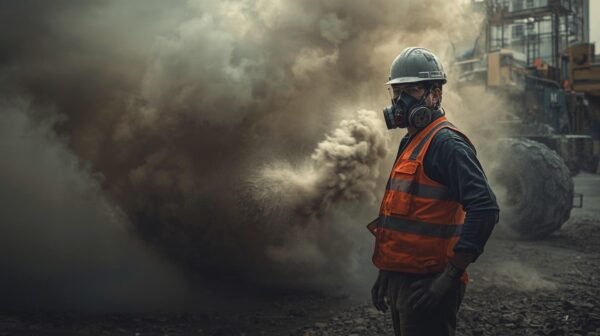
Every day, millions of construction workers around the world show up to sites saturated with invisible hazards. Concrete cutters release clouds of crystalline silica.
Welders breathe in metallic fumes laced with manganese and chromium. Demolition crews disturb decades-old asbestos that was never fully removed.
Roofers and floor layers work amid solvents and adhesives in poorly ventilated spaces. And in far too many cases, the respiratory protection they are given — if they are given any at all — is inadequate, improperly fitted, or simply left dangling around their necks.
The costs of this failure are staggering, and they are not paid all at once.
They accumulate quietly over years and decades, lodged deep in the lung tissue of workers, hidden inside insurance premiums, buried in legal settlements, and spread across the wider healthcare systems that treat diseases which never had to happen.
Understanding the full scale of this problem is the first step toward solving it — and the data, increasingly, leaves no room for doubt.
A Deadly Everyday Hazard That Nobody Can See
Construction sites are among the most hazardous workplaces on earth from a respiratory standpoint.
The range of airborne threats is broad, persistent, and often cumulative. Unlike a fall from height — which is immediate, visible, and unmistakable — respiratory damage is slow, silent, and frequently irreversible by the time symptoms appear.
The primary culprits include:
- Respirable Crystalline Silica (RCS): Generated when cutting, sawing, grinding, drilling, and crushing stone, concrete, brick, block, and mortar. Particles are up to 100 times smaller than grains of beach sand, allowing them to penetrate deep into lung tissue.
- Asbestos fibres: Still present in vast quantities in buildings constructed before the 1980s. Renovation, maintenance, and demolition work routinely disturbs these materials, releasing fibres that can cause mesothelioma and asbestosis decades later.
- Welding fumes: Contain metallic oxides including manganese, hexavalent chromium, and nickel — substances associated with lung cancer, neurological damage, and metal fume fever.
- Wood dust: Produced by cutting, sanding, and shaping timber and wood-based panels. Classified as a human carcinogen; associated with respiratory irritation, occupational asthma, and nasal cancer.
- Cement and concrete dust: Contains silica compounds plus calcium and alkaline compounds that cause chemical burns to lung tissue on prolonged exposure.
- Demolition debris: A complex cocktail that may include lead paint particles, mould spores, asbestos fragments, and legacy chemical residues from decades of industrial use.
What makes these hazards particularly treacherous is their invisibility. Dust concentrations that exceed safe exposure limits are not always visible to the naked eye. Workers who cannot see the danger frequently do not perceive the risk — and supervisors who apply only visual checks are systematically underestimating the threat level on their sites.
| 230 Million
Workers globally are estimated to be exposed to silica dust, including more than 2 million in the construction industry alone. (Global public health data / OSHA) |
The Disease Burden: Incurable, Progressive, Fatal
The respiratory diseases caused by inadequate protection on construction sites share a grim common thread: most are incurable.
Medical intervention can slow progression and manage symptoms, but the underlying damage to lung tissue cannot be reversed.
For thousands of workers each year, inadequate protection on a construction site is ultimately a death sentence — one that simply takes years or decades to be carried out.
Silicosis
Silicosis is caused by the inhalation of crystalline silica dust and triggers irreversible scarring of the lungs (pulmonary fibrosis).
It presents in three forms: chronic silicosis (developing after 10 or more years of lower-level exposure), accelerated silicosis (5-10 years), and acute silicosis (weeks to five years of very high exposure, often fatal within months of diagnosis).
Research published in Springer Nature in 2025 estimated that approximately 230 million workers worldwide are exposed to silica dust, with those in mining and construction representing the highest-risk populations.
Silicosis is also associated with severe comorbidities, including tuberculosis, COPD, kidney disease, and lung cancer.
In the United Kingdom, the Health and Safety Executive (HSE) estimates that more than 500 construction workers die annually from silica dust exposure alone — a figure the HSE has used to anchor its sustained enforcement campaigns.
Australia, confronting an epidemic of accelerated silicosis among artificial stone fabricators, went as far as banning engineered stone entirely in 2024, the first country in the world to do so.
Mesothelioma and Asbestos-Related Disease
Despite comprehensive regulation, asbestos exposure remains an active risk on construction sites wherever older structures are being renovated or demolished.
A 2023 NIOSH-affiliated study mapping occupational mesothelioma cases in the United States from 2006 to 2022 found that construction and extraction workers accounted for the highest number of diagnoses of any single occupational category — 174 out of 924 recorded cases, or 18.8% of the total.
The mean latency period between first exposure and diagnosis is approximately 47 to 48 years, meaning that workers exposed today may not receive their diagnoses until well into the 2060s and 2070s.
A 2023 study published in BMJ Open Respiratory Research confirmed that construction workers face a significantly elevated risk of breathing problems, with asbestos fibres and hazardous dust identified as the primary drivers.
Another 2024 study found that construction workers at US Department of Energy sites had substantially higher rates of job-related illness, particularly cancer.
COPD and Occupational Asthma
Chronic Obstructive Pulmonary Disease (COPD) is increasingly recognised as an occupational disease in the construction sector, not merely a lifestyle condition. Research shows that occupational exposure to construction dust and fumes can trigger COPD independently of smoking history.
Occupational asthma, triggered by sensitisers including isocyanates in spray paints, wood dusts, and flux fumes from soldering, is another frequently underdiagnosed condition.
A study involving 85 construction workers, published in NCBI, found that 51.8% showed moderate lung restriction, while 4.7% exhibited obstruction — compared to a control group with no occupational dust exposure.
| KEY FINDING
A study of construction workers exposed to crystalline silica found that even where average exposure levels were below the national permissible limit, lung function indices had significantly declined over four years and risk of lung cancer mortality was substantially elevated. There is no safe threshold below which casual disregard for respiratory protection is acceptable. |
The Financial Reckoning: Who Pays, and How Much
The financial costs of poor respiratory protection on construction sites are distributed across multiple parties — employers, insurers, governments, healthcare systems, and the workers themselves.
Most of these costs are invisible in project budgets and safety reports. They show up years later, in places that are hard to trace back to a specific site or a specific supervisor who decided the dust extraction could wait.
Workers’ Compensation and Medical Costs
In the United Kingdom, analysis published by Start Safety in 2025 found that respiratory illness accounted for more than 7% of total workplace illness in 2024, costing employers more than £13 million in 2022/23 alone.
The total cost of all workplace injuries across the UK in 2022/23 was estimated at £1.35 billion, with construction ranking as the third most expensive industry for workplace injury costs at £815 million.
Across all industries, each injury cost employers an average of £21,900 in direct and indirect costs.
In the United States, the picture is similar. The National Safety Council reported in 2024 that the average workers’ compensation payout stands at $41,179 per claim.
For asbestos-related mesothelioma, however, the financial exposure is dramatically higher: litigation settlements average between $1 million and $1.4 million, while jury verdicts for mesothelioma cases have ranged between $5 million and $11.4 million.
In May 2025, a New York jury awarded $117 million to a steel and sheet metal worker diagnosed with mesothelioma in 2022 after asbestos exposure on construction sites. Over 60 active asbestos trust funds in the US currently hold approximately $30 billion set aside to compensate future claimants.
Regulatory Fines and Enforcement Actions
Regulatory penalties for respiratory protection failures have escalated significantly. In the United States, OSHA’s 2025 maximum penalty for serious violations stands at $16,550 per violation, rising to $165,514 for willful or repeated violations.
In August 2024, OSHA cited a Chicago-area countertop manufacturer for dozens of violations related to silica dust exposure — two workers had already developed incurable lung disease, and the company faced over $1 million in proposed penalties.
According to J.J. Keller’s February 2025 report, OSHA’s top respiratory protection violations in 2024 included missing medical evaluations, absence of written respiratory protection programs, and failure to conduct annual fit testing.
Respiratory protection is consistently listed among the most cited OSHA standards in construction, appearing alongside fall protection, hazard communication, and lockout/tagout procedures in the agency’s annual enforcement summaries.
In the UK, the HSE announced that dust exposure would be a specific focus of its 2024 site inspection programme, building on its Dust Kills campaign, signalling that enforcement is intensifying rather than relaxing.
| $165,514
Maximum OSHA penalty per willful or repeated violation in 2025 — and that is before the civil litigation, lost productivity, and reputational costs are counted. |
Lost Productivity and Absenteeism
The UK’s Health and Safety Executive estimated that 33.7 million working days were lost to workplace sickness and injury in 2023/24 — an average of 15.5 days per affected worker.
Respiratory conditions, by their chronic and progressive nature, tend to generate extended absences rather than brief ones.
A worker with advancing silicosis or COPD is not absent for a week; they are often progressively less productive over years, then intermittently absent, then permanently disabled.
The downstream productivity costs of a workforce with impaired lung function are rarely captured in site safety metrics, but they are nonetheless real.
The Litigation Tail
Perhaps the most financially devastating aspect of respiratory disease is the litigation tail — the fact that claims arrive years or decades after the original exposure.
A contractor who ran a site carelessly in 2005 may face its first legal claims in the 2030s, long after the project has been forgotten, the safety records have been archived, and the original decision-makers have retired.
Construction firms that dismiss respiratory protection as a minor compliance item today are, in effect, loading future liability onto their own balance sheets. The average latency period between asbestos exposure and mesothelioma diagnosis has been documented at between 43 and 48 years.
The Compliance Gap: Why the Problem Persists
Despite robust regulatory frameworks in most major construction markets, the gap between what the law requires and what happens on site remains stubbornly wide.
Research involving migrant interior construction workers in China found that 87.84% had no respiratory protection or only a single inadequate protective measure, even in environments where dust concentrations exceeded hygiene standards by significant margins.
A study measuring dust concentrations across 33 construction sites in Hong Kong found an average total suspended particle (TSP) level that regularly exceeded guidelines, with mixing mortar, crushing concrete, and blasting operations generating the highest exposures — yet these activities attracted the least managerial attention in terms of dust control.
The compliance gap is driven by a cluster of interconnected problems:
- Invisibility of the hazard: Workers and supervisors who cannot see dust clouds often fail to perceive risk. The most dangerous particles — those small enough to penetrate the alveoli — are by definition those least visible.
- Discomfort and productivity pressure: Respirators impede communication, increase breathing effort, and become uncomfortable in hot working conditions. Under production pressure, both workers and supervisors find reasons not to use them consistently.
- Incorrect selection: A surgical mask or basic dust mask offers no meaningful protection against crystalline silica or welding fumes. Yet these are frequently the only protection provided, creating a false sense of compliance that is in practice no protection at all.
- Poor fit testing practices: Even a correctly specified respirator fails if it does not seal properly against the wearer’s face. Fit testing is legally required in many jurisdictions but is frequently skipped or performed inadequately.
- Supply chain failures: On complex projects with multiple subcontractors, responsibility for providing PPE can fall into gaps between principal contractors, subcontractors, and labour-only gangs — with the result that workers at the bottom of the chain receive the least protection.
- Delayed consequences: The long latency period between exposure and disease means that many worksites operate for years without any visible human cost of inadequate protection — until claims begin arriving decades later.
| SITE REALITY CHECK
Studies on construction dust exposure have consistently found that the mixing of mortar, crushing of concrete, and heavy demolition work generate the highest airborne particle concentrations on site — yet project management teams allocate the least dust control attention to these activities. The hazard and the protection effort are, on many sites, inversely correlated. |
The Right Approach: A Hierarchy, Not a Mask
Regulatory guidance from OSHA, the HSE, and equivalent bodies worldwide emphasises that respiratory protective equipment (RPE) is the last line of defence, not the first. The correct framework is a hierarchy of controls, applied in sequence:
- Elimination: Remove the hazardous process wherever possible — for example, specifying pre-cut materials to avoid on-site cutting of silica-containing materials.
- Substitution: Replace hazardous materials with less hazardous alternatives — using low-silica alternatives to quartz-based aggregates where feasible.
- Engineering controls: Deploy local exhaust ventilation (LEV), on-tool dust extraction, water suppression, and enclosed cabs with filtered air supplies. These controls should reduce exposure to the lowest practicable level before RPE is considered.
- Administrative controls: Rotate workers to reduce individual exposure time, schedule high-dust activities when fewer workers are present, and maintain equipment that generates dust rather than allowing it to run in degraded condition.
- Respiratory Protective Equipment: Where residual risk remains after all other controls are applied, provide correctly specified, properly fitted, and regularly maintained RPE. For silica dust, this typically means at minimum an FFP3-rated filtering facepiece or a half-face elastomeric respirator with P3 filters, not a basic dust mask.
NIOSH’s respirator selection guide for construction emphasises that different tasks require different protection levels.
Filtering facepiece respirators such as N95-rated masks are appropriate for particulate dust but offer no protection against gases, vapours, or specific hazardous fumes.
Welders require powered air-purifying respirators (PAPRs) or supplied-air systems in confined spaces. Asbestos removal demands Type 3 protection in most regulatory frameworks.
The selection must match the hazard — and that requires a formal risk assessment, not a visual judgment from the site supervisor.
The Business Case for Getting It Right
The global market for respiratory protective equipment was valued at approximately USD 6.5 billion in 2024 and is projected to expand at a compound annual growth rate of between 5.8% and 7.6% through the early 2030s, driven in part by tightening regulatory requirements and rising awareness of occupational lung disease.
Respirator adoption in the construction sector specifically is forecast to grow at 8.5% annually, driven substantially by silica dust exposure concerns.
The market growth reflects, in part, a reckoning — a belated recognition by the construction industry that the respiratory health of its workforce is both a moral imperative and a financial necessity.
The business case for proactive respiratory protection is, in fact, straightforward:
- Direct cost avoidance: Preventing a single mesothelioma case avoids litigation exposure of $1 million to $11 million or more. A comprehensive respiratory protection programme for a mid-sized contractor costs a fraction of a single adverse verdict.
- Insurance and risk management: Poor safety records translate directly into higher insurance premiums. Contractors with documented, audited respiratory protection programmes are increasingly able to demonstrate lower risk profiles to insurers and clients.
- Workforce retention: Skilled construction workers are increasingly aware of occupational health risks. Employers who take respiratory protection seriously retain experienced workers and attract talent; those who do not face higher turnover, particularly among workers who have access to better alternatives.
- Regulatory standing: As enforcement intensity increases — the HSE’s 2024 dust inspection campaign, OSHA’s rising penalty schedule — contractors without robust programmes face growing regulatory risk. A single enforcement action can impose direct penalties, trigger unannounced follow-up inspections, and damage tendering prospects on public contracts.
- Project reputation and client requirements: Major clients in the public and institutional sectors increasingly require evidence of occupational health management as a pre-qualification criterion. Poor respiratory protection practices, if they become visible, can disqualify contractors from preferred supplier lists.
Conclusion: The Breath Your Worker Takes Today
The construction industry builds the physical fabric of the world. It is also, in many markets, one of the few industries still generating occupational lung diseases at significant scale — diseases that were already understood to be preventable a century ago.
Every week, the HSE notes, construction workers die from respiratory diseases caused by dust exposures that could have been controlled.
Every year, OSHA enforcement actions reveal sites where workers are routinely exposed to crystalline silica without adequate protection, sometimes for years before an inspector arrives.
The hidden cost of poor respiratory protection is not really hidden at all. It is present in the silicosis cases arriving at respiratory clinics, in the mesothelioma litigation files, in the workers’ compensation claims, in the OSHA citations, in the insurance premium renewals, and in the slow, progressive impairment of workers who built careers on construction sites without ever fully understanding what they were breathing in.
The costs are simply deferred — displaced from the site where the exposure happened to the hospitals, courts, and families where the consequences eventually land.
For contractors, safety managers, and site supervisors, the calculus is not complicated. The respiratory hazards on a construction site are known, measurable, and largely controllable.
The technologies and systems to control them — from engineering controls to correctly specified RPE — are well established and commercially available.
The regulatory framework is clear. What is required, in most cases, is not new knowledge but a genuine organisational commitment to acting on knowledge that already exists.
The breath a worker takes on your site today could, twenty or thirty years from now, be the evidence in a lawsuit, the precipitating cause of a terminal diagnosis, or the memory a family carries of a life cut short.
The choice to protect it — properly, systematically, without compromise — is among the most consequential decisions a construction business makes.
Also Read
Top Smart Safety Shoes to Watch in 2026
From Hard Hat to Smart Hat: How Wearables Are Rewiring Workplace Safety

- Africa’s Water Reuse Opportunity: Building the Infrastructure for a Water-Secure Future - September 28, 2026
- Why Water Reuse Is Becoming a Business Imperative for African Industry - September 28, 2026
- Africa’s Water Reuse Opportunity: Why Treatment Plants Must Be Designed as Complete Systems - September 22, 2026