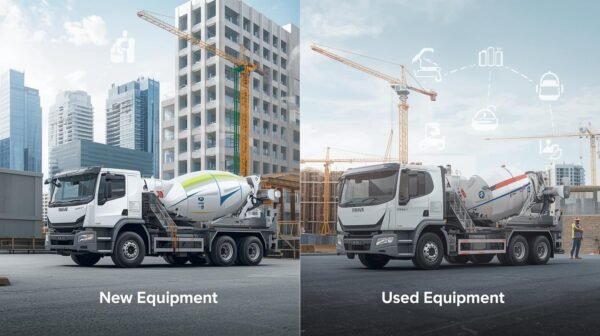
For construction company owners and fleet managers, few equipment decisions carry as much financial weight as purchasing a concrete pump truck.
With price tags ranging from tens of thousands to over half a million dollars, choosing between new and used concrete pump trucks demands careful analysis beyond simple sticker shock.
This comprehensive guide breaks down the true costs and benefits of both options, helping you make an informed decision that aligns with your company’s financial health, project pipeline, and long-term growth strategy.
Understanding the Investment Landscape
Concrete pump trucks represent a significant capital investment that directly impacts your operational capacity and bottom line.
Before diving into the comparison, it’s essential to understand what drives value in this equipment category.
A new concrete pump truck from manufacturers like Putzmeister, Schwing, or Alliance typically costs between $300,000 and $750,000 depending on boom reach, pumping capacity, and chassis specifications.
These machines come with full warranties, the latest technology, and zero operational history.
Used concrete pump trucks for sale offer an alternative entry point, with prices ranging from $75,000 for older models with higher hours to $400,000 for late-model units in excellent condition.
The challenge lies in determining which option delivers better value when you factor in total cost of ownership over the equipment’s lifespan with your company.
The Financial Breakdown: Initial Purchase Price
The most obvious difference between new and used concrete pump trucks is the upfront cost, but this surface-level comparison only tells part of the story.
New concrete pump trucks command premium pricing for good reason. You’re paying for current engineering standards, fuel efficiency improvements, enhanced safety features, and compliance with the latest emissions regulations. However, this premium often represents 100 to 200 percent more than a comparable used unit that’s three to five years old.
Used equipment provides immediate cost savings that can preserve working capital for other business needs.
A well-maintained five-year-old concrete pump truck might cost 40 to 60 percent less than its new equivalent while still offering years of productive service.
For companies with tight cash flow or those testing new market segments, this price difference can mean the difference between expanding operations or staying stagnant.
The depreciation curve for concrete pump trucks is steepest in the first three years, with equipment typically losing 30 to 40 percent of its value during this period. This rapid depreciation works against buyers of new equipment but creates opportunity for strategic purchasers in the used market.
Financing and Cash Flow Considerations
How you pay for equipment matters as much as what you pay. The financing landscape differs significantly between new and used concrete pump trucks, with implications for your balance sheet and monthly cash flow.
New equipment typically qualifies for the most favorable financing terms. Lenders view new concrete pump trucks as lower-risk collateral, often offering interest rates 1 to 3 percentage points below used equipment rates.
Loan terms can extend to seven years or more, reducing monthly payments and easing cash flow pressure. Manufacturer financing programs may include deferred payment options or seasonal payment structures that align with construction cycles.
Used concrete pump trucks generally face stricter lending criteria. Banks and equipment financing companies may require larger down payments, typically 15 to 25 percent compared to 10 to 15 percent for new units.
Loan terms are often shorter, compressing the repayment schedule into three to five years. However, the lower purchase price means your total debt burden remains smaller, and you’ll own the equipment free and clear much sooner.
Tax implications also differ substantially. The Section 179 deduction allows businesses to deduct the full purchase price of qualifying equipment in the year of purchase, up to current limits.
Both new and used equipment can qualify, but new purchases may also be eligible for bonus depreciation, potentially providing additional first-year tax benefits. Consult with your tax advisor to understand how these provisions apply to your specific situation.
Maintenance Costs and Operational Reliability
The ongoing cost of keeping a concrete pump truck operational represents a substantial portion of total ownership expenses, and this is where the new versus used equation becomes more complex.
New concrete pump trucks enjoy a honeymoon period where maintenance requirements remain minimal. Comprehensive warranties typically cover major components for two to three years or 3,000 to 5,000 hours, protecting you from unexpected repair costs during the most critical early period of ownership.
Scheduled maintenance follows factory recommendations with predictable costs for fluids, filters, and routine inspections.
Used concrete pump trucks bring operational history that cuts both ways. A unit with 4,000 to 6,000 hours from a single owner with complete maintenance records can be nearly as reliable as new equipment.
However, machines with spotty documentation, multiple owners, or signs of deferred maintenance can become money pits. Major components like hydraulic pumps, boom cylinders, and transmission systems can cost $10,000 to $50,000 to replace, quickly eroding the initial purchase savings.
The reality is that maintenance costs accelerate as equipment ages. Industry data suggests that annual maintenance expenses for concrete pump trucks in their first three years average 2 to 4 percent of purchase price, climbing to 6 to 10 percent for units over seven years old.
Factor these projections into your analysis, adjusting upward for equipment with uncertain history or harsh operating environments.
Parts availability presents another consideration. Current-production models benefit from ready access to replacement components, while older used units may face discontinued parts or longer lead times.
This can translate to increased downtime that costs far more than the parts themselves when crews and projects sit idle.
Technology, Efficiency, and Competitive Advantage
The concrete pump industry continues to evolve, with new technology delivering measurable improvements in productivity, fuel consumption, and operator experience.
These advancements represent both opportunity and obsolescence risk depending on which side of the new-versus-used decision you land.
Modern concrete pump trucks incorporate sophisticated electronic controls, automated setup systems, and enhanced safety interlocks that older models lack. Radio remote controls have become standard on new equipment, allowing operators to position themselves optimally for visibility and safety.
Advanced boom oscillation dampening systems reduce operator fatigue and improve precision on high-reach pours.
Fuel efficiency improvements in new models can save $5,000 to $15,000 annually depending on utilization rates and fuel prices.
Newer engines meeting current emissions standards also avoid potential regulatory complications in markets with strict air quality requirements. For companies bidding on projects with sustainability requirements or working in environmentally sensitive areas, new equipment may open doors that older units cannot.
However, used concrete pump trucks that are five to seven years old still incorporate much of the core technology that makes modern equipment productive. Unless you’re comparing a current-year model to something ten or fifteen years old, the technology gap may not justify the price premium for many applications.
The fundamentals of concrete pumping haven’t changed dramatically, and experienced operators can achieve excellent results with well-maintained equipment regardless of model year.
Warranty Coverage and Risk Management
Risk exposure differs dramatically between new and used concrete pump purchases, with warranty coverage serving as the primary differentiator in your first years of ownership.
New concrete pump trucks include comprehensive factory warranties that typically cover the entire machine for one to two years and major components like engines, transmissions, and hydraulic systems for three to five years.
This protection shields you from catastrophic repair costs during the period when you’re also managing loan payments. If a boom cylinder fails or an engine requires major work, the manufacturer bears the cost, not your maintenance budget.
Extended warranty options for new equipment can push coverage to five years or beyond, though these programs add to upfront costs.
For risk-averse companies or those entering new market segments, this peace of mind justifies the expense. You can confidently bid on multi-year projects knowing your equipment won’t saddle you with surprise five-figure repair bills.
Used concrete pump trucks typically come with limited or no warranty coverage. Private party sales almost universally transfer equipment “as-is,” placing all risk on the buyer.
Dealer sales may include 30 to 90 day limited warranties covering major drivetrain components, but coverage rarely extends to hydraulics, boom systems, or other specialized concrete pump components.
Some dealers offer extended warranty products for used equipment, though coverage terms are less comprehensive than factory new warranties and add several thousand dollars to purchase price.
The practical implication is that used equipment buyers must maintain larger cash reserves for unexpected repairs.
If your maintenance budget cannot absorb a $30,000 hydraulic pump failure without impacting operations, the warranty coverage on new equipment may be worth the premium.
Resale Value and Long-Term Asset Management
Equipment doesn’t last forever, and eventually you’ll need to sell, trade, or retire your concrete pump truck. Understanding resale dynamics helps you calculate true long-term cost of ownership.
New concrete pump trucks experience that steep initial depreciation mentioned earlier, losing substantial value in years one through three even with low hours and excellent maintenance. This depreciation represents real economic loss that buyers must factor into their analysis. A $500,000 truck that’s worth $350,000 three years later has cost you $150,000 in value loss alone before considering financing costs, maintenance, or operational expenses.
Used concrete pump purchases begin further down the depreciation curve where value retention improves. A well-bought used truck that cost $250,000 might still fetch $180,000 after three years of service, representing a 28 percent loss versus the 30 to 40 percent hit on new equipment. The absolute dollar loss is also smaller, preserving more capital when you’re ready to upgrade.
Market demand influences resale value significantly. Well-known brands like Putzmeister and Schwing command premium prices in the used market due to reputation for reliability and parts support. Lesser-known manufacturers may offer lower initial purchase prices but struggle with resale value when you’re ready to sell. The equipment that seems like a bargain today may prove difficult to move later.
Maintenance documentation dramatically affects resale value for used equipment. Complete service records from a reputable maintenance facility can add 15 to 25 percent to resale price compared to similar equipment without documentation. This argues for meticulous record-keeping regardless of whether you buy new or used, as you’ll eventually become a seller in the used equipment market.
Utilization Analysis: Matching Equipment to Workload
The new versus used decision cannot be divorced from how intensively you’ll use the equipment. Utilization rates dramatically impact which option delivers better value.
High-utilization scenarios favor new equipment. If you’re running a concrete pump truck 1,500 to 2,000 hours annually on steady commercial or infrastructure work, new equipment’s reliability and warranty coverage minimize downtime risks during your busiest periods. The warranty absorbs repair costs during your highest-revenue years, and you’ll accumulate enough hours to fully amortize the purchase price before major out-of-warranty repairs become necessary.
Companies projecting 800 to 1,200 annual hours find themselves in the middle ground where either option can work. Here, the decision hinges more on financial position, risk tolerance, and available equipment condition.
A pristine low-hour used truck from a reputable seller might be the smarter buy, while companies with strong balance sheets may prefer the simplicity and predictability of new equipment.
Low-utilization applications under 500 hours annually strongly favor used equipment. The economics of new equipment simply don’t work when you’re not running enough hours to justify the capital investment.
You’ll make loan payments and absorb depreciation far exceeding the revenue generated by occasional use. A quality used concrete pump truck provides the capability you need without the financial burden of equipment sitting idle.
Consider also the nature of your work. Demanding applications like high-rise construction, remote site work, or round-the-clock concrete pours stress equipment heavily and may justify new equipment investment. Lighter-duty applications like residential construction or decorative concrete can be served effectively by older equipment that’s been well maintained.
The Hidden Costs: Insurance, Registration, and Compliance
Beyond purchase price and maintenance, several operational costs differ between new and used concrete pump trucks in ways that impact your bottom line.
Insurance premiums reflect equipment value and age. New concrete pump trucks require higher coverage limits to protect your investment and lender interests, translating to annual premiums that may be 30 to 50 percent higher than comparable coverage for used equipment.
However, some insurers offer new equipment discounts that partially offset this difference. Request insurance quotes for specific equipment before finalizing your purchase to avoid surprises.
Registration and licensing costs vary by jurisdiction but generally increase with vehicle weight and value.
New equipment may trigger higher initial registration fees in some states, though annual renewals typically equalize between new and used after the first year. Commercial vehicle taxes in jurisdictions that assess property tax on equipment can also favor lower-value used purchases.
Emissions compliance presents a moving target. Newer concrete pump trucks meet current Environmental Protection Agency standards, ensuring compliance with regulations that vary by state and locality.
Older used equipment may face restrictions in California and other states with strict emissions requirements. Before purchasing used equipment, verify that it can legally operate in all jurisdictions where you need to work.
Safety regulations continue to evolve. New equipment incorporates current safety standards, reducing liability exposure if accidents occur.
Older used equipment may require retrofits to meet current best practices, particularly for operator protection systems, stability monitoring, and emergency controls. Budget for necessary safety upgrades when evaluating used equipment to ensure you’re comparing apples to apples.
Making the Decision: A Framework for Your Company
With all factors considered, how should construction company decision-makers approach this choice? Here’s a practical framework based on your company’s specific situation.
Choose new concrete pump trucks when:
Your company has strong cash flow or access to favorable financing that makes monthly payments manageable without straining operations.
You’re expanding into new markets or service offerings where equipment reliability is critical to building reputation and client relationships. Your project pipeline includes high-utilization work that will generate 1,200-plus hours annually.
You lack in-house maintenance capabilities and want warranty protection during the critical early years.
You’re working in markets with strict emissions requirements or on projects demanding the latest technology. Your risk tolerance is low and you prefer predictable costs over potential savings with added uncertainty.
Choose used concrete pump trucks for sale when:
You’re conserving working capital for other business priorities or managing through a period of uncertain project pipeline. You have experienced maintenance staff who can evaluate equipment condition and perform repairs cost-effectively.
Your annual utilization projections fall below 1,000 hours, making it difficult to justify new equipment costs. You’ve identified specific used units with excellent maintenance history from reputable sellers.
You’re entering the concrete pumping business and want to minimize initial investment while proving the market. You have adequate cash reserves to handle unexpected repairs without impacting operations.
You’re comfortable with the additional due diligence required to buy used equipment wisely.
Many successful construction companies employ a mixed fleet strategy, purchasing new equipment for core, high-utilization applications while supplementing with quality used units for overflow work or specialized applications. This approach balances financial prudence with operational reliability.
Due Diligence: Essential Steps for Used Equipment Buyers
If you’re leaning toward used concrete pump trucks, rigorous evaluation is non-negotiable. The money you save on purchase price can evaporate quickly if you buy someone else’s problem.
Insist on complete maintenance records showing regular service intervals, major repairs, and component replacements.
Records from reputable service facilities carry more weight than handwritten logs. Look for evidence of preventive maintenance rather than reactive repairs that suggest deferred upkeep.
Conduct thorough pre-purchase inspections or hire qualified third-party inspectors who specialize in concrete pump equipment.
Critical inspection points include hydraulic system integrity, boom condition and structural cracks, outrigger operation and stability systems, engine compression and emissions system function, transmission and drivetrain condition, electrical systems and controls, concrete hopper and piping wear, and chassis frame for damage or repairs.
Request the equipment’s hour meter history and verify it hasn’t been tampered with. Low hours on older equipment should raise questions about why it sat unused. Extremely high hours may indicate the equipment is near the end of its productive life.
Verify clear title with no liens or encumbrances. A title search through the appropriate state agency protects you from inheriting someone else’s financial problems. For dealer purchases, ensure they’re reputable with established businesses and references from other buyers.
Operate the equipment personally or have your most experienced operator do so. Listen for unusual noises, feel for abnormal vibrations, and test all functions under load if possible. Many problems only become apparent during operation rather than static inspection.
Financing Strategies to Maximize Your Investment
Regardless of which direction you choose, smart financing can improve your return on investment and preserve financial flexibility.
For new equipment purchases, explore manufacturer financing programs that may offer competitive rates and terms aligned with construction seasonality.
Some manufacturers provide deferred payment programs or reduced rates during slow seasons to move inventory. Compare these offers against traditional bank financing and independent equipment finance companies to find the best terms.
Used equipment buyers should shop multiple lenders, as rates and terms vary significantly. Some lenders specialize in used construction equipment and may offer more favorable terms than general commercial banks.
Credit unions sometimes provide competitive rates for established members with strong business financials.
Consider lease options for new equipment if you prefer preserving capital and have concerns about long-term commitment. Operating leases keep equipment off your balance sheet and provide upgrade flexibility, though you’ll never own the asset outright. Capital leases function more like financed purchases with buyout provisions at lease end.
The down payment strategy matters more than many buyers realize. While minimizing down payment preserves working capital, larger down payments reduce monthly obligations and total interest paid. Balance short-term cash flow needs against long-term cost minimization based on your company’s financial position.
The Verdict: There’s No Universal Answer
The used versus new concrete pump truck decision defies simple recommendations because the right answer depends entirely on your company’s unique circumstances.
New equipment delivers predictability, warranty protection, and the latest technology at premium prices.
It’s the conservative choice that minimizes risk for companies with the financial strength to absorb higher upfront costs in exchange for operational certainty.
Used concrete pump trucks for sale offer substantial cost savings and faster path to ownership for buyers willing to invest time in due diligence and accept some operational uncertainty. It’s the entrepreneurial choice that rewards careful evaluation and smart buying.
The best decision emerges from honest assessment of your financial position, utilization projections, risk tolerance, and competitive landscape. Run the numbers with realistic assumptions about maintenance costs, utilization rates, and equipment lifespan. Consider not just today’s needs but where your company will be in five years.
Ultimately, the concrete pump truck that helps you win profitable projects, serve clients reliably, and build long-term business value is the right choice, whether it rolls off the assembly line today or has already logged thousands of productive hours for another contractor.
Focus on total cost of ownership rather than purchase price alone, and make the decision that positions your construction company for sustainable growth and profitability.
Also Read
Inside a Modern Asphalt Plant: Where Science Meets Infrastructure
How Ready-Mix Concrete Plants Work

- Africa’s Water Reuse Opportunity: Building the Infrastructure for a Water-Secure Future - September 28, 2026
- Why Water Reuse Is Becoming a Business Imperative for African Industry - September 28, 2026
- Africa’s Water Reuse Opportunity: Why Treatment Plants Must Be Designed as Complete Systems - September 22, 2026