
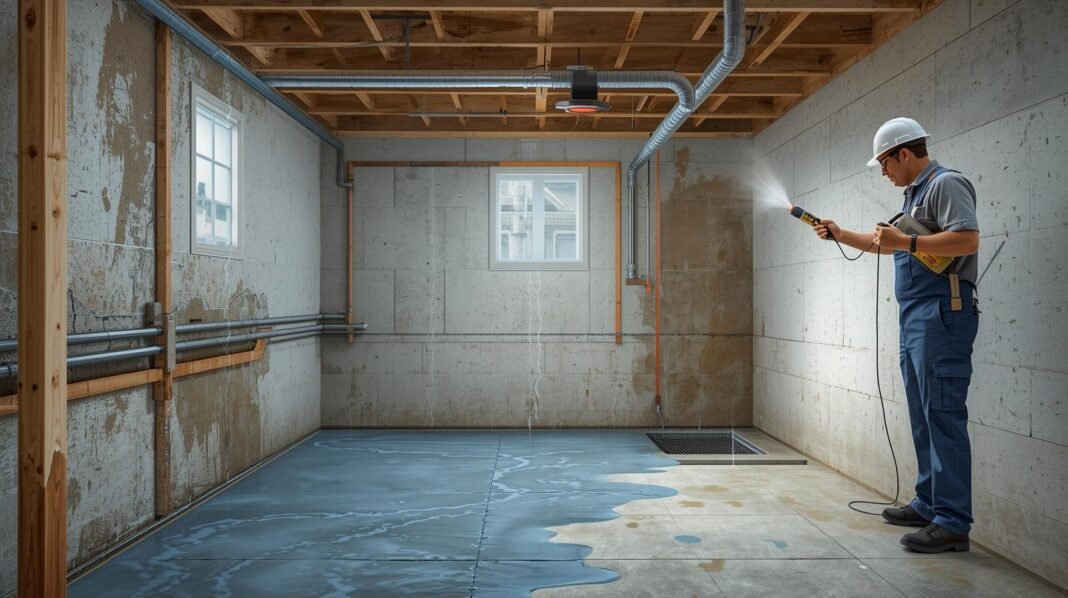
A dry basement is essential for protecting your home’s foundation, preventing mold growth, and maintaining your property’s value.
However, many homeowners make critical errors when attempting to waterproof their basements, leading to costly repairs and ongoing moisture problems. Understanding these common mistakes can save you thousands of dollars and years of frustration.
Ignoring the Root Cause of Water Problems
One of the most frequent mistakes homeowners make is treating the symptoms rather than addressing the underlying issue. Applying waterproof paint or sealants to interior walls might temporarily hide dampness, but it won’t stop water from penetrating your foundation.
How to avoid this mistake: Conduct a thorough inspection to identify where water is entering your basement.
Check for cracks in the foundation, poor drainage around your home’s perimeter, and inadequate gutter systems. Water problems often originate from exterior sources, so examining the outside of your foundation is crucial before implementing any interior solutions.
Relying Solely on Interior Waterproofing
While interior waterproofing methods like sealants and drainage systems have their place, depending exclusively on them without addressing exterior issues is a significant oversight. Water pressure against your foundation walls will continue building up, potentially causing structural damage over time.
How to avoid this mistake: Implement a comprehensive approach that combines both interior and exterior waterproofing strategies.
Exterior waterproofing, which involves excavating around your foundation and applying waterproof membranes, prevents water from reaching your basement walls in the first place. Pair this with interior drainage systems for maximum protection.
Neglecting Proper Grading and Drainage
Poor grading around your home is one of the leading causes of basement water intrusion. When soil slopes toward your foundation rather than away from it, rainwater naturally flows toward your basement walls, increasing hydrostatic pressure and the likelihood of leaks.
How to avoid this mistake: Ensure the ground around your foundation slopes away at a minimum grade of six inches over the first ten feet.
Install or repair gutters and downspouts to direct water at least five feet away from your foundation.
Consider adding extensions to downspouts or installing underground drainage pipes to carry water even farther from your home.
Using the Wrong Waterproofing Products
Not all waterproofing products are created equal, and using inappropriate materials for your specific situation can lead to failure. Some homeowners purchase inexpensive basement paints marketed as waterproofing solutions, only to discover they provide minimal protection against actual water intrusion.
How to avoid this mistake: Research products thoroughly before purchasing. For minor dampness, crystalline waterproofing compounds that penetrate concrete and seal microscopic cracks may work well.
For more serious water problems, hydraulic cement for active leaks or professional-grade membranes might be necessary. When in doubt, consult with a waterproofing specialist who can recommend appropriate products for your specific circumstances.
Improper Sump Pump Installation or Maintenance
A sump pump serves as your basement’s first line of defense against flooding, but many homeowners either install them incorrectly or fail to maintain them properly. Common issues include inadequate pump capacity, lack of a battery backup system, and neglected maintenance schedules.
How to avoid this mistake: Size your sump pump appropriately for your basement’s square footage and typical water volume. Install a battery backup system to ensure the pump continues working during power outages, which often occur during severe storms when you need it most.
Test your sump pump regularly by pouring water into the pit, and clean the inlet screen to prevent clogging. Replace your pump every seven to ten years, even if it appears to be working.
Failing to Address Foundation Cracks Promptly
Small foundation cracks may seem insignificant, but they can quickly expand due to freeze-thaw cycles, soil pressure, and water infiltration. Postponing repairs allows minor issues to develop into major structural problems that are exponentially more expensive to fix.
How to avoid this mistake: Inspect your foundation walls regularly for new or expanding cracks. Hairline cracks smaller than one-eighth inch can often be sealed with epoxy or polyurethane injections.
Larger cracks or those that continue widening may indicate serious structural issues requiring professional assessment. Address all cracks promptly before they allow significant water entry or compromise your foundation’s integrity.
Overlooking Basement Window Wells
Window wells are notorious trouble spots for water infiltration. Without proper drainage, they collect rainwater and snowmelt that can seep through window frames or overwhelm window seals, leading to basement flooding.
How to avoid this mistake: Install window well covers to prevent rain and debris from entering. Ensure each window well has adequate drainage by adding several inches of gravel at the bottom.
For persistent problems, consider drilling weep holes through the foundation wall at the bottom of the window well or installing a dedicated drain line connected to your perimeter drainage system.
DIY Projects Beyond Your Skill Level
Waterproofing can be complex, and some projects require specialized knowledge, equipment, and experience.
Attempting advanced waterproofing work without proper expertise can result in ineffective solutions, wasted money, and potentially more damage to your home.
How to avoid this mistake: Honestly assess your abilities before starting any waterproofing project. Simple tasks like improving grading, cleaning gutters, or applying interior sealants are often manageable for homeowners with basic skills.
However, projects involving excavation, foundation repairs, drainage system installation, or structural issues should be left to licensed professionals. The cost of hiring experts is often less than fixing mistakes from failed DIY attempts.
Insufficient Vapor Barrier Installation
When finishing a basement, many homeowners either skip the vapor barrier entirely or install it incorrectly, trapping moisture between the foundation wall and finished materials. This creates an ideal environment for mold growth and material deterioration.
How to avoid this mistake: Install a proper vapor barrier on the warm side of the insulation, facing the interior of your basement.
Ensure all seams overlap and are sealed with appropriate tape. Leave a small gap at the bottom of the barrier to allow any moisture that does get behind it to drain to the floor and into your drainage system. Never install a vapor barrier directly against cold foundation walls, as this can trap moisture and cause problems.
Disregarding Professional Inspections
Many homeowners attempt to diagnose and fix water problems without seeking professional assessment. While this may save money initially, it often leads to addressing the wrong issues or implementing inadequate solutions.
How to avoid this mistake: Schedule a professional waterproofing inspection, especially if you’re experiencing recurring moisture problems or purchasing a home.
Experienced contractors can identify issues you might miss and recommend comprehensive solutions tailored to your specific situation.
Many companies offer free inspections, and the knowledge gained is invaluable for making informed decisions about your basement waterproofing strategy.
Conclusion
Avoiding these common basement waterproofing mistakes requires diligence, proper planning, and sometimes professional assistance.
By taking a comprehensive approach that addresses both interior and exterior concerns, using appropriate materials, and maintaining systems regularly, you can keep your basement dry and protect your home’s structural integrity for years to come.
Remember that prevention is always more cost-effective than remediation, so invest in proper waterproofing solutions before minor issues become major problems.
Also Read
Step-by-step guide to waterproofing a basement
Top Concrete Mixer Pump Brands in Africa and Their Price Ranges

- South Africa’s April 1 Triple Shock: When the Joke Is on the Consumer - March 26, 2026
- KeNHA’s World Bank Funding Boost: Inside Kenya’s KSh Multi-Billion Expressway Masterplan - March 25, 2026
- SASSA locks in full-year social grant payment schedule — and announces biggest increases in years - March 24, 2026
