
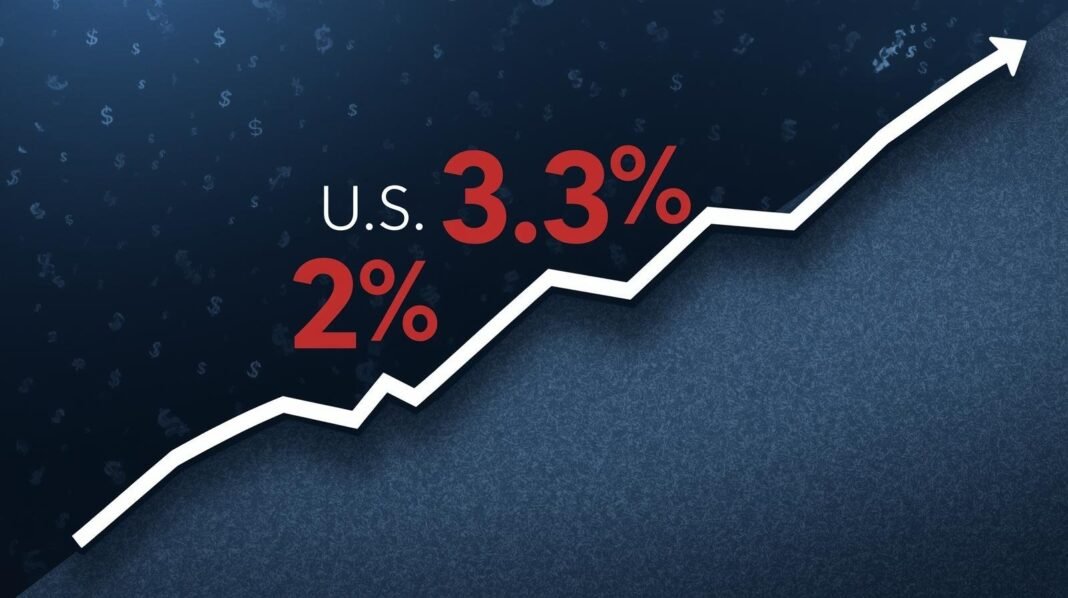
The U.S. economy grew at a faster pace than initially estimated in the second quarter of 2025, with the Commerce Department reporting on Thursday that gross domestic product (GDP) expanded at a 3.3% annualized rate.
The revised figure, released by the Bureau of Economic Analysis (BEA), marks an upgrade from the preliminary 3.0% estimate and signals resilience in the world’s largest economy following a weak start to the year.
A Sharp Rebound After First-Quarter Slump
The second-quarter expansion comes as a sharp turnaround after the economy contracted by 0.5% in the first quarter of 2025, largely due to trade disruptions and tariff-related slowdowns.
The rebound reflects stronger consumer spending, a notable pickup in private-sector investment, and a decline in imports, which reduced the drag on GDP.
“This latest revision underscores the durability of U.S. demand, especially in household consumption,” said Jason Feldman, senior economist at Evercore ISI.
“While global headwinds persist, the American consumer remains the backbone of this expansion.”
What Drove Growth Higher
Government statisticians pointed to two key factors behind the upward revision:
-
Consumer Spending: Households continued to spend robustly on services such as travel, healthcare, and entertainment, supporting overall demand.
-
Imports Decline: A sharper-than-expected drop in imports lessened the drag on GDP calculations, as goods sourced domestically substituted for some foreign products.
Business investment also showed signs of life, particularly in equipment and intellectual property, after several sluggish quarters.
That improvement bolstered confidence among analysts that growth may remain on a stable trajectory into the second half of the year.
Corporate Profits Recover
Alongside the GDP revision, the government reported a rebound in corporate profits, a metric closely watched by markets and policymakers. After several quarters of weakness, profit growth turned positive, reflecting stronger margins in manufacturing and technology sectors.
“This combination of firmer growth and improving profitability is a positive signal for hiring and investment decisions,” noted Sarah Klein, chief U.S. economist at Capital Economics.
Implications for Policy and Markets
The stronger-than-expected GDP data adds complexity to the Federal Reserve’s policy outlook.
While growth is encouraging, the Fed must weigh it against lingering concerns about inflation and financial stability.
Markets reacted cautiously to the release, with U.S. Treasury yields inching higher as investors reassessed the possibility of rate adjustments later this year. The dollar also strengthened modestly on the news.
Looking Ahead
Economists caution that while the second quarter’s performance is impressive, risks remain. Tariff uncertainties, global supply chain challenges, and geopolitical tensions could all weigh on growth in the months ahead.
Still, many analysts believe the momentum seen in consumer activity will help the economy avoid a significant downturn.
“The second-quarter numbers should give businesses and consumers some confidence that the U.S. economy is on firmer footing than feared earlier this year,” said Feldman.
“The challenge now will be sustaining this growth against external shocks.”
With the official revision to 3.3% growth, the U.S. economy has once again defied predictions of a slowdown, highlighting both its vulnerabilities and its enduring strength.
Also Read
Capitec Dethrones FirstRand: What the Challenger Bank Is Getting Right
NVIDIA’s Record-Breaking Quarter: Growth, Geopolitical Risks, and the AI Future

- Top Smart Safety Shoes to Watch in 2026 - March 29, 2026
- From Hard Hat to Smart Hat: How Wearables Are Rewiring Workplace Safety - March 28, 2026
- How Much Does Emergency AC Repair Cost in the US IN 2026? - March 26, 2026
