
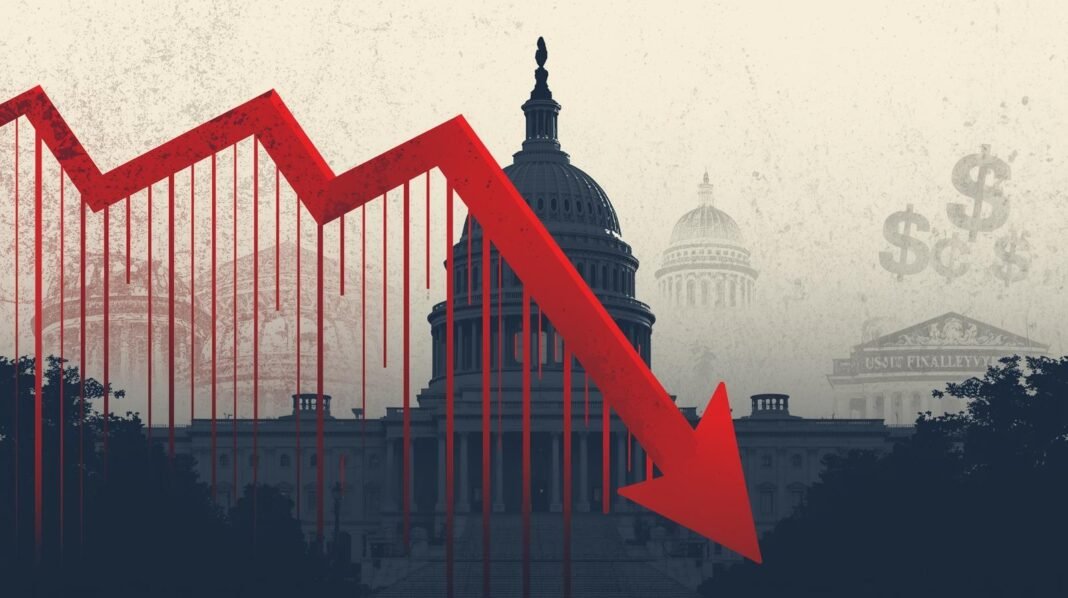
Stock futures dropped on Wednesday as Wall Street reacted to the start of a U.S. government shutdown, fueling concerns over delayed economic data and rising uncertainty for investors.
Dow futures slid more than 230 points, while S&P 500 and Nasdaq futures also traded lower, signaling a shaky open for U.S. markets.
Why Stock Futures Are Falling
Markets are under pressure as lawmakers in Washington remain locked in a budget standoff that has now triggered a shutdown.
The disruption raises the likelihood that crucial economic reports—including monthly jobs data and inflation figures—will be delayed.
Without these reports, the Federal Reserve faces an even tougher task in determining its next move on interest rates.
The lack of visibility on the economy’s health has left investors uneasy, with many shifting toward safe-haven assets such as gold and Treasuries.
Shutdowns and Market Volatility
Historically, government shutdowns create short-term volatility in equity markets, though the long-term impact has often been limited.
The 2018–2019 shutdown, the longest in U.S. history, trimmed billions from GDP and rattled consumer confidence. While some sectors rebound quickly, prolonged political stalemates can dent growth momentum and market sentiment.
Sectors Most at Risk
-
Defense and contractors may face delays in payments and government work.
-
Airlines and transportation could experience operational strain if federal staffing is disrupted.
-
Financials may struggle with limited access to official data that informs policy and market forecasts.
-
Safe-haven plays such as gold and Treasury bonds are attracting inflows as risk appetite cools.
What Investors Should Watch
-
Developments in Washington – Any progress toward a funding deal could immediately stabilize sentiment.
-
Alternative data sources – With government reports delayed, traders may turn to private surveys like ADP payrolls or PMI data.
-
Federal Reserve communication – The central bank may need to adjust its outlook if it lacks real-time economic data.
-
Market volatility signals – Bond yields, gold prices, and the VIX index will provide clues about investor risk appetite.
The Bottom Line
Stock futures are signaling renewed anxiety as the shutdown begins, highlighting the political risks weighing on Wall Street.
For now, investors are urged to stay defensive, avoid overreacting to headline-driven swings, and watch for clues from Washington that could determine whether this is a short-lived dip—or the start of deeper market turbulence.
Also Read
Boeing Stock Climbs on FAA Green Light and Airline Wins: Can the Rally Last?
Robinhood Stock Outlook: Breakout or Breakdown After a 226% Surge?

- U.S. Senators Push for Tariff Probe into Construction Equipment Imports from Mexico - March 30, 2026
- Top Smart Safety Shoes to Watch in 2026 - March 29, 2026
- SASSA Payment Dates for April 2026: What Every Beneficiary Needs to Know - March 29, 2026
