
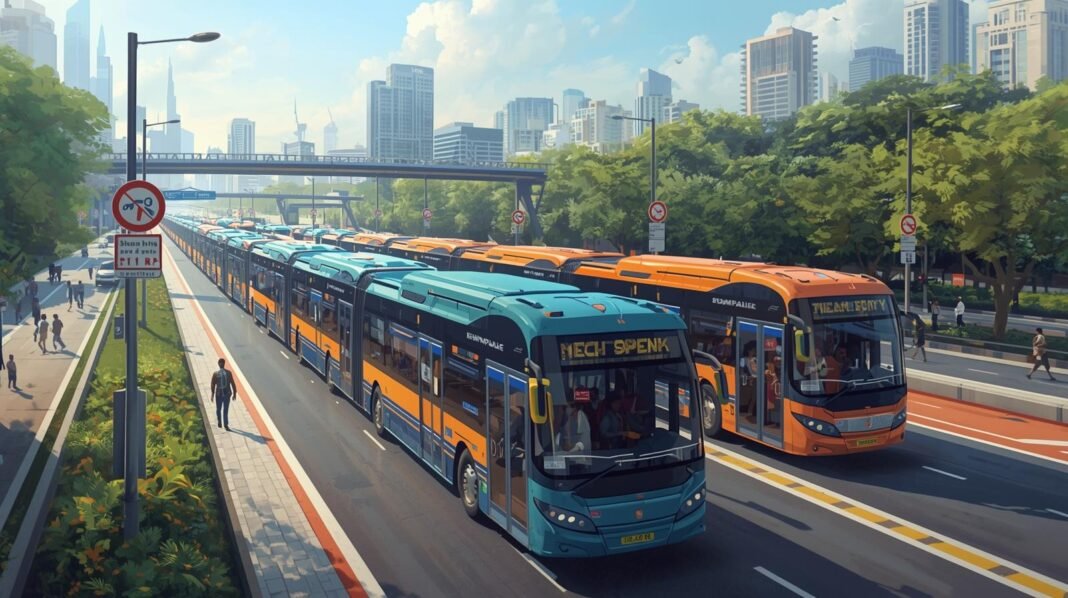
The Trump administration has abruptly terminated a $60 million commitment to Nairobi’s Bus Rapid Transit system, dealing a devastating blow to Kenya’s efforts to modernize its capital’s chronically congested transportation network.
The project, valued at approximately KSh 7.76 billion and barely 30 percent complete, was part of the Millennium Challenge Corporation Threshold Program signed just over a year ago during President William Ruto’s visit to the United Nations General Assembly in September 2023.
Under the now-canceled agreement, the United States was set to contribute KSh 5.8 billion while Kenya provided KSh 1.56 billion to develop a sophisticated GIS platform for managing urban transport data.
The system was designed to be the backbone of Nairobi’s ambitious five-line BRT network, complete with modern stations, footbridges, CCTV surveillance, electric vehicle charging depots, and integrated rapid transit capabilities.
The timing couldn’t be worse for Nairobi commuters. The capital’s traffic congestion costs the economy billions annually in lost productivity, and the BRT system was seen as a critical solution to ease the gridlock that chokes the city’s major arteries during rush hour.
Also Read: Kenya Breaks Ground on Electric Vehicle Assembly Plant in Naivasha
Part of Sweeping Foreign Aid Cuts
The Nairobi project cancellation is not an isolated incident. It represents just one piece of the Trump administration’s aggressive rollback of foreign assistance programs initiated under President Biden.
The administration has announced plans to eliminate over 90 percent of USAID contracts and slash approximately $60 billion in global development assistance.
Kenya has emerged as one of the hardest-hit nations, with canceled American contracts now exceeding KSh 108 billion in total value.
The country’s close relationship with the previous administration, which had positioned Kenya as a strategic partner in East Africa, now appears to be working against it.
What Happens Next?
With the American funding withdrawn and construction already underway on certain components, Kenya faces a critical decision: find alternative financing to complete the project or abandon the investment already made.
The Kenyan government has not yet announced whether it will seek funding from other international partners, redirect domestic resources, or scale back the project’s ambitions.
Transport experts warn that leaving the project incomplete would represent a significant waste of the resources already invested and perpetuate Nairobi’s transportation challenges for years to come.
Also Read:Kenya Set to Launch “Kenya Token” on Solana
The city’s population continues to grow rapidly, making the need for efficient public transit more urgent with each passing year.
For the millions of Nairobi residents who navigate the city’s chaotic matatu system and traffic-clogged roads daily, the cancellation means their wait for a modern, reliable public transport system just got considerably longer.
Also Read
Kenya Launches SmartBuild AI to Revolutionize Construction Planning and Cut Hidden Costs
From Groundbreaking Fanfare to Legal Gridlock: The Story of Kenya’s Pinnacle Tower

- U.S. Senators Push for Tariff Probe into Construction Equipment Imports from Mexico - March 30, 2026
- Top Smart Safety Shoes to Watch in 2026 - March 29, 2026
- SASSA Payment Dates for April 2026: What Every Beneficiary Needs to Know - March 29, 2026
