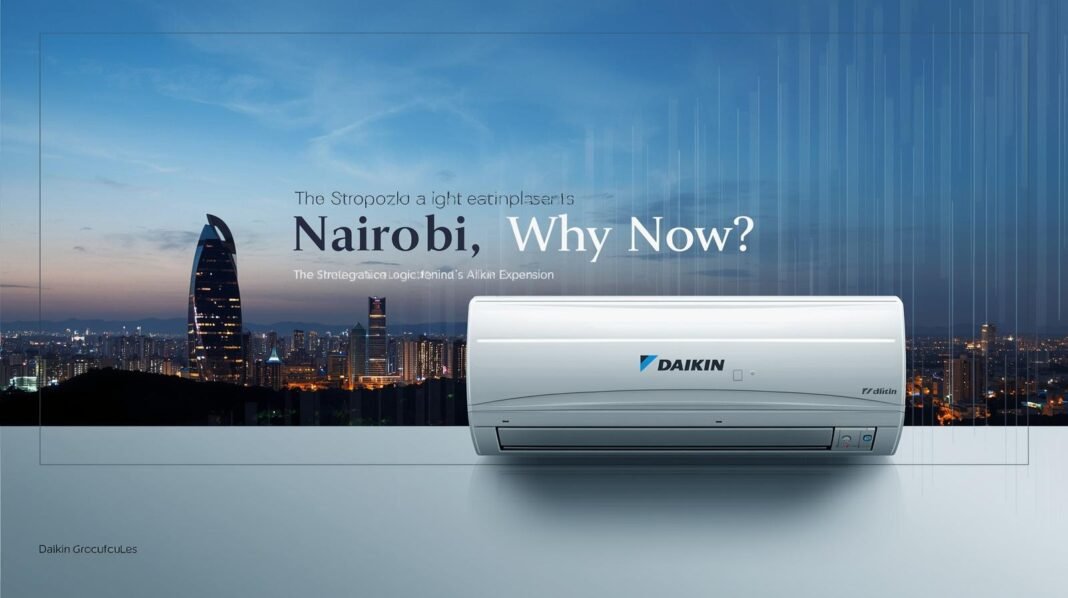
Daikin Industries Ltd., the world’s largest air-conditioning manufacturer, is sharpening its focus on Africa with a new office and showroom in Nairobi, underscoring the continent’s emergence as a key frontier for global HVAC players.
Africa’s Cooling Market: A High-Growth Frontier
The African air-conditioning market is projected to grow at 7–10% annually over the next decade, driven by urbanisation, rising disposable incomes, and escalating temperatures.
Yet penetration remains below 10% in most African cities, compared to 80% in parts of Asia. This gap presents a multibillion-dollar opportunity for Daikin, which already generates over $30 billion in global sales annually.
Why Nairobi?
Nairobi offers Daikin more than just geographic centrality. Kenya’s GDP has averaged 5% growth over the past five years, making it one of Africa’s more resilient economies.
The city is also a gateway to East Africa’s construction boom — with investments in commercial real estate, infrastructure, and housing driving demand for energy-efficient HVAC systems.
By anchoring its office in Westlands’ One Africa Place, Daikin gains visibility with developers, government stakeholders, and regional decision-makers.
The office doubles as a showroom and training hub, strengthening Daikin’s dealer and contractor network — an approach the company has successfully deployed in India and Southeast Asia.
Sustainability as a Differentiator
With African governments adopting stricter energy codes, Daikin is betting on its inverter and green refrigerant technologies to outpace lower-cost competitors.
Nairobi’s growing portfolio of LEED- and EDGE-certified buildings provides a natural testing ground. If Daikin can position itself as the premium, sustainable alternative, it could secure lucrative contracts in commercial and public-sector projects.
Competitive Dynamics
The expansion intensifies competition with Chinese and Middle Eastern brands that dominate Africa’s low-to-mid tier HVAC segment.
While rivals compete on cost, Daikin’s Nairobi hub signals a premium, service-led model aimed at institutional buyers and high-growth property markets.
Analysts say this positioning could help Daikin capture the top end of the market, where margins are higher and long-term partnerships matter more than price.
Strategic Signal
Daikin’s African footprint has long been limited to distribution agreements. The Nairobi expansion represents a shift from outsourced sales to a direct market presence, echoing the company’s early strategies in India and the Middle East — markets that now contribute significantly to growth.
If replicated across West and Southern Africa, Africa could become one of Daikin’s fastest-growing regions over the next decade.
Bottom line: The Nairobi office may be small in scale, but it carries outsized significance. For Daikin, Africa is no longer a distant bet — it is the next growth frontier.
Also Read
Ethiopia Unveils Africa’s Largest Dam Amid Nile Tensions
Why Now is the Best Time to Go Solar in South Africa: New Rules Cut Compliance Costs

- Thousands of Oracle Employees Say They Were Fired by Email - March 31, 2026
- U.S. Senators Push for Tariff Probe into Construction Equipment Imports from Mexico - March 30, 2026
- Top Smart Safety Shoes to Watch in 2026 - March 29, 2026
