
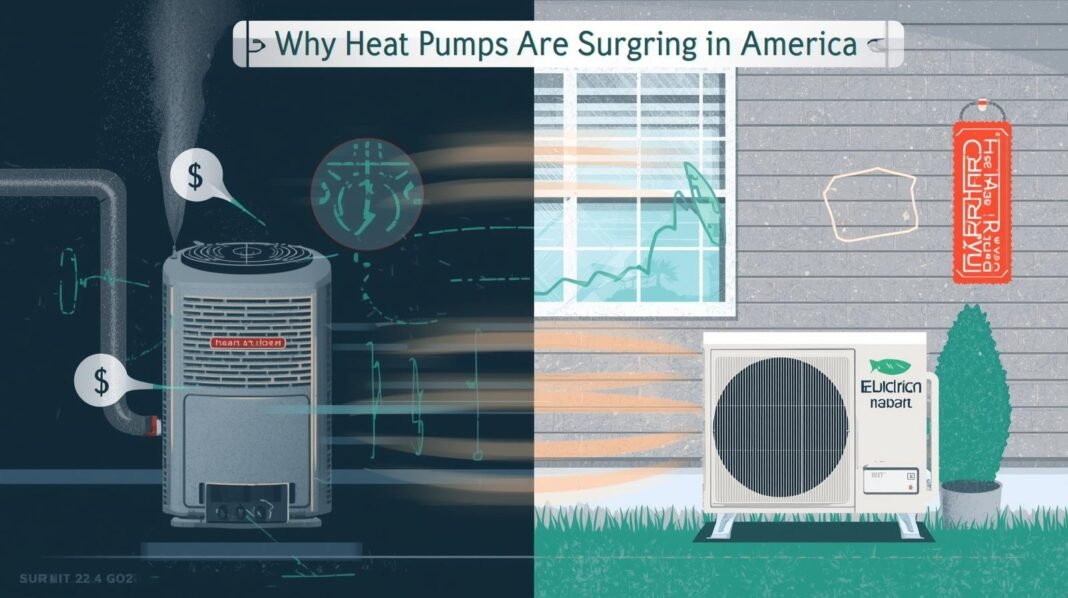
In just a few years, heat pumps have gone from a niche technology to one of the fastest-growing choices for American households.
Manufacturers are now shipping millions of units each year, and for the first time, heat pump sales have overtaken gas furnaces.
This shift reflects more than just a trend — it’s a fundamental change in how Americans heat and cool their homes.
One Device, Year-Round Comfort
The biggest reason behind this surge is simple: value. Heat pumps provide both heating in the winter and cooling in the summer.
Instead of generating heat, they move it, which makes them far more efficient than many traditional systems. For a homeowner replacing an old furnace or adding air conditioning, getting two systems in one makes heat pumps an attractive option.
Technology Has Caught Up
Not long ago, heat pumps were considered impractical in colder regions because they struggled in freezing weather.
That’s no longer true. Advances in compressor technology, refrigerants, and system design have created “cold-climate heat pumps” that can reliably warm homes even when outdoor temperatures plunge well below freezing.
Installers, too, are gaining more experience, which means better system design and fewer issues. Today’s heat pumps aren’t just an option for the South — they’re spreading to the Northeast and Midwest as well.
Incentives Make Them Affordable
Government support has been another game changer. Federal tax credits, state programs, and utility rebates are reducing the upfront cost of installing a heat pump.
For many homeowners, these financial incentives mean the difference between sticking with an old furnace and upgrading to a more efficient, modern system.
When you add in the fact that heat pumps can lower monthly energy bills — especially for households currently using oil or propane — the financial case becomes even stronger.
Regional Adoption Patterns
Heat pump adoption isn’t evenly spread across the country. In the South and Southeast, where winters are mild and air conditioning is essential, heat pumps are already a standard choice. In some states, more than a third of homes rely on them.
In colder regions, adoption has been slower, but momentum is building thanks to improved technology and generous state-level programs. Builders of new homes are also installing heat pumps at much higher rates than before, which means adoption will continue to grow.
More Than Just Comfort — Climate and Energy Goals
Beyond personal savings, heat pumps are helping meet bigger goals. As the U.S. grid brings in more renewable energy, electrifying home heating becomes an effective way to cut carbon emissions.
Heat pumps replace the need for on-site combustion of fossil fuels, improving indoor air quality and reducing environmental impact.
For many households, this added benefit is a powerful motivator. Choosing a heat pump isn’t just about saving money — it’s about future-proofing a home.
—–The U.S. Department of Energy has pointed to heat pumps as a central part of the nation’s transition toward a low-carbon energy system. With rising demand, better technology, and stronger policy support, heat pumps are on track to become a standard household choice by the 2030s.—
Barriers That Still Exist
Despite the momentum, there are still challenges. Upfront installation costs can be high, particularly if electrical panels or ductwork need upgrades.
In some states, high electricity rates make payback periods longer. And not every installer is trained to size and install heat pumps properly, which can affect performance.
There’s also an equity issue: renters and lower-income households often have fewer opportunities to switch, since decisions depend on landlords or financing options.
Why the Trend Will Continue
Even with these barriers, the direction is clear. Heat pumps are gaining ground because they solve real problems: they reduce energy bills, offer year-round comfort, and align with climate goals.
With technology improving and policies pushing toward electrification, their share of the market is expected to keep climbing.
Builders are increasingly installing them in new homes, homeowners are taking advantage of rebates, and more installers are recommending them. Each of these factors reinforces the momentum, making heat pumps less of a niche and more of a new normal.
Final Takeaway
So, why are heat pumps surging in popularity across America? Because they deliver on multiple fronts. They’re efficient, practical, increasingly affordable, and ready for climates where they once struggled.
At the same time, they help households save money and reduce their environmental impact.
For millions of Americans, that combination of comfort, cost savings, and sustainability makes the choice clear: the future of home heating and cooling is electric, and heat pumps are leading the way.
FAQs About Heat Pumps
1. Do heat pumps work in cold weather?
Yes. Modern cold-climate heat pumps can operate efficiently even below freezing, thanks to advanced compressors and refrigerants.
2. Are there tax credits for installing heat pumps?
Yes. The Inflation Reduction Act offers homeowners federal tax credits of up to $2,000, plus additional rebates depending on income and state programs.
3. How long does a heat pump last?
With proper maintenance, most heat pumps last 15–20 years, similar to traditional HVAC systems.
4. Are heat pumps expensive to run?
While upfront installation can cost more, their high efficiency often results in lower monthly bills, making them cost-effective in the long run.
5. Do heat pumps reduce carbon emissions?
Absolutely. By using electricity instead of fossil fuels, and with the grid increasingly powered by renewables, heat pumps are one of the most effective ways to lower household carbon footprints.
Also Read
Why Nairobi, Why Now? The Strategic Logic Behind Daikin’s African Expansion
Why Now is the Best Time to Go Solar in South Africa: New Rules Cut Compliance Costs

- Thousands of Oracle Employees Say They Were Fired by Email - March 31, 2026
- U.S. Senators Push for Tariff Probe into Construction Equipment Imports from Mexico - March 30, 2026
- Top Smart Safety Shoes to Watch in 2026 - March 29, 2026
