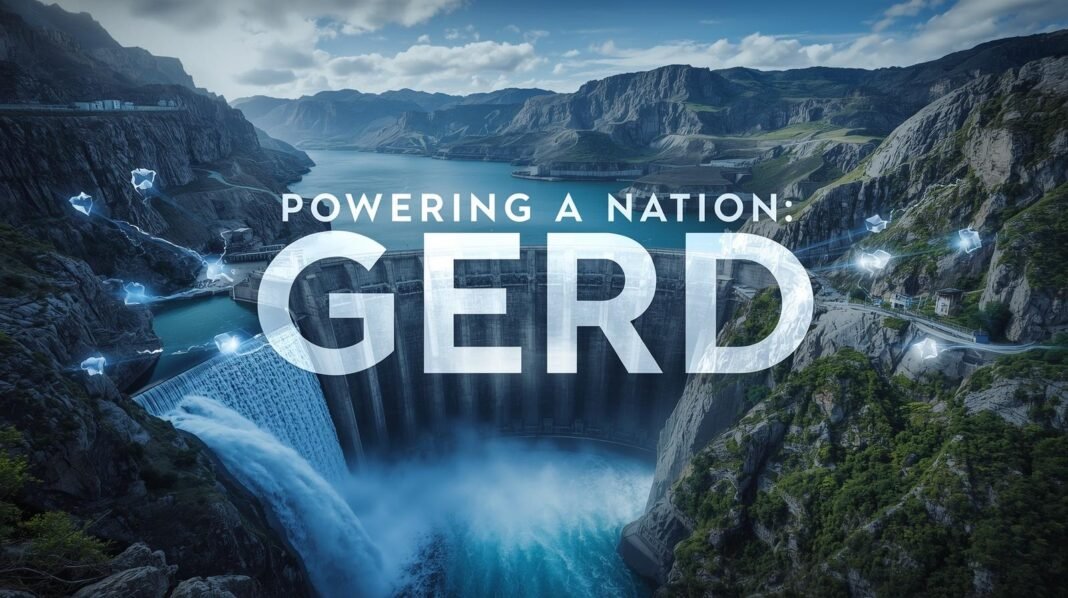
In a landmark event for Ethiopia and the entire African continent, the Grand Ethiopian Renaissance Dam (GERD) was officially inaugurated on September 9, 2025.
The ceremony, held in the Benishangul-Gumuz region, marks a pivotal moment in the nation’s history, promising a new era of energy independence and economic growth.
Yet, as the waters of the Blue Nile begin to turn the turbines of Africa’s largest hydroelectric project, the momentous occasion is shadowed by deep-seated regional tensions over the river’s precious resources.
This article explores the significance of the GERD for Ethiopia’s future, the concerns of its downstream neighbors, and the broader implications for energy and cooperation in the region.
We will look at how this colossal $5 billion project is set to transform a nation and reshape the geopolitical landscape of Northeast Africa.
A Monumental Achievement for Ethiopia
The GERD is more than just a dam; it is a symbol of national pride and a testament to Ethiopia’s ambition.
For over a decade, the country has poured immense resources and political capital into this mega-project.
Financed largely by its own citizens and government bonds, the dam represents a powerful statement of self-reliance.
With a projected capacity to generate over 6,000 megawatts of electricity, the GERD is designed to double Ethiopia’s current power output.
This surge in energy is critical for a country where a significant portion of the population still lacks access to reliable electricity. At the inauguration, Ethiopian officials spoke of the dam’s transformative potential.
“This is not just a project for Ethiopia; it is a project for our region,” stated a senior official during the ceremony.
“We are unlocking the gift of the Nile to lift millions out of poverty and power a new age of industry and progress. The GERD will electrify our entire region and foster shared prosperity.”
The economic benefits are expected to be substantial. The dam will power homes, schools, and hospitals, and fuel an expanding industrial sector.
Furthermore, Ethiopia plans to become a major electricity exporter, selling surplus power to neighboring countries and generating vital foreign currency.
The $5 billion investment is seen as a cornerstone of the nation’s strategy to achieve middle-income status.
Downstream Tensions and Water Scarcity Fears
While Ethiopia celebrates, its downstream neighbors, Egypt and Sudan, watch with apprehension.
The Nile River is the lifeblood for these arid nations, and any disruption to its flow is viewed as an existential threat.
The Blue Nile, which originates in Ethiopia, contributes over 85% of the total water volume of the Nile.
Egypt, which relies on the Nile for nearly all of its freshwater needs, fears that the rapid filling and operation of the GERD could severely restrict its water supply, especially during periods of drought.
For years, diplomatic negotiations have stalled, failing to produce a legally binding agreement on the dam’s operation and filling schedule.
Egypt insists on a deal that guarantees a minimum flow of water, a demand Ethiopia has resisted, citing its sovereign right to develop its natural resources.
Sudan’s position is more complex. While the dam offers potential benefits, such as regulating the Nile’s flow to prevent destructive seasonal floods and providing cheap electricity, it also poses risks.
Sudden releases of water from the GERD could overwhelm Sudan’s own dams, and the country shares Egypt’s concerns about the lack of a binding operational agreement.
The inauguration proceeds without this trilateral consensus, deepening the rift and leaving the future of water management in the hands of unilateral decisions.
The Broader Implications for Africa
The GERD saga is a microcosm of a larger challenge facing Africa: balancing national development with the need for regional cooperation on shared resources.
The dam highlights the continent’s immense potential for renewable energy.
Hydropower, along with solar and wind, is key to powering Africa’s future, reducing reliance on fossil fuels, and extending electricity to the hundreds of millions who still live without it.
However, the project also serves as a cautionary tale. Without robust frameworks for collaboration and conflict resolution, mega-projects on transboundary rivers can become sources of instability rather than shared progress.
The African Union has attempted to mediate the dispute, but a lasting solution remains elusive. The success or failure of resolving the GERD issue will set a precedent for future projects across the continent.
Looking Ahead: A Future Powered by Water and Diplomacy
As the Grand Ethiopian Renaissance Dam begins its operational life, it stands as a colossal structure of concrete, steel, and ambition. For Ethiopia, it represents a new dawn, a promise of light and prosperity for its 120 million people.
The dam is poised to become the powerhouse of East Africa, fundamentally altering the economic trajectory of the nation.
However, its full potential can only be realized through cooperation. The path forward requires a shift from confrontation to collaboration.
A binding agreement that addresses the concerns of Egypt and Sudan while respecting Ethiopia’s development goals is essential for long-term regional stability.
The future of the Nile Basin depends not just on the flow of water, but on a renewed flow of diplomacy and a shared vision for a prosperous and peaceful future.
Also Read
Anglo American and Teck Resources to Merge, Forming $53 Billion Copper Behemoth
Why Now is the Best Time to Go Solar in South Africa: New Rules Cut Compliance Costs

- Thousands of Oracle Employees Say They Were Fired by Email - March 31, 2026
- U.S. Senators Push for Tariff Probe into Construction Equipment Imports from Mexico - March 30, 2026
- Top Smart Safety Shoes to Watch in 2026 - March 29, 2026
