MAPUTO — The longest force majeure declaration in modern LNG history has officially ended.
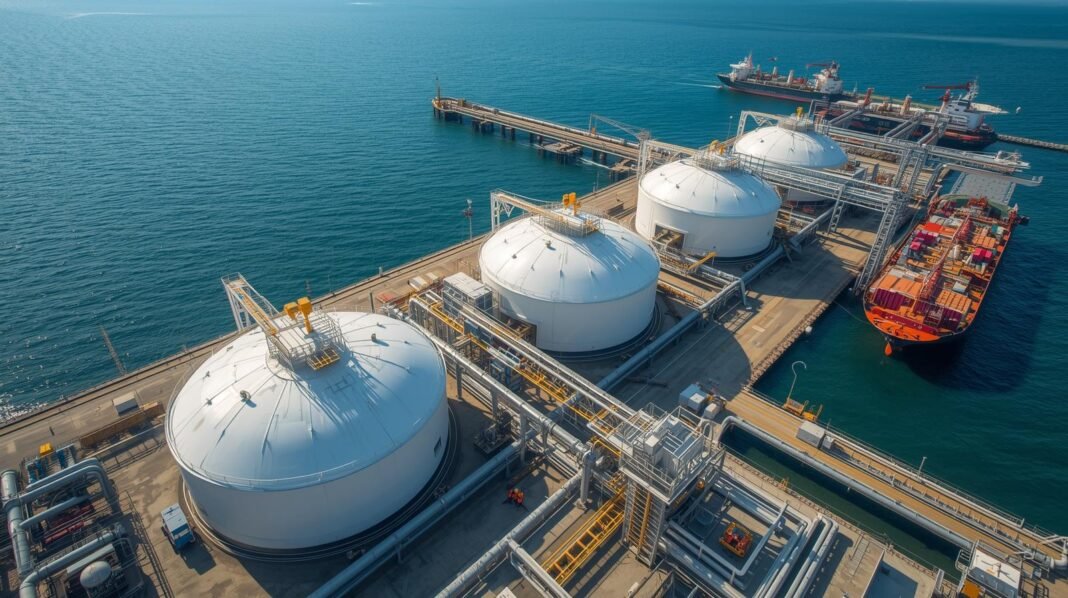
TotalEnergies confirmed last month that it has lifted the emergency suspension on its massive Mozambique LNG project, reopening a development that was frozen mid-construction when insurgents attacked a nearby coastal town in March 2021.
The French energy giant’s CEO Patrick Pouyanné sealed the reversal during negotiations with Mozambican President Daniel Chapo, reaching a critical agreement that allows the company to recoup an eye-watering $4.5 billion in costs incurred during the four-year shutdown through future tax deductions.
But the restart comes with a sobering reality check. What was once envisioned as a 2024 startup has been pushed back to the first half of 2029, with both production trains not expected to reach full capacity until the end of that year.
The delay represents nearly a decade lost since the project’s original timelines.
The Long Road Back
The transformation at the Afungi Peninsula site tells the story of an industry learning to operate in one of the world’s most challenging security environments.
Where construction crews once worked unimpeded, approximately 4,000 workers now operate under heavily reinforced security protocols, with significant resources devoted to protecting the facility from potential insurgent threats.
The economics have fundamentally shifted. The project budget has swelled to approximately $20.5 billion, with more than a fifth of that total consumed by expenses during the suspension period when no construction progress was being made.
A Government Desperate for Revenue
For Mozambique, the stakes could hardly be higher. The impoverished southern African nation has been counting on LNG revenues to transform its economy, with the project expected to generate substantial income from royalties and taxes once the facility begins producing 13 million tonnes of LNG annually.
The government still must grant final approval through its Council of Ministers for an amended development plan that reflects the new timeline and budget. But with national coffers strained and few alternatives for economic growth, rejection seems unlikely.
Security Gamble
The critical question remains whether the enhanced security measures will prove sufficient. The Cabo Delgado insurgency that triggered the original shutdown has been suppressed but not eliminated, thanks in part to intervention from Rwandan forces and a Southern African regional military mission.
TotalEnergies is betting that a combination of military presence, fortified infrastructure, and extensive surveillance can create a protective bubble around the facility. It’s a wager that will be tested over the next several years of construction and beyond.
Global Energy Implications
The restart carries implications far beyond Mozambique. The project represents one of the world’s largest untapped gas reserves coming online at a time when global LNG markets remain tight following Russia’s invasion of Ukraine and the resulting energy crisis.
For TotalEnergies, success could vindicate its persistence through an extraordinarily difficult period. Failure would raise profound questions about whether massive energy infrastructure can be developed in conflict-affected regions, no matter how promising the geology.
As workers return to the Afungi site and construction equipment fires up once again, both the company and the country are making a calculated bet that the insurgent threat has been contained enough to proceed.
The world will be watching to see if they’re right.
Also Read
Trump Pulls Plug on Nairobi’s $60 Million Bus Project Just Months After Launch
Hong Kong’s Construction Innovation Expo 2025 Postponed to 2026 Following Tai Po Fire Tragedy

- U.S. Senators Push for Tariff Probe into Construction Equipment Imports from Mexico - March 30, 2026
- Top Smart Safety Shoes to Watch in 2026 - March 29, 2026
- SASSA Payment Dates for April 2026: What Every Beneficiary Needs to Know - March 29, 2026
