
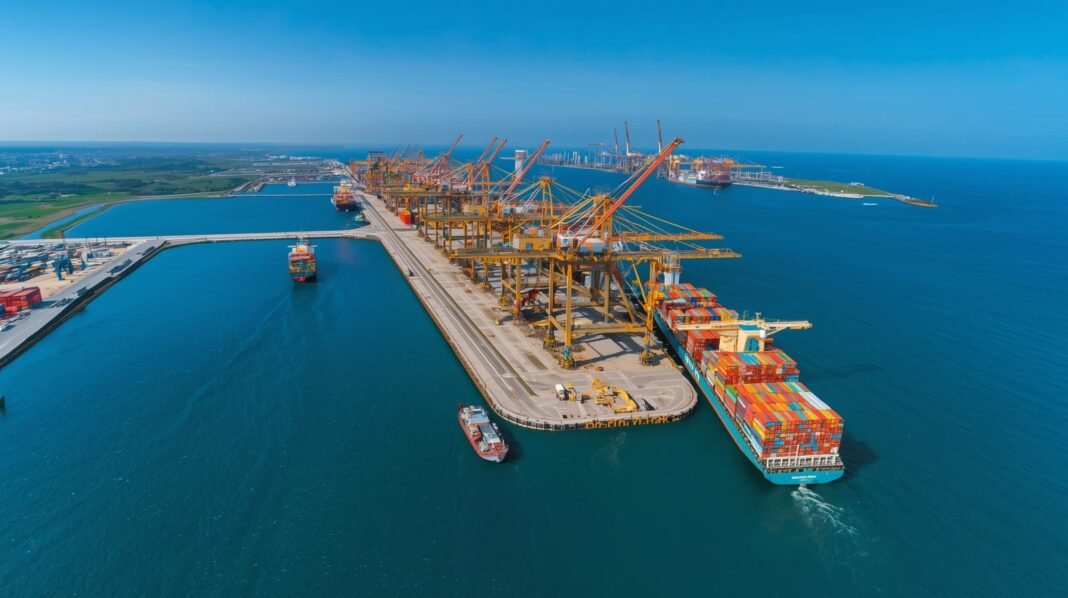
As Africa confronts an infrastructure financing gap estimated at between $68 billion and $108 billion annually, Public-Private Partnerships have emerged as a critical mechanism to bridge this divide.
With the continent’s population projected to reach 1.7 billion by 2030 and the African Continental Free Trade Area creating a single market of 1.3 billion people, infrastructure development has become more urgent than ever. Here are the most significant PPP projects reshaping Africa’s economic landscape in 2026.
Nigeria: A PPP Powerhouse Emerges
Nigeria has positioned itself at the forefront of Africa’s PPP revolution with an unprecedented wave of major infrastructure projects reaching approval in late 2025.
The Federal Executive Council has greenlit over N6.43 trillion in PPP projects, demonstrating the government’s commitment to leveraging private capital for national development.
Maritime Gateway Projects
Two transformative deep seaport developments are set to reshape Nigeria’s maritime infrastructure.
The Bakassi Deep Seaport, with an investment of $2.27 billion, will serve as a crucial maritime gateway for North-Central and North-East Nigeria. Complementing this is the Port of Ondo Deep Seaport, valued at $1.14 billion, which aims to unlock the region’s solid minerals and agro-allied potential.
Both projects are fully funded by private investors, marking a significant shift in Nigeria’s infrastructure financing approach.
Power Generation Breakthrough
The 460MW Katsina-Ala Hydropower Plant represents an $878 million investment in sustainable energy solutions.
This project demonstrates Nigeria’s strategic pivot toward cleaner power generation, with the potential to transform regional productivity and strengthen the national energy supply.
Combined with previously approved airport concessions and digital infrastructure projects, Nigeria has approved at least 13 PPP projects in 2025 alone.
Namibia’s Green Hydrogen Ambition
Namibia has captured global attention with what may become Africa’s most transformative energy project. The Hyphen Green Hydrogen project, valued at over $10 billion, represents a bold bet on the future of clean energy.
With construction scheduled to begin in January 2025 and the first phase targeting commissioning by late 2026, this initiative aims to produce 300,000 tons of green hydrogen annually by 2030.
The project will harness Namibia’s exceptional solar and wind resources, deploying 5-6GW of renewable generation capacity to power 3GW of electrolyser capacity.
The African Development Bank recently approved a $10 million loan to support front-end engineering design studies, underscoring international confidence in the project’s viability.
Beyond its environmental credentials, the project promises substantial economic benefits. It’s expected to create 15,000 construction jobs and 3,000 permanent positions, with 90% reserved for Namibian nationals.
Once at full scale, the project could supply enough surplus electricity to decarbonize Namibia’s entire power grid, potentially making the country a net exporter of low-carbon energy.
Additional green hydrogen initiatives, including the Daures Green Hydrogen Village and projects by Cleanergy Solutions, are positioning Namibia as Africa’s green hydrogen hub. The Daures project aims to produce 180,000 tonnes of green hydrogen and one million tonnes of green ammonia annually, demonstrating the sector’s rapid expansion.
South Africa: Transforming Energy Transmission
South Africa is pioneering an innovative approach to infrastructure financing with its Independent Transmission Projects Programme, marking the first time private investment will be permitted in the country’s transmission infrastructure.
This groundbreaking initiative is backed by a newly designed Credit Guarantee Vehicle, capitalized with R2 billion from the government.
The transmission expansion program addresses a critical bottleneck in South Africa’s renewable energy rollout. The National Transmission Company of South Africa’s Transmission Development Plan calls for more than 14,000 kilometers of new high-voltage power lines over the next decade.
Private investment in these transmission lines will enable thousands of megawatts of new renewable energy capacity to connect in areas where grid capacity is currently limited.
Supporting this ambitious program, the government is launching a R15 billion infrastructure bond to mobilize cheaper financing for critical projects.
The new Infrastructure Finance and Implementation Support Agency, set to become operational by March 2026, will centralize infrastructure finance functions and systematically attract private capital.
Municipal PPP regulations are being amended with completion expected by February 2026, while the Budget Facility for Infrastructure has been reconfigured to run four bid windows per year instead of one.
These reforms signal South Africa’s determination to accelerate infrastructure delivery through enhanced private sector participation.
East Africa’s Transport Corridors
The Lamu Port-South Sudan-Ethiopia Transport Corridor continues to advance as one of Africa’s most ambitious multi-country infrastructure projects.
The first three berths at Lamu Port are now completed and operational, with ongoing road works on the Lamu-Garissa-Isiolo section creating vital new trade corridors connecting landlocked East African nations to international markets.
Kenya continues to strengthen its position as one of Africa’s most mature PPP markets. Recent successful ventures include the Nairobi-Nakuru-Mau Summit road PPP, Kenya’s first PPP road project with an investment of $150 million, alongside major transmission line developments.
Kenya’s comprehensive legislative framework, updated with the Public Private Partnerships Act of 2021, positions the country for continued PPP growth across education, energy, health, housing, and water sectors.
The country’s geothermal energy sector is also embracing PPP models. The 100MW Paka project is being developed for PPP financing, while the successful 155MW Orpower4 plant and 105MW Menengai projects demonstrate the viability of private sector participation in Kenya’s renewable energy expansion.
East Africa is targeting more than 5,000MW of geothermal power projects by 2035, with most developments concentrated in Djibouti, Ethiopia, Kenya, and Tanzania.
Zambia: Rail Renaissance
Zambia’s 2026 National Budget has established a transformative framework for transport infrastructure through PPPs, with particular emphasis on rail modernization. The government has introduced a tailored tax regime for rail PPPs, positioning Zambia as one of Africa’s most attractive destinations for long-term infrastructure investment.
Since announcing its PPP strategy in 2021, Zambia has signed 10 PPP agreements in the road sector, representing a total investment of $1.7 billion. The government’s focus on rail infrastructure aims to reduce the country’s heavy reliance on roads, which currently handle over 96% of export value but face increasing maintenance costs and environmental concerns.
With more PPP projects expected to be announced in 2026, Zambia’s ambition to create a well-connected, competitive, and resilient transport system appears increasingly achievable. The country has overhauled its PPP framework to align with global standards, introducing clearer rules on procurement, project appraisal, and dispute resolution.
Morocco’s World Cup Infrastructure Drive
Morocco’s co-hosting bid for the FIFA 2030 World Cup is catalyzing substantial infrastructure investment across the kingdom.
The country aims to bridge its projected $37 billion infrastructure gap by 2040 through focused investments in roads, ports, airports, rail links, and energy, with renewables receiving over half of an upcoming $4 billion investment allocation.
Morocco has established itself as one of Africa’s PPP leaders, consistently mobilizing billions in private capital for transformative infrastructure projects. The country’s mature regulatory framework and strategic partnerships with international investors have made it a model for other African nations seeking to enhance their PPP capabilities.
Regional Power Integration
Energy infrastructure remains the dominant sector for PPP investment across Africa, accounting for 78% of PPP projects in recent years.
South Africa’s Renewable Energy Independent Power Producers Procurement Program Bid Window 7 aims to procure 3,200MW of wind power and 1,800MW of solar power, representing one of the largest renewable energy procurement rounds in African history.
Major upstream oil and gas projects are also advancing, with developments including Ivory Coast’s Baleine Phase 3, Angola’s Agogo Phase 3, and Algeria’s Bourarhet Nord projects representing more than $30 billion in capital expenditure.
These projects underscore the critical role of midstream infrastructure and regional integration in Africa’s energy transition.
Challenges and Opportunities
Despite the momentum, Africa’s PPP market faces persistent challenges. Projects remain heavily concentrated in a few countries—South Africa, Nigeria, Kenya, Egypt, Morocco, and Uganda account for over half of all PPP projects by value.
Many African governments struggle with limited resources, slow procurement processes, weak project preparation, and inadequate risk-sharing structures that discourage long-term private investment.
The underdeveloped nature of local and regional financial markets forces private operators to pursue international financing options, which often come at higher costs ultimately transferred to the public through elevated user fees or taxes.
Political risks, both real and perceived, continue to complicate investor confidence across much of the continent.
However, regulatory reforms are gaining traction. Countries including Rwanda, Kenya, Ghana, Morocco, and Senegal have made significant strides in adopting pro-investment legal reforms.
Innovative financing mechanisms such as green bonds, infrastructure debt funds, credit-enhancement instruments, and project preparation facilities are helping to bridge the bankability divide.
Looking Ahead
The Infrastructure Africa 2026 Conference, scheduled for March 2-3 in Cape Town, will provide a crucial platform for connecting stakeholders and mobilizing investment.
With the African Continental Free Trade Area creating unprecedented opportunities for regional integration, infrastructure development has become the backbone enabling trade, industrialization, and sustainable development.
As Africa’s PPP market matures, the focus is shifting from mere project approval to effective execution and long-term sustainability.
The projects outlined above represent more than infrastructure development—they embody Africa’s determination to leverage partnerships between public vision and private sector efficiency to build the foundation for sustainable economic growth.
With an estimated annual energy infrastructure need of up to $170 billion and broader infrastructure requirements far exceeding that figure, Africa’s PPP revolution is not just necessary but inevitable.
The question for 2026 is not whether these partnerships will shape Africa’s future, but how effectively they will be executed to deliver tangible benefits to Africa’s growing population.
The projects advancing in 2026 demonstrate that when properly structured with clear risk allocation, transparent procurement, and strong political will, PPPs can transform Africa’s infrastructure landscape.
Success stories from Nigeria’s deep seaports to Namibia’s green hydrogen ambitions prove that Africa is ready to take its place as a major destination for infrastructure investment—and that the continent’s most transformative projects are just beginning to take shape.
Also Read
10 Mega Construction Projects Set to Transform Africa by 2026
Next-Gen Stadiums: Innovative Designs Shaping Africa’s Sporting Venues

