
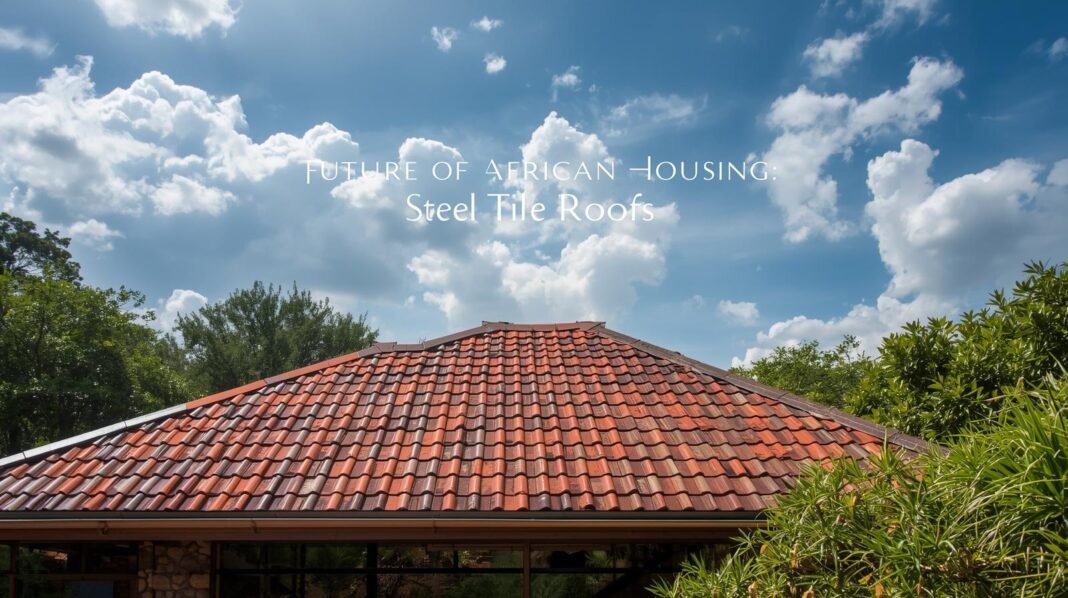
Across African cities and towns — from new suburban developments to fast-growing peri-urban settlements — roofing is quietly changing.
Homeowners, builders and architects are increasingly choosing steel tile roofs: products that combine the classic look of tile with the strength, lightness and longevity of steel.
For a continent facing rapid urbanisation, extreme weather events and pressure to build affordably and sustainably, steel tile roofing is emerging as a pragmatic, future-facing choice.
Built for climate and cost
African climates are diverse but many regions face the same roofing challenges: intense sun, heavy seasonal rains, high winds and corrosive coastal air.
Traditional clay or concrete tiles look great, but they are heavy, brittle and often require costly roof strengthening or replacement. Corrugated iron sheets are light and cheap, but they dent, corrode and age quickly.
Steel tile roofs — often stone-coated or alloy-coated for extra corrosion resistance — hit a sweet spot. They are far lighter than clay or concrete tiles, which reduces requirements (and cost) for roof framing.
Lighter roofs speed construction and lower labour and material costs — an important advantage where skilled labour is scarce. Because the underlying material is steel, panels resist cracking and can better withstand wind uplift when properly fixed, improving resilience during storms.
Longevity and lower lifecycle costs
A key reason steel tile roofs are gaining traction is lifecycle economics. Upfront cost comparisons sometimes favour cheaper corrugated sheets, but when maintenance, repair frequency and replacement intervals are factored in, steel tile roofs often cost less over the life of the building.
-
Steel tile roofs are engineered to resist rust and UV degradation; modern coatings and stone chips extend life and appearance.
-
Reduced leak rates and easier inspection/repair lower maintenance bills.
-
Many steel tile systems carry long product warranties, which appeals to homeowners and developers focused on asset value.
For governments and housing developers planning mass-build programmes, the lower total cost of ownership — not just the sticker price — makes steel tiles an attractive specification.
Energy efficiency and comfort
Urban heat is a growing problem across African cities. Roofs play a major role in indoor temperatures. Steel tile roofs can be manufactured with reflective coatings and airspace-compatible profiles that reduce heat transfer into buildings. In practical terms this means:
-
Cooler indoor temperatures in hot months.
-
Less reliance on electricity-intensive cooling (important where power access is limited or costly).
-
Potential to combine with insulation and ventilated roof systems for even better thermal performance.
When policymakers and builders look for scalable ways to improve living comfort without large capital investments in HVAC, roofing choices matter — and steel tile systems can deliver measurable benefits.
Aesthetics that sell homes
One reason homeowners resist metal roofs is aesthetics. Steel tile roofs counter that objection by replicating the classic profile of clay tiles, slate or shingles while retaining the technical advantages of metal.
Architects and developers appreciate the design flexibility: multiple profiles, colours and finishes allow new housing to match cultural and neighbourhood aesthetics — important for marketability and resale value.
This aesthetic-versus-performance balance is critical in mixed-use developments and gated communities where visual appeal can be the difference between a quick sale and months on the market.
Sustainability and circularity
Sustainability is no longer optional in many procurement processes. Steel tile roofs score well on sustainability metrics:
-
Steel is highly recyclable; many manufacturers use recycled content in production.
-
Long lifespan reduces the frequency of material replacement and the embodied carbon of repeated roofing cycles.
-
Lighter roofs mean less construction material overall (smaller trusses, less concrete for foundations).
When combined with reflective coatings that reduce cooling loads, steel tile systems contribute to lower operational energy use. For green building programmes and financiers evaluating ESG performance, that combination makes steel tiles a compelling spec.
Faster installation, safer roofs
Installation speed matters in large housing projects and in informal settlement upgrading where time on site must be minimised.
Steel tile panels are typically modular and lighter, enabling faster installation with smaller crews. Faster build cycles lower labour costs, reduce exposure to construction-site hazards, and speed the time-to-occupancy for families.
Additionally, because the material resists cracking and breakage, rooftop safety improves: fewer broken tiles, safer maintenance access, and a lower chance of water ingress that can lead to structural decay.
Local manufacturing and economic benefits
Where steel tile production can be localised, the benefits ripple beyond single projects. Local manufacturing:
-
Reduces import costs and supply chain delays.
-
Creates jobs in production, distribution and installation.
-
Encourages development of local standards and after-sales services (warranty centres, spare parts).
Countries with active steel industries can therefore convert roofing demand into broader industrial growth — an economic multiplier that aligns with national development goals.
Challenges and how to address them
No solution is perfect. Common objections to steel tile roofs include concerns about noise during heavy rain, perceived coldness in winter, and misinformation about corrosion. These are addressable:
-
Proper insulation and underlayment solutions reduce noise and thermal concerns.
-
High-quality coatings and galvanised/galvalume cores significantly mitigate corrosion — choosing reputable manufacturers is essential.
-
Installer training and quality control ensure correct fixing and flashing, which reduces leak and durability issues.
Education campaigns for builders and homeowners, combined with enforceable product standards, will accelerate adoption while keeping quality high.
Conclusion — practical, scalable, and future-ready
Steel tile roofs are more than a roofing product; they’re a systems solution that aligns with Africa’s housing needs: resilience to climate, affordability across a building’s lifecycle, faster construction times, aesthetic flexibility and sustainability.
For developers, governments and homeowners looking to invest in housing that performs well today and stands the test of time, steel tile roofing is a forward-looking choice.
If African housing programmes and private developers prioritise lifecycle value, local production and scalable installation methods, steel tile roofs will move from being an option to the standard.
And that shift will deliver safer, cooler and more affordable homes for millions.
Also Read
Roof Safety: Essential Gear and Practices for Roofers
7 Unbeatable Temporary Power Rental Solutions for Manufacturing Plant Emergencies

- Top Smart Safety Shoes to Watch in 2026 - March 29, 2026
- From Hard Hat to Smart Hat: How Wearables Are Rewiring Workplace Safety - March 28, 2026
- How Much Does Emergency AC Repair Cost in the US IN 2026? - March 26, 2026
