
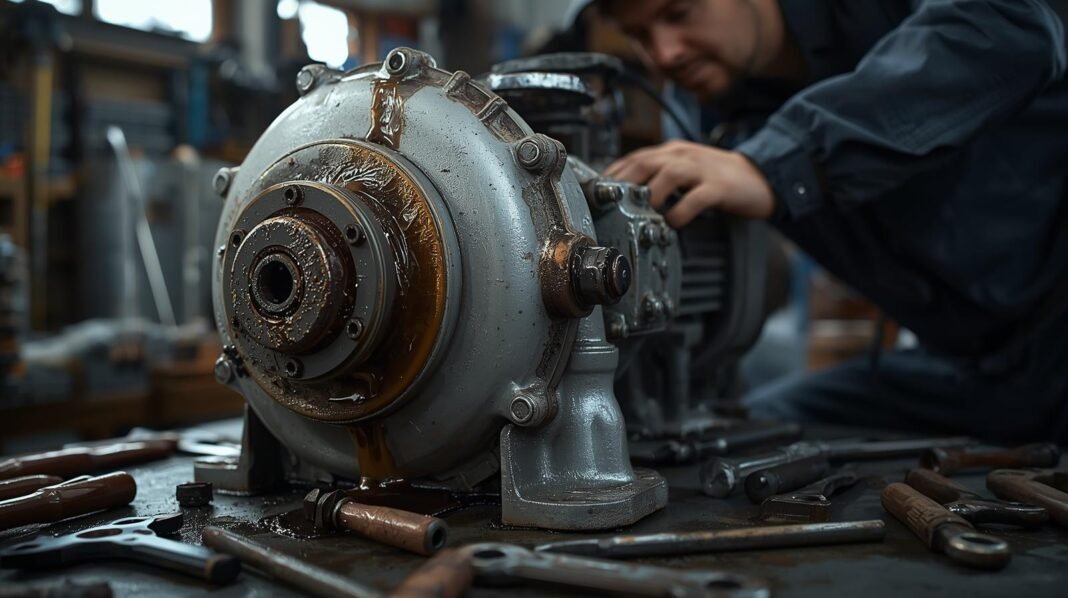
Hydraulic pumps are the heart of any hydraulic system, converting mechanical energy into hydraulic energy to power everything from industrial machinery to construction equipment.
When these critical components fail, the consequences can be costly—resulting in unexpected downtime, expensive repairs, and lost productivity.
Understanding the most common hydraulic pump failures and implementing preventive measures can save your operation thousands of dollars while extending equipment lifespan.
Understanding Hydraulic Pump Operation
Before diving into failures, it’s essential to understand how hydraulic pumps work. These devices create flow by mechanically moving fluid from a reservoir through the system.
The three main types—gear pumps, vane pumps, and piston pumps—all rely on precise tolerances and clean fluid to operate efficiently. When these conditions aren’t met, failure becomes inevitable.
Cavitation: The Silent Destroyer
Cavitation occurs when vapor bubbles form in the hydraulic fluid due to low pressure at the pump inlet.
As these bubbles move into higher-pressure areas within the pump, they implode violently, creating shock waves that erode internal components over time.
Symptoms of cavitation include:
- Excessive noise resembling marbles rattling in the pump
- Reduced pump performance and efficiency
- Pitted or damaged internal surfaces
- Erratic system operation
Prevention strategies: Ensure adequate reservoir levels and proper fluid viscosity for operating temperatures. Install inlet lines with appropriate diameter to minimize pressure drop, and keep suction lines as short and straight as possible. Regular inspection of inlet strainers prevents blockages that restrict flow.
Maintaining proper operating temperature prevents fluid from becoming too viscous in cold conditions or too thin when hot.
Contamination: The Primary Culprit
Contamination accounts for approximately 75% of all hydraulic system failures. Even microscopic particles can cause catastrophic damage to precision-machined pump components operating with clearances measured in microns.
Common contaminants include:
- Dirt and dust entering through breather caps or damaged seals
- Metal particles from component wear
- Water from condensation or external sources
- Chemical breakdown products from degraded fluid
Prevention strategies: Implement a comprehensive filtration strategy using appropriately rated filters for your system.
Replace filters according to manufacturer recommendations or when differential pressure indicators signal replacement. Use breather caps with desiccant filters on reservoirs to prevent moisture and airborne contamination.
Always use clean containers and funnels when adding fluid, and never top off with fluid that hasn’t been filtered. Consider offline filtration systems for large reservoirs to continuously clean the fluid even when the system isn’t operating.
Aeration: Air in the System
Unlike cavitation, which involves vapor bubbles forming from the fluid itself, aeration occurs when external air enters the hydraulic system. Air is compressible, while hydraulic fluid is not—this fundamental difference causes numerous problems.
Signs of aeration:
- Spongy or sluggish system response
- Foaming in the reservoir
- Increased fluid temperature
- Pump noise similar to cavitation
Prevention strategies: Inspect and replace worn or damaged seals on the pump shaft and suction lines. Ensure all fittings are properly tightened and free from leaks. Maintain proper fluid levels—low levels can create a vortex that draws air into the pump inlet.
Use proper bleeding procedures when filling or servicing the system, and allow adequate residence time in the reservoir for entrained air to escape before fluid returns to the pump.
Overheating: Temperature’s Toll
Excessive heat is both a cause and symptom of hydraulic system problems. Most hydraulic fluids operate optimally between 120°F and 140°F (49°C to 60°C). Temperatures consistently exceeding 180°F (82°C) accelerate fluid degradation and damage seals and other components.
Causes of overheating:
- Undersized or blocked heat exchangers
- Operating pressures exceeding system design
- Internal pump wear increasing bypass flow
- Excessive system friction or restriction
Prevention strategies: Regularly clean heat exchangers and cooling fins to maintain efficiency. Monitor fluid temperature with gauges or temperature sensors.
Ensure proper fluid selection for your operating environment—different applications require different viscosity grades.
Address any leaks promptly, as low fluid levels reduce the system’s ability to dissipate heat. Consider installing additional cooling capacity if your application consistently generates high temperatures.
Worn Components and Clearance Loss
Over time, the precise clearances inside hydraulic pumps increase due to normal wear. As internal bypass increases, pump efficiency drops dramatically.
What begins as slightly reduced performance eventually leads to complete pump failure.
Indicators of wear:
- Decreased system pressure
- Slower cycle times
- Increased pump case temperature
- Higher noise levels during operation
Prevention strategies: Use high-quality hydraulic fluid with appropriate anti-wear additives. Maintain clean fluid to minimize abrasive wear.
Operate within the pump’s rated pressure and speed specifications—running pumps beyond their design parameters accelerates wear exponentially.
Implement predictive maintenance by monitoring pump performance metrics and establishing baseline efficiency measurements. Replace pumps before catastrophic failure occurs, allowing for planned downtime rather than emergency repairs.
Improper Installation and Misalignment
Many pump failures begin at installation. Improper shaft alignment, incorrect coupling selection, or inadequate mounting can create excessive loads that quickly destroy bearings and seals.
Prevention strategies: Follow manufacturer installation guidelines precisely. Use proper alignment tools to ensure shafts are perfectly aligned—even slight misalignment creates destructive side loads.
Select appropriate flexible couplings that can accommodate minor misalignment while protecting the pump. Ensure the mounting surface is rigid and level. Never use the pump as a structural support or mount—it should only transmit rotational force.
Developing a Preventive Maintenance Program
The most effective way to prevent hydraulic pump failures is implementing a comprehensive maintenance program that includes regular fluid analysis, temperature monitoring, vibration analysis, and visual inspections.
Establish baseline performance metrics when equipment is new, then trend these measurements over time to predict when maintenance is needed.
Train operators to recognize early warning signs and encourage reporting of unusual noises, temperature changes, or performance issues. Many catastrophic failures could be prevented if minor problems were addressed promptly.
Conclusion
Hydraulic pump failures are rarely sudden or unpredictable. Most result from preventable conditions that develop over time.
By understanding common failure modes and implementing proven prevention strategies, you can dramatically extend pump life, reduce maintenance costs, and eliminate unexpected downtime.
The investment in proper filtration, fluid maintenance, and monitoring programs pays for itself many times over through improved reliability and equipment longevity.
Remember, hydraulic systems operate on simple principles: keep the fluid clean, cool, and at proper levels, maintain system components according to specifications, and address problems early before they cascade into major failures.
These practices form the foundation of hydraulic system reliability.
Also Read
Step-by-step guide to waterproofing a basement
Top 3 Construction Trends to Watch in 2026

- South Africa’s April 1 Triple Shock: When the Joke Is on the Consumer - March 26, 2026
- KeNHA’s World Bank Funding Boost: Inside Kenya’s KSh Multi-Billion Expressway Masterplan - March 25, 2026
- SASSA locks in full-year social grant payment schedule — and announces biggest increases in years - March 24, 2026
