
A clogged kitchen sink is one of the most frustrating household problems you’ll encounter. Water pools in the basin, dishes pile up, and that unpleasant odor starts creeping in.
Before you reach for the phone to call a plumber, try these five proven methods that can save you time and money.
1. Boiling Water: The Simplest Solution
Sometimes the easiest fix is the most effective. Boiling water can dissolve grease, soap residue, and other organic materials causing minor clogs.
Start by removing any standing water from the sink. Boil a full kettle of water and pour it directly down the drain in stages, waiting a few seconds between each pour.
The heat helps break down fatty deposits clinging to your pipes.
This method works best for grease-based clogs and should be your first attempt for any slow-draining sink.
One important note: avoid this method if you have PVC pipes, as boiling water can soften or damage them. Use very hot tap water instead.
2. The Plunger Technique
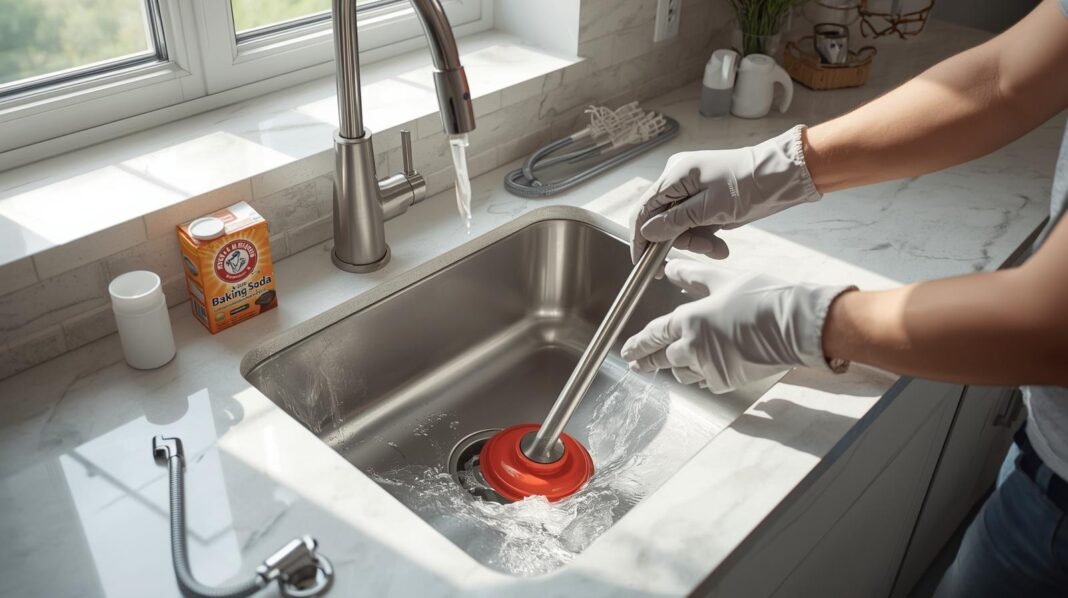
A plunger isn’t just for toilets. This classic tool creates pressure that can dislodge stubborn blockages in your kitchen sink.
Fill the sink with enough water to cover the plunger cup. If you have a double sink, plug the second drain with a wet cloth to prevent air from escaping.
Place the plunger over the drain and pump vigorously 15 to 20 times. The suction and pressure work together to break up the clog and push it through the pipes. You may need to repeat this process several times for stubborn blockages.
3. Baking Soda and Vinegar: The Natural Powerhouse
This chemical-free combination creates a fizzing reaction that can break down clogs without harsh chemicals damaging your pipes or the environment.
Remove standing water, then pour one cup of baking soda down the drain. Follow this with one cup of white vinegar and immediately plug the drain with a stopper or wet cloth. The mixture will fizz and bubble as it works its magic.
Let it sit for at least 30 minutes, or even overnight for tough clogs. Flush with hot water to clear away the loosened debris.
This method is particularly effective for clogs caused by food particles, grease buildup, and soap scum. It’s also safe to use regularly as a preventive measure.
4. The Drain Snake or Zip-It Tool
When liquid solutions fail, it’s time to physically remove the clog. A drain snake (also called a plumber’s auger) or a plastic zip-it tool can reach deep into your pipes to grab hair, food particles, and other solid debris.
Insert the tool into the drain and push it down while rotating. You’ll feel resistance when you hit the clog. Continue pushing and twisting until you break through or hook the blockage. Slowly pull the tool back out, bringing the clog with it.
Be prepared for an unpleasant sight and smell. Flush the drain with hot water afterward to clear any remaining debris.
Zip-it tools are inexpensive, disposable options available at most hardware stores and work well for shallow clogs. For deeper blockages, invest in a proper drain snake.
5. Clean the P-Trap
If none of the above methods work, the clog might be in the P-trap, the curved pipe section under your sink designed to hold water and prevent sewer gases from entering your home.
Place a bucket under the P-trap to catch water and debris. Use a wrench or your hands to loosen the slip nuts connecting the trap to the pipes.
Remove the P-trap and empty its contents into the bucket. Check both the trap and the pipes for blockages, using a brush or your fingers to clear any buildup. Rinse everything thoroughly before reassembling. Make sure all connections are tight to prevent leaks.
This method is highly effective because it allows you to physically access and remove the clog. It’s messier than other options but often provides a definitive solution.
Prevention Tips
Once you’ve successfully unclogged your sink, take steps to prevent future blockages. Avoid pouring grease or oil down the drain, use a sink strainer to catch food particles, run hot water after each use, and consider a monthly maintenance flush with baking soda and vinegar.
Most kitchen sink clogs can be resolved with these DIY methods, saving you the cost of a plumber’s visit.
Start with the simplest solution and work your way up to more intensive methods as needed. Your clear-flowing sink will thank you.
Also Read
How to make your kitchen look sleek and elegant
Top 6 must-have bathroom accessories

- U.S. Senators Push for Tariff Probe into Construction Equipment Imports from Mexico - March 30, 2026
- Top Smart Safety Shoes to Watch in 2026 - March 29, 2026
- SASSA Payment Dates for April 2026: What Every Beneficiary Needs to Know - March 29, 2026
