
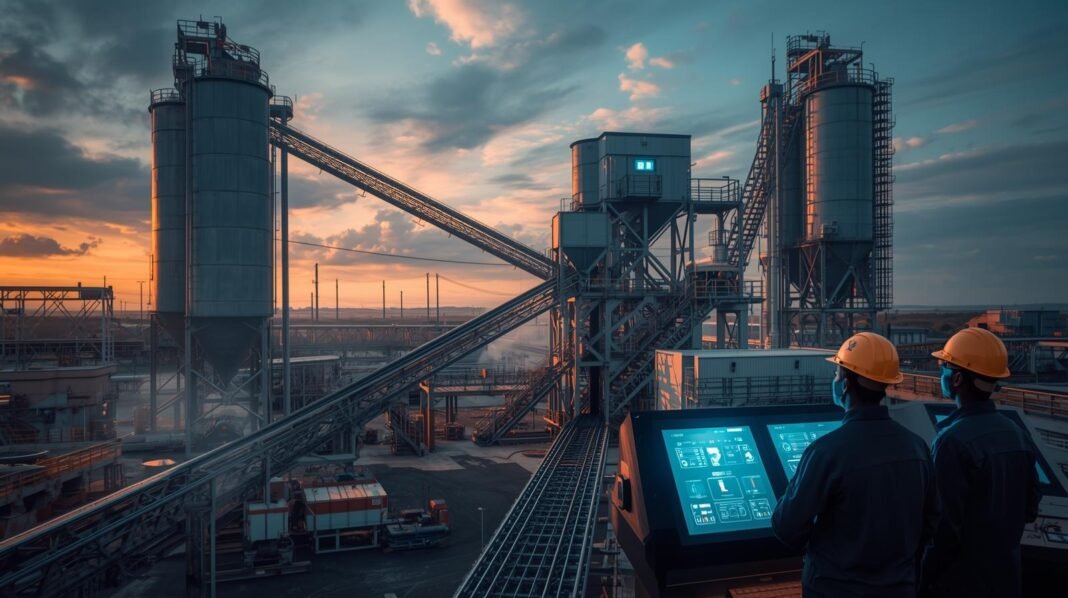
The acrid smell hits you first—a distinctive blend of heated petroleum and crushed stone that’s unmistakable to anyone who’s driven past an asphalt plant.
But beyond that signature scent lies a sophisticated operation where raw materials transform into the smooth pavement beneath millions of tires every day.
Modern asphalt plants represent a fascinating intersection of chemistry, engineering, and environmental technology, producing the material that quite literally paves the way for modern civilization.
The Beating Heart of Road Construction
On any given morning at a modern asphalt plant, the operation begins long before the first truck arrives. Inside the control room, operators monitor banks of screens displaying temperatures, flow rates, and mixture specifications with the precision of a pharmaceutical manufacturer.
This isn’t the smoky, chaotic industrial scene of decades past. Today’s plants are highly automated facilities where computer systems regulate every aspect of production, from aggregate proportions to the exact temperature at which bitumen bonds with stone.
The process starts in towering silos that store different grades of aggregate—crushed stone, gravel, and sand that form the skeleton of asphalt pavement.
These materials have been carefully selected and tested for size, durability, and compatibility.
A typical plant might stock five or more aggregate sizes, each serving a specific purpose in the final mix. The largest stones provide structural strength, while progressively smaller particles fill gaps and create density.
The finest sand acts almost like ball bearings, allowing the mix to flow and compact smoothly during paving.
From storage, aggregates travel by conveyor belt toward the plant’s centerpiece: the dryer drum. This massive rotating cylinder, often 30 feet long or more, performs the crucial first transformation.
Aggregates enter one end while a burner at the opposite end blasts flame and heat through the drum. The purpose isn’t just warming the stone—it’s driving out every molecule of moisture.
Water is asphalt’s enemy; even a small amount can cause the pavement to fail prematurely. As the drum rotates, materials cascade through 300-degree heat, emerging bone-dry and ready for binding.
The Chemistry of the Mix
What happens next is where modern asphalt production reveals its sophistication. The heated aggregates move to a mixing chamber where they meet liquid asphalt cement—the black, tar-like petroleum derivative that gives asphalt pavement its binding power and characteristic color.
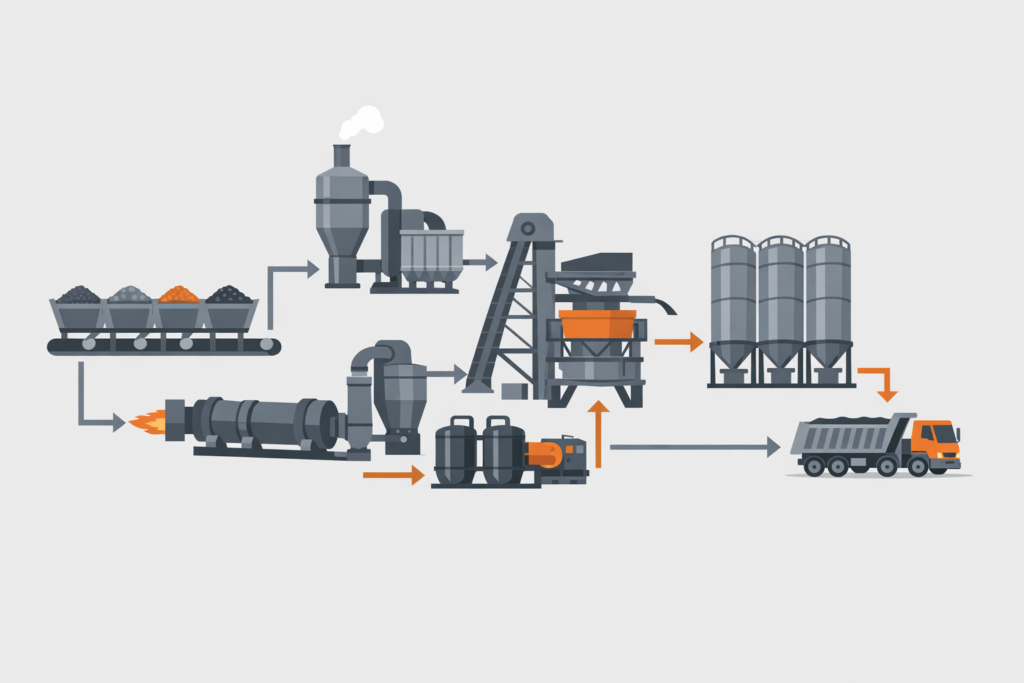
IN SUMMARY: How a Modern Asphalt Plant Works: Step-by-Step Process
-
Cold Feed Bins
Raw aggregates of different sizes are stored in cold feed bins and precisely measured to ensure the correct asphalt mix design. -
Conveyor Belt System
Aggregates are transported from the bins to the drying drum using controlled conveyor belts for consistent material flow. -
Drying Drum & Burner
Aggregates are dried and heated at high temperatures to remove moisture, improving asphalt strength and durability. -
Dust Collection System
Fine particles are captured through baghouse filters, reducing emissions and improving environmental compliance. -
Hot Aggregate Elevator
Heated aggregates are lifted to the mixing tower for further processing. -
Screening Unit
Aggregates are separated by size to maintain uniformity and high-quality asphalt production. -
Weighing & Proportioning
Aggregates, bitumen, and fillers are accurately weighed to meet project specifications. -
Asphalt Mixing Unit
All materials are blended in a high-performance mixer to produce a homogeneous asphalt mix. -
Bitumen Storage & Heating Tanks
Bitumen is stored at controlled temperatures to ensure optimal viscosity during mixing. -
Asphalt Storage Silos
Finished asphalt is temporarily stored in insulated silos to retain heat before dispatch. -
Truck Loading & Dispatch
Hot asphalt is loaded into trucks and transported to construction sites for paving.
This material arrives at the plant in tanker trucks and is stored in heated tanks, maintaining a temperature around 300 degrees Fahrenheit to keep it fluid.
The ratio of aggregate to asphalt cement typically runs about 95 to 5, but that small percentage of binder is critical. Too little, and the pavement crumbles. Too much, and it becomes soft and prone to rutting.
Modern plants use sophisticated electronic scales to ensure every batch hits the target within a fraction of a percent. The mixing itself happens in a matter of seconds—paddles spinning at high speed coat each particle of stone with a thin film of asphalt cement, creating the familiar black mixture.
But the real innovation in contemporary plants lies in their ability to produce specialized mixes for specific applications.
A surface course that vehicles drive on directly requires different properties than a base layer that provides structural support.
High-traffic intersections need mixes that resist deformation, while airport runways demand exceptional durability.
Many plants now produce warm-mix asphalt, which uses additives or foaming techniques to allow production at temperatures 30 to 50 degrees lower than conventional hot mix, reducing energy consumption and emissions.
Environmental Evolution
Perhaps nowhere has asphalt plant technology advanced more dramatically than in environmental performance.
The industry has undergone a remarkable transformation from its smoke-belching past to today’s relatively clean operations. Modern plants incorporate sophisticated pollution control systems that capture particulates before they can escape into the atmosphere.
Baghouse filters—massive fabric filtration systems—trap dust particles as small as a few microns, achieving removal efficiencies exceeding 99 percent.
Even more impressive is the industry’s embrace of recycling. Asphalt pavement is America’s most recycled product, with reclaim rates surpassing paper, glass, and plastic. When roads are milled or torn up, the material doesn’t go to landfills—it returns to asphalt plants.
Modern facilities include parallel drums or special feed systems that allow them to incorporate recycled asphalt pavement (RAP) into new mixes, sometimes at rates exceeding 50 percent.
This isn’t just environmental virtue signaling; RAP contains valuable asphalt binder that would otherwise need to be purchased, making recycling economically attractive.
Some cutting-edge plants go further, accepting recycled asphalt shingles torn from demolished roofs, rubber from ground-up tires, and even slag from steel production. Each recycled input reduces both environmental impact and material costs.
The challenge lies in maintaining quality—recycled materials must be carefully evaluated and proportioned to ensure the final product meets specifications.
Advanced testing equipment now allows operators to verify mix properties in real-time, adjusting proportions on the fly to account for variations in recycled content.
The Human Element
Despite all the automation and computer control, skilled human operators remain essential. In the control room, an experienced plant operator reads the facility like a conductor reads an orchestra. They notice when aggregate moisture content increases after a rain, requiring dryer adjustments.
They spot when a burner isn’t achieving optimal combustion and needs tuning. They understand that different paving contractors have different preferences—some want their mix slightly hotter, others prefer a stiffer consistency.
Mike Patterson has operated asphalt plants for 27 years, and he describes the job as equal parts science and intuition. “The computer can tell you the temperature and the weight, but it can’t tell you if the mix looks right,” he explains during a brief break between batches.
“You learn to see when the coating is complete, when the moisture is gone, when something’s off even if all the numbers say it’s perfect.” His weathered hands gesture toward the viewing window where freshly mixed asphalt tumbles into a waiting truck bed, steaming in the cool morning air.
The seasonal nature of asphalt production adds another dimension to the work. In much of the country, asphalt plants operate intensively from April through October, then sit largely idle through winter when freezing temperatures make paving impractical.
This creates a pressure-cooker environment during paving season, with plants running extended hours to meet demand. A single facility might produce 500 to 1,000 tons per day during peak season—enough to pave several miles of two-lane road.
Economic Realities and Market Forces
The economics of asphalt production are driven by infrastructure demand and petroleum prices. Asphalt cement is a refined petroleum product, so its cost fluctuates with oil markets. When crude prices spike, asphalt producers face margin pressure, sometimes struggling to pass increased costs to customers working on fixed-price contracts.
This volatility has accelerated the adoption of recycled materials and warm-mix technologies that reduce petroleum consumption.
Plant ownership has consolidated significantly over recent decades. While independent operators still exist, many facilities now belong to larger construction companies that have vertically integrated—controlling the entire chain from aggregate mining through asphalt production to final paving.
This integration provides supply security and cost control but has reduced the number of independent producers competing in many markets.
The capital requirements create substantial barriers to entry. A modern batch plant might cost between three and five million dollars, while a larger drum-mix facility can exceed ten million.
Add in the cost of land, environmental permits, aggregate reserves, and working capital, and starting an asphalt plant becomes a major industrial undertaking. Consequently, most new facilities are expansions or upgrades of existing sites rather than greenfield developments.
Innovation on the Horizon
The asphalt industry, often perceived as traditional and slow-moving, is actually experiencing a period of significant innovation.
Researchers are developing bio-based binders derived from vegetable oils and lignin that could partially replace petroleum-derived asphalt cement.
These materials promise lower environmental impact and reduced dependence on fossil fuels, though questions about long-term performance and cost-effectiveness remain.
Other advances focus on pavement longevity. Self-healing asphalt mixtures incorporate materials that can fill small cracks before they propagate into larger failures.
Some experimental mixes include steel fibers that allow for induction heating, enabling repairs without removing and replacing pavement.
While these technologies remain largely in the research phase, they point toward a future where asphalt pavements last longer and require less maintenance.
Digital technology is also transforming plant operations. Modern facilities increasingly connect to the internet, allowing remote monitoring and diagnostics.
When equipment begins showing signs of wear, predictive maintenance algorithms can alert operators before failures occur, reducing downtime.
Mix design software now uses artificial intelligence to optimize recipes based on available materials, local climate conditions, and intended pavement use.
The Community Relationship
Few industrial facilities generate as much local controversy as asphalt plants. Residents near these operations often complain about noise, odor, truck traffic, and perceived health impacts.
Plant operators counter that modern facilities meet stringent environmental standards and provide essential materials for infrastructure maintenance.
This tension plays out repeatedly in zoning hearings and permit applications across the country.
Successful plants invest in community relationships, implementing measures that go beyond regulatory requirements. Some install advanced odor control systems, plant buffer vegetation, or restrict operating hours to minimize disturbance.
Others invite community members to tour facilities, demystifying operations and addressing concerns directly. The most effective operators recognize that maintaining their social license to operate requires ongoing engagement, not just regulatory compliance.
The industry argues, with considerable justification, that society cannot function without asphalt pavement. Roads, parking lots, airport runways, bike paths—the infrastructure that enables modern life—depends on a steady supply of asphalt.
The materials must be produced relatively near where they’re used because asphalt cools during transportation, making long-distance hauling impractical. This means communities that want maintained infrastructure must accept asphalt plants in relative proximity.
Looking Ahead
As infrastructure needs intensify and environmental expectations rise, asphalt plants find themselves at a crossroads.
The American Society of Civil Engineers estimates that the United States needs to invest trillions of dollars in infrastructure improvements over the coming decades. Much of that investment will require asphalt pavement, placing sustained demand on production facilities.
Simultaneously, climate change concerns and environmental justice movements are scrutinizing industrial operations more closely.
Plants will need to continue reducing emissions, increasing recycled content, and minimizing community impacts. The facilities that thrive will be those that embrace innovation while maintaining the operational efficiency that makes asphalt pavement economically viable.
Inside the control room, as another load of steaming asphalt rumbles out toward a paving project, the synthesis of past and future is evident. The basic process—heating stone, mixing it with petroleum binder—remains fundamentally unchanged from a century ago.
But the precision, efficiency, environmental performance, and material science behind modern asphalt production would astonish the industry’s pioneers.
These facilities, hidden in plain sight along highways and industrial corridors, continue their essential work: transforming rock and oil into the foundation of modern mobility.
Frequently Asked Questions
What does an asphalt plant do?
An asphalt plant manufactures hot-mix asphalt pavement by combining heated aggregates (crushed stone, gravel, and sand) with asphalt cement, a petroleum-based binding agent.
The plant heats aggregates to remove moisture and raise their temperature, then mixes them with liquid asphalt binder in precise proportions to create the material used for paving roads, parking lots, and other surfaces.
Modern plants also incorporate recycled asphalt pavement and other materials into new mixes, operating sophisticated pollution control systems to minimize environmental impact while producing hundreds or thousands of tons of asphalt daily during paving season.
What is asphalt used for?
Asphalt is primarily used for paving roads, highways, and streets, comprising about 94% of paved surfaces in the United States.
Beyond roadways, asphalt serves numerous other applications: airport runways and taxiways, parking lots, driveways, bicycle paths, walking trails, playground surfaces, and running tracks. It’s also used for roofing shingles, waterproofing applications, and as a sealing material.
Asphalt’s durability, flexibility, weather resistance, and relatively low cost make it ideal for surfaces that must withstand heavy loads and varying temperatures while providing a smooth, safe driving or walking surface.
Its ability to be recycled and repaved multiple times adds to its sustainability credentials.
How much is an asphalt plant?
Asphalt plant costs vary widely based on production capacity, technology type, and features. A small portable batch plant might start around $500,000 to $1 million, suitable for smaller contractors or remote projects.
Mid-sized stationary batch plants typically range from $2 million to $5 million, while large drum-mix plants with high production capacity can cost $5 million to $15 million or more.
These figures cover the core equipment but don’t include site preparation, concrete foundations, silos, storage facilities, aggregate stockpiles, environmental systems, permits, or installation labor, which can add millions more.
Used plants cost substantially less but may lack modern efficiency and environmental features. The total investment to establish a functioning asphalt production facility, including land and working capital, often exceeds $10 million to $20 million.
What does an asphalt plant look like?
An asphalt plant presents as a distinctive industrial complex dominated by vertical structures and surrounded by large mounds of aggregate materials.
The central feature is typically a tall tower or elevated structure housing the mixing equipment and hot aggregate storage bins, often reaching 60 to 100 feet high.
Adjacent to this stands the dryer drum—a large, slightly inclined cylindrical structure where aggregates are heated. Multiple tall silos store different sizes of aggregates before processing, while heated storage tanks hold liquid asphalt cement.
Conveyor belts connect various components, moving materials throughout the facility. The plant is typically surrounded by organized piles of different aggregate sizes, sorted by type and grade.
Most facilities include a baghouse or other emission control system—often a large rectangular structure near the dryer.
Truck scales, a control building, and maintenance shops complete the layout. The entire complex usually covers several acres and produces visible heat shimmer and steam during operation.
Also Read
How Ready-Mix Concrete Plants Work
Cone Crushers vs. Impact Crushers: Which Is Better for Basalt Aggregates?

