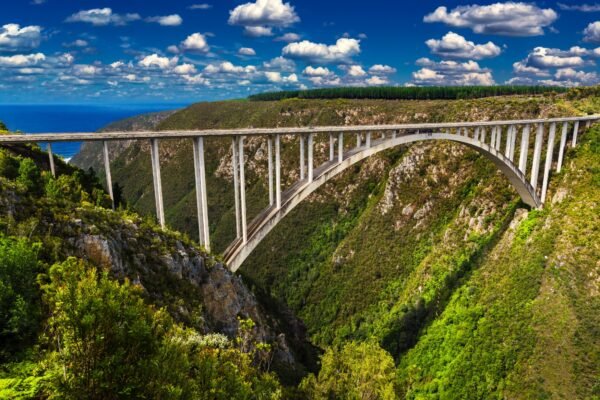
The South African National Roads Agency SOC Ltd (SANRAL) is reaffirming its commitment to complete a major bridge rehabilitation project along the Garden Route, almost ten years after construction first got underway.
The prolonged timeline highlights both the complexity of maintaining strategic transport infrastructure and the challenges that can derail large public works projects.
The project, centred on the rehabilitation of the Bloukrans Bridge on the N2 highway, has faced a series of setbacks since work commenced in 2016.
Contractor failures, legal disputes, procurement delays and rising construction costs have all contributed to repeated interruptions, leaving the bridge only partially completed after nearly a decade.
Despite these obstacles, SANRAL has indicated that finishing the project remains a priority because of the bridge’s strategic role on one of South Africa’s busiest transport corridors.
The N2 serves as a vital economic artery connecting the Western Cape and Eastern Cape, carrying freight, tourists and commuters through the scenic Garden Route region.
According to reports, the rehabilitation project is approximately 55% complete. SANRAL is now working to secure the resources and contractual arrangements necessary to bring construction to completion after previous contractors were unable to finish the work.
The delays have significantly increased the project’s overall cost compared with the original budget.
Inflation in construction materials, additional engineering requirements and the need to reprocure portions of the work have all added to the financial burden.
Such challenges are not unique to South Africa, with infrastructure projects worldwide often experiencing cost escalations when schedules extend over many years.
The Bloukrans Bridge is a critical asset within the national road network.
Maintaining its structural integrity is essential for ensuring the continued safe movement of vehicles along the N2, a route that supports regional trade, tourism and economic development.
Rehabilitation works are intended to extend the bridge’s service life and ensure it continues to meet modern safety and operational standards.
For businesses operating in logistics and transport, reliable road infrastructure is particularly important.
Delays or restrictions on key corridors can increase travel times, raise operating costs and disrupt supply chains.
Completing the bridge project is therefore expected to benefit freight operators and other road users who depend on efficient connectivity between provinces.
The Garden Route itself is one of South Africa’s premier tourism destinations, attracting visitors with its coastal landscapes, nature reserves and outdoor attractions.
Sustained investment in transport infrastructure helps support tourism by improving accessibility and ensuring that major routes remain safe and dependable throughout the year.
The project also underscores the broader challenges facing infrastructure delivery in the public sector.
Complex engineering works often require specialised contractors, long-term funding commitments and effective project management to remain on schedule.
When disruptions occur, recovery can be difficult, particularly if replacement procurement processes or legal proceedings are required.
SANRAL has continued to emphasise the importance of preserving and upgrading South Africa’s road network as demand for transport infrastructure grows.
Rehabilitation projects, while less visible than entirely new developments, play a crucial role in extending the lifespan of existing assets and reducing the need for more costly replacements in the future.
As efforts to complete the Bloukrans Bridge rehabilitation move forward, industry observers will be watching closely to see whether the renewed commitment translates into tangible progress on site.
Successful completion would represent the culmination of nearly a decade of work and demonstrate the importance of persistence in delivering nationally significant infrastructure projects despite unforeseen setbacks.
With freight volumes expected to grow and tourism remaining a key contributor to the regional economy, bringing this long-delayed project to completion could strengthen the resilience and reliability of one of South Africa’s most important transport corridors for years to come.
Also Read
South Africa’s Highest Court Slams Shut the Door on R40 Million Beit Bridge Fence
Lesotho’s R2.4bn Senqu Bridge Opens

- Accurate and Reliable Measurement and Monitoring of Industrial Plant Water Treatment - October 21, 2026
- SODECA Highlights Industrial Ventilation Technology at Mega Clima Expo Kenya 2026 - October 14, 2026
- How They Were Built: Inside the Engineering of the Lesotho Highlands Water Project - October 11, 2026