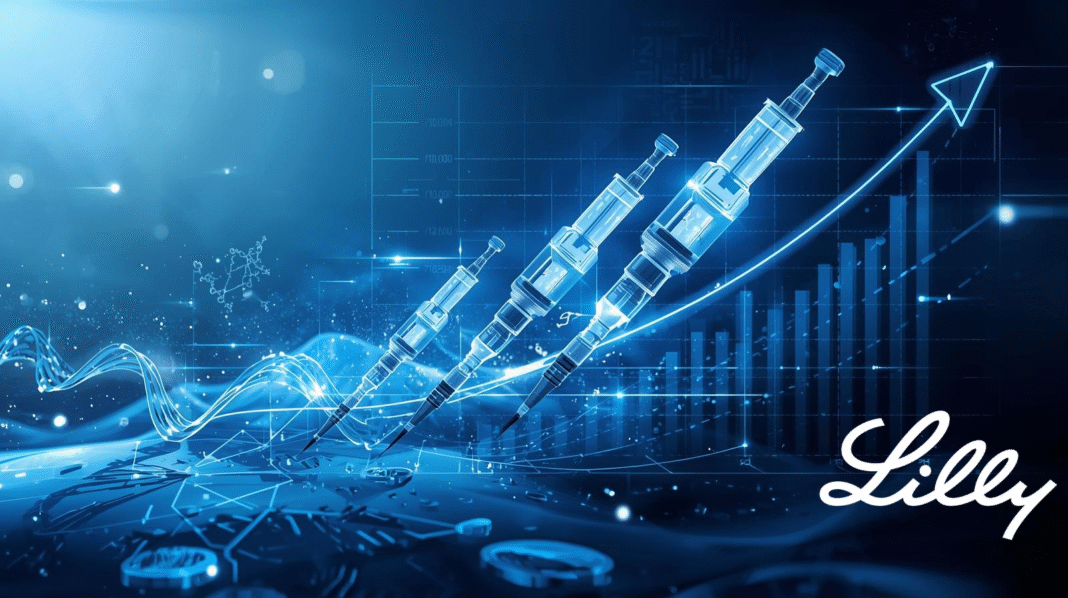
Eli Lilly has become the first healthcare company in history to reach a trillion-dollar market valuation, marking a watershed moment for the pharmaceutical industry.
The company’s shares surged above $1,060 in late November 2025, culminating in a 35% rally throughout the year driven almost entirely by explosive demand for weight-loss medications.
This achievement places the Indianapolis-based drugmaker in an elite club previously dominated by technology giants like Apple, Microsoft, and Nvidia.
Eli Lilly is now the second non-technology company to reach the coveted trillion-dollar mark in the United States after Warren Buffett’s Berkshire Hathaway, signaling a profound shift in how the market values pharmaceutical innovation.
From Civil War Veteran to Global Powerhouse
The company’s origins trace back to 1876, when Colonel Eli Lilly, a pharmaceutical chemist and Union Army veteran, founded his namesake firm in Indianapolis.
What began as a modest wholesale drug manufacturing operation has evolved into one of the world’s most influential pharmaceutical corporations.
The Lilly Endowment, a charitable foundation organized in 1937 by the founding family, owns 10% of the company, maintaining a connection to the founder’s legacy of innovation and philanthropy.
Throughout its history, Eli Lilly pioneered numerous medical breakthroughs, from mass-producing insulin in the 1920s to developing penicillin during World War II.
The GLP-1 Revolution: A Game-Changing Class of Drugs
The pharmaceutical landscape transformed dramatically with the emergence of GLP-1 receptor agonists, a class of medications that mimic naturally occurring gut hormones.
The human gut naturally produces a hormone called GLP-1 in response to eating, which triggers mechanisms that regulate blood sugar levels, slow digestive processes, and act on neurons in the brain to create feelings of fullness.
Eli Lilly brought exenatide to market in 2005, marking the first GLP-1 receptor agonist, laying the groundwork for today’s blockbuster weight-loss medications.
However, the real breakthrough came with the development of tirzepatide, a dual-action medication that revolutionized obesity treatment.
Mounjaro and Zepbound: The Dual-Receptor Advantage
Eli Lilly’s competitive edge stems from tirzepatide’s unique mechanism of action. Tirzepatide works by imitating two hormones produced in the gut called GLP-1 and GIP, with GLP-1 helping reduce food intake and appetite while GIP also suppresses appetite and may improve how the body breaks down sugar and fat.
This dual-receptor approach differentiates Eli Lilly from rival Novo Nordisk, whose semaglutide-based products (Ozempic and Wegovy) only target GLP-1.
Tirzepatide has a greater affinity to GIP receptors than to GLP-1 receptors, and this dual agonist behavior has been shown to produce greater reductions of hyperglycemia compared to a selective GLP-1 receptor agonist.
The same active ingredient, tirzepatide, is marketed under two brand names: Mounjaro for type 2 diabetes management and Zepbound for weight loss and obesity treatment.
In the third quarter, Mounjaro drew in $6.52 billion in revenue, a 109% increase from the previous year, while Zepbound posted $3.59 billion in sales, a 184% spike from the prior-year period.
Clinical Results That Rival Surgery
The clinical efficacy of these medications has exceeded expectations. In studies, Zepbound has led to a 21% weight loss in adults using the highest dose, results that approach those traditionally achieved only through bariatric surgery.
Obesity and diabetes drugs generated over $10.09 billion in revenue in the most recent quarter, accounting for more than half of the company’s $17.6 billion total revenue.
This dramatic concentration of revenue in a single therapeutic area demonstrates both the market opportunity and the company’s successful execution.
The Next Generation Pipeline
Eli Lilly isn’t resting on its current success. The company’s next-generation drug eloralintide, which belongs to the amylin analog class, helped patients lose between 9.5% and 20.1% of their body weight in mid-stage trials, with patients on the highest 9 mg dose losing up to 21.3 kilograms.
Eli Lilly will begin late-stage trials after these promising results, with plans to enroll patients by the end of the year.
The company’s oral obesity drug, orforglipron, is expected to be approved early next year, potentially offering patients a more convenient alternative to injectable medications and simplifying manufacturing processes.
These amylin analogs work through a different hormone pathway than GLP-1 drugs. Amylin is a hormone co-secreted with insulin through the pancreas and helps regulate blood glucose levels, appetite, and gastric emptying.
Some studies suggest these drugs may lead to lower loss of lean muscle mass relative to fat mass, addressing a key concern with rapid weight loss.
A Market Poised for Explosive Growth
The obesity medication market is experiencing unprecedented expansion. Wall Street estimates the weight-loss drug market to be worth $150 billion by 2030, with Lilly and Novo together controlling the majority of projected global sales.
Other forecasts are even more bullish. Morgan Stanley Research expects the global market for obesity drugs to reach $105 billion in 2030, up from an earlier forecast of $77 billion, and as high as $144 billion.
Goldman Sachs Research projects the market could grow by more than 16 times from $6 billion on an annualized basis to $100 billion by 2030.
This growth is driven by alarming trends in global obesity prevalence. The World Obesity Atlas 2022 projects that by 2030, around 1 billion people worldwide will be living with obesity, creating enormous demand for effective pharmaceutical interventions.
Transforming from Niche to Blockbuster
Once seen as a niche category, obesity treatments are now one of the most lucrative segments in healthcare, with steadily rising demand. This transformation reflects both improved efficacy of new medications and changing perceptions of obesity as a treatable medical condition rather than a lifestyle issue.
In 2013, the American Medical Association recognized obesity as a chronic disease, which raised awareness on a range of medical interventions required for treatment and prevention. This reclassification has been crucial in expanding insurance coverage and reducing stigma around pharmaceutical treatment for weight management.
In the United States, it could include 9% of the population taking these drugs by 2035, a fivefold increase over today, suggesting the market is still in its early stages despite current growth rates.
Comparing to Tech’s Magnificent Seven
Industry analysts are comparing Eli Lilly to the “Magnificent Seven” tech heavyweights including Nvidia and Microsoft that have powered much of the stock market’s returns. The stock currently trades at 51 times future earnings estimates, a rich valuation by most standards, but analysts remain bullish with 18 of 20 Wall Street analysts maintaining Buy ratings.
Analysts note that Eli Lilly seems poised to join the elite circle of market leaders, possibly even as an alternative for investors given recent concerns and weakness in some AI stocks.
The Competitive Landscape: Lilly vs. Novo Nordisk
Novo Nordisk had the early lead in the weight-loss space, but Lilly’s drugs Mounjaro and Zepbound have surged in popularity and helped eclipse its rival in prescriptions.
This competitive dynamic has reshaped the pharmaceutical industry, with both companies investing heavily to expand production capacity.
Leading drugmakers are expected to spend more than $50 billion to shore up supply chains through 2028 to meet the opportunity to treat a wider range of illnesses. Supply constraints have been a major issue, with demand consistently outpacing production capacity.
Expanding Beyond Weight Loss
The potential applications of GLP-1 and dual receptor agonists extend far beyond obesity and diabetes. These medications are showing promise in treating cardiovascular disease, kidney disease, sleep apnea, and other obesity-related conditions.
In December 2024, the FDA approved tirzepatide (Zepbound) as the first medication to be used in the treatment of moderate to severe obstructive sleep apnea, demonstrating the broad therapeutic potential of these drugs.
The Centers for Disease Control and Prevention estimates that obesity-related medical costs in the US were about $173 billion in 2019, highlighting the enormous healthcare burden that effective obesity treatments could help alleviate.
Challenges and Headwinds
Despite the tremendous opportunity, significant challenges remain. Analysts and investors are watching if Lilly can sustain its current growth as prices of Mounjaro and Zepbound come under pressure, and whether its scale-up plans, along with its diversified pipeline and dealmaking, will offset margin pressure.
Insurance companies may be more stringent in covering the costs of these drugs, and the potential patient population may be segmented across different weight-loss needs rather than addressed with a one-size-fits-all approach.
Patient dropout rates remain high, with cost and loss of insurance coverage accounting for the majority of discontinuations.
Ripple Effects Across Industries
The rise of weight-loss medications is creating ripple effects throughout the economy. While analysts estimate consumption of soft drinks, alcohol, and salty snacks will fall by as much as 4% through 2035, the proportion of survey respondents who said they exercised weekly doubled once they started taking the drugs.
Food and beverage companies are adapting by offering products with less or zero sugar, smaller packages, and healthier options. The fitness industry is seeing increased gym memberships among medication users, while apparel companies may benefit from wardrobe changes as patients lose weight.
The Broader Pipeline: A Crowded Field
Eli Lilly and Novo Nordisk face increasing competition. More than 80 molecules are currently in development for obesity, with over 25 companies testing GLP-1s either as monotherapies or in combination with other agents.
Next-generation drugs are exploring combinations of GLP-1 with other hormones such as glucagon and amylin.
Two promising candidates include retatrutide, which would be the first to interact with a third receptor in addition to GLP-1 and GIP, and CagriSema, which combines semaglutide with a synthetic version of amylin.
Regulatory and Policy Environment
Lilly’s recent deal with the White House to cut prices for its weight-loss drugs, as well as planned investments to expand drug production, augurs well for its growth.
This agreement represents a delicate balance between maintaining profitability and expanding access to medications that could significantly reduce healthcare costs from obesity-related conditions.
The regulatory environment continues to evolve as more data emerges on the long-term efficacy and safety of these medications. The FDA has been relatively accommodating, recognizing the urgent public health need for effective obesity treatments.
Investment and Manufacturing Scale-Up
The capital investments required to meet demand are staggering. Companies are building new manufacturing facilities, expanding existing plants, and securing raw material supplies to address supply constraints that have limited patient access.
These investments reflect confidence in the long-term market potential and the durability of demand for these medications. Unlike many pharmaceutical products that face rapid generic competition, the complexity of manufacturing these biological drugs creates substantial barriers to entry.
The Road to $1 Trillion and Beyond
Eli Lilly reached $1 trillion in market value with shares briefly touching an all-time high of $1,060, becoming the first pharmaceutical company ever to achieve this milestone.
This valuation reflects investor confidence that the obesity drug market is sustainable and that Eli Lilly’s competitive position is defensible.
The company’s achievement represents more than just financial success. It demonstrates how pharmaceutical innovation can create tremendous value by addressing major unmet medical needs.
The obesity crisis has been growing for decades with limited pharmaceutical options, and the arrival of truly effective medications has transformed what was possible.
Implications for Healthcare Systems
The widespread adoption of obesity medications could fundamentally reshape healthcare economics. By preventing or treating obesity-related complications like diabetes, cardiovascular disease, and certain cancers, these drugs could reduce long-term healthcare costs despite their high upfront prices.
The World Obesity Atlas estimates that the total costs attached to obesity, both healthcare and productivity related, will exceed $4 trillion worldwide by 2035, or about 3% of global GDP. Effective pharmaceutical interventions could substantially reduce this burden.
The Innovation Imperative
Eli Lilly’s success story underscores the importance of sustained research and development investment. The company’s breakthrough with tirzepatide built on decades of research into metabolic hormones and receptor biology.
The path from basic science to blockbuster drug required patience, substantial capital, and tolerance for failure.
The company maintains a robust pipeline beyond obesity drugs, with ongoing programs in oncology, neuroscience, immunology, and other therapeutic areas. This diversification helps buffer against the inevitable patent cliffs and competitive pressures that all pharmaceutical companies face.
A New Era for Pharmaceutical Value Creation
Eli Lilly’s trillion-dollar valuation signals a new era where pharmaceutical companies can achieve valuations previously reserved for technology giants.
This shift reflects the enormous market opportunities created by aging populations, rising chronic disease prevalence, and scientific advances enabling treatments that were previously impossible.
The weight-loss drug revolution demonstrates that pharmaceutical innovation remains one of the most powerful forces in healthcare. When new medications can fundamentally alter disease trajectories and improve quality of life for millions of patients, the commercial rewards can be extraordinary.
As Eli Lilly continues expanding its obesity franchise with next-generation medications like eloralintide and orforglipron, while Novo Nordisk and emerging competitors vie for market share, the industry is witnessing a defining moment.
The question is no longer whether obesity drugs will become a major market, but rather how large that market will grow and which companies will capture the greatest share.
For patients struggling with obesity and its complications, the pharmaceutical industry’s intense focus on this therapeutic area promises continued innovation, improved treatment options, and potentially broader access as competition increases.
For investors, Eli Lilly’s milestone represents validation of the pharmaceutical sector’s ability to create exceptional value through medical breakthroughs that address major health challenges.
The journey to a trillion dollars is complete, but the story of how weight-loss drugs will reshape healthcare, change lives, and impact the global economy is only beginning.
Also Read
What’s Actually Breaking Bitcoin Right Now? The Tariff, Fed, and ETF Outflow Trifecta Explained
Walmart’s Earnings Jump: What This Means for Investors and Consumers

- The R33 Billion Rare Earth Opportunity: Why Investors Are Watching South Africa - June 27, 2026
- Mega Machines: The World’s Largest Motor Graders - June 27, 2026
- Mega Machines: Meet the Biggest Wheel Loaders Ever Built - June 27, 2026
