
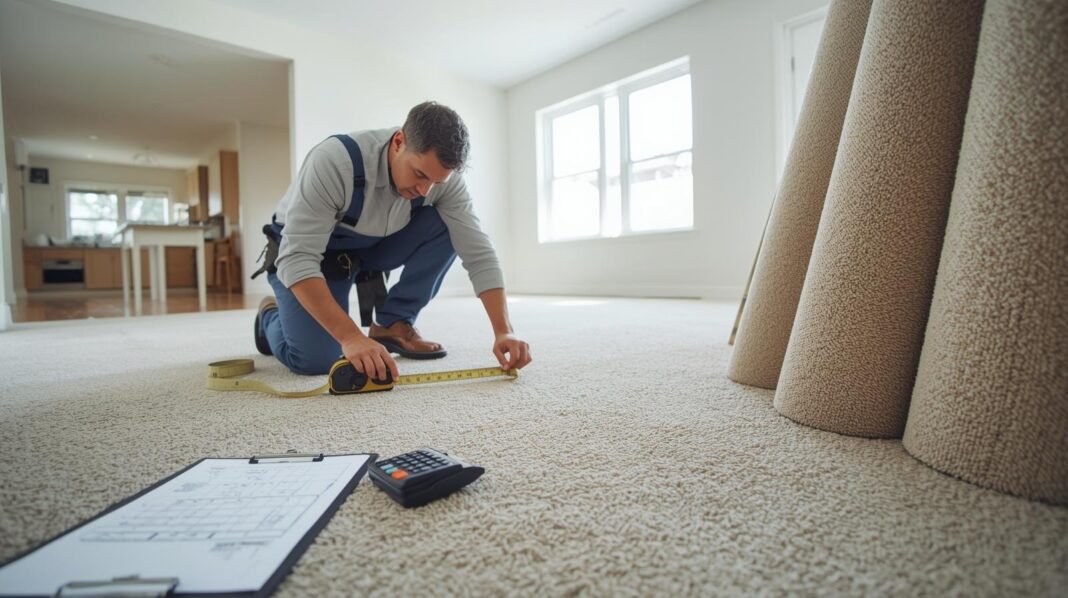
Replacing or installing new carpet transforms your home’s comfort and aesthetics while offering excellent value compared to other flooring options.
Understanding the complete cost breakdown—from materials and labor to hidden fees—helps you budget accurately and avoid unwelcome surprises during your project.
Carpet Installation Cost Per Square Foot
National Average Pricing
In 2026, carpet installation costs range from $5.27 to $7.72 per square foot, though total project costs vary significantly based on carpet quality, room complexity, and additional services required.
Most homeowners spend between $2 and $8 per square foot for complete installation including materials, padding, and labor.
Price Breakdown by Quality Level:
- Budget Installation: $2.50 to $4 per square foot (basic polyester carpet, standard padding, simple rooms)
- Mid-Range Installation: $4 to $7 per square foot (nylon or Triexta carpet, quality padding, standard installation)
- Premium Installation: $7 to $12+ per square foot (wool or high-end synthetic, premium padding, complex layouts)
- Luxury Installation: $12 to $20 per square foot (designer wool, custom patterns, intricate installations)
Room Size Cost Estimates
Understanding costs by room size helps create realistic project budgets:
Small Room (12′ x 12′ = 144 sq ft): $288 to $1,152 total, averaging $650 for mid-range materials and installation
Medium Bedroom (15′ x 15′ = 225 sq ft): $450 to $1,800 total, with most homeowners paying around $1,000
Large Living Room (20′ x 20′ = 400 sq ft): $800 to $3,200 total, typically $1,600 for quality installation
1,000 Square Feet: $1,800 to $7,500 total for basement or main floor installation
2,000 Square Feet (Whole Home): $3,500 to $15,000 total, including all materials, padding, labor, and standard prep work
3-Bedroom House (60% carpeted): $1,600 to $6,700 total for complete recarpeting
Regional Price Variations
Geographic location significantly impacts installation costs due to labor rates, material availability, and local market conditions. Regional differences can range from 20 to 30 percent between the most and least expensive markets.
West Coast (California, Oregon, Washington): $4.50 to $9.50 per square foot installed—highest costs due to labor rates and material shipping in metropolitan areas
Northeast (New York, Massachusetts, Pennsylvania): $4 to $8.50 per square foot installed—higher labor costs in urban areas like NYC and Boston, with premium wool carpets more common
South (Texas, Florida, Georgia): $3.50 to $7 per square foot installed—mid-range pricing with stain-resistant carpets popular in humid climates
Midwest (Ohio, Illinois, Michigan): $3 to $6.50 per square foot installed—most affordable region with traditional broadloom carpets dominating the market
Mountain West (Colorado, Arizona, Utah): $3.50 to $7.50 per square foot installed—moderate pricing with eco-friendly materials increasingly popular
Remote locations like Alaska can see costs 15 to 25 percent higher than national averages due to shipping expenses and limited installer availability.
Material Costs: Carpet Types and Pricing
Carpet material represents the largest variable in your total project cost, with fiber type, construction quality, and brand significantly impacting price.
Synthetic Carpet Materials
Polyester: $1 to $3 per square foot for materials alone. This budget-friendly option offers soft texture, vibrant colors, and mold resistance.
However, polyester compresses under heavy traffic, making it best suited for low-traffic bedrooms and guest rooms. Homeowners appreciate its stain resistance and affordability but should expect a shorter lifespan of 5 to 8 years.
Nylon: $2 to $5 per square foot for materials. As the most popular synthetic carpet fiber, nylon provides exceptional durability, stain resistance, and resilience in high-traffic areas.
It maintains its appearance longer than polyester and works excellently in homes with children and pets. Nylon carpets typically last 10 to 15 years with proper maintenance.
Triexta (SmartStrand): $2.50 to $5 per square foot for materials. This newer synthetic fiber combines nylon’s durability with polyester’s softness and stain resistance. Made partially from renewable corn sugar, Triexta appeals to environmentally conscious homeowners while delivering excellent performance in active households. Expect 12 to 15 years of service life.
Olefin/Polypropylene: $1 to $3 per square foot for materials. Excelling in moisture resistance, olefin makes ideal carpet for finished basements, humid climates, and indoor/outdoor applications.
It resists mold and mildew even when damp, though it feels less plush underfoot than other options. This fiber works well in commercial settings and utility areas, lasting 5 to 10 years.
Natural Fiber Carpet
Wool: $4 to $20 per square foot for materials alone. Premium wool carpet represents the luxury end of the market, offering unmatched natural softness, appearance, and longevity. Wool provides superior insulation, natural stain resistance, and develops a beautiful patina over time.
However, it requires professional cleaning for spills and shouldn’t be used in moisture-prone basements. Quality wool carpet can last 20 to 30 years, making it a worthwhile investment for formal living areas and primary bedrooms in homes where owners plan long-term residency.
Carpet Style and Construction
Beyond fiber type, carpet construction affects both price and performance:
Cut Pile/Plush: Dense, evenly cut fibers creating a soft, luxurious feel. Shows footprints and vacuum marks but provides maximum comfort. Best for bedrooms and low-traffic formal areas.
Berber/Loop Pile: Looped fibers creating durable, textured surface. Excellent for high-traffic areas and resists showing wear. Popular in family rooms and hallways.
Frieze/Shag: Long, twisted fibers creating casual, textured appearance. Hides footprints well and works in active family spaces.
Texture/Cut-and-Loop: Combines cut and looped fibers for dimensional patterns. Offers durability with visual interest, suitable for most living spaces.
Labor Costs
Professional installation labor typically costs $0.50 to $1.50 per square foot for standard installations, though complex projects can reach $2 to $3 per square foot or higher.
Standard Labor Pricing
Basic Installation (Simple Rectangular Rooms): $0.50 to $1 per square foot. Open floor plans with minimal cuts, no stairs, and straightforward layouts fall into this category.
Standard Installation (Average Complexity): $1 to $1.50 per square foot. Most residential installations with normal room configurations, closets, and standard transitions.
Complex Installation (High Difficulty): $1.50 to $3 per square foot. Rooms with multiple angles, custom patterns, numerous closets, or challenging layouts require additional time and expertise.
Stair Installation: $10 to $25 per step for basic box stairs, or $20 to $45 per step with spindles or detailed railings. Stairs demand specialized skills and significantly increase labor costs.
Hourly Rates
Some installers charge hourly rates instead of per-square-foot pricing. Professional carpet installers typically charge $35 to $80 per hour, with a minimum service charge of $75 to $150. Installation times vary:
- Single room: 1 to 2 hours
- Multiple rooms: 4 to 6 hours
- Whole house: 1 to 2 days
What Labor Includes
Professional installation encompasses several critical steps:
- Subfloor inspection and minor leveling
- Tack strip installation around room perimeters
- Padding/underlayment installation
- Carpet measurement, cutting, and seaming
- Power stretching to prevent wrinkles and ensure proper tension
- Trimming and tucking edges
- Transition strip installation between flooring types
- Basic cleanup and debris removal
Quality installers use power stretchers rather than knee kickers alone, as proper stretching prevents premature wear and maintains warranty coverage.
Padding/Underlayment Costs
Carpet padding costs $0.50 to $2 per square foot depending on thickness, density, and material type. Never skimp on padding—it extends carpet life by up to 50 percent, improves comfort, provides insulation, and reduces noise transmission between floors.
Padding Types and Pricing
Rebond Foam Padding: $0.25 to $0.80 per square foot. Made from recycled foam scraps bonded together, creating colorful, eco-friendly cushioning. This most common residential padding offers good performance at budget-friendly prices. Densities range from 5 to 10 pounds, with thicknesses of 1/4 to 1/2 inch.
Frothed Foam Padding: $0.50 to $2 per square foot. High-density polyurethane foam (10 to 12 pounds) providing exceptional support for high-traffic areas. More expensive than rebond but offers superior durability and resilience.
Prime Foam Padding: $0.25 to $1.50 per square foot. Made from new (non-recycled) polyurethane foam, suitable for light-traffic areas like bedrooms. Less durable than rebond or frothed foam for active spaces.
Memory Foam Padding: $1 to $2.50 per square foot. Extremely soft and comfortable, similar to memory foam mattresses. Best for low-traffic bedrooms where maximum cushioning is desired. Not recommended for high-traffic areas.
Rubber Padding: $0.75 to $3 per square foot. Flat rubber padding represents the premium option, offering the longest lifespan of any padding type. Excellent for commercial applications and heavy residential use. Can outlive the carpet itself.
Moisture Barrier Padding: $1 to $2 per square foot. Features waterproof barrier layer protecting against spills and accidents. Ideal for basements, children’s rooms, and pet-friendly homes. Install with barrier facing up toward carpet.
Recommended Padding Specifications
For most residential applications, choose padding with:
- Thickness: 3/8 to 7/16 inch (thinner for Berber/low-pile, thicker for plush/high-pile)
- Density: 6 to 8 pounds for general use, 8+ pounds for high-traffic areas
- Material: 8-pound rebond foam offers best value for most homeowners
Always follow carpet manufacturer recommendations to maintain warranty coverage. Using incorrect padding voids most carpet warranties.
Hidden Fees and Additional Costs
Carpet installation involves numerous potential additional charges that catch homeowners off guard. Understanding these upfront prevents budget surprises.
Old Carpet Removal and Disposal
Carpet and Pad Removal: $0.50 to $1.50 per square foot, including labor and disposal fees. This involves pulling carpet from tack strips, removing old padding, extracting staples and tacks, and hauling materials away.
Glued-Down Carpet Removal: $1 to $3 per square foot. Removing carpet adhered directly to subfloor requires significantly more labor, including scraping residual adhesive.
Disposal Fees: Included in most removal quotes, but some installers charge $50 to $150 separately for dump fees, especially for large projects.
DIY removal can save up to $5 per square foot but requires proper tools, disposal arrangements, and considerable physical effort.
Subfloor Preparation and Repair
Minor Leveling: $1 to $2 per square foot. Using leveling compound to smooth minor imperfections ensures carpet lays flat.
Major Subfloor Repair: $3 to $10 per square foot. Replacing damaged plywood or OSB subfloor sections, addressing rot, or fixing structural issues significantly increases costs. Average subfloor repairs total $600 but can exceed several thousand dollars for extensive damage.
Moisture Barrier Installation: $0.50 to $1 per square foot. Required for concrete slabs and basement installations to prevent moisture transmission.
Cleaning and Preparation: $0.25 to $0.50 per square foot. Thorough subfloor cleaning, removing debris, extracting old staples, and ensuring proper surface for installation.
Furniture Moving
Professional Furniture Moving: $50 to $200 per room depending on furniture quantity and weight. Standard furniture like beds, dressers, and sofas typically costs $100 to $150 per room.
Excluded Items: Most installers won’t move pianos, aquariums, waterbeds, pool tables, safes, large exercise equipment, or electronics. Homeowners must arrange separate moving services for these items.
DIY Moving: Homeowners can save money by clearing rooms themselves, but must ensure complete removal before installers arrive.
Custom Work and Special Requirements
Staircase Installation: Additional $150 to $600 depending on stair count and complexity, beyond standard per-square-foot charges.
Custom Cuts and Patterns: $1 to $2 per square foot extra for irregularly shaped rooms, patterns requiring precise matching, or custom borders.
Third-Story Installation: Some installers charge $0.50 to $1 per square foot additional for carrying materials up multiple flights.
Transition Strips: $10 to $30 per strip for metal, wood, or vinyl transitions between carpet and other flooring types.
Tack Strips: $0.25 to $0.50 per square foot if existing strips need replacement.
Baseboards and Molding: $200 to $300 for new baseboards and trim if removed during installation.
Lead Testing: Required in pre-1978 homes in some areas, costing $50 to $150.
Sales Tax and Contractor Markup
Sales Tax: Applied to materials in most states, adding 5 to 10 percent to material costs.
General Contractor Supervision: If a general contractor coordinates your carpet installation, expect 13 to 22 percent markup on total costs for supervision and coordination.
Installation Methods
Understanding installation methods helps you communicate with installers and ensure proper technique for your specific situation.
Stretch-In Installation (Standard Method)
The most common residential carpet installation method uses tack strips installed around room perimeters. Carpet is stretched tightly using power stretchers and hooked onto tack strips, with padding stapled or glued to subfloor underneath.
Best For: Most residential applications over wooden subfloors
Advantages:
- Standard method most installers master
- Easier carpet replacement in future
- Better comfort and resilience underfoot
- Allows carpet “breathing” and adjustment to seasonal changes
Process: Installers nail tack strips around perimeter, install padding, lay carpet, use power stretcher to eliminate wrinkles, hook carpet onto tacks, and trim excess.
Critical: Proper power stretching is essential—knee kickers alone don’t provide adequate tension and can void warranties.
Glue-Down Installation
Carpet and padding are adhered directly to subfloor using strong adhesive, creating permanent bond.
Best For: Commercial installations, concrete subfloors, basements, areas with heavy furniture or equipment
Advantages:
- Extremely stable with no shifting or movement
- Works on concrete where tack strips can’t be nailed
- Ideal for low-pile commercial carpets
- No padding movement in high-traffic areas
Disadvantages:
- More expensive due to adhesive costs
- Difficult removal for future replacement
- Requires perfectly level, clean subfloor
- Adhesive needs 24 hours to cure
Process: Apply adhesive with notched trowel, position carpet carefully, roll to ensure contact, allow proper curing time.
Carpet Tile Installation
Individual carpet tiles (18″ x 18″ or 24″ x 24″) install with peel-and-stick backing or adhesive dots.
Cost: $1.50 to $3.50 per square foot for materials, $2.50 to $6.75 per square foot installed
Best For: Commercial spaces, DIY installations, areas where easy replacement is desired, modern residential designs
Advantages:
- DIY-friendly installation
- Individual damaged tiles replaceable
- Creative patterns and color combinations possible
- No special tools required
Disadvantages:
- Visible seams between tiles
- May feel less luxurious than broadloom carpet
- Tiles can shift without proper installation
Timeline and Project Preparation
Pre-Installation Phase (1-2 Weeks Before)
Measurement and Estimation: Professional measurement ensures accurate material orders. Most retailers offer free in-home measurement with carpet purchase, crediting $35 to $50 measurement fees toward installation.
Material Selection and Ordering: Choose carpet, padding, and accessories. Custom orders may require 1 to 2 weeks for delivery, while in-stock options ship within days.
Room Preparation: Remove all furniture, wall decorations, and items from closets. Clear pathways for installer access and material delivery.
Subfloor Inspection: Address known issues before installation day to avoid delays. Schedule any necessary repairs in advance.
Installation Day
Standard Room (200-300 sq ft): 2 to 4 hours for experienced installers
Whole House (1,500-2,000 sq ft): 1 to 2 days depending on complexity and room count
What to Expect:
- Installers arrive with materials, tools, and equipment
- Subfloor receives final inspection and preparation
- Padding installed and secured
- Carpet positioned, cut, and seamed
- Power stretching ensures proper tension
- Trimming and tucking for finished edges
- Transition strips and accessories installed
- Cleanup and final inspection
Post-Installation
Immediate Use: Walk on new carpet immediately, but wait 24 hours before replacing heavy furniture to allow adhesives to cure and carpet to settle.
Ventilation: Provide good air circulation for 48 to 72 hours to dissipate new carpet smell, though all carpets now meet strict indoor air quality standards.
Furniture Placement: Use furniture coasters under heavy items to prevent permanent impressions in new carpet.
First Cleaning: Wait 2 to 4 weeks before first vacuuming to allow carpet fibers to settle and new carpet “fuzzies” to diminish naturally.
Common Mistakes to Avoid
Choosing Carpet Based Solely on Price
Cheap carpet costs less upfront but wears quickly, mats easily, and requires earlier replacement. Budget polyester might save $2 per square foot initially but needs replacement in 5 years, while quality nylon lasting 12+ years ultimately costs less over time. Consider total cost of ownership rather than just purchase price.
Inadequate or Wrong Padding
Using cheap, thin padding or choosing incorrect density for your carpet type dramatically shortens carpet life and voids most warranties. Padding accounts for only 10 to 15 percent of total project cost but provides 50 percent of carpet’s comfort and longevity. Never reuse old padding—it’s compressed, stained, and won’t support new carpet properly.
Skipping Subfloor Preparation
Installing over damaged, uneven, or dirty subfloors causes premature wear, visible irregularities, and carpet failure. Every bump, dip, or debris piece telegraphs through carpet. Proper preparation adds cost upfront but prevents expensive problems later. Moisture in subfloors causes mold, mildew, and odors—always test moisture levels in basements and concrete slabs.
Ignoring Manufacturer Specifications
Each carpet manufacturer specifies required padding type, thickness, and installation methods to maintain warranty coverage. Deviating from these specifications voids warranties, leaving you unprotected against defects. Always request written specifications and ensure installers follow them precisely.
Hiring Inexperienced Installers
Inexperienced installers may charge less but often lack skills for proper power stretching, seaming, and pattern matching. Poor installation causes wrinkles, visible seams, premature wear, and voided warranties. Ripples and buckling appearing months after installation typically result from inadequate stretching, requiring expensive restretching.
Not Getting Detailed Written Estimates
Verbal estimates and vague quotes lead to disputes and surprise charges. Insist on itemized written estimates detailing all costs: materials by type and quantity, labor, padding, removal, subfloor work, furniture moving, disposal, and any additional fees. Written estimates protect both parties and prevent misunderstandings.
Measuring Incorrectly
Underestimating square footage causes project delays and additional delivery charges. Overestimating wastes money on unused materials. Always add 10 percent to room measurements for cuts, waste, and pattern matching. For complex rooms or patterns, professional measurement ensures accuracy.
Installing Wrong Carpet for Location
Placing polyester in high-traffic hallways or wool in moisture-prone basements leads to rapid deterioration and dissatisfaction. Match carpet type to room function: nylon or Triexta for traffic areas, polyester for bedrooms, moisture-resistant olefin for basements, and wool for low-traffic formal spaces.
How to Choose a Carpet Installer
Selecting the right installation professional directly impacts your carpet’s appearance, longevity, and warranty validity.
Verify Credentials and Insurance
Licensing: Confirm installers hold required state and local licenses for flooring work. Requirements vary by jurisdiction, but licensed professionals demonstrate baseline competency.
Insurance Coverage: Verify general liability insurance protecting your property from damage, and workers’ compensation covering installer injuries on your property. Request current certificates of insurance and verify coverage with insurance companies.
Bonding: Bonded contractors provide financial protection if they fail to complete work or violate contract terms.
Certifications: Look for certifications from the International Certified Flooring Installers Association (CFI). Certified installers complete rigorous training and testing, demonstrating superior skills.
Assess Experience
Years in Business: Hire contractors with minimum 5 years’ experience in residential carpet installation. Established businesses have refined techniques, solved common challenges, and built reputations.
Relevant Experience: Ensure experience matches your project type. Installers specializing in commercial work may lack residential skills for stairs, multiple rooms, and detailed finish work. Ask about similar projects they’ve completed.
Specialized Skills: Complex projects like pattern matching, custom borders, or unusual room shapes require advanced skills. Verify installer experience with your specific requirements.
Check References and Reviews
Online Reviews: Research contractors on Google, HomeGuide, Angi, and Yelp. Look for patterns in feedback regarding quality, professionalism, communication, timeliness, and problem resolution. Several negative reviews about similar issues indicate real concerns.
Recent Reviews: Prioritize reviews from the past 6 to 12 months, as they reflect current team and practices.
References: Request contact information for 3 to 5 recent clients with similar projects. Actually call references and ask:
- How did the project go overall?
- Did installers arrive on time and complete work as scheduled?
- Were there any unexpected costs or issues?
- How was communication throughout the project?
- How did they handle any problems?
- Would you hire them again?
Compare Multiple Detailed Estimates
Get Three Quotes Minimum: Obtain at least three in-home estimates to compare pricing and approaches. Extremely low bids may indicate inexperience, hidden fees, or low-quality materials.
In-Home Measurements: Reputable installers measure your space personally rather than providing quotes over phone based on your measurements. This ensures accuracy and identifies potential issues.
Written Itemized Estimates Should Include:
- Carpet specifications (fiber, brand, style, color)
- Padding type, thickness, and density
- Square footage being covered
- Labor costs broken down by task
- Old carpet removal and disposal costs
- Subfloor preparation requirements
- Furniture moving fees
- Transition strips and accessories
- Disposal fees
- Sales tax
- Total project cost
- Timeline with start and completion dates
- Payment schedule
- Warranty information
Understand Payment Terms
Deposit: Expect to pay 10 to 30 percent deposit when ordering materials, with balance due upon completion. Never pay more than 50 percent upfront—this protects you if contractor abandons project or performs substandard work.
Payment Schedule: For large projects, establish milestone payments tied to work completion rather than dates.
Payment Methods: Understand accepted payment methods and any fees for credit card payments.
Review Warranties
Installation Warranty: Quality installers offer 1 to 5 year labor warranties covering seams, restretches, stairwork, and installation defects. Lifetime labor warranties on installation are becoming more common with major retailers.
Manufacturer Warranty: Understand carpet manufacturer warranties covering materials, wear, and staining. Installation must follow manufacturer specifications to maintain coverage.
Warranty Requirements: Ask what actions void warranties, such as DIY repairs, unauthorized cleaning methods, or improper maintenance.
Ask Critical Questions
Before hiring, ask prospective installers:
- How long have you been installing carpet professionally?
- Are you licensed, bonded, and insured? (Request documentation)
- Do you have CFI certification?
- Can you provide references for similar recent projects?
- Will you or subcontractors perform the work?
- What padding do you recommend for my carpet and why?
- How do you handle unexpected subfloor issues discovered during installation?
- What’s included in your written estimate?
- What’s your payment schedule?
- What warranties do you offer on installation?
- How long will my project take?
- What happens if I’m not satisfied with the work?
Red Flags to Avoid
- Requests for full payment upfront
- No physical business address or showroom
- Unwilling to provide references or proof of insurance
- Lacking proper licenses
- Pressure tactics to sign immediately
- Estimates without in-home measurement
- Vague pricing without itemization
- No written contract or warranty
- Significantly lower prices than all other quotes (often indicates inexperience or hidden costs)
Frequently Asked Questions
How much does carpet installation cost on average?
Carpet installation costs $2 to $8 per square foot on average, including materials, padding, and labor. A typical 200-square-foot bedroom costs $400 to $1,600, while a 2,000-square-foot whole-home installation ranges from $3,500 to $15,000. Final costs depend on carpet quality, room complexity, and additional services required.
What’s the difference between carpet padding types?
Rebond foam, the most common padding, offers good performance at budget prices. Frothed foam provides premium durability for high-traffic areas.
Memory foam maximizes comfort in bedrooms. Rubber padding lasts longest but costs most. Moisture barrier padding protects against spills in basements and children’s rooms. Choose based on room traffic, desired comfort, and budget.
Can I install carpet myself to save money?
DIY carpet installation is possible but challenging, requiring specialized tools like power stretchers, knee kickers, and seam irons. Many homeowners successfully install carpet tiles using peel-and-stick backing. However, DIY installation often voids manufacturer warranties on broadloom carpet.
Unless you have experience and proper equipment, professional installation ensures better results and warranty protection.
How long does carpet typically last?
Quality carpet lasts 5 to 15 years depending on fiber type, traffic levels, and maintenance. Polyester typically lasts 5 to 8 years, nylon 10 to 15 years, Triexta 12 to 15 years, and wool 20 to 30 years. Proper padding, professional installation, regular vacuuming, and periodic professional cleaning extend carpet lifespan significantly.
Is carpet cheaper than hardwood or laminate?
Yes, carpet typically costs less than hardwood flooring upfront. Carpet ranges from $2 to $8 per square foot installed, while hardwood costs $8 to $15+ per square foot. However, hardwood lasts longer (50+ years vs. 5-15 for carpet) and adds more resale value. Laminate falls between carpet and hardwood at $3 to $10 per square foot installed.
How much does it cost to carpet stairs?
Carpeting stairs costs $150 to $600 total, or $10 to $25 per step for basic box stairs. Stairs with spindles or detailed railings cost $20 to $45 per step due to increased complexity. Stair runners (carpet strips down center) cost less than full-width installations but offer less safety and wear protection.
What additional costs should I budget for?
Beyond basic installation, budget for old carpet removal ($0.50-$1.50/sq ft), subfloor repairs ($1-$10/sq ft), furniture moving ($50-$200/room), transition strips ($10-$30 each), and potential contractor markup (13-22% if using general contractor). Always add 10% contingency for unexpected issues.
When should I replace my carpet?
Replace carpet when it shows matting that won’t fluff with vacuuming, permanent stains that cleaning can’t remove, persistent odors despite cleaning, visible wear patterns, or when it’s 10+ years old. Water damage, mold, or severe pet damage also necessitate replacement rather than cleaning.
Do installers move furniture?
Many professional installers offer furniture moving for $50 to $200 per room. However, they typically exclude heavy or delicate items like pianos, aquariums, pool tables, electronics, and antiques. Homeowners must arrange separate moving for these items or move them before installers arrive.
How can I get the best price on carpet installation?
Shop during off-season (late winter, early spring), compare multiple quotes, choose in-stock carpet to avoid custom order fees, consider mid-grade materials offering best value, and ask about package deals including installation.
Big-box retailers often offer promotions with free installation on purchases over $500 to $600, though quality may be comparable to local installers at 10-20% lower prices.
Carpet installation costs $2 to $8 per square foot on average in 2026, with regional variations, material choices, and project complexity significantly impacting final pricing.
Understanding the complete cost breakdown—materials ($1-$20/sq ft), labor ($0.50-$1.50/sq ft), padding ($0.50-$2/sq ft), and hidden fees for removal, subfloor work, and furniture moving—enables accurate budgeting and prevents unwelcome surprises.
Success requires choosing appropriate carpet for your space and traffic patterns, investing in quality padding to extend carpet life, hiring experienced certified installers, obtaining detailed written estimates, and avoiding common mistakes like inadequate preparation or choosing based solely on price.
By approaching your carpet installation project with knowledge and realistic expectations, you’ll enjoy comfortable, beautiful floors that enhance your home for years to come.
Also Read
Hardwood Floor Installation: Cost, Process, Types, and How to Choose the Right Installer
Top tips for selecting durable flooring materials: A comprehensive guide
