
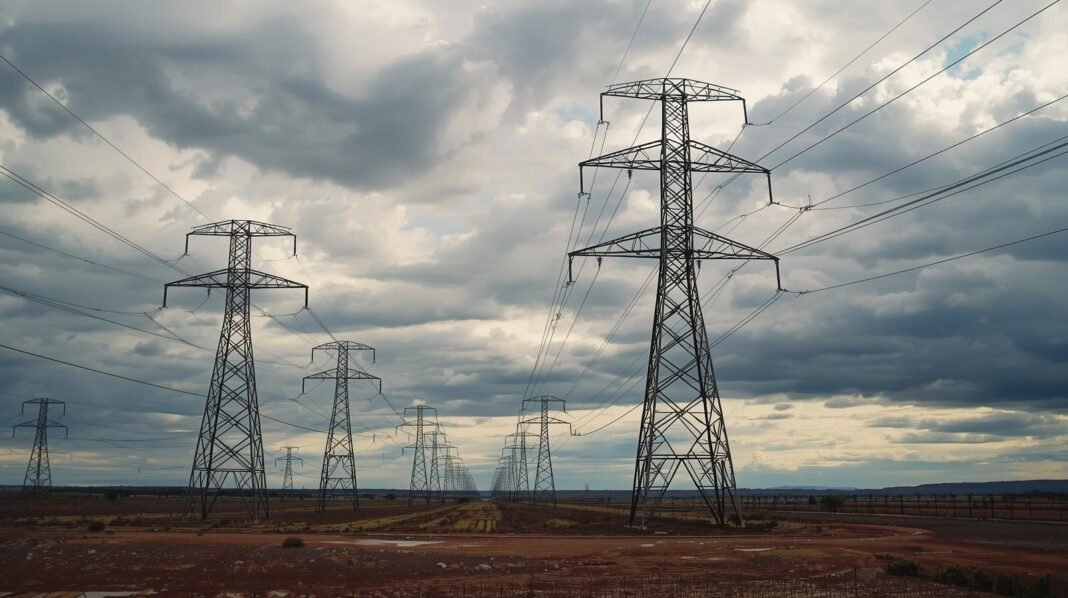
South Africa’s embattled power utility, Eskom, is at the center of a monumental financial miscalculation that could have significant consequences for every citizen.
A staggering R54 billion error, originating from a depreciation miscalculation by the National Energy Regulator of South Africa (NERSA), has been uncovered.
This mistake has set the stage for a potential electricity price hike in South Africa, with major implications for tariffs starting in 2026.
The revelation has sent shockwaves through an economy already grappling with energy instability, raising urgent questions about regulatory oversight, accountability, and the future cost of keeping the lights on.
What Happened: The R54 Billion Error Explained
At its core, the issue is a technical but critical accounting mistake. NERSA, the body responsible for determining electricity tariffs, incorrectly calculated the depreciation value of Eskom’s assets.
Depreciation is an accounting method used to allocate the cost of a physical asset over its useful life.
For a company like Eskom, with vast infrastructure like power stations and transmission lines, depreciation is a massive figure that directly influences how much revenue it needs to operate and maintain its assets.
Understanding the Depreciation Miscalculation
In simple terms, NERSA used the wrong asset base when it calculated how much Eskom’s infrastructure would devalue over time.
The regulator used the value of Eskom’s assets at the end of a financial year instead of the average value over that year.
This seemingly minor detail had a colossal effect. By using the year-end value, which was lower due to assets being removed from the books, NERSA effectively underestimated the amount of money Eskom was entitled to recover for depreciation.
This calculation was part of NERSA’s Multi-Year Price Determination (MYPD) process, which sets the electricity tariffs for a multi-year period.
The error occurred during the fifth MYPD cycle (MYPD5), which covered the 2023/24 and 2024/25 financial years. The total impact of this miscalculation across the two years amounts to an enormous R54 billion shortfall for Eskom.
The utility argues this is revenue it was legally entitled to but was denied due to the NERSA Eskom error.
Why the Mistake Matters for Eskom and South Africa
A R54 billion hole in Eskom’s finances is more than just an accounting problem; it poses a systemic risk to the utility and the country’s energy security. Eskom is already financially fragile, carrying a debt burden of over R400 billion.
The utility relies on the revenue it collects from electricity sales to fund its operations, maintain its aging coal fleet, invest in new generation capacity, and service its massive debt.
Losing out on R54 billion severely hampers its ability to perform these essential functions. It could lead to delayed maintenance, which in turn increases the risk of breakdowns and more intensive load shedding.
Furthermore, it undermines Eskom’s efforts to achieve financial sustainability, a key condition of its government debt relief plan. Without adequate revenue, the utility remains dependent on taxpayer-funded bailouts, placing further strain on the national fiscus.
For South Africa, the implications are equally severe. A financially unstable Eskom cannot reliably power the economy.
The ongoing energy crisis has already shaved points off the country’s GDP growth, discouraged investment, and contributed to job losses.
This R54 billion Eskom mistake exacerbates the situation, creating uncertainty and threatening the fragile progress made in stabilizing the grid.
Impact on Electricity Tariffs in 2026
The most direct consequence of this error for the public will likely be a significant Eskom tariff increase in 2026. Eskom has indicated its intention to recover the R54 billion shortfall through the Regulatory Clearing Account (RCA).
The RCA is a mechanism that allows Eskom to claim back costs that were prudently incurred but not accounted for in NERSA’s initial tariff decision.
How the RCA Process Works
Think of the RCA as a financial catch-up mechanism. When Eskom faces unexpected costs (like higher-than-projected coal prices) or, in this case, a revenue shortfall due to a regulatory error, it can apply to NERSA to recover these funds from consumers in a future tariff period.
If NERSA approves the RCA application, the R54 billion will be added to the revenue Eskom is allowed to collect in the next tariff cycle, which begins in April 2025.
However, given the sheer size of the amount, it is more probable that the recovery will be phased in over several years to avoid a massive, one-off price shock.
This means consumers will likely start feeling the effects with the Eskom tariff increase in 2026 and potentially for several years after.
An electricity price hike in South Africa now seems almost inevitable as Eskom moves to claw back these funds.
What This Means for Households and Businesses
For ordinary South Africans, an electricity price hike of this magnitude will place additional pressure on already stretched household budgets.
The cost of living continues to rise, and a substantial increase in electricity bills will reduce disposable income, affecting everything from groceries to school fees.
Low-income households, who spend a larger portion of their income on essential services, will be hit the hardest.
Businesses are also bracing for impact. Electricity is a major operational cost for most industries, from manufacturing and mining to retail and hospitality.
A sharp increase in tariffs will erode profit margins, potentially leading to higher prices for goods and services, reduced investment in expansion, and even job cuts as companies struggle to absorb the costs.
Small and medium-sized enterprises (SMEs), the backbone of the economy, are particularly vulnerable as they often lack the financial cushion to withstand such shocks.
The ripple effect of a steep electricity price hike in South Africa could slow economic recovery and hinder growth across all sectors.
Government and NERSA’s Response
The response from government and NERSA has been a mix of acknowledgment and procedural formality. NERSA has publicly conceded that it made an error in its depreciation calculation.
In a statement, the regulator acknowledged the mistake and confirmed its commitment to following the established legal and regulatory processes to rectify it. This means processing Eskom’s forthcoming RCA application according to the prescribed rules.
The Department of Public Enterprises and the National Treasury are closely monitoring the situation. The government is caught between the need to ensure Eskom’s financial viability and the imperative to protect consumers from unaffordable tariff increases.
While there is an understanding that the NERSA Eskom error must be corrected, there is also significant political pressure to mitigate the impact on the public. This sets the stage for a contentious regulatory process ahead.
What Comes Next: Possible Scenarios
As South Africa looks toward 2026, several scenarios could unfold:
- Full Recovery via Tariffs: NERSA could approve Eskom’s full R54 billion RCA claim, leading to a substantial Eskom tariff increase in 2026. This would be the most direct route but also the most painful for consumers. The increase would likely be smoothed over two to three years to lessen the immediate blow.
- Partial Recovery or Phased-in Approach: The regulator might negotiate a compromise, allowing Eskom to recover only a portion of the amount or spreading the recovery over a longer period (e.g., four to five years). This would soften the impact on tariffs but prolong the period of financial uncertainty for Eskom.
- Government Intervention: The government could step in with another form of financial support to cover part of the shortfall, thereby reducing the amount that needs to be passed on to consumers. However, this would mean taxpayers ultimately foot the bill, just through a different mechanism, and would add to the country’s sovereign debt.
The most likely outcome is a combination of these scenarios—a phased-in tariff increase supplemented by some form of negotiation or government support to cushion the blow.
The final decision rests with NERSA, which will have to balance its mandate to be fair to both the utility and the consumer.
Frequently Asked Questions (FAQ)
What is the R54 billion Eskom mistake?
The R54 billion Eskom mistake refers to a financial shortfall Eskom is facing due to an error made by the National Energy Regulator of South Africa (NERSA).
NERSA incorrectly calculated the depreciation of Eskom’s assets for the 2023/24 and 2024/25 tariff years, resulting in Eskom being allocated R54 billion less revenue than it was entitled to.
Who is responsible for the error?
The National Energy Regulator of South Africa (NERSA) is responsible for the error. The regulator has publicly acknowledged that it used an incorrect methodology to calculate the depreciation component of Eskom’s allowable revenue.
Will electricity prices increase in South Africa?
Yes, an electricity price hike in South Africa is highly likely as a result of this error. Eskom intends to recover the R54 billion through the Regulatory Clearing Account (RCA), which will be passed on to consumers through higher tariffs.
When will the new tariffs take effect?
The impact on tariffs is expected to be felt from 2026 onwards. While the next tariff period begins in April 2025, it is probable that NERSA will approve a phased-in recovery plan. This means consumers will see the Eskom tariff increase in 2026 and potentially in the following years.
A Call for Accountability
The R54 billion NERSA Eskom error is a costly reminder of the critical importance of regulatory competence and accountability.
While mistakes happen, an error of this magnitude has profound consequences for an entire nation. As Eskom prepares to recover the funds, South Africans must prepare for a future of higher electricity costs.
The immediate focus will be on NERSA’s handling of the RCA application and the government’s strategy to mitigate the fallout.
Ultimately, this incident must lead to a thorough review of regulatory processes to ensure such a damaging mistake is never repeated, safeguarding both the energy utility and the citizens it serves.
Also Read
South Africa’s Economy Shows Surprising Strength with 0.8% GDP Growth in Second Quarter
Altvest Capital to Raise $210M for Bitcoin Treasury

