
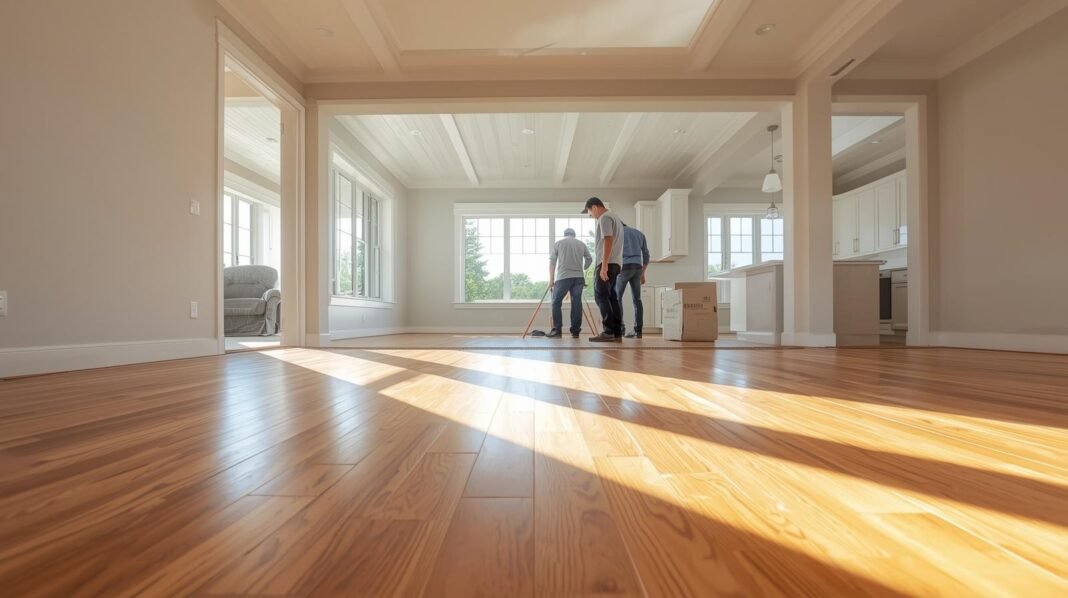
Hardwood flooring remains one of the most valuable home investments, combining timeless elegance with exceptional durability.
Whether you’re upgrading from carpet or replacing worn flooring, understanding the installation process, costs, and material options will help you make informed decisions and avoid costly mistakes.
Cost of Hardwood Floor Installation
National Average Pricing
Installation costs nationwide range from $6 to $12 per square foot for materials and labor combined, though this varies significantly based on wood type and project complexity. High-end installations with exotic woods or complex patterns can reach $13 to $25 per square foot.
For a typical 250-square-foot room, expect to pay $1,800 to $6,300, while a complete 2,000-square-foot home installation ranges from $14,000 to $50,000.
Cost Breakdown by Component
Materials: Hardwood materials alone cost $6 to $15 per square foot, depending on species and grade. Domestic woods like oak and maple typically cost $4 to $8 per square foot, while exotic species such as Brazilian walnut range from $8 to $12 per square foot.
Labor: Professional installation labor typically costs $3 to $6 per square foot. Complex installations with intricate patterns or difficult layouts can increase labor costs to $8 to $10 per square foot.
Additional Costs:
- Old flooring removal: $1.50 to $3.50 per square foot
- Subfloor preparation and leveling: $1 to $2 per square foot
- Moisture barrier installation: $1 to $2 per square foot
- Finishing (for unfinished hardwood): $1 to $3 per square foot
Regional Price Variations
Installation costs vary by 25 to 40 percent between regions, with West Coast pricing significantly higher than Midwest rates due to labor costs, demand, and material transportation expenses.
Regional Estimates:
- West Coast: $10 to $16 per square foot installed (highest costs)
- Midwest: $7 to $13 per square foot installed (most affordable)
- South: $8 to $14 per square foot installed (moderate pricing)
- Northeast: $9 to $15 per square foot installed
Coastal cities and densely populated metropolitan areas typically command premium prices, while costs in central regions remain more competitive.
Solid vs. Engineered Hardwood
Understanding the fundamental differences between solid and engineered hardwood is crucial for choosing the right product for your space and budget.
Solid Hardwood
Solid hardwood consists of single, thick pieces of wood typically 3/4 inch in thickness, milled from a single wood species. This traditional flooring option offers unmatched longevity and refinishing potential.
Advantages:
- Can be sanded and refinished 4 to 6 times over its lifetime, extending its lifespan significantly
- Lasts 100 years or longer with proper maintenance
- Authentic solid wood feel and sound underfoot
- Increases home resale value
Limitations:
- Susceptible to expansion and contraction from moisture and temperature changes
- Not suitable for basements or concrete slabs without extensive subfloor work
- Higher upfront material costs ($11 to $25 per square foot installed)
- Requires nail-down installation over wooden subfloors
Engineered Hardwood
Engineered hardwood features a plywood core with 5 to 7 crisscrossed layers, topped with a thin veneer of real hardwood. This construction provides enhanced dimensional stability.
Advantages:
- Better resistance to moisture, humidity, and temperature fluctuations
- Can be installed in basements, over concrete, and with radiant heating systems
- Multiple installation options (nail, glue, or float)
- More affordable ($9 to $20 per square foot installed)
- Available in wider planks and longer formats
Limitations:
- Limited refinishing potential based on veneer thickness (1 to 2 times for most products)
- May sound more hollow underfoot compared to solid hardwood, especially with floating installations
- Shorter overall lifespan (20 to 80 years depending on veneer thickness)
Which to Choose?
Select solid hardwood if you want maximum refinishing potential, plan to stay in your home long-term, and have above-grade installation on wooden subfloors. Choose engineered hardwood for moisture-prone areas, below-grade spaces, concrete slabs, budget constraints, or faster installation timelines.
Installation Methods
The installation method significantly impacts both cost and performance. Understanding your options helps ensure the right choice for your subfloor type and living conditions.
Nail-Down Installation
The nail-down method involves nailing boards directly into a wooden subfloor, creating a sturdy, long-lasting bond. This traditional approach remains the most common for solid hardwood.
Best For: Solid hardwood on wooden subfloors, traditional installations, above-grade applications
Advantages:
- Creates extremely stable, permanent flooring
- Minimal floor movement or creaking once properly installed
- Allows for multiple refinishing cycles
- Solid feel and sound underfoot
Process: Installers use pneumatic nailers to “blind nail” through the tongue of each plank at 45-degree angles, hiding fasteners from view. The first and last rows require face-nailing with trim covering the exposed nails.
Considerations: Approximately 70 percent of tongue-and-groove floors use nail-down installation, making it the industry standard. However, this method requires wooden subfloors and more labor-intensive installation.
Glue-Down Installation
Glue-down installation involves adhering planks directly to the subfloor using strong hardwood flooring adhesive, working well for both concrete and wooden bases.
Best For: Engineered hardwood, concrete subfloors, below-grade installations, radiant heating systems
Advantages:
- Works on concrete slabs where nailing isn’t possible
- Excellent sound absorption and solid feel
- Suitable for thin engineered products
- Reduces hollow sounds compared to floating floors
Process: Installers spread adhesive across the subfloor using a notched trowel, then press planks firmly into place. Adhesive typically requires 24 hours to cure before walking on floors.
Considerations: The adhesive secures the hardwood, reducing plank movement and potential for warping or gapping. However, removal can be challenging during future renovations, and adhesive adds to material costs.
Floating Floor Installation
Floating installation connects planks to each other rather than the subfloor, with boards “floating” above a pad or underlayment.
Best For: Engineered hardwood with click-lock systems, DIY installations, temporary or rental properties
Advantages:
- Fastest and most affordable installation method
- Can be installed over various subfloor types, including existing flooring
- Allows for easier replacement of individual damaged planks
- DIY-friendly with click-together systems
Process: Installers lay underlayment for moisture protection and sound dampening, then click or lock planks together without any adhesive or fasteners. Expansion gaps around perimeters accommodate wood movement.
Considerations: Floating floors may not feel as solid as nail-down or glue-down options, especially in high-traffic areas. Quality underlayment is essential for reducing hollow sounds and providing cushioning.
Timeline and Preparation
Understanding the complete installation timeline helps you plan around the disruption and set realistic expectations.
Pre-Installation Preparation (1-2 Weeks)
Before installation begins, several crucial preparatory steps ensure success:
Acclimation Period: Wood needs 7 to 10 days to adjust to your home’s temperature and humidity. Some solid hardwoods may require up to two weeks in high-humidity climates. During acclimation, maintain room temperature between 60 to 80°F with relative humidity between 30 to 50 percent.
Subfloor Preparation: The subfloor must be clean, level, and dry. This includes removing old flooring, repairing damage, leveling uneven surfaces, and addressing moisture issues. Proper preparation prevents future creaking, buckling, and premature wear.
Space Clearing: Remove all furniture, electronics, and personal items from installation areas. Disconnect appliances if installing in kitchens. Create clear pathways for installers and material delivery.
Installation Phase (1-5 Days)
Most installations take between 3 and 7 days from start to finish, depending on project size and complexity.
Standard Room (500 square feet): 1 to 3 days Large Space (1,000 square feet): 3 to 7 days
Whole Home (2,000 square feet): 5 to 10 days
Professional crews can typically install 750 to 1,000 square feet per day with a two-person team. Complex patterns like herringbone or parquet require additional time.
Installation Steps:
- Final subfloor inspection and moisture testing
- Installation of first rows (often requiring hand-nailing)
- Main floor installation using pneumatic equipment
- Final rows and transition pieces
- Trim and molding installation
Post-Installation (1-7 Days)
Prefinished Hardwood: Ready to walk on immediately after installation. Wait 24 hours before moving furniture to allow any adhesives to cure.
Unfinished Hardwood: Requires sanding and finishing on-site, adding 2 to 3 days for sanding, staining, and applying protective coats. Multiple finish coats need drying time between applications, with oil-based finishes requiring longer curing periods than water-based options.
Cleanup: Professional installers typically include debris removal and basic cleanup. Expect some dust, particularly with site-finished installations, though dust containment systems minimize this issue.
Common Mistakes to Avoid
Even experienced homeowners can make critical errors during hardwood installation. Awareness of common pitfalls helps ensure a successful project.
Improper Acclimation
The number-one mistake when installing hardwood floors is likely improper acclimation, leading to excessive expansion, shrinkage, warping, and structural damage. Never rush this crucial step to meet deadlines.
Solution: Allow sufficient time (minimum 5 to 7 days, up to 14 days for some species) and maintain consistent temperature and humidity during acclimation.
Inadequate Subfloor Preparation
Subfloors must be dry, level, and clean to ensure hardwood remains secure, flat, and even. Uneven subfloors cause creaking, loose boards, and premature wear.
Solution: Invest in proper leveling compounds, moisture testing, and repairs before installation begins. This upfront investment prevents expensive fixes later.
Insufficient Expansion Gaps
Engineered hardwood requires 1/2 inch expansion space, while solid hardwood needs up to 3/4 inch due to greater expansion potential. Without adequate gaps, floors can buckle or expand into walls.
Solution: Use spacers during installation around all perimeters, door frames, and fixed objects like island counters. These gaps get covered by baseboards and trim.
Installing Wrong Wood for Location
Installing hardwood in inappropriate moisture-prone locations like bathrooms and laundry rooms leads to warping and damage.
Solution: Choose engineered hardwood for basements, kitchens, and moisture-prone areas. Reserve solid hardwood for above-grade, climate-controlled spaces. Never install any hardwood in full bathrooms or outdoor applications.
Poor Board Layout Planning
Not racking boards properly can result in flooring that looks poorly designed with clustered joints or odd placement of different tones.
Solution: Lay out several rows of planks before installation to create an aesthetically pleasing pattern. Stagger end joints by at least 6 inches and mix planks from different boxes to blend color variations.
Skipping Moisture Testing
Moisture is wood’s greatest enemy. Installing over wet subfloors or during extreme humidity periods causes warping, cupping, and buckling.
Solution: Always test subfloor moisture content before installation. Wait for newly poured concrete to cure fully (typically 60 to 90 days). Choose installation timing during average humidity periods for your region.
How to Choose a Contractor
Selecting the right installer directly impacts your floor’s longevity, appearance, and your overall satisfaction with the investment.
Verify Credentials and Insurance
Licensing: Confirm your contractor holds required state and local licenses for flooring installation work.
Insurance: Verify they carry liability insurance, worker’s compensation, and bond guarantees to protect you from liability for accidents or damage during installation.
Certifications: Look for contractors certified with the National Wood Flooring Association (NWFA), which requires rigorous training, hands-on testing, and adherence to industry standards.
Assess Experience and Expertise
Years in Business: Choose contractors with several years of hardwood flooring experience. Established businesses have refined their processes and troubleshooting capabilities.
Portfolio Review: Request photos of completed projects similar to yours. This reveals their craftsmanship quality and experience with your preferred wood species and installation method.
Specialization: Ensure the contractor specializes in hardwood flooring rather than being a general handyman. Hardwood installation requires specific skills and equipment.
Check References and Reviews
Online Reviews: Research contractors on Google, HomeGuide, Angi, and Yelp. Look for patterns in feedback regarding quality, professionalism, communication, and problem resolution.
References: Request references from recent projects and actually contact them. Ask about quality of work, adherence to timelines, cleanliness, and how they handled any issues.
Local Reputation: Check with the Better Business Bureau for complaints and resolution history.
Get Multiple Detailed Estimates
Comparison Shopping: Obtain at least three in-person estimates to compare pricing, materials, and approaches. Extremely low bids may indicate inexperience or cut corners.
Written Quotes Should Include:
- Detailed material specifications (species, grade, thickness)
- Labor costs broken down by task
- Subfloor preparation requirements
- Removal and disposal of existing flooring
- Timeline with start and completion dates
- Payment schedule
- Warranty information
Review Warranties and Guarantees
Ask About:
- Length of installation warranty
- What the warranty covers (labor, materials, both)
- Manufacturer warranties on materials
- Conditions that void warranties
Quality contractors stand behind their work with written warranties covering installation defects.
Key Questions to Ask
Before hiring, ask contractors:
- How long will my specific project take?
- Do you use subcontractors, and are they insured?
- Where does your wood come from, and how will you acclimate it?
- What is your cleanup process?
- How do you handle humidity and temperature monitoring during installation?
- What happens if there are issues after installation?
- Can you provide a detailed written contract?
Red Flags to Avoid
- Requests for full payment upfront (never pay more than 30 to 50 percent as deposit)
- No physical business address or showroom
- Unwilling to provide references or portfolio
- Lacking proper insurance or licenses
- Pressure tactics to sign immediately
- Vague estimates without itemization
Frequently Asked Questions
How long do hardwood floors last?
Solid hardwood floors last 100 years or longer with proper maintenance. Engineered wood flooring lasts 20 to 30 years for thin planks and 40 to 80 years for thicker planks with substantial wear layers.
Can I install hardwood flooring myself?
While DIY installation is possible, professional installation ensures proper acclimation, subfloor preparation, and technique. Most homeowners benefit from hiring professionals for flawless results, particularly for nail-down installations or complex patterns.
When should I refinish hardwood floors?
Plan to refinish every 7 to 10 years to remove scratches, discoloration, and wear. Signs you need refinishing include deep scratches, significant fading, water damage, or worn finish exposing bare wood.
What’s the best wood species for high-traffic areas?
Choose harder woods like oak, maple, or hickory for high-traffic spaces. These species resist denting and scratching better than softer woods like pine. Exotic hardwoods like Brazilian cherry offer even greater durability.
Can hardwood be installed in kitchens or basements?
Engineered hardwood works well in kitchens and basements due to better moisture resistance. Avoid solid hardwood in basements or areas with moisture concerns. Never install any hardwood in full bathrooms.
How much does refinishing cost compared to replacement?
Refinishing costs $3 to $8 per square foot, significantly less than new installation at $6 to $25 per square foot. Refinishing makes economic sense when floors are structurally sound with surface-level damage only.
What’s the return on investment for hardwood floors?
Hardwood flooring increases home value by 2 to 5 percent on average, with 70 to 80 percent return on investment. Hardwood consistently outperforms other flooring materials for resale value.
How soon can I walk on new hardwood floors?
Walk on prefinished floors after 24 hours. Site-finished floors require waiting until all coats cure completely, typically 3 to 7 days depending on finish type. Follow your installer’s specific recommendations.
Hardwood floor installation represents a significant but worthwhile investment in your home’s value, beauty, and livability.
Success requires understanding costs, choosing between solid and engineered products, selecting the appropriate installation method, allowing proper timeline for acclimation and installation, avoiding common mistakes, and hiring qualified professionals.
By approaching your hardwood flooring project with knowledge and realistic expectations, you’ll enjoy beautiful, durable floors that enhance your home for decades to come.
Take time to research options, obtain multiple quotes from certified installers, and never rush critical steps like acclimation and subfloor preparation—your floors will reward you with lasting beauty and performance.
Also Read
Top tips for selecting durable flooring materials: A comprehensive guide
Top 3 flooring trends that are here to stay
