
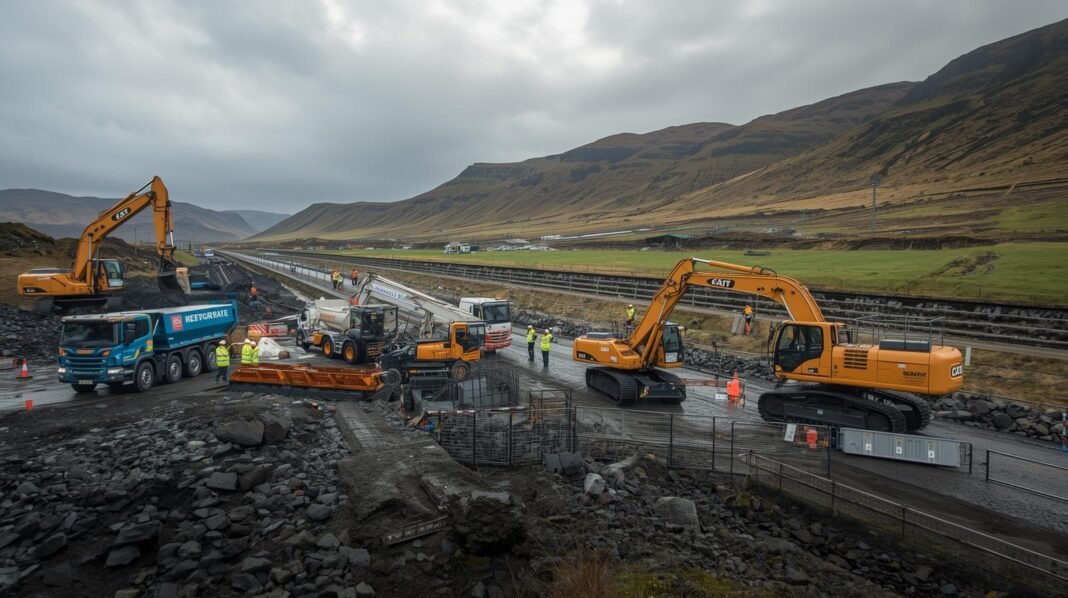
As the Scottish construction industry prepares for ScotPlant 2026, attention is turning to the state of the plant hire sector—an industry that has become a cornerstone of modern construction and infrastructure delivery.
From major renewable energy projects to road upgrades and urban developments, contractors across Scotland increasingly rely on rental fleets to access the machinery needed to keep projects moving.
This evolving landscape makes plant hire one of the most dynamic segments of the construction ecosystem.
As the Road to ScotPlant 2026 series continues, understanding the trends shaping Scotland’s plant hire market provides valuable insight into the broader direction of the industry.
Rental Continues to Outpace Ownership
One of the most significant developments in the sector is the steady shift from equipment ownership to rental.
Contractors are increasingly choosing to hire rather than purchase machinery, allowing them to preserve capital while maintaining access to modern equipment fleets.
Rising equipment costs and rapidly evolving technology are major reasons behind this shift. Purchasing new heavy machinery requires substantial investment, and machines can quickly become outdated as environmental standards and digital capabilities advance.
Hiring equipment offers a more flexible alternative. Contractors can deploy the machines they need for specific project phases and return them when the work is completed.
This approach is particularly beneficial for companies managing multiple projects with varying equipment requirements.
Infrastructure Projects Driving Equipment Demand
Infrastructure development continues to play a central role in sustaining demand for plant hire across Scotland.
Road improvements, energy infrastructure upgrades, and renewable energy developments are all contributing to a steady flow of construction activity requiring heavy equipment.
Wind farm construction in particular remains a major driver of machinery demand. These projects require extensive groundwork, transportation infrastructure, and heavy lifting capabilities.
Excavators, articulated dump trucks, and cranes are all critical to preparing turbine foundations and building access routes.
Because such equipment is required only during certain stages of development, plant hire companies provide the flexibility needed to support large-scale energy projects without long-term equipment commitments.
Larger Machines for Greater Productivity
Another notable trend within Scotland’s plant hire sector is the growing demand for larger and more powerful machines.
Contractors are increasingly turning to high-capacity excavators, dump trucks, and telehandlers capable of handling greater workloads.
This shift reflects the pressure many construction firms face to complete projects faster while working with limited labour resources.
Larger machines allow operators to move more material in less time, improving productivity and helping contractors stay on schedule.
Hire companies are responding by expanding their fleets with higher-capacity equipment capable of supporting complex infrastructure and energy projects.
Sustainability Reshaping Plant Fleets
Environmental considerations are also reshaping the Scottish plant hire landscape. As sustainability becomes a priority for developers and regulators, contractors must increasingly demonstrate that their operations meet strict emissions standards.
Plant hire companies are therefore investing heavily in newer machines that comply with the latest engine regulations and offer lower emissions.
Stage V diesel equipment is now widely adopted, while battery-electric machinery is gradually entering rental fleets for use on urban construction sites where noise and emissions restrictions are tighter.
The rental model allows contractors to access these advanced machines without making costly purchases, helping them meet environmental requirements while controlling project budgets.
Technology Enhancing Safety and Efficiency
Technology is playing an increasingly important role in plant hire operations. Many modern machines now feature integrated telematics systems that allow equipment performance to be monitored remotely.
These systems provide real-time insights into machine usage, fuel consumption, and maintenance requirements, helping hire companies improve fleet management and reliability.
Safety technology is also becoming standard across rental fleets. Features such as 360-degree cameras, proximity sensors, and collision warning systems are helping contractors improve site safety and comply with increasingly strict construction regulations.
Market Headwinds and Opportunities
Despite the strong role of infrastructure and renewable energy projects, the broader construction sector faces several challenges.
Housing development activity has slowed in some areas, reflecting economic pressures and changing investment conditions.
Labour shortages also remain a concern for contractors and plant hire providers alike. Skilled operators, mechanics, and technicians are increasingly difficult to recruit, placing pressure on companies to improve efficiency through technology and better equipment utilization.
Nevertheless, the long-term outlook for plant hire remains positive. Scotland’s commitment to infrastructure development and energy transition projects continues to create demand for heavy machinery across multiple sectors.
The Industry Gathers at ScotPlant
These trends will be on full display when the industry gathers at ScotPlant, one of the most important construction equipment exhibitions in the UK.
The upcoming ScotPlant 2026 will bring together manufacturers, hire companies, contractors, and technology providers to showcase the latest equipment and innovations shaping the sector.
For plant hire companies, the event offers an opportunity to explore new machinery, evaluate emerging technologies, and strengthen relationships with manufacturers and customers alike.
Looking Ahead on the Road to ScotPlant
As the Road to ScotPlant 2026 series continues, the state of plant hire in Scotland reflects a sector adapting rapidly to new economic realities, environmental expectations, and technological change.
From flexible rental models to low-emission fleets and smarter machines, plant hire companies are playing an increasingly strategic role in enabling construction projects across the country.
With major infrastructure and renewable energy developments still on the horizon, Scotland’s plant hire industry is set to remain a vital engine powering the nation’s construction sector in the years ahead.
Editor’s Note – Road to ScotPlant 2026
This article is part of CCE NEWS’ “Road to ScotPlant 2026” editorial series, which explores the key trends, innovations, and companies shaping the construction equipment and plant hire sector ahead of the exhibition.
In the months leading up to the event, CCE NEWS will publish industry analysis, exhibitor previews, technology spotlights, and expert insights highlighting developments across the plant, machinery, and infrastructure sectors.
Coverage will continue during and after the show, delivering event highlights, interviews, and on-the-ground reporting from one of the UK’s most important construction equipment gatherings.
Companies exhibiting at or participating in ScotPlant 2026 are invited to share their news, product launches, and industry perspectives as part of this special editorial series.
Also Read
Scottish Construction Goes Electric: What ScotPlant 2026 Reveals About the Industry’s Green Future
ScotPlant 2026 Exhibitor Map Goes Live: Outdoor Showground Nearly Fully Booked

