
Africa is in the middle of an unprecedented construction boom, and it shows no signs of slowing down.
As cities expand at breakneck speed, millions of new homes, schools, clinics, and commercial buildings are needed — and virtually all of them require one thing:concrete blocks.
For the entrepreneur willing to navigate the realities of the African market, the block making business offers a rare combination of low barriers to entry, predictable demand, and genuine long-term scalability.
This guide breaks down everything you need to know to get started.
The Market Opportunity: Why Now?
Africa is urbanising faster than any other region on earth. The continent’s urban population currently stands at roughly 700 million people and is projected to double to 1.4 billion by 2050.
That demographic tidal wave translates into a construction surge that is already straining supply chains and driving up demand for building materials across the continent.
The scale of Africa’s housing shortfall alone is staggering. According to Nigeria’s Minister of Housing and Urban Development, the continent currently faces a deficit of no fewer than 50 million housing units, with the financing gap estimated at $1.4 trillion.
Without accelerated solutions, that deficit could climb to 130 million units by 2030. Nigeria alone accounts for an estimated 17 to 22 million of those missing homes.
Kenya faces a shortfall of around two million units, with the government mandating the delivery of 250,000 affordable homes annually to begin closing the gap. Rwanda is targeting 150,000 new homes per year through 2030 to meet its projected demand.
Africa’s housing deficit — currently 50 million units — could reach 130 million by 2030 without urgent intervention. Every one of those units requires building materials. Most will be built with concrete blocks.
Beyond housing, the continent’s infrastructure expansion is generating additional demand from roads, retaining walls, commercial developments, and government projects.
Egypt’s New Administrative Capital, a $58 billion megacity under construction, and Ethiopia’s Bishoftu Airport, budgeted at $7.8 billion, are just two examples of the mega-projects consuming vast quantities of building materials.
The African construction market was valued at approximately $241 billion in 2025 and is projected to reach $432 billion by 2033, according to market research firm Mordor Intelligence — a compound annual growth rate of 7.57%.
Concrete blocks are not peripheral to this story. They are the backbone of it. Research in Nigeria has found that sandcrete blocks constitute around 90% of all building construction materials used in the country.
This pattern holds across much of Sub-Saharan Africa, where the availability of local raw materials and the relatively low cost of block production have made cement-sand concrete blocks the dominant walling material for both residential and commercial construction.
Understanding the Product: Types of Blocks You Can Make
One of the advantages of entering the block making business is flexibility. Depending on your equipment and the market you’re targeting, you can produce a range of products.
Hollow concrete blocks (standard masonry blocks): The workhorse of residential and commercial construction across Africa. Available in 6-inch and 9-inch widths, these are the most commonly purchased blocks for load-bearing and partition walls.
Solid concrete blocks: Denser and heavier, typically used for foundations, retaining walls, and applications where greater structural strength is required.
Interlocking blocks (Hydraform-style): A technology developed in South Africa and now used widely across the continent, these blocks are designed to lock together without mortar for up to 70% of the structure, significantly reducing labour costs and construction time. They command a price premium and appeal to lower-income housing developers.
Paving blocks (interlocking paving stones): Increasingly in demand for commercial driveways, parking areas, walkways, and urban road surfaces. The market for paving blocks in West and East Africa has grown significantly alongside urbanisation. In Lagos, paving blocks are currently priced at approximately NGN 2,000 per square metre including laying costs.
Kerbstones and curbstones: Used in road construction, estate developments, and urban landscaping. These represent a smaller but reliable niche market that complements hollow block production.
For a first-time entrant, hollow concrete blocks — particularly 6-inch and 9-inch sizes — offer the most straightforward path to market.
They require the simplest mix ratios, have the broadest customer base, and use the same equipment needed for other block types, allowing you to diversify as your business grows.
What You Will Need to Get Started
Land and Location
Location is arguably the single most important factor in the early success of a block yard. The ideal site is accessible by heavy vehicles for raw material deliveries and customer collections, close to active construction zones where demand is highest, situated on dry, level ground — waterlogged or swampy land will compromise block curing and increase vehicle access problems — and large enough to accommodate your production machine, a curing area (blocks need several days to cure after moulding), raw material storage, and a buffer stock of finished product.
A 60 x 120 foot plot is generally considered the minimum workable area for a small-scale operation. If you are renting land, factor this cost into your projections from day one.
Equipment
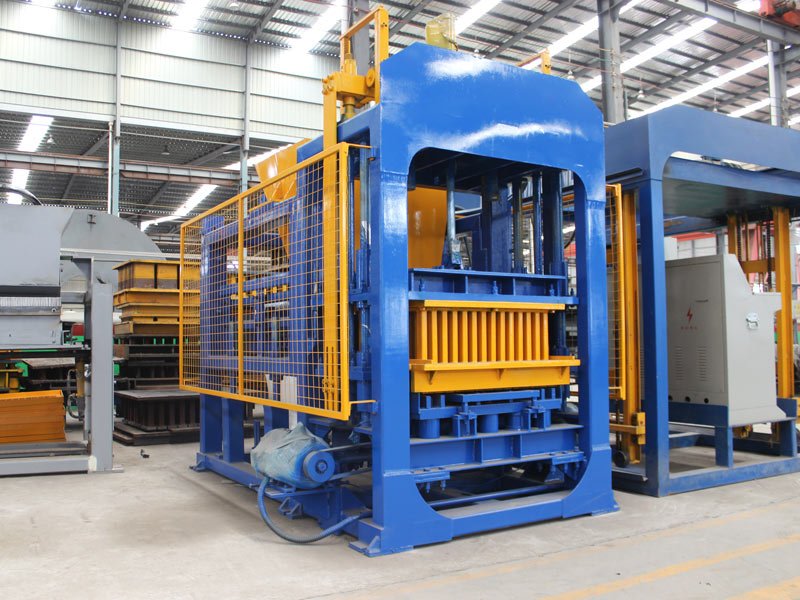
Your choice of machine determines your production capacity, your labour requirements, and your competitive positioning. Three broad categories exist in the African market:
Manual block moulding machines: The entry point for operators with very limited capital.
These machines are inexpensive — some locally fabricated units in Nigeria sell for as little as NGN 250,000 (under $200) — but production output is low and block consistency is harder to control.
They are best suited to a sole proprietor producing blocks for local residential self-builds rather than bulk supply to contractors.
Semi-automatic machines: The most commonly recommended option for operators in Africa by international equipment suppliers, including Turkey-based BESS and China-based Lontto.
Semi-automatic machines offer a balance between affordability and production capacity. In Kenya and Nigeria, the semi-automatic models that have gained the widest adoption can produce approximately 4,000 hollow blocks per eight-hour shift.
Import prices for quality semi-automatic machines from major manufacturers range from roughly $5,000 to $30,000, with additional costs for shipping, customs duties, and installation.
Fully automatic machines: Better suited to established operators in high-volume urban markets, or those with reliable electrical infrastructure.
These machines require fewer workers per unit of output, but they come at significantly higher capital cost and demand consistent power supply — a genuine challenge in many parts of the continent.
In markets like Kenya, South Africa, Ghana, Ethiopia, and Somalia, labour costs and land prices are generally low enough that semi-automatic machines offer the best return on investment for new entrants. Automatic machines become more attractive as the business scales.
Beyond the block moulding machine itself, you will also need a concrete mixer for consistent material blending, a water storage tank or borehole pump (blocks require significant water for both mixing and curing), wooden pallets or carriers for transporting freshly moulded blocks to the curing area, basic hand tools including wheelbarrows, shovels, and head pans, and, once volume justifies it, a small truck or tractor for deliveries.
Raw Materials
Concrete blocks are fundamentally simple products: cement, sand, and water. Getting the mix right — and maintaining that consistency — is what separates a profitable, reputable operation from one that generates complaints and loses customers.
Cement: The single most expensive input in block production. As research from Nigeria has consistently shown, cement accounts for the majority of direct production costs, which is why some operators are tempted to reduce cement content to cut costs.
This is a false economy. Blocks with insufficient cement fail strength tests and, critically, can contribute to structural failures — a reputational and ethical liability no serious business can afford.
The standard 1:8 ratio of cement to sand typically yields approximately 21 blocks per 50kg bag of cement. For bulk purchasing, establishing a credit relationship with a regional cement distributor — many will supply on account to reliable operators — can significantly improve your cash flow.
Sand: Three types are typically used: sharp sand, stone dust (a granite quarry by-product that improves block density), and in some applications, ordinary pit sand. Sharp sand is the primary aggregate for standard block production. Proximity to a reliable, consistent sand supply is one of the strongest arguments for choosing a site near quarrying or river extraction areas.
Water: Both mixing and curing require substantial volumes of water. An on-site borehole or large storage tank is strongly recommended. Dependence on municipal water supply introduces both cost variability and potential downtime risk.
The Numbers: Startup Costs and Profitability
Startup costs vary significantly by country, scale of operation, and equipment choice. The table below provides indicative figures for a small-to-medium scale entry into three major African markets.
| Cost Item | Nigeria (NGN) | Kenya (KES) | South Africa (ZAR) |
| Semi-auto block machine | ₦1.2M – ₦3.5M | KES 150K – 450K | ZAR 15K – 70K |
| Concrete mixer | ₦400K – ₦1.5M | KES 50K – 120K | ZAR 5K – 15K |
| Land (rent or purchase) | ₦500K – ₦2M | KES 50K – 300K | ZAR 20K – 80K |
| Initial raw materials (cement + sand) | ₦500K – ₦1M | KES 60K – 150K | ZAR 10K – 30K |
| Water infrastructure / borehole | ₦300K – ₦800K | KES 40K – 100K | ZAR 8K – 25K |
| Working capital (3 months) | ₦500K – ₦1M | KES 80K – 200K | ZAR 15K – 40K |
| Total (small-to-medium scale) | ₦3.4M – ₦9.8M | KES 430K – 1.32M | ZAR 73K – 260K |
Note: Figures are indicative estimates based on market data as of 2025–2026. Currency values fluctuate; confirm local pricing before committing capital.
On the revenue side, the business model is straightforward. A semi-automatic machine producing 4,000 six-inch hollow blocks per eight-hour day, selling at conservative market prices, generates substantial daily cash flow once the operation is running consistently.
Research from the Nigerian market indicates that 500 nine-inch blocks per day sold at NGN 140 per block yields gross revenue of NGN 70,000, against production costs (cement, sand, labour, diesel) of approximately NGN 45,000–50,000 — a daily gross profit of NGN 20,000–25,000, or NGN 600,000–750,000 per month before overheads.
A business running at 4,000 blocks per day would scale those figures proportionally.
Equipment supplier HF Machinery, which has deployed more than 380 units across Nigeria, has reported that clients using their machines typically achieve return on investment within 14 months based on surveyed operational data.
These figures will vary significantly depending on cement prices, local demand, competition, and operational efficiency.
Regulatory and Legal Requirements
Regulatory requirements vary by country, but across most African markets, starting a block making business involves securing business registration with the relevant national or regional authority, obtaining a trading licence from the local municipal government, acquiring any applicable environmental or land use permits — particularly if you are operating near a water body or in a peri-urban zone — and complying with national building standards for block strength and dimensions.
In Nigeria, the National Industrial Standards (NIS) specify minimum compressive strength requirements for sandcrete blocks: 3.45 N/mm² for 225mm-wide blocks and 2.5 N/mm² for 150mm-wide blocks.
Academic research has found that a significant proportion of commercially available blocks on the Nigerian market fall below these standards, which creates both a compliance issue and a competitive opportunity for operators who commit to quality.
In South Africa and Kenya, equivalent standards are enforced through the South African Bureau of Standards (SABS) and the Kenya Bureau of Standards (KEBS) respectively.
Quality is not just a regulatory obligation — it is the most durable competitive advantage in the block making business. A reputation for strong, consistent blocks will generate more repeat business from contractors than any price discount.
Operational Best Practices
Mix Ratios and Block Quality
The compressive strength of your blocks is directly determined by your cement-to-sand ratio and the thoroughness of your mixing process.
The widely used 1:8 ratio (one part cement to eight parts sand by volume) is a baseline for standard residential-grade hollow blocks.
For higher-specification applications such as foundation blocks or load-bearing external walls, a stronger mix of 1:6 is advisable. Never compromise the cement content to increase block yield. The short-term cost saving is real; the reputational and structural risk is greater.
Curing
Curing is the phase most commonly neglected by operators looking to cut time or costs, and it is the phase that most determines block durability.
Freshly moulded blocks must be protected from direct sunlight and kept moist for a minimum of 7 days, ideally 14–28 days for full strength development.
Covering blocks with tarpaulins or hessian sacking and watering them twice daily in hot, dry climates is standard practice. Blocks that are exposed to rapid drying in the sun before the cement has properly hydrated will be weaker and more brittle, regardless of the mix ratio used.
Staffing
A typical small-to-medium block yard requires one machine operator, two mixing workers who blend cement, sand, and water to the correct consistency, two carriers who transport freshly moulded blocks from the machine to the curing area, and a site supervisor or business owner overseeing quality control, sales, and logistics.
As the operation scales, you will want to add a dedicated salesperson or delivery coordinator.
Water and Power Management
Power supply is one of the most operationally significant variables in African block making. Fully automatic machines require consistent three-phase electricity; semi-automatic models can often run on single-phase power or diesel-powered generators.
In markets with unreliable grid supply — which covers most of Sub-Saharan Africa outside South Africa — a diesel generator and a calculated fuel budget are essential. Water for curing should be stored in large tanks to insulate the operation from daily supply interruptions.
Market Development and Sales Strategy
Unlike many businesses, a block yard does not need elaborate marketing infrastructure to generate sales.
The market comes to you — provided you are in the right location and your product quality is known. That said, a deliberate approach to market development will significantly accelerate growth.
Build relationships with contractors: Small and medium construction companies building private homes are your most reliable repeat customers.
Visit active building sites near your yard, introduce yourself, and offer trial deliveries. A contractor who tests your blocks and finds them consistent and strong will return with bulk orders.
Supply consistency: Contractors work to deadlines. A block yard that cannot fulfil orders reliably — because of raw material stockouts, machine downtime, or insufficient curing time — will lose clients to competitors even if the product quality is good. Buffer stock management and preventive machine maintenance are non-negotiable for sustained contracts.
Offer delivery: Customers who must arrange their own transport for block collection are less likely to return. Owning or hiring a small lorry for deliveries — and pricing it transparently — removes a significant friction point for contractors and self-builders alike.
Diversify your product range: As your machine capacity and capital allow, expand from standard hollow blocks into paving blocks, kerbstones, or interlocking blocks. Paving block demand is growing rapidly across urban Africa alongside commercial development and estate housing projects, and it carries a better margin than standard hollow blocks.
Target the affordable housing pipeline: Government-backed affordable housing programmes in Kenya, Nigeria, South Africa, Rwanda, and Ethiopia represent a significant and growing procurement channel for block makers who can supply consistently at scale.
Registering as a supplier with housing development authorities, cooperatives, or real estate developers positions your business to access this pipeline as it matures.
Challenges to Anticipate
No business guide would be complete without an honest assessment of the risks. The block making business in Africa is genuinely profitable — but it operates in an environment with specific challenges that new entrants must plan for.
Cement price volatility: As the dominant cost input, cement price movements directly erode or expand your margins. Currency depreciation in local markets has pushed cement costs upward across the continent in recent years. Building a relationship with a volume supplier and buying in bulk when prices are favourable are the two most effective hedges.
Competition from informal producers: Many African markets have a dense population of small-scale block makers operating without formal registration, quality control, or consistent pricing. Competing on price alone against informal producers is a race to the bottom. Quality differentiation and reliable supply are the sustainable competitive advantages of a formalised operation.
Power supply: As noted above, grid-dependent operations in markets with unreliable electricity supply will face production interruptions. Budget for a backup power solution from day one.
Transportation costs: Poor road infrastructure in secondary cities and peri-urban areas can significantly increase both inbound raw material costs and outbound delivery costs. Site selection should factor in road quality, not just proximity to construction activity.
Access to finance: Equipment financing for block making businesses is available through some microfinance institutions and development finance organisations in Nigeria, Kenya, and South Africa, but it remains limited and often expensive.
Most operators start with personal or family capital. Demonstrating business registration, a formal business plan, and clean financial records improves access to credit as the business grows.
The Technology Horizon
The block making business is not standing still. Several technology trends are worth watching as you plan for growth.
Autoclaved Aerated Concrete (AAC) blocks — lightweight, thermally insulating precast blocks that offer superior performance to standard concrete — are gaining traction in South Africa, Kenya, and Nigeria.
The African AAC market was valued at $880 million in 2024 and is forecast to reach $1.38 billion by 2033.
While AAC production requires significantly higher capital investment than standard block making, it represents an adjacent market opportunity for established operators looking to move upmarket.
Interlocking compressed earth blocks and other alternative building materials are being promoted in several African markets as lower-carbon, locally sourced alternatives to cement-intensive blocks.
Companies like South Africa’s Hydraform have trained communities across the continent in interlocking block production. For operators in regions with high-quality laterite soils, compressed earth block production can complement cement block output.
Digital procurement platforms are beginning to reshape how building materials are bought and sold in Africa.
Platforms like Kenya’s Jumba are connecting block makers, material suppliers, and contractors digitally, reducing the friction in bulk ordering and payment. A forward-looking block making business should be thinking about how to integrate with these channels as they mature.
The Bottom Line
Africa’s construction boom is not a speculative future scenario — it is happening right now, in every major city and secondary town across the continent.
The block making business sits at the centre of that boom, supplying a product that is simultaneously essential, consumable, and manufactured locally from materials that are broadly available.
The barriers to entry are lower than almost any other manufacturing business of comparable profitability. The market is growing faster than supply can keep pace.
And for operators who invest in quality, consistency, and relationships, the business generates reliable daily cash flow with a clear path to scaling.
What it requires in return is operational discipline, an honest approach to quality, and a willingness to learn the specific dynamics of your local market.
The construction industry has no shortage of block yards producing substandard product. It has a persistent shortage of suppliers it can genuinely rely on.
Africa is building — and it needs builders who can supply the blocks to do it. The market is there. The question is whether you will meet it at the standard it deserves.
Also Read
How to choose the right block-making machine for your construction project
7 world’s top precast machinery manufacturers

