
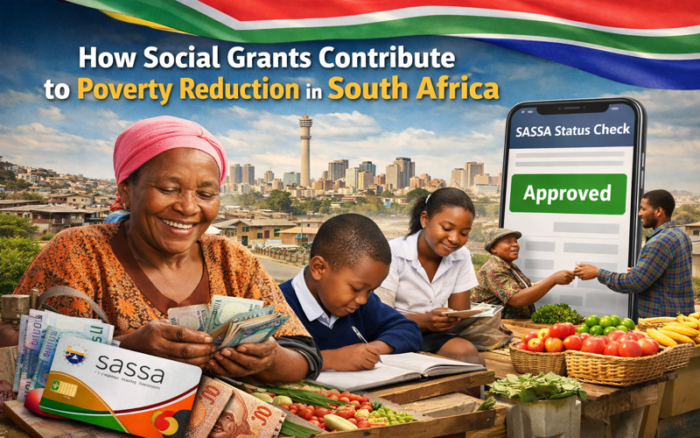
CAPE TOWN, March 17: Social grants are a critical component of the social welfare system in South Africa, designed to support individuals and families facing financial hardship.
These programs are administered by the South African Social Security Agency, which distributes various types of grants to eligible citizens.
The government introduced these initiatives to reduce poverty, improve living conditions, and ensure that vulnerable populations have access to basic financial support.
Among the most widely discussed programs is the Social Relief of Distress Grant, which provides temporary assistance to unemployed individuals and those with little or no income.
Improving Household Financial Stability
One of the primary ways social grants reduce poverty is by providing consistent financial assistance to low-income households.
Many families rely on these funds to cover essential living expenses such as food, electricity, transportation, and healthcare.
This regular financial support helps stabilize household budgets and prevents families from falling deeper into poverty during periods of unemployment or economic uncertainty.
Strengthening Food Security and Basic Needs
Social grants directly contribute to improved food security in disadvantaged communities. Beneficiaries often allocate a large portion of their grant income toward purchasing groceries and other daily necessities.
By ensuring that households have access to basic nutrition and essential goods, the grant system helps reduce hunger and improves overall living standards for millions of South Africans.
Stimulating Local Economies
Beyond individual households, social grants also have a broader economic impact. When recipients spend their grant payments in local shops, markets, and small businesses, the money circulates within the community.
This spending supports informal traders, small retailers, and service providers who depend on local demand. As a result, social grants indirectly contribute to economic activity and job sustainability in low-income areas.
Enhancing Access Through Digital Platforms
The modernization of digital services has improved accessibility and transparency in the grant system.
Applicants can now submit applications online, update banking information, and track payment schedules through digital platforms.
Many beneficiaries regularly perform a SASSA status check to monitor application outcomes, payment approvals, and eligibility updates. This digital access reduces the need for physical visits to government offices and allows applicants to stay informed about their grant progress.
Supporting Education and Long-Term Development
Social grants also support long-term poverty reduction by helping families invest in education and human development.
Households often use grant funds to cover school-related expenses such as uniforms, transport, and learning materials.
This financial support helps improve school attendance and ensures that children from low-income families have better access to educational opportunities.
Social grants remain one of the most effective poverty alleviation tools in South Africa. By providing consistent financial support, improving access to basic necessities, and stimulating local economies, these programs play a vital role in supporting vulnerable communities.
Initiatives managed by the South African Social Security Agency continue to strengthen the country’s social protection framework and contribute to long-term economic stability while helping millions of citizens maintain a basic standard of living.
Also Read
Quanta Services: The Engineering Contractor That Quietly Became an AI Infrastructure Powerhouse
How Trane Technologies Is Solving the US Data Centre Power Crisis

- How Social Grants Contribute to Poverty Reduction in South Africa - March 17, 2026
- Quanta Services: The Engineering Contractor That Quietly Became an AI Infrastructure Powerhouse - March 17, 2026
- South Africa Fuel Restrictions Are Squeezing Construction Sites — Here’s What Contractors Need to Know - March 13, 2026
