
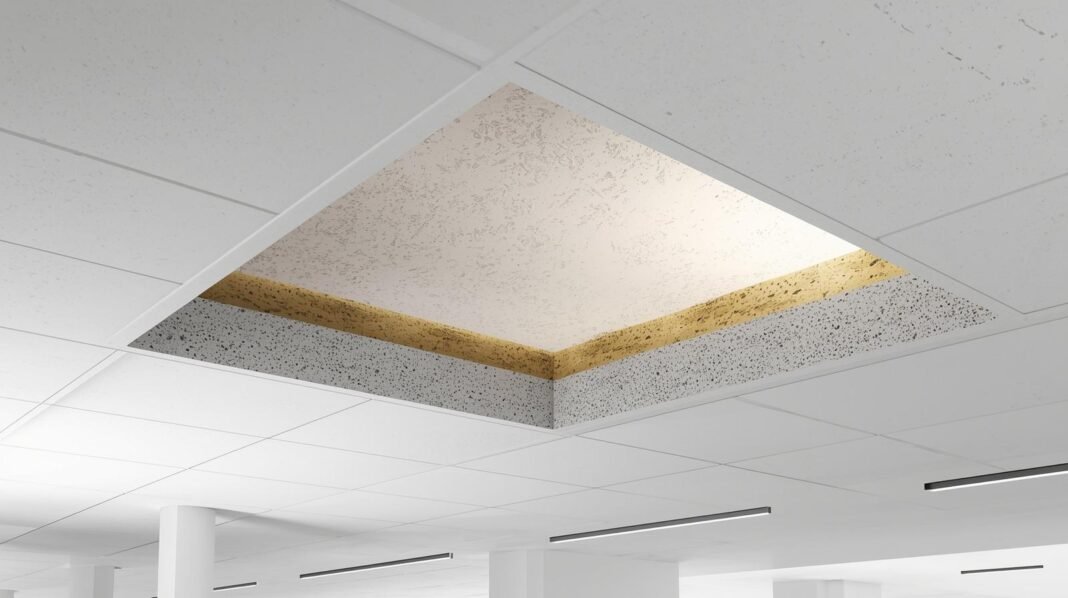
When specifying ceiling systems for commercial projects, contractors and architects often focus on aesthetics, acoustics, and fire ratings.
However, the materials that enable these high-performance characteristics rarely get the attention they deserve. One such material—hydrated lime—plays a crucial role in manufacturing ceiling tiles that meet today’s demanding building standards.
What is Hydrated Lime and Why Does It Matter?
Hydrated lime, chemically known as calcium hydroxide (Ca(OH)₂), is produced by adding water to quicklime (calcium oxide).
In the context of ceiling tile manufacturing, this seemingly simple compound delivers remarkable benefits that directly impact building performance, occupant comfort, and long-term durability.
Unlike traditional construction materials, modern ceiling tiles must balance multiple performance criteria simultaneously: sound absorption, fire resistance, dimensional stability, light reflectance, and sustainability.
Hydrated lime contributes to achieving this complex balance in ways that few other additives can match.
The Manufacturing Advantage: How Hydrated Lime Enhances Ceiling Tiles
Superior Binding Properties
In mineral fiber ceiling tiles—the most common type used in commercial construction—hydrated lime serves as a critical binding agent.
When combined with mineral wool, perlite, recycled paper, and other fibers, hydrated lime creates a matrix that holds these materials together while maintaining the porosity needed for acoustic performance.
The binding mechanism works through carbonation, a process where hydrated lime reacts with carbon dioxide in the air to form calcium carbonate.
This chemical reaction creates a strong, stable bond between fibers without requiring excessive heat or synthetic resins, resulting in a more sustainable manufacturing process.
Enhanced Fire Resistance
Fire safety remains a top priority in commercial and institutional buildings. Hydrated lime significantly improves the fire resistance of ceiling tiles through several mechanisms:
Endothermic Decomposition: When exposed to high temperatures, calcium hydroxide releases water vapor, which helps cool the surrounding material and dilute combustible gases.
Non-Combustible Barrier: As an inherently non-combustible mineral, hydrated lime doesn’t contribute to flame spread or smoke development—critical factors in fire-rated assemblies.
Char Formation: During exposure to fire, hydrated lime contributes to forming a protective char layer that insulates underlying materials from heat.
This fire-resistant performance allows ceiling tiles containing hydrated lime to achieve Class A fire ratings, meeting stringent building codes for occupied spaces.
Acoustic Performance: The Hidden Connection
One of the most valued characteristics of commercial ceiling tiles is their ability to control sound. Open-plan offices, healthcare facilities, educational institutions, and hospitality spaces all depend on effective acoustic management for occupant comfort and productivity.
Hydrated lime contributes to acoustic performance in subtle but important ways:
Controlled Porosity: The binding properties of hydrated lime allow manufacturers to create consistent, controlled porosity throughout the tile. This porosity is essential for sound absorption, as it creates pathways for sound waves to enter the material and dissipate as heat energy.
Structural Integrity: While maintaining necessary porosity, hydrated lime provides enough structural strength to prevent tile sagging or degradation over time, which could compromise acoustic performance.
Dimensional Stability: By reducing shrinkage and warping, hydrated lime helps ceiling tiles maintain their designed thickness and density—both critical factors in achieving specified Noise Reduction Coefficient (NRC) ratings.
Sustainability and Indoor Air Quality Benefits
Modern construction increasingly emphasizes sustainability and healthy indoor environments. Hydrated lime aligns well with both objectives:
Lower Embodied Carbon
The carbonation process that occurs in lime-based ceiling tiles actually sequesters atmospheric CO₂, partially offsetting the carbon emissions from lime production. While not carbon-neutral, this process results in lower embodied carbon compared to ceiling tiles relying solely on synthetic binders.
Reduced VOC Emissions
Hydrated lime is an inorganic mineral that doesn’t release volatile organic compounds (VOCs). In ceiling tiles, using lime-based binders can reduce or eliminate the need for formaldehyde-containing resins, contributing to better indoor air quality and easier compliance with green building standards like LEED and WELL.
Recyclability and Circular Economy
Ceiling tiles manufactured with hydrated lime and mineral fibers can often be recycled at end-of-life, with some manufacturers accepting old tiles for incorporation into new products. The inorganic nature of hydrated lime makes it compatible with recycling processes.
Moisture Management and Durability
Commercial buildings face varying humidity conditions, and ceiling systems must perform reliably across these conditions:
Moisture Buffering: Hydrated lime can absorb and release moisture in response to changing relative humidity, helping stabilize conditions in the ceiling plenum and reducing condensation risk.
Mold and Mildew Resistance: The alkaline nature of hydrated lime (pH around 12.4) creates an inhospitable environment for mold and mildew growth, important in humid climates or above moisture-generating spaces.
Reduced Sagging: By improving dimensional stability under varying moisture conditions, hydrated lime helps ceiling tiles maintain their appearance and performance over decades of service.
Specifying Lime-Enhanced Ceiling Systems
For construction professionals selecting ceiling systems, understanding the role of hydrated lime helps in making informed decisions:
Performance Verification: Look for ceiling tiles with Class A fire ratings, high NRC values (0.70 or higher for acoustic applications), and low VOC emissions—characteristics often enabled by lime-based formulations.
Manufacturer Transparency: Leading ceiling tile manufacturers provide detailed product data sheets that list ingredients and performance characteristics. Don’t hesitate to ask about the role of hydrated lime in meeting specifications.
Lifecycle Considerations: Consider not just initial cost but also the longevity, maintenance requirements, and end-of-life options that lime-enhanced tiles can offer.
Climate Appropriateness: In humid or coastal environments, the moisture-resistant properties of lime-based ceiling tiles can provide significant long-term benefits.
The Future of Ceiling Technology
As building science advances, the role of traditional materials like hydrated lime continues to evolve. Research into bio-based binders, improved manufacturing processes, and enhanced recycling methods all build upon the proven foundation that hydrated lime provides.
The integration of hydrated lime with modern fiber technologies, advanced manufacturing techniques, and sustainable sourcing represents a bridge between time-tested building materials and contemporary performance requirements.
Conclusion
While often overlooked in discussions of building materials, hydrated lime serves as a cornerstone ingredient in high-performance ceiling systems.
Its contributions to fire safety, acoustic control, sustainability, and long-term durability make it an essential component in creating healthy, comfortable, and safe interior environments.
For contractors, specifiers, and building owners, understanding the science behind ceiling tile performance—including the critical role of hydrated lime—enables better decision-making and ultimately delivers superior building performance.
As green building standards become more stringent and occupant wellness gains priority, the advantages of lime-enhanced ceiling systems will only become more apparent.
The next time you look up at a suspended ceiling grid, remember that the unassuming white tiles overhead represent sophisticated material science at work—with hydrated lime playing a starring role in their performance.
Also Read
Mobile & Modular Batching Plants: The Future of On-Site Concrete Production
New vs Used Heavy-Duty Trucks: What Works Best in Africa?

