Africa’s construction boom presents unprecedented opportunities for entrepreneurs and contractors looking to establish concrete production facilities.
With the continent’s cement market projected to expand from approximately $35 billion in 2024 to over $42 billion by 2030, understanding the costs of setting up a small concrete plant has never been more critical for business success.
Understanding Small Concrete Plant Investment Requirements
Setting up a small concrete batching plant in Africa requires careful financial planning and consideration of multiple cost components.
The total investment typically ranges between $30,000 and $120,000, depending on plant capacity, location, and level of automation.
Equipment Costs: The Primary Investment
The concrete batching plant equipment represents the largest portion of your initial investment. For small-scale operations in Africa, the pricing structure breaks down as follows:
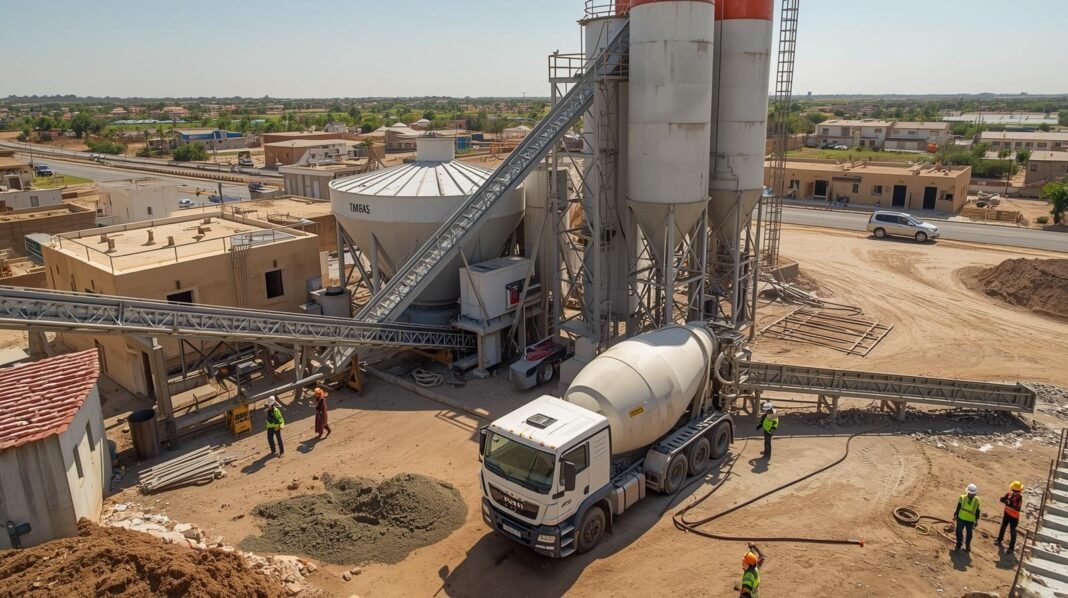
Mini Ready-Mix Concrete (RMC) Plants with production capacities of 15-35 cubic meters per hour typically cost between $25,000 and $50,000. These compact units are ideal for small construction contractors and local building projects.
Medium Capacity Plants producing 50-90 cubic meters per hour range from $60,000 to $120,000. These plants suit growing businesses handling multiple projects simultaneously and requiring higher output volumes.
The choice between stationary and mobile plants significantly impacts costs. Mobile batching plants offer greater flexibility for contractors moving between job sites, though they may carry a slightly higher price tag due to their transportable design.
Stationary plants provide stability and are better suited for operations serving a fixed geographic area.
Breaking Down the Complete Setup Costs
Land Acquisition and Site Preparation
Beyond equipment purchase, securing appropriate land represents a substantial investment. Urban areas command premium prices ranging from $10,000 to $100,000 depending on city and proximity to construction markets.
Rural locations offer more affordable alternatives while still providing access to raw materials.
Site preparation adds another $10,000 to $50,000 to your budget. This includes land leveling, foundation construction for equipment stability, fencing for security, and establishing basic infrastructure such as reliable water supply and electrical connections.
In many African locations, planning for backup power generation becomes essential due to intermittent grid electricity.
Installation and Commissioning
Professional installation ensures smooth operations and equipment longevity. Installation costs typically range from $5,000 to $20,000, varying with plant complexity and manufacturer support packages.
Many reputable suppliers include installation assistance and initial operator training as part of their service offering, which proves invaluable for first-time plant operators.
Operating Capital and Raw Materials
Initial working capital must cover raw material procurement before revenue generation begins. Cement, aggregates, sand, fly ash, and chemical admixtures constitute the primary materials.
Depending on your target market and production volume, allocating $10,000 to $30,000 for initial raw material inventory ensures uninterrupted operations during the startup phase.
Ongoing Operational Costs
Labor and Staffing
Labor costs vary significantly across African countries based on local wage standards and skill availability.
Small concrete plants typically require 5-10 employees including plant operators, quality control technicians, mixer truck drivers, and administrative staff. Annual labor expenses generally fall between $20,000 and $60,000, with skilled technicians commanding higher compensation.
Utilities and Maintenance
Water and electricity consumption directly correlates with production volume. Expect monthly utility bills ranging from $500 to $3,000 depending on plant size and operation hours.
In regions with unreliable grid power, factor in diesel generator fuel costs which can add significantly to operating expenses.
Regular maintenance proves essential for equipment longevity and consistent concrete quality.
Annual maintenance budgets typically represent 10-15% of the plant’s purchase price, covering spare parts, scheduled servicing, and repairs. Critical wear components like mixer blades, conveyor belts, and weighing sensors require periodic replacement.
Regional Considerations Across Africa
Market Dynamics by Region
Nigeria’s construction sector remains robust despite economic volatility, driven by massive population growth toward 401 million people by 2050. The country faces a housing deficit of 22 million units, creating sustained demand for concrete production capabilities.
Kenya’s construction market demonstrates strong growth, particularly around infrastructure development. With an annual concrete demand of approximately 6 million tons against production capacity of 13 million tons, opportunities exist for efficient, well-located plants.
South Africa’s mature construction industry offers both opportunities and challenges. While infrastructure spending continues, competition from established players and potential imports from Asia require careful market positioning and competitive pricing strategies.
Ethiopia showcases rapid cement industry expansion with current overcapacity creating export opportunities to neighboring countries. The country’s aggressive infrastructure development, including major dam projects, ensures consistent concrete demand.
Cost Optimization Strategies
Selecting the Right Plant Configuration
Choose plant capacity matching your realistic production projections rather than oversizing equipment. A 25-35 cubic meter per hour plant adequately serves most small contractor needs while minimizing initial capital outlay and operating costs.
Consider modular designs allowing future capacity expansion as business grows. This approach spreads capital investment over time while maintaining operational flexibility.
Supplier Selection and Support
Partner with manufacturers offering comprehensive local support networks. Companies with established presence across Africa provide faster spare parts delivery, reducing costly downtime. Their technical support teams understand local operating conditions and can troubleshoot efficiently.
Factory-direct purchasing eliminates middleman markups, potentially saving 15-25% on equipment costs. However, verify the manufacturer’s reputation, warranty terms, and after-sales service capabilities before committing.
Automation Level Considerations
Fully automated plants reduce labor requirements and ensure consistent mix quality but command higher initial investment. Semi-automated systems offer balanced solutions, combining reasonable automation benefits with lower costs. For small operations where labor costs remain relatively low, basic automation may provide the best return on investment.
Hidden Costs to Consider
Regulatory Compliance
Environmental compliance represents an often-underestimated expense. Dust collection systems, wastewater management, and noise control measures can add $5,000 to $20,000 to setup costs. However, these investments prove essential for obtaining operating permits and maintaining community relations.
Transportation and Logistics
In Africa’s often-challenging logistics environment, raw material transportation significantly impacts profitability. Fuel price volatility, poor road conditions, and long supply chains necessitate careful location selection near aggregate sources and target markets.
Working Capital Buffer
Maintain sufficient working capital reserves to weather payment delays common in construction markets. Many projects experience payment cycles of 30-90 days, requiring operational funds to continue production during collection periods.
Return on Investment Potential
Well-managed small concrete plants in Africa typically achieve profitability within 18-36 months. Success factors include:
- Strategic location minimizing transportation costs
- Consistent quality control attracting repeat customers
- Efficient operations reducing waste and downtime
- Competitive pricing while maintaining margins
- Reliable supply chain management
- Strong customer relationships and payment discipline
Making Your Investment Decision
Setting up a small concrete plant in Africa represents a significant but potentially lucrative investment. The continent’s rapid urbanization, infrastructure development needs, and construction boom create favorable market conditions for concrete producers.
Thorough market research, realistic financial projections, and careful supplier selection prove essential for success. While initial costs may seem substantial, the combination of growing demand and strategic positioning can deliver attractive returns for diligent entrepreneurs.
Consider starting with modest capacity, establishing strong operational practices, and scaling gradually as market presence grows. This approach minimizes financial risk while building expertise and customer relationships essential for long-term success in Africa’s dynamic construction materials sector.
The opportunity exists—success requires careful planning, quality execution, and commitment to operational excellence in this promising but demanding market.
Frequently Asked Questions (FAQs)
What are the different types of concrete plants?
Concrete plants are commonly classified into stationary batching plants, mobile batching plants, mini batching plants, and compact batching plants, each designed to suit different project sizes, budgets, and mobility needs.
Also Read
How Much Does a Concrete Mixer Pump Cost in Africa?
How Much Does a Mobile Batching Plant Cost in Africa?

- South Africa’s April 1 Triple Shock: When the Joke Is on the Consumer - March 26, 2026
- KeNHA’s World Bank Funding Boost: Inside Kenya’s KSh Multi-Billion Expressway Masterplan - March 25, 2026
- SASSA locks in full-year social grant payment schedule — and announces biggest increases in years - March 24, 2026
