
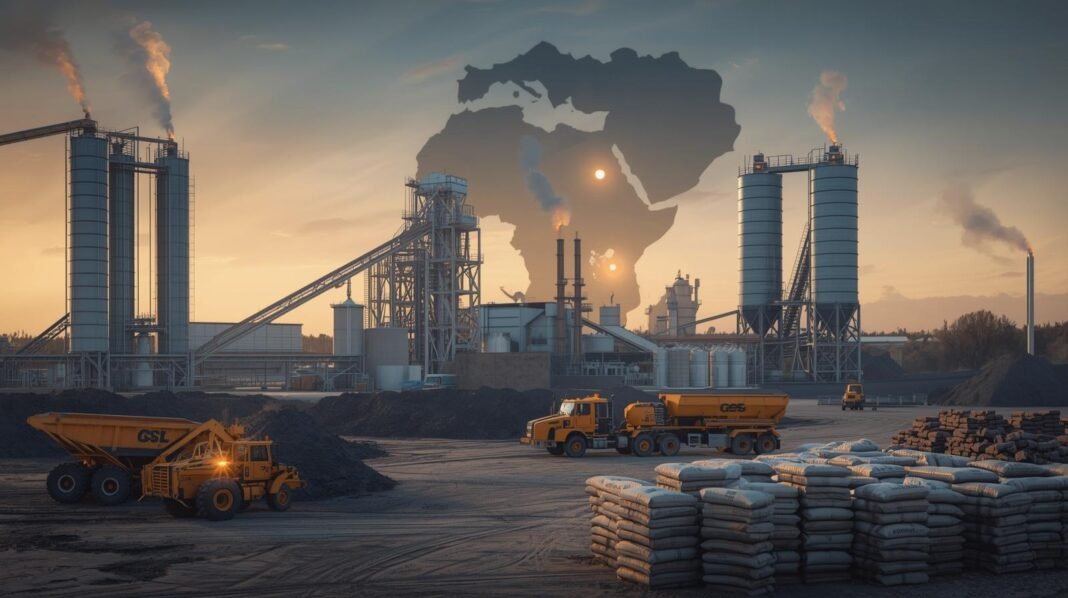
Africa’s cement industry has experienced remarkable transformation over the past two decades, evolving from a fragmented market reliant on imports to a dynamic sector increasingly driven by local production.
With rapid urbanization, population growth, and ambitious infrastructure projects across the continent, cement production has become a cornerstone of Africa’s economic development.
As of 2020, Africa’s cement industry boasted a total capacity exceeding 386 million tons per annum, with the top producers controlling significant market share while fostering competition and innovation.
Let’s explore the nine largest cement producers that are literally building Africa’s future, one ton at a time.
1. Dangote Cement: Africa’s Undisputed Giant
Headquarters: Nigeria
Capacity: 48.6 million tons per annum across Africa
Dangote Cement stands as Africa’s largest cement producer, a remarkable achievement for a company that began its cement operations in the early 2000s.
Founded by Africa’s richest man, Aliko Dangote, this Nigerian powerhouse has revolutionized the continent’s cement landscape through aggressive expansion and strategic investments.
The company operates 32.3 million tons per annum of capacity in Nigeria alone, making it the dominant force in Africa’s most populous nation.
Beyond Nigerian borders, Dangote has established operations in nine other African countries, including Tanzania, South Africa, Ethiopia, Senegal, Ghana, Zambia, Cameroon, Congo, and Sierra Leone, adding another 16.3 million tons of capacity.
Dangote Cement’s success story is one of vertical integration and scale. The company has invested billions in modern production facilities, ensuring consistent quality while maintaining competitive pricing.
In Nigeria, Dangote controls approximately 48% of the national cement market, operating three major integrated plants at Obajana, Ibese, and Gboko.
What sets Dangote apart is its commitment to self-sufficiency. The company has significantly reduced Nigeria’s reliance on imported cement, transforming the country from a net importer to an exporter of cement to neighboring West African nations.
This achievement has contributed substantially to job creation and economic growth across the region.
2. Holcim Group (formerly LafargeHolcim): Global Expertise, Local Impact
Headquarters: Switzerland (African operations)
Capacity: 26.3 million tons per annum in Africa
Holcim, one of the world’s largest building materials companies, maintains a substantial footprint across Africa.
The company entered the African market through the acquisition of Scancem in 1999 and has since grown to operate integrated cement plants in Egypt, Morocco, the Democratic Republic of Congo, Tanzania, and Togo.
In addition to its integrated plants, Holcim operates grinding facilities in Ghana, Benin, Burkina Faso, Liberia, Sierra Leone, and Mozambique.
This strategic mix of integrated and grinding plants allows the company to serve diverse markets efficiently while maintaining proximity to urban growth centers.
Holcim’s African operations emphasize sustainability and innovation. The company has been at the forefront of adopting alternative fuels and reducing carbon emissions, setting benchmarks for environmental responsibility in cement production.
However, recent portfolio optimization strategies have led to some divestments, including the sale of Lafarge Africa to Huaxin Cement in 2025, indicating a strategic realignment of its African assets.
The company’s subsidiary in Nigeria, Lafarge Africa, operates with a capacity of 10.5 million tons per annum across four plants in Sagamu, Ewekoro, Mfamosing, and Ashaka, serving the Nigerian market with a comprehensive range of cement products.
3. GICA (Groupe Industriel des Ciments d’Algérie): North Africa’s State Giant
Headquarters: Algeria
Capacity: 20 million tons per annum
The state-owned Groupe Industriel des Ciments d’Algérie (GICA) is Algeria’s cement champion and one of Africa’s largest producers.
Comprising 14 subsidiaries, GICA represents the Algerian government’s commitment to maintaining strategic control over cement production, a vital commodity for national development.
Algeria boasts one of the highest per capita cement consumption rates in Africa at 522 kilograms, reflecting the country’s ongoing infrastructure development and construction activities.
GICA’s capacity utilization rate of approximately 61.6% is among the highest on the continent, demonstrating efficient operations and strong domestic demand.
The company has modernized its facilities over the years, incorporating advanced production technologies and expanding capacity to meet growing demand.
As a state enterprise, GICA plays a crucial role in supporting Algeria’s ambitious infrastructure projects and housing programs, particularly in addressing the needs of the country’s 44 million inhabitants.
4. Egyptian Armed Forces Cement Operations: Military Might Meets Construction
Headquarters: Egypt
Capacity: 12.5 million tons per annum
Egypt’s cement industry took an unprecedented turn with the establishment of the Al-Arish plant in Beni Suef, owned and operated by the Egyptian Armed Forces. This facility represents the world’s largest cement plant built at one time in a single location, featuring six identical kiln lines, each producing 6,000 tons per day.
The plant commenced clinker production in December 2017, adding massive capacity to Egypt’s already substantial cement sector.
Egypt, as Africa’s leading cement producer by country, has a total national capacity of approximately 50 million tons per annum, making it one of the world’s major cement manufacturing hubs.
However, the timing of this capacity addition coincided with significant oversupply in the Egyptian market, leading to price declines of 25-30% post-commissioning.
Despite these market challenges, the Egyptian Armed Forces’ venture into cement production demonstrates the strategic importance of construction materials in national development and the military’s expanding role in economic activities.
5. BUA Cement: Nigeria’s Rising Challenger
Headquarters: Nigeria
Capacity: Significant operations with multiple integrated plants
BUA Cement has emerged as Nigeria’s second-largest cement producer, mounting a serious challenge to Dangote’s dominance. The company operates modern integrated cement plants in Okpella (Edo State) and Kalambaina (Sokoto State), with plans for continued expansion.
In 2022, BUA made headlines with aggressive market strategies, including a dramatic 36% price cut in October to gain market share, demonstrating the increasingly competitive nature of Nigeria’s cement sector.
The company has shown impressive financial performance, with profit margins exceeding 36% and consistent revenue growth.
BUA Cement’s growth strategy focuses on capacity expansion and operational efficiency. The company recently commissioned a 3 million tons per annum plant in Sokoto, bringing cutting-edge technology to northern Nigeria.
This expansion not only increases production capacity but also reduces transportation costs for customers in Nigeria’s northern regions.
The company is part of the larger BUA Group, a diversified conglomerate with interests in sugar refining, real estate, and other sectors, providing financial strength and strategic flexibility for its cement operations.
6. HeidelbergCement: German Engineering Across Africa
Headquarters: Germany (African operations)
Capacity: Substantial presence across multiple markets
HeidelbergCement’s African operations span numerous countries, with particularly strong positions in Ghana, Tanzania, and several West African markets.
The company entered Africa through strategic acquisitions and has built a reputation for operational excellence and environmental stewardship.
In Ghana, HeidelbergCement operates through its subsidiary Ghacem, which runs plants in Tema (upgraded to 2.2 million tons per year capacity) and Sekondi-Takoradi (1.2 million tons per year).
These facilities have made the company a market leader in a country that relies heavily on grinding plants due to limited limestone resources.
The company’s Tanzania operations through Tanzania Portland Cement Company represent another significant African investment, serving East Africa’s growing construction needs. HeidelbergCement’s approach emphasizes close proximity to urban centers, ensuring efficient distribution and responsive customer service.
Sustainability remains a core focus, with investments in alternative fuels, energy efficiency, and reduced emissions across all African operations. The company has consistently demonstrated that profitability and environmental responsibility can go hand in hand.
7. CIMAF (Ciments de l’Afrique): Pan-African Ambition
Headquarters: Morocco (operations across West and Central Africa)
Capacity: 16 million tons per annum across operations
Ciments de l’Afrique (CIMAF), the pan-African subsidiary of Morocco’s Omnium des Industries et de la Promotion (OIP) Group, represents one of Africa’s most ambitious expansion stories.
Operating 13 grinding plants across 11 countries—including Guinea, Guinea Bissau, Ivory Coast, Cameroon, Burkina Faso, Gabon, Congo-Brazzaville, Ghana, Mali, Mauritania, and Chad—CIMAF has built an impressive regional network.
The company’s parent organization, OIP, is the third-largest cement producer in Morocco and has leveraged its North African expertise to penetrate West and Central African markets aggressively.
Annual production capacity exceeds 16 million tons, with ambitious plans for further expansion, including the construction of an integrated cement plant in Senegal.
CIMAF’s strategy focuses on establishing grinding facilities in coastal and strategic inland locations, then supplying them with clinker from Morocco and other sources. This approach allows rapid market entry with lower initial capital investment compared to integrated plants. However, the company is now investing in local clinker production to improve competitiveness and reduce reliance on imports.
Sustainability initiatives are central to CIMAF’s operations. The company has partnered with the International Finance Corporation (IFC) to implement solar energy projects, increase the use of alternative fuels, and reduce carbon emissions across its African facilities. These investments in green technology position CIMAF as a forward-thinking player in Africa’s cement industry.
8. Vicat: French Expertise in Strategic Markets
Headquarters: France (African operations)
Capacity: Operations in West Africa
Vicat, a French cement company with a long history dating back to 1853, maintains strategic operations in Africa, particularly in Senegal and Mali.
While smaller than some continental giants, Vicat’s expertise in specialized cement products and technical excellence gives it a competitive edge in select markets.
The company’s African operations focus on quality and innovation, introducing advanced cement formulations suited to local climatic conditions and construction requirements. Vicat has invested in modern production facilities that emphasize efficiency and environmental sustainability.
In Senegal, Vicat competes with CIMAF and other regional players, differentiating itself through product quality and customer service. The company’s deep technical knowledge, accumulated over more than 150 years of cement production globally, provides significant advantages in troubleshooting production challenges and optimizing operations.
9. National Cement Company (Devki Group): East Africa’s Growing Force
Headquarters: Kenya
Capacity: Expanding presence in Kenya and East Africa
National Cement, owned by the Devki Group, has emerged as Kenya’s second-largest cement producer following strategic acquisitions of ARM Cement and Cemtech Sanghi assets. This consolidation has positioned the company as a major player in East Africa’s cement sector.
Kenya’s cement market, with consumption of approximately 6.55 million tons in 2020, offers significant growth potential as the country pursues its Vision 2030 development goals. National Cement’s expansion strategy focuses on capturing market share through competitive pricing and improved distribution networks.
The company operates modern facilities with a focus on efficiency and sustainability. East Africa’s demographic trends—with growing populations and accelerating urbanization—provide a favorable long-term outlook for cement producers positioned to serve this dynamic market.
National Cement faces competition from established players like Bamburi Cement (part of Holcim), Savannah Cement, and others, but its recent acquisitions and investments in capacity expansion demonstrate confidence in the region’s growth trajectory.
The Future of Africa’s Cement Industry
Africa’s cement sector stands at an exciting crossroads. The continent’s population, projected to reach 2.5 billion by 2050, combined with rapid urbanization and infrastructure development needs, ensures robust long-term demand. However, the industry also faces significant challenges and opportunities:
Sustainability Imperatives: Cement production is carbon-intensive, and Africa’s producers are increasingly pressured to adopt cleaner technologies. Leading companies are investing in alternative fuels, renewable energy, and lower-clinker cement formulations to reduce environmental impact.
Overcapacity Concerns: Some markets, particularly Egypt and Nigeria, face overcapacity challenges, leading to price competition and margin pressure. Producers must balance capacity expansion with market realities.
Infrastructure Development: African Union’s Agenda 2063 and national development plans across the continent promise massive infrastructure investments in roads, bridges, railways, ports, and housing. These projects will drive sustained cement demand.
Local Competition: While foreign multinationals once dominated Africa’s cement industry, local and regional champions like Dangote and CIMAF now control significant market share, reflecting the industry’s maturation and the rise of African industrial capabilities.
Chinese Investment: Chinese cement producers, driven by domestic overcapacity, are increasingly investing in African operations. Companies like Huaxin Cement and West China Cement Limited are establishing plants across the continent, bringing advanced technology and competitive pricing.
Digital Transformation: Industry 4.0 technologies, including automation, artificial intelligence, and data analytics, are gradually being adopted to improve operational efficiency and reduce costs.
Conclusion
Africa’s nine largest cement producers represent a diverse mix of local champions, regional players, and global multinationals, each contributing to the continent’s infrastructure development in unique ways.
From Dangote’s Nigerian dominance to CIMAF’s pan-African network, from state-owned GICA to multinational Holcim, these companies are not just producing building materials—they’re literally constructing Africa’s future.
As Africa continues its economic transformation, cement will remain fundamental to progress.
The producers who balance growth with sustainability, who invest in technology while creating local jobs, and who adapt to changing market dynamics while maintaining financial discipline will lead the industry into a prosperous future.
The story of Africa’s cement industry is ultimately the story of African development itself—ambitious, challenging, full of potential, and building toward a stronger tomorrow, one ton at a time.
Also Read
Effective Waterproofing Solutions for Industrial and Commercial Buildings
Cost of Metallic vs. Polyamide Conduits: Strategic Selection Drives Project Savings
