
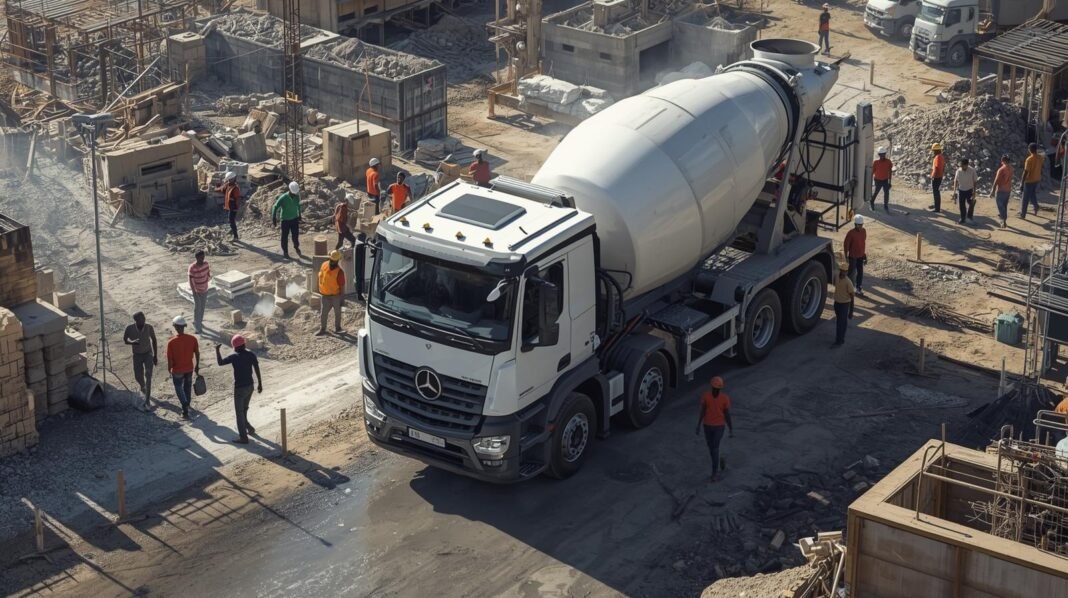
The African construction industry is experiencing unprecedented growth, with infrastructure projects spanning from urban development in Lagos to highway construction in Nairobi.
At the heart of many successful construction operations lies a piece of equipment that combines efficiency, mobility, and self-sufficiency: the self-loader mixer truck.
These innovative vehicles are revolutionizing how concrete is produced and delivered across the continent, particularly in regions where traditional batching plants are impractical or inaccessible.
What Makes Self Loader Mixer Trucks Essential for African Projects?
Self-loader mixer trucks represent a paradigm shift in concrete production for construction sites across Africa.
Unlike traditional concrete mixer trucks that require a separate batching plant, self-loader mixers incorporate loading, mixing, and transporting capabilities into a single mobile unit.
This all-in-one functionality addresses several critical challenges faced by African construction projects, including limited infrastructure, remote project locations, and the need for cost-effective solutions.
The African terrain presents unique challenges that make self-loader mixers particularly valuable. From the dusty roads of the Sahel to the mountainous regions of Ethiopia, these trucks navigate diverse conditions while maintaining productivity.
Their ability to load raw materials directly from stockpiles eliminates dependency on fixed batching plants, reducing setup time and operational costs significantly.
Key Features to Consider
When selecting a self-loader mixer truck for African construction projects, several features warrant careful consideration.
The loading capacity typically ranges from 1.2 to 4 cubic meters, with mid-range capacities of 2.5 to 3.5 cubic meters proving most popular for general construction work.
The self-loading mechanism, usually hydraulic, should demonstrate reliability under demanding conditions and require minimal maintenance.
Mobility is paramount in African contexts where road conditions vary dramatically. Four-wheel drive capability ensures access to challenging terrain, while compact dimensions allow navigation through narrow urban streets and rural pathways.
The mixing drum rotation speed and efficiency directly impact concrete quality, making this a critical specification to evaluate.
Fuel efficiency deserves special attention given the variable cost and availability of diesel across different African regions.
Modern self-loader mixers with optimized engines can significantly reduce operating expenses over the equipment’s lifespan. Additionally, the availability of spare parts and local technical support should influence purchasing decisions to minimize downtime.
Leading Self Loader Mixer Truck Models
Several manufacturers have established strong reputations in the African market, each offering distinct advantages for different project requirements.
AIMIX Self Loading Concrete Mixer Trucks have gained substantial traction across African markets, particularly in East and West Africa. Their AS-3.5 and AS-4.0 models combine robust construction with user-friendly operation. These trucks feature a 270-degree rotating drum, enabling efficient loading from multiple angles.
The hydraulic system demonstrates excellent performance even in high-temperature environments common across equatorial Africa. AIMIX’s competitive pricing and growing dealer network make their equipment accessible to both large contractors and small to medium enterprises.
Carmix Self Loading Mobile Batching Plants represent the premium segment of the market, offering Italian engineering tailored for demanding applications. The Carmix 3.5 TT and 5.5 XL models are frequently spotted on major infrastructure projects from Cape Town to Cairo.
These machines excel in producing consistent, high-quality concrete batches, making them ideal for projects with stringent specifications. Their advanced control systems allow operators to precisely adjust mix designs, while the robust chassis handles rough terrain with minimal wear.
Fiori Self Loading Concrete Mixers provide a balanced combination of performance and value. The DB 260 and DB 350 models have proven particularly popular in North and Southern Africa, where construction companies value their durability and relatively low maintenance requirements.
Fiori trucks feature intuitive controls that reduce operator training time, an important consideration where skilled labor may be scarce. Their compact design makes them especially suitable for urban construction projects with space constraints.
Qingdao Co-Nele Self Loading Mixers offer Chinese engineering at competitive price points, making concrete production technology accessible to a broader range of African contractors.
Models like the CO-3500 have established presence in markets across the continent, supported by improving after-sales service networks. These mixers incorporate planetary mixing technology that ensures thorough material blending, producing concrete that meets international quality standards.
Applications Across African Construction Sectors
Self-loader mixer trucks serve diverse applications throughout the African construction landscape.
In road construction projects stretching across countries like Kenya, Tanzania, and Ghana, these trucks provide the mobility needed to keep pace with paving operations over long distances.
Their ability to produce concrete on-demand eliminates the delays associated with traditional ready-mix delivery, particularly crucial when working in areas distant from urban centers.
Housing development projects, from government-subsidized programs to private residential estates, benefit enormously from self-loader technology.
The machines enable small to medium-scale developers to undertake concrete work without the capital investment required for permanent batching plants. This democratization of concrete production technology has contributed to increased housing construction across rapidly urbanizing African cities.
Agricultural infrastructure, including irrigation systems, storage facilities, and processing plants, represents another significant application area.
Self-loader mixers can be transported to remote rural locations where establishing conventional batching facilities would be economically unfeasible. This capability supports the development of agricultural value chains across the continent.
Operational Advantages in African Contexts
The operational benefits of self-loader mixer trucks align exceptionally well with African construction realities.
The elimination of concrete transportation costs and time represents a substantial advantage, particularly given traffic congestion in major cities and poor road conditions in rural areas.
Projects can produce concrete exactly where needed, when needed, reducing waste from over-ordering and delays from supply chain disruptions.
Labor efficiency improves dramatically with self-loader mixers. A single skilled operator can manage the entire concrete production process, from loading aggregates to delivering the mixed concrete, reducing labor costs and coordination complexity.
This efficiency proves particularly valuable in markets where skilled construction workers command premium wages or face limited availability.
The flexibility to adjust mix designs on-site enables contractors to respond quickly to changing project specifications or material availability.
In regions where cement and aggregate quality can vary between suppliers or shipments, this adaptability ensures consistent concrete quality despite variable input materials.
Maintenance and Support Considerations
Successful deployment of self-loader mixer trucks in Africa requires attention to maintenance and support infrastructure.
The hydraulic systems, which drive the loading and mixing mechanisms, require regular inspection and fluid changes to maintain performance in dusty, high-temperature environments.
Establishing preventive maintenance schedules and training local technicians represents a wise investment that extends equipment life and maintains productivity.
The availability of genuine spare parts varies significantly across African regions. Contractors should prioritize suppliers with established distribution networks and inventory in major African hubs.
Some operators maintain their own spare parts inventory for critical components, reducing downtime when parts need replacement.
Operator training programs ensure maximum equipment utilization and longevity. Many manufacturers now offer training packages as part of their sales agreements, covering not only operation but also basic maintenance and troubleshooting.
These programs should be considered essential rather than optional when acquiring self-loader mixer trucks.
Future Outlook
The African construction sector’s trajectory suggests continued growth in self-loader mixer truck adoption.
Infrastructure development initiatives across the continent, from the African Continental Free Trade Area supporting projects to national highway and railway programs, will require efficient concrete production solutions.
Self-loader mixers, with their combination of mobility, efficiency, and independence from fixed infrastructure, are positioned to play an increasingly central role in this development.
Technological advancement continues to enhance these machines. Features like GPS tracking, remote diagnostics, and automated mix design systems are gradually becoming standard, even in markets traditionally focused on basic functionality.
These innovations promise to further improve the productivity and reliability of self-loader mixers in African applications.
Conclusion
Self-loader mixer trucks have proven themselves indispensable tools for African construction projects, addressing the continent’s unique combination of infrastructure challenges and development opportunities.
By combining loading, mixing, and transport capabilities in a single mobile unit, these machines enable contractors to undertake projects that would otherwise be economically or logistically unfeasible.
Whether supporting mega-infrastructure projects in urban centers or bringing concrete production capability to remote rural areas, self-loader mixers are helping to build Africa’s future, one batch at a time.
For construction companies evaluating equipment investments, self-loader mixer trucks represent not just a purchase but a strategic capability that enhances competitiveness, operational flexibility, and project profitability across Africa’s diverse and dynamic construction landscape.
Also Read
New vs Used Heavy-Duty Trucks: What Works Best in Africa?
How Cheap Equipment Could Cost Your Business More in the Long Run

