
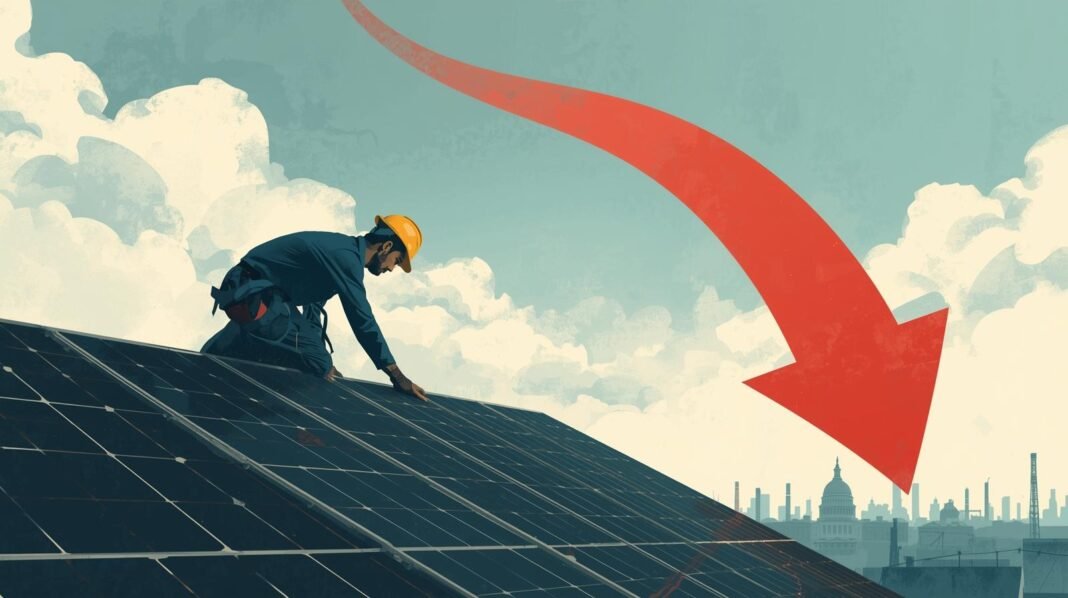
The U.S. solar industry, once a symbol of the nation’s clean energy boom, now faces a turning point.
According to the latest Clean Jobs America 2025 report from Environmental Entrepreneurs (E2), more than 330,000 solar jobs could be at risk over the next five years if policy uncertainty and trade disputes remain unresolved.
A Growing Yet Vulnerable Workforce
Solar has been one of the fastest-growing segments of America’s clean energy economy, employing nearly 330,000 people in installation, manufacturing, and related services.
That figure represents roughly one in every three clean energy jobs nationwide.
Yet, the same report warns that tariffs on imported solar panels, shifting federal incentives, and grid bottlenecks could significantly slow expansion, putting a large portion of these jobs in jeopardy.
Policy and Market Pressures
Industry executives point to a volatile policy environment. While the Inflation Reduction Act (IRA) promised long-term certainty, ongoing debates about subsidy rollbacks, permitting hurdles, and potential shifts under a new administration have raised questions about whether those incentives will last.
At the same time, global supply chain disruptions and rising costs of materials like polysilicon are squeezing margins for U.S. solar companies.
How Companies Are Responding
Top solar firms are adopting strategies to hedge against these risks:
-
Diversifying Supply Chains: Companies like First Solar and SunPower are investing in domestic manufacturing to reduce reliance on imported panels vulnerable to tariffs.
-
Investing in Workforce Training: Solar companies are partnering with unions and technical colleges to upskill workers, ensuring they can pivot to new roles as the sector evolves.
-
Expanding into Storage and Grid Services: With grid integration becoming a bottleneck, many firms are diversifying into battery storage and smart grid solutions, creating adjacent job opportunities.
-
Lobbying for Policy Stability: Trade groups such as the Solar Energy Industries Association (SEIA) are intensifying efforts in Washington to secure bipartisan support for long-term incentives.
The Bigger Picture
What’s unfolding in solar reflects a broader tension across America’s clean energy sector: robust job growth fueled by demand and climate goals, counterbalanced by political and market uncertainty.
If companies succeed in adapting, the sector could not only preserve its current workforce but also expand further into new clean tech niches. If not, tens of thousands of workers could face an abrupt disruption.
For policymakers, the risk is clear: inaction could undermine one of the nation’s fastest-growing job engines.
For companies, the message is equally urgent — resilience depends on rethinking supply chains, diversifying revenue, and ensuring workers remain at the heart of the clean energy transition.
Also Read
Top solar companies in America driving clean energy jobs
Whales Take Losses as ETH Dips Below $4K — What It Means for the Market

