
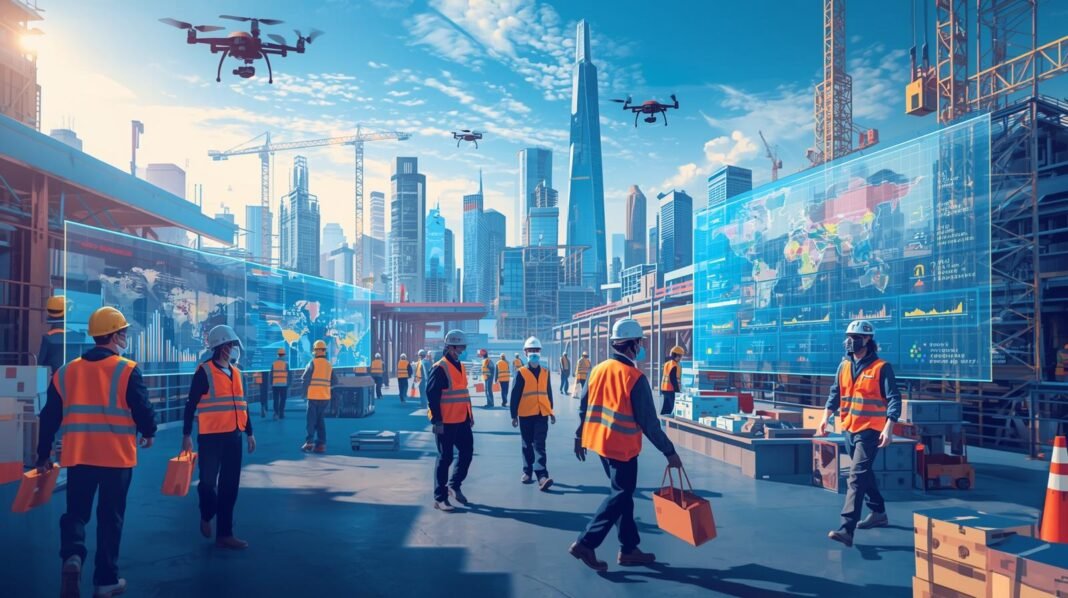
The COVID-19 pandemic sent shockwaves through industries across the globe, and construction was no exception.
Projects were halted, supply chains were disrupted, and on-site operations were suddenly exposed to unprecedented health risks.
Health and safety became the immediate priority as sites scrambled to protect workers. Construction, with its close-contact environments and physically demanding tasks, required new protocols to maintain operations.
Companies quickly adopted enhanced sanitation, health screenings, and social distancing measures.
Protective equipment extended beyond traditional hard hats and gloves, incorporating masks and other safeguards to reduce viral transmission.
These adaptations not only kept workers safer but also ensured that projects could continue despite restrictions, demonstrating the need for flexible, pandemic-ready safety protocols as a permanent part of site management.
Strengthening Supply Chain Resilience
The pandemic also highlighted the fragility of global supply chains. Delays in materials and equipment underscored the risks of relying on single sources or distant suppliers.
Construction companies learned to diversify their suppliers and, where possible, prioritize local sourcing to mitigate dependency on international logistics.
Digital supply chain monitoring tools became essential, allowing managers to track deliveries in real time and adjust plans swiftly. For future disruptions, supply chain resilience will be just as critical as worker safety in maintaining project continuity.
Embracing Digital Transformation
Digital transformation emerged as another pivotal lesson. With travel restrictions and lockdowns, remote collaboration became essential.
Technologies such as Building Information Modeling (BIM) allowed teams to plan, coordinate, and visualize projects virtually.
Drones and remote monitoring enabled site inspections without crowding, while project management platforms kept teams connected regardless of location.
Virtual training programs allowed workers to acquire new skills safely, demonstrating that integrating technology into day-to-day operations is no longer optional—it is a core strategy for resilience.
Flexible Workforce Management
Workforce management and flexibility were tested like never before. Labor shortages and movement restrictions forced companies to rethink staffing models.
Cross-training employees, adjusting shift schedules, and enabling remote administrative work became necessary to keep projects moving.
Companies that invested in their workforce’s adaptability and wellbeing—including mental health support—found they could maintain higher productivity under stress.
A resilient construction workforce, capable of adjusting to changing conditions, is essential for future-proofing the industry.
Rethinking Risk Management and Contracts
Beyond operational adjustments, COVID-19 exposed weaknesses in risk management and contractual planning. Many projects struggled due to gaps in agreements and unprepared contingency plans.
The pandemic highlighted the importance of incorporating comprehensive force majeure clauses and reviewing insurance coverage to include health-related disruptions.
Companies that had robust contingency strategies were better positioned to navigate delays and cost pressures, demonstrating that proactive risk management is vital for long-term stability.
Integrating Sustainability for Long-Term Resilience
Finally, the crisis underscored the link between sustainability and resilience. Energy-efficient construction methods, modular designs, and eco-friendly materials not only reduce environmental impact but also minimize labor and supply chain dependence.
Projects designed with adaptability in mind proved more capable of withstanding sudden shocks, suggesting that sustainable practices are not merely a moral imperative—they are a strategic one.
Turning Lessons into Action
The lessons from COVID-19 present a clear roadmap for the construction industry. By integrating health and safety, supply chain resilience, digital tools, flexible workforce strategies, robust risk planning, and sustainable design, construction firms can transform vulnerability into strength.
Preparing for future pandemics is no longer a distant consideration; it is an essential strategy for ensuring that the industry can continue to build safely and efficiently, no matter what challenges lie ahead.
Also Read
How Web3 Can Revolutionize Construction Equipment Leasing
Tokenizing Real Estate and Infrastructure Projects: The Rise of Fractional Ownership

- South Africa Fuel Restrictions Are Squeezing Construction Sites — Here’s What Contractors Need to Know - March 13, 2026
- The $104 Billion Question: Why Africa’s Hotel Pipeline Keeps Missing Opening Deadlines - March 12, 2026
- What FlySafair’s First-Ever Fuel Surcharge Tells Us About Construction Costs Ahead - March 12, 2026
