

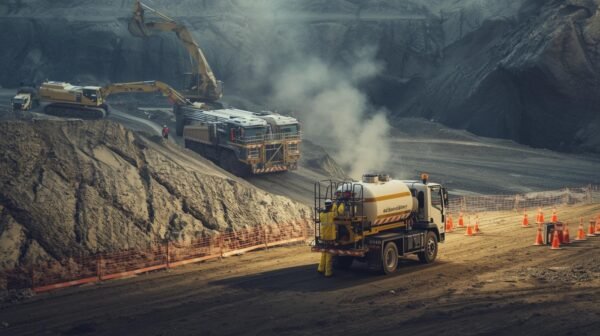
Rock blasting is one of the most technically demanding operations in mining, quarrying, tunneling, and large-scale construction.
At the heart of every successful blast lies a largely unsung hero: the pump system. From delivering water-gel explosives and emulsion slurries to managing dewatering and borehole preparation, pump technologies are indispensable to blasting efficiency, worker safety, and operational cost control.
As the industry evolves — driven by demands for greater precision, reduced environmental impact, and improved productivity — so too does the engineering behind these pumping systems.
This article explores the top pump technologies currently shaping modern rock blasting operations, examining their mechanisms, advantages, and ideal applications.
1. Emulsion Pump Systems: The Industry Workhorse
Emulsion explosives have largely replaced traditional ANFO (Ammonium Nitrate/Fuel Oil) in many blasting environments, particularly in wet or sensitive applications.
These water-in-oil emulsions require specialized pumping systems capable of handling viscous, shear-sensitive materials without triggering sensitization prematurely.
Modern emulsion pumps are typically positive-displacement units — often progressive cavity (PC) or twin-screw designs — engineered to deliver consistent flow rates at high pressures without mechanical degradation of the explosive matrix.
Key performance requirements include:
- Low-shear delivery to maintain emulsion stability throughout the borehole loading process
- Chemical compatibility with nitrate-rich, oil-phase compounds
- Precise flow metering to achieve accurate charge weights per hole
- Robust sealing systems to prevent leaks in underground or confined environments
Modern mobile emulsion pump units are typically mounted on dedicated blast trucks, allowing operators to pump product directly from a bulk storage tank into the borehole.
Flow rates commonly range from 50 to 300 liters per minute depending on borehole diameter and required charge density.
Industry Insight
Leading mining operations report that switching to bulk emulsion pump systems from
packaged cartridge explosives can reduce product costs by
20–35% while improving blast consistency through more
uniform charge distribution.
2. Progressive Cavity (PC) Pumps: Precision Under Pressure
Progressive cavity pumps have become a go-to solution for pumping heavy explosive slurries, emulsions, and ANFO blends in blasting applications.
Their single-screw helical rotor turning within an elastomeric stator creates a series of sealed cavities that progress from suction to discharge — delivering smooth, pulsation-free flow regardless of viscosity.
In blasting contexts, PC pumps offer several critical advantages:
- Handles slurries with specific gravities up to 1.5 g/cm³ and viscosities exceeding 100,000 cP
- Self-priming capability reduces setup time in field conditions
- Reversible operation allows for product recovery from hoses and lines after loading
- Variable-speed drive compatibility enables precise flow control from the cab
The primary limitation of PC pumps is stator wear — particularly when pumping abrasive or crystalline materials.
Operators in high-throughput environments may find maintenance intervals tighter than with alternative designs, making robust stator material selection (nitrile, EPDM, natural rubber) critical to total cost of ownership.
3. Peristaltic (Hose) Pumps: Contamination-Free Loading
Peristaltic pumps — which move fluid by compressing a flexible hose between a rotating roller and a fixed casing — have carved out an important niche in blasting operations where product purity and containment are paramount.
Because the pumped material only ever contacts the interior of the hose, peristaltic pumps are ideal for:
- Sensitizer and gassing agent delivery in heavy ANFO and emulsion blends
- Handling highly corrosive or oxidizer-rich materials where metallic contact is undesirable
- Pump-out and product recovery without cross-contamination risk
- Low-volume, high-accuracy dosing of chemical additives and density-control agents
Modern peristaltic pump designs for blasting use reinforced, oil-resistant hose materials that withstand continuous compression cycling.
They are compact, easy to maintain in the field (hose replacement requires no special tooling), and generate virtually zero product waste during shutdown.
These characteristics make them especially valuable in underground development headings where space and contamination control are at a premium.
4. High-Pressure Water Pumps: Borehole Preparation and Stemming
Before an explosive charge is loaded, the borehole must often be cleaned of drill cuttings, water ingress, and unstable debris.
High-pressure water pumps play a critical role in this preparatory stage, particularly in competent rock formations where borehole integrity is essential for charge coupling and confinement.
Applications for high-pressure pumps in blasting operations include:
- Borehole flushing to remove drill cuttings and stabilize hole walls
- Water stemming — using water bags or bladders pumped full under pressure to confine the explosive column
- Hydro-fracturing and pre-splitting in controlled demolition applications
- Dust suppression during loading and collar stemming operations
Centrifugal and triplex plunger pumps dominate this space, with operating pressures typically ranging from 700 to 3,500 kPa for borehole flushing and up to 70 MPa in specialized hydro-blasting applications.
Diesel-driven skid-mounted units offer the portability required for remote surface blast sites, while electric submersible variants serve underground dewatering needs during blasting operations.
Safety Note
Water stemming using inflatable bladders filled by
precision pumps has demonstrated measurable improvements in blast confinement,
reducing fly-rock incidents and improving energy transfer to the rock mass —
directly impacting fragmentation outcomes.
5. Dewatering Pumps: Managing Groundwater in Blast Zones
Water in boreholes is one of the most persistent challenges in blasting operations. It degrades ANFO-based products, dilutes emulsion explosives, and undermines charge column integrity.
Effective dewatering is therefore not just a logistical convenience — it is a safety and performance imperative.
Modern dewatering pump technologies for blasting environments include:
- Submersible electric pumps for rapid borehole dewatering before loading
- Diaphragm pumps capable of handling slurry-laden water without clogging
- Venturi-operated air-lift pumps for deep, narrow boreholes where conventional pumps cannot reach
- Centrifugal trash pumps for high-volume pit dewatering ahead of blast preparation
The selection of dewatering pump type depends on hole depth, diameter, inflow rate, and available power source.
In high-inflow environments such as coastal quarries or underground mines intersecting aquifers, continuous dewatering systems must operate in parallel with loading crews to maintain dry conditions.
6. Automated and Smart Pump Systems: The Digital Frontier
The most significant development in blasting pump technology over the past decade has been the integration of digital monitoring, automation, and remote control capabilities into pump systems previously operated entirely by manual adjustment.
Modern smart pump systems for blasting operations can feature:
- Real-time flow metering with GPS-referenced charge logging per borehole
- Automated density control through variable-speed drives and inline density sensors
- Remote diagnostics and telemetry for fleet maintenance management
- Integration with blast design software for automated charge reconciliation
- Alarm systems for overpressure, low-level, and product contamination detection
Companies like Orica, Dyno Nobel, and Maxam have invested heavily in proprietary bulk explosive delivery platforms that pair precision pump engineering with digital blast management systems.
These platforms allow drill-and-blast engineers to monitor product delivery in real time, adjust charge parameters on the fly, and generate post-blast records with far greater accuracy than manual methods allow.
The productivity gains are substantial. Automated pump trucks can load boreholes up to 40% faster than manual loading crews, while simultaneously eliminating common sources of human error such as incorrect charge weights, missed boreholes, or improper stemming depths.
7. Selecting the Right Pump Technology: Key Considerations
No single pump technology suits all blasting environments. The optimal selection depends on a matrix of operational, chemical, and logistical variables:
- Explosive product type: ANFO, heavy ANFO, bulk emulsion, or slurry
- Borehole conditions: wet, dry, deep, large-diameter, or narrow development holes
- Throughput requirements: volume of explosive per shift and number of holes loaded
- Site accessibility: surface open-cut, underground drive, or submarine/marine application
- Environmental regulations: spill containment, noise limits, and emissions standards
- Power availability: diesel, electric, or pneumatic options on site
Most large-scale mining and quarrying operations maintain a fleet of pump types to address the full range of conditions encountered across a blasting program.
Standardizing on compatible brands and hose fittings across the fleet simplifies spare parts management and reduces downtime during critical pre-blast windows.
Conclusion: Pump Technology as a Competitive Advantage
Pump systems may not generate the dramatic spectacle of the blast itself, but they are foundational to every measurable performance outcome — fragmentation quality, safety compliance, explosive efficiency, and cost per tonne broken.
As rock blasting operations grow larger, deeper, and more tightly regulated, the engineering demands on pump technology will only intensify.
Organizations that invest in modern, well-maintained, and appropriately specified pump systems consistently achieve better blast results.
Whether through precision emulsion delivery, smart automated loading platforms, or reliable dewatering solutions, advanced pump technology is increasingly the differentiator between operations that merely blast rock and those that do so with precision, safety, and measurable competitive advantage.
Also Read
How Cement Is Made: A Look Inside a Modern Cement Plant
Inside a Modern Quarry Crushing Plant: Where Rock Meets Precision Engineering

- SODECA Highlights Industrial Ventilation Technology at Mega Clima Expo Kenya 2026 - October 14, 2026
- How They Were Built: Inside the Engineering of the Lesotho Highlands Water Project - October 11, 2026
- Africa’s Water Reuse Opportunity: Building the Infrastructure for a Water-Secure Future - September 28, 2026