

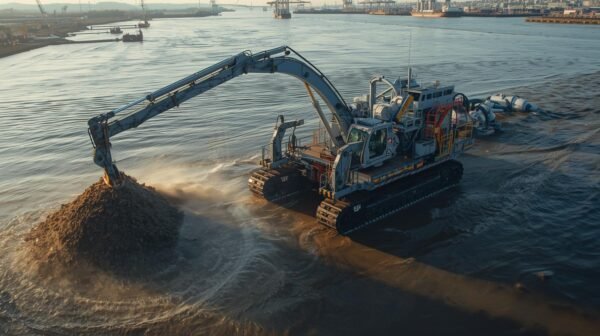
The construction industry is witnessing a transformative shift in how we approach waterway projects, coastal development, and inland water management.
At the forefront of this evolution are combined dredging excavators—versatile machines that are redefining efficiency, sustainability, and cost-effectiveness in aquatic construction environments.
Understanding Combined Dredging Excavators
Combined dredging excavators, also known as amphibious excavators or multi-purpose dredging machines, represent a hybrid solution that merges traditional excavation capabilities with specialized dredging functions.
These innovative machines can operate seamlessly on both land and water, equipped with pontoons or flotation devices that allow them to navigate shallow waters, marshlands, and coastal zones that were previously difficult or impossible to access with conventional equipment.
Unlike traditional dredging equipment that requires extensive setup and specialized vessels, combined dredging excavators offer unprecedented flexibility.
They can transition from terrestrial excavation to aquatic dredging operations without the need for equipment changes or lengthy mobilization periods.
The Growing Demand for Versatile Dredging Solutions
Climate Change and Coastal Resilience
Rising sea levels and increasingly severe weather events have made coastal protection and adaptation projects critical priorities worldwide.
Combined dredging excavators play a vital role in beach nourishment, wetland restoration, and the construction of protective barriers.
Their ability to work in shallow, sensitive environments makes them ideal for projects that require minimal environmental disruption while maintaining coastal resilience.
Urbanization and Waterfront Development
As cities expand toward waterfronts, the demand for specialized equipment capable of operating in transitional zones between land and water has surged.
Combined dredging excavators enable developers to undertake marina construction, waterfront promenades, and mixed-use developments with greater efficiency and reduced environmental impact.
Infrastructure Maintenance Requirements
Aging water infrastructure, including canals, drainage systems, and navigation channels, requires regular maintenance to prevent flooding and ensure navigability.
Combined dredging excavators offer municipalities and water authorities a cost-effective solution for routine maintenance work that would otherwise require multiple pieces of specialized equipment.
Key Advantages of Combined Dredging Excavators
Operational Versatility
The primary advantage of combined dredging excavators lies in their multi-functional capabilities.
A single machine can perform excavation, dredging, sediment removal, pile driving, and material handling across diverse terrains.
This versatility eliminates the need for multiple specialized machines, reducing equipment costs and logistical complexity.
Enhanced Accessibility
Traditional dredging operations often struggle in shallow waters, marshlands, and environmentally sensitive areas.
Combined dredging excavators excel in these challenging environments, accessing locations that conventional dredges and excavators cannot reach. Their low ground pressure distribution prevents soil compaction and reduces environmental damage in delicate ecosystems.
Cost Efficiency
By consolidating multiple functions into a single machine, combined dredging excavators significantly reduce project costs.
Companies save on equipment procurement, transportation, and mobilization expenses. The reduced crew requirements and faster project completion times further enhance the economic benefits.
Environmental Benefits
Modern combined dredging excavators incorporate environmentally conscious design features. Their precision operation minimizes sediment disturbance and reduces turbidity in aquatic environments. Many models now include sediment containment systems that prevent the spread of contaminated materials during dredging operations, making them ideal for environmental remediation projects.
Rapid Deployment
Unlike traditional dredging vessels that require extensive setup time and support infrastructure, combined dredging excavators can be deployed quickly.
Their ability to self-navigate and operate independently reduces mobilization time from weeks to days, allowing projects to commence faster and respond more effectively to emergency situations like flood mitigation.
Technological Innovations Driving Adoption
Advanced Hydraulic Systems
Modern combined dredging excavators feature sophisticated hydraulic systems that deliver exceptional power and precision.
These systems enable operators to adjust digging force and speed according to substrate conditions, improving efficiency while reducing fuel consumption and environmental impact.
GPS and Automation Technologies
Integration of GPS guidance systems and automated controls has revolutionized dredging accuracy. Operators can now execute complex excavation patterns with centimeter-level precision, ensuring projects meet exact specifications while minimizing over-dredging and material waste.
Eco-Friendly Power Solutions
The industry is witnessing a shift toward hybrid and electric-powered combined dredging excavators. These innovations reduce carbon emissions, lower operating costs, and allow machines to work in noise-sensitive environments without disturbing surrounding communities or wildlife.
Enhanced Attachment Systems
Quick-coupling systems allow operators to switch between specialized attachments rapidly, transforming the excavator for different tasks. From clamshell buckets for deep dredging to rock breakers for hard substrate removal, these versatile attachment options maximize machine utilization.
Applications Across Industries
Port and Harbor Development
Combined dredging excavators are instrumental in port expansion projects, channel deepening operations, and berth construction. Their ability to work alongside existing infrastructure without requiring large exclusion zones makes them valuable for operational ports that cannot afford extended closures.
Flood Control and Water Management
Water authorities increasingly rely on combined dredging excavators for maintaining drainage channels, removing sediment from retention ponds, and constructing flood control infrastructure. Their precision and efficiency make them ideal for urban environments where minimizing disruption is essential.
Environmental Restoration
Wetland restoration, invasive species removal, and contaminated sediment remediation projects benefit enormously from the gentle operation and precise control offered by combined dredging excavators. Environmental agencies prefer these machines for sensitive ecosystem work where traditional equipment would cause unacceptable damage.
Renewable Energy Infrastructure
The offshore wind energy sector has emerged as a significant market for combined dredging excavators. These machines support foundation installation, cable laying operations, and site preparation for wind farms in shallow coastal waters.
Mining and Resource Extraction
Sand and gravel extraction operations in rivers and coastal areas utilize combined dredging excavators for their efficiency in material handling and loading operations. Their ability to operate in variable water depths makes them ideal for resource extraction in dynamic aquatic environments.
Economic Impact and Market Growth
The global market for combined dredging excavators is experiencing robust growth, driven by infrastructure investment, climate adaptation spending, and technological advancement.
Industry analysts project continued expansion as more contractors recognize the long-term cost savings and operational advantages these machines provide.
Governments worldwide are increasing infrastructure budgets to address aging water systems and climate resilience needs. This investment trend creates sustained demand for efficient, versatile equipment capable of tackling complex aquatic construction challenges.
Addressing Common Challenges
Operator Training Requirements
While combined dredging excavators offer numerous advantages, they require skilled operators familiar with both excavation and dredging techniques.
The industry is responding with comprehensive training programs that equip operators with the specialized knowledge needed to maximize machine performance and safety.
Initial Investment Costs
The upfront cost of combined dredging excavators can be substantial, potentially deterring smaller contractors. However, the total cost of ownership analysis consistently demonstrates that these machines deliver superior value over their operational lifetime through reduced labor costs, faster project completion, and equipment consolidation.
Maintenance and Support
Specialized equipment requires specialized maintenance. Manufacturers are addressing this challenge by expanding service networks, offering remote diagnostics capabilities, and designing machines with improved component accessibility to reduce maintenance downtime.
The Future Landscape
Autonomous Operations
The next generation of combined dredging excavators will likely incorporate autonomous and semi-autonomous capabilities. Remote operation technology is already emerging, allowing operators to control machines from safe distances while maintaining precision and productivity.
Data-Driven Performance Optimization
Integration of IoT sensors and machine learning algorithms will enable predictive maintenance, real-time performance monitoring, and continuous optimization of dredging operations. These technologies will further improve efficiency and reduce operational costs.
Sustainable Materials and Design
Future models will emphasize sustainability throughout their lifecycle, incorporating recycled materials, biodegradable hydraulic fluids, and designs that facilitate component reuse and recycling at end-of-life.
Expanded Operational Capabilities
Ongoing innovation will push the boundaries of depth range, lifting capacity, and operational conditions. Future combined dredging excavators may operate in deeper waters, handle larger volumes, and function effectively in more extreme environmental conditions.
Making the Transition
For construction companies and contractors considering combined dredging excavators, the transition requires careful planning.
Assessing project portfolios to identify opportunities for multi-use equipment, investing in operator training, and developing maintenance partnerships with equipment suppliers are essential steps toward successful adoption.
Starting with rental or leasing arrangements allows companies to evaluate performance in real-world conditions before committing to purchase. Many contractors find that even short-term use on a single project demonstrates clear advantages that justify longer-term investment.
Combined dredging excavators represent a paradigm shift in aquatic and coastal construction methodology.
Their versatility, efficiency, and environmental benefits position them as essential tools for addressing 21st-century infrastructure challenges.
As climate change intensifies coastal pressures, urbanization accelerates waterfront development, and aging infrastructure demands attention, these innovative machines will play an increasingly central role in shaping how we build, maintain, and protect our water-dependent communities.
The future of coastal and inland construction is not just about doing more with less—it’s about doing better with smarter tools.
Combined dredging excavators embody this principle, offering a sustainable, economical, and technically superior approach to the complex challenges of modern aquatic construction.
For forward-thinking contractors and project owners, embracing this technology is not merely an option but a competitive necessity in an evolving industry landscape.
Also Read
How High-Reach Excavators and Robotics Are Changing the Industry
Top Self Loader Mixer Trucks for African Construction Projects

She brings insightful analysis and in-depth reporting to the sector, highlighting innovations and developments that shape Africa’s built environment.
- Moldtech: Engineering Africa’s Next Generation of Precast Concrete Production - September 23, 2026
- How They Were Built: Inside the Construction of the Grand Ethiopian Renaissance Dam - September 4, 2026
- CNH Construction Sales Rise 12% as North American Demand Offsets Tariff Headwinds - August 3, 2026