

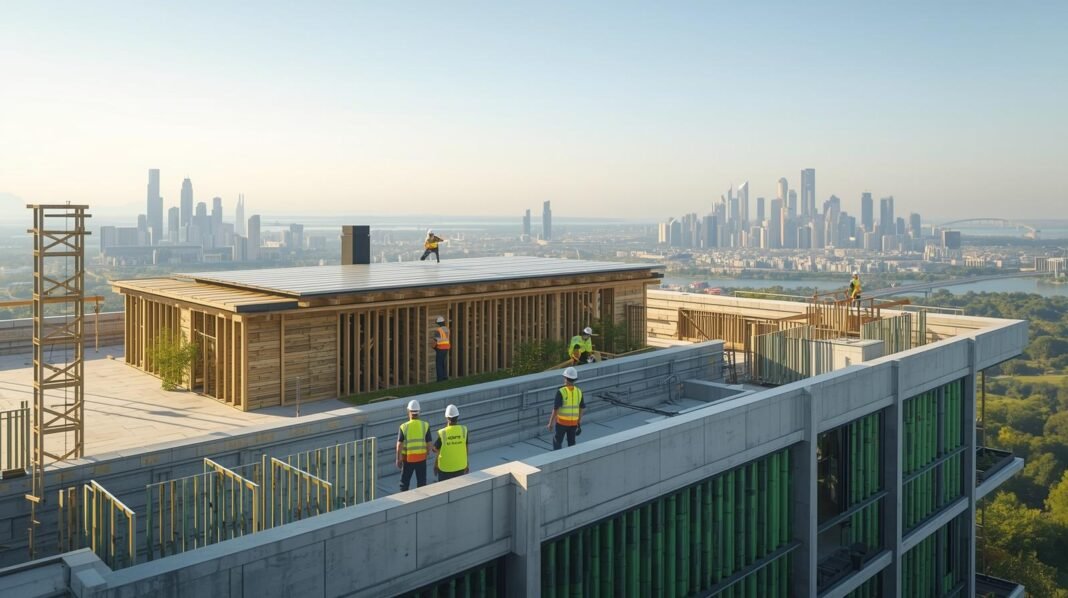
The construction industry stands at a pivotal intersection of innovation and environmental responsibility.
As we navigate through 2026, sustainable building materials are no longer just an alternative—they’re becoming the standard.
With the built environment accounting for nearly 40% of global carbon emissions, the materials we choose today will define the livability of our planet tomorrow.
This year brings a fascinating blend of bio-based innovations, circular economy solutions, and high-tech materials that promise to revolutionize how we build.
Whether you’re an architect, contractor, developer, or environmentally conscious homeowner, these cutting-edge materials deserve your attention.
Mycelium-Based Composites: Nature’s 3D Printer
Mycelium, the root structure of mushrooms, has emerged as one of the most promising biomaterials in construction. This living organism grows into custom shapes within days, binding agricultural waste into strong, lightweight composites.
What makes mycelium revolutionary:
- Grows to shape in 7-14 days using minimal energy
- Naturally fire-resistant and provides excellent insulation
- Biodegradable at end of life, creating zero waste
- Sequesters carbon during growth rather than emitting it
- Uses agricultural waste streams like corn husks and hemp fiber
Companies like Ecovative and MycoWorks are scaling production, with mycelium products appearing in acoustic panels, insulation, and even structural components.
Early adopters report R-values comparable to traditional foam insulation, but with a carbon footprint that’s 90% lower.
The material’s ability to be grown in custom molds makes it particularly attractive for complex architectural features that would traditionally require expensive fabrication.
Hempcrete: The Carbon-Negative Wall System
Hemp cultivation has expanded significantly following regulatory changes, and hempcrete is finally achieving mainstream recognition. This biocomposite combines hemp hurds (the woody core of the hemp plant) with lime-based binders to create a breathable, insulating wall system.
Key performance characteristics:
- Sequesters approximately 110 kg of CO2 per cubic meter
- Excellent thermal mass and humidity regulation
- Naturally resistant to pests, mold, and fire
- Improves indoor air quality through breathability
- Recyclable and fully biodegradable
Hempcrete’s carbon-negative profile stems from hemp’s rapid CO2 absorption during growth—the plant captures more carbon than is released during processing and transportation.
While not load-bearing in most applications, hempcrete serves brilliantly as insulating infill for timber-framed structures.
Projects across Europe and North America are demonstrating its viability in residential construction, with some builders reporting 50-70% reductions in heating and cooling costs.
The material’s hygroscopic properties—its ability to absorb and release moisture—create naturally regulated indoor humidity levels between 40-60%, the ideal range for human health and comfort.
Cross-Laminated Timber (CLT): Mass Timber Matures
Mass timber construction has moved decisively from experimental to established. Cross-laminated timber panels, made from layers of lumber stacked crosswise and glued together, now enable wooden structures that rival concrete and steel in strength and fire resistance.
Why CLT continues to gain momentum:
- Stores carbon throughout the building’s lifetime (approximately 0.9 tons CO2 per cubic meter)
- Prefabricated off-site, reducing construction time by 25-50%
- Lighter than concrete, reducing foundation requirements
- Aesthetic warmth improves occupant wellbeing
- Meets stringent fire codes through predictable char-rate protection
The world’s tallest timber buildings continue to push boundaries, with multiple 18+ story mass timber structures completed or underway globally.
Beyond environmental benefits, developers cite faster project timelines and lower labor costs as compelling economic drivers.
Recent innovations in adhesives and treatments have extended CLT’s applicability to humid climates and high-seismic zones, markets previously dominated by conventional materials.
Bio-Based Insulation: Beyond Fiberglass
The insulation sector is experiencing a biomaterial renaissance. Materials derived from sheep’s wool, wood fiber, cork, and even seagrass are offering performance that matches or exceeds synthetic alternatives.
Emerging insulation innovations:
- Wood fiber boards: Excellent sound dampening with R-values of 3.5-4.0 per inch
- Sheep’s wool: Naturally regulates moisture while maintaining insulating properties when damp
- Cork: Harvested without killing trees, naturally resistant to moisture and pests
- Seagrass: Ocean-harvested Posidonia creates dense, rot-resistant insulation
- Recycled denim: Diverts textile waste while providing safe, non-irritating installation
These materials share common advantages including superior indoor air quality, moisture management without performance degradation, and biodegradability.
Wood fiber insulation has gained particular traction in European Passivhaus construction, where its ability to buffer moisture helps prevent condensation issues in super-insulated assemblies.
Recycled and Upcycled Aggregates: Closing the Loop
Concrete’s environmental impact has driven intensive research into recycled aggregates and alternative binders. The circular economy is finally reaching the construction site.
Breakthrough developments:
- Recycled concrete aggregate (RCA): Crushed concrete replacing virgin stone in new concrete mixes
- Recycled glass aggregate: Post-consumer glass creating decorative, high-performance concrete
- Plastic lumber: Ocean and landfill plastics reformed into durable structural members
- Reclaimed brick: Historic bricks cleaned and reused, preserving embodied energy
- Ferrock: Iron waste combined with recycled materials to create carbon-absorbing concrete alternatives
High-quality RCA can now replace up to 30% of virgin aggregate in structural concrete without performance compromise.
Some jurisdictions are mandating recycled content in public projects, accelerating market transformation.
The technology for cleaning and grading recycled aggregates has improved dramatically, addressing earlier concerns about consistency and strength.
Algae-Based Materials: Photosynthesis Meets Architecture
Algae cultivation requires minimal land and no freshwater while absorbing CO2 at rates far exceeding terrestrial plants. Researchers have developed multiple building applications for this abundant organism.
Current and emerging applications:
- Bio-panels: Living algae facades that generate biomass for fuel while cleaning air
- Bioplastic composites: Algae-derived polymers for interior finishes
- Insulation: Dried algae mixed with binders for thermal performance
- Cement additives: Algae supplements reducing Portland cement requirements
While some algae applications remain in pilot phases, living algae facades are appearing on commercial buildings in urban areas with air quality challenges.
These bio-reactive systems can sequester meaningful quantities of CO2—a single square meter can absorb as much CO2 as a mature tree annually while occupying minimal footprint.
Graphene-Enhanced Concrete: Strength Through Nanomaterials
Graphene, a single layer of carbon atoms arranged in a hexagonal lattice, represents one of the strongest materials ever tested.
When incorporated into concrete at minute concentrations, it dramatically improves performance.
Performance improvements:
- 30% increase in compressive strength
- Improved resistance to water penetration and corrosion
- Reduced material requirements (less concrete for equivalent strength)
- Lower carbon footprint due to reduced cement content
- Extended service life reducing replacement frequency
Companies like Nationwide Engineering have begun producing graphene-enhanced concrete at commercial scale.
While costs remain higher than conventional mixes, the material’s superior durability and reduced quantity requirements are narrowing the price gap. Early infrastructure applications include bridge decks and high-traffic pavements where longevity justifies premium pricing.
Self-Healing Concrete: Bacterial Construction Crews
Imagine concrete that repairs its own cracks. Researchers have embedded bacterial spores and calcium lactate nutrients within concrete mixes.
When cracks form and water enters, the dormant bacteria activate, consuming the nutrients and producing limestone that seals the damage.
Benefits of bioconcrete:
- Extends service life by 50% or more
- Reduces maintenance costs and material replacement
- Prevents water infiltration and rebar corrosion
- Maintains structural integrity with minimal intervention
- Decreases long-term environmental impact
Several infrastructure projects in Europe now feature self-healing concrete in critical applications.
The bacteria can remain dormant for up to 200 years, providing autonomous repair throughout the structure’s intended service life.
While production costs currently run 40-50% higher than conventional concrete, lifecycle analyses show cost parity or savings when maintenance and replacement are factored over decades.
Recycled Plastic Bricks and Blocks: Waste to Wall
The global plastic waste crisis has spurred innovations in plastic-aggregate building materials.
Modern plastic bricks incorporate sorted, cleaned post-consumer plastics into interlocking masonry units and structural blocks.
System advantages:
- Diverts thousands of tons of plastic from landfills and oceans
- Lighter than conventional masonry, reducing transportation emissions
- Excellent insulation properties (R-values 2-3x higher than concrete block)
- Waterproof and pest-resistant
- Interlocking designs reduce mortar requirements
Companies in Africa and Asia are scaling production, with several million plastic bricks now in use globally.
The materials perform particularly well in hot, humid climates where conventional materials struggle with moisture. While fire resistance requires protective treatments, modern formulations meet building codes for residential construction.
Transparent Wood: The Future of Fenestration
Swedish researchers pioneered transparent wood by removing lignin from the wood structure and replacing it with transparent polymers.
The resulting material transmits light while providing structural support and insulation.
Unique properties:
- Five times better insulation than glass
- Diffuses light evenly, reducing glare
- Maintains wood’s structural strength
- Biodegradable at end of life
- Lower embodied energy than glass production
While still in early commercialization, transparent wood could revolutionize window design, particularly in cold climates where heat loss through glazing remains problematic.
The material’s haze creates privacy while maintaining brightness, potentially eliminating the need for separate window treatments in some applications.
Bamboo Composites: Grass That Builds Like Hardwood
Bamboo’s incredible growth rate—some species grow over three feet per day—makes it an endlessly renewable resource. Modern processing techniques transform this grass into engineered products rivaling tropical hardwoods.
Why bamboo is gaining traction:
- Reaches harvestable maturity in 3-5 years versus 20-50 for hardwoods
- Tensile strength exceeding steel pound-for-pound
- Naturally antimicrobial and moisture-resistant
- Sequesters carbon rapidly during growth
- No replanting required (cut stalks regenerate from existing root systems)
Strand-woven bamboo products achieve hardness ratings above oak and maple, making them suitable for high-traffic flooring.
Structural bamboo beams and panels are appearing in both residential and commercial projects, particularly in regions where sustainable forestry certification is prioritized.
Making the Transition: Implementation Considerations
Adopting these materials requires understanding their specific characteristics, regional availability, and building code status. Here are practical steps for integration:
For designers and architects:
- Specify performance requirements rather than prescriptive materials, allowing contractor innovation
- Engage manufacturers early in the design process to understand lead times and installation requirements
- Pursue Living Building Challenge or LEED certification to demonstrate commitment and gain recognition
- Educate clients on lifecycle costs versus first costs
For contractors and builders:
- Partner with manufacturers for training and technical support
- Start with pilot projects to develop expertise before scaling
- Document lessons learned and performance data to build confidence
- Join green building networks to share knowledge and best practices
For property owners and developers:
- Request lifecycle cost analysis, not just first-cost comparisons
- Consider carbon accounting alongside financial returns
- Investigate available incentives and green building financing options
- Communicate environmental features to tenants and buyers as value differentiators
The Economics of Green Building Materials
Initial cost premiums for sustainable materials continue to decline as production scales and conventional material prices rise. A comprehensive view reveals economic advantages:
Direct financial benefits:
- Reduced energy costs through superior insulation (10-40% savings typical)
- Lower maintenance and replacement costs from durable materials
- Faster construction timelines reducing carrying costs
- Premium rents and resale values for certified green buildings
Indirect value creation:
- Improved occupant health and productivity (estimated 3-5% productivity gains)
- Enhanced brand value and market positioning
- Future-proofing against increasing carbon regulations
- Access to green financing at favorable rates
Studies consistently show that green buildings command 7-10% rent premiums and sell 10-20% faster than conventional properties. As environmental regulations tighten and consumer awareness grows, these advantages will likely increase.
Looking Ahead: The Materials Revolution Continues
The green building materials emerging in 2026 represent just the beginning of a fundamental transformation in how we construct the built environment. Several trends will accelerate adoption:
Regulatory drivers: Carbon pricing, embodied carbon limits in building codes, and buy-clean procurement policies are making sustainable materials increasingly mandatory rather than optional.
Technological advancement: Artificial intelligence is optimizing material mixes, digital twins are modeling performance before construction, and robotics are enabling precision installation of novel materials.
Cultural shift: A generation of architects, engineers, and builders trained in sustainable design principles are entering leadership positions, bringing environmental values into corporate decision-making.
Climate urgency: As extreme weather events increase in frequency and severity, the construction industry recognizes its responsibility and opportunity to be part of the solution.
The materials highlighted here share a common thread: they work with natural systems rather than against them.
They sequester carbon, create healthy indoor environments, close waste loops, and demonstrate that environmental responsibility and building performance are not trade-offs but complements.
For anyone involved in construction—from DIY renovators to multinational developers—2026 offers an unprecedented palette of materials that allow us to build beautiful, durable, and genuinely sustainable structures.
The question is no longer whether we can build sustainably, but whether we have the vision to seize the opportunity.
The buildings we create this year will stand for decades or centuries. By choosing materials wisely now, we ensure those structures contribute to solving rather than exacerbating the environmental challenges we face.
The future of building is green, and that future is arriving faster than many expected.
Also Read
Why Ceramic Membranes Are Becoming the Gold Standard in Industrial Filtration

- From Operator to Algorithm: Bedrock Puts Autonomous Excavators to Work on Live Construction Sites - September 7, 2026
- Built For The Rough Stuff: Inside Titan’s new ForestEDGE™ Tyre Line - September 4, 2026
- South Africa Has R395 Billion in Infrastructure Projects — But Can the Industry Deliver Them? - August 26, 2026
