

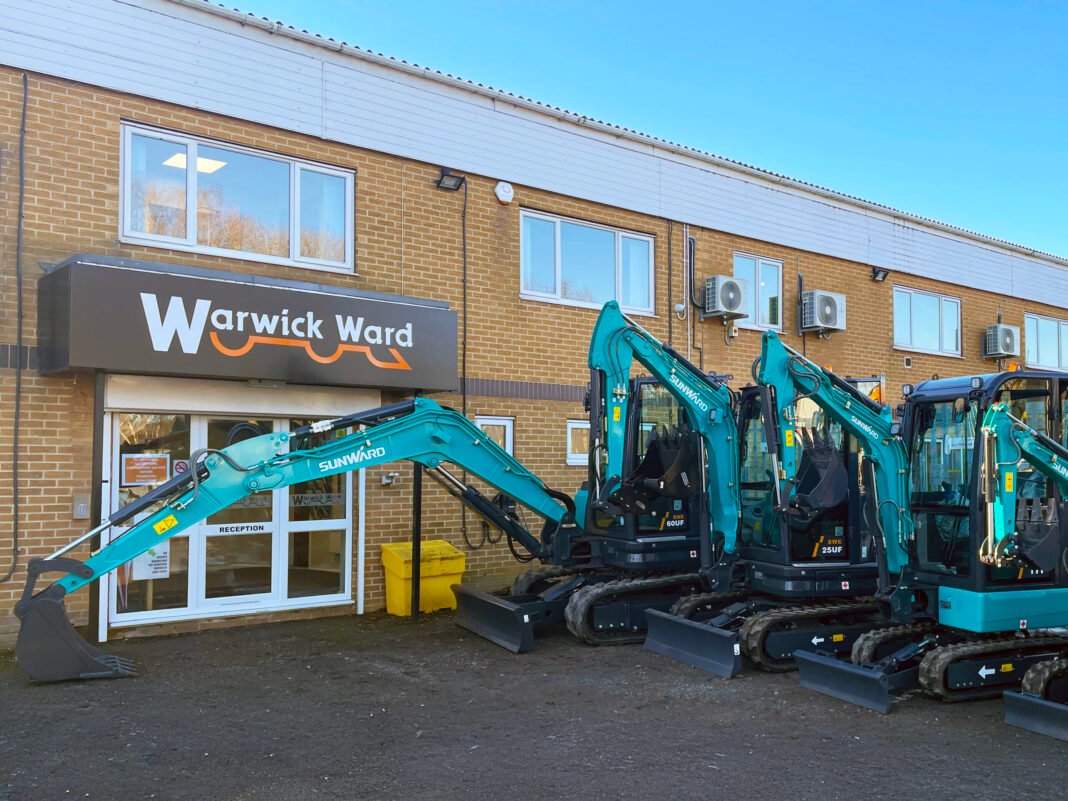
A prominent UK supplier of earthmoving and waste recycling machinery has collapsed into administration, resulting in the immediate loss of most jobs at the 55-year-old company.
Warwick Ward (Machinery) Ltd ceased trading on 3 December when administrators from Interpath were appointed to oversee the insolvency process.
The company’s 89 employees have largely been made redundant, marking an abrupt end to operations for one of Britain’s established equipment dealers.
The failure comes barely 18 months after the company transitioned to employee ownership in June 2023, a move that was intended to secure its long-term future. However, the debt burden associated with that transition has been identified as a significant factor in the company’s downfall.
Financial Deterioration
The shift in ownership structure coincided with a sharp reversal in the company’s financial performance. Under the Ward family’s stewardship, the business generated pre-tax profits of £679,000 on turnover of £51.2 million.
Following the employee buyout, those figures inverted dramatically—the company posted a £1.3 million pre-tax loss while revenues contracted by 11% to £45.3 million.
Joint administrators James Lumb and James Clark pointed to broader market pressures that proved insurmountable. The construction and waste recycling sectors have faced considerable economic challenges, creating cashflow difficulties that the business ultimately could not overcome.
End of an Era
Founded in 1970, Warwick Ward had built a reputation as a major player in the heavy equipment market.
The company operated from its Barnsley headquarters with additional depots in Bromsgrove and Harlow, serving customers across multiple sectors with machinery for earthmoving and waste management applications.
The administrators are now assessing options for the company’s remaining assets as they work through the insolvency process.
The collapse adds to growing concerns about the viability of mid-sized equipment dealers facing margin pressure and economic uncertainty in their core markets.
It also raises questions about the timing and structure of employee ownership transitions during periods of sector-wide turbulence.
Also Read
US Construction Firms Face Scrutiny Over DJI Drone Deployment on Federal Sites
South Africa Launches Landmark Infrastructure Bond

- Africa’s Water Reuse Opportunity: Why Treatment Plants Must Be Designed as Complete Systems - September 22, 2026
- From Operator to Algorithm: Bedrock Puts Autonomous Excavators to Work on Live Construction Sites - September 7, 2026
- Built For The Rough Stuff: Inside Titan’s new ForestEDGE™ Tyre Line - September 4, 2026
