
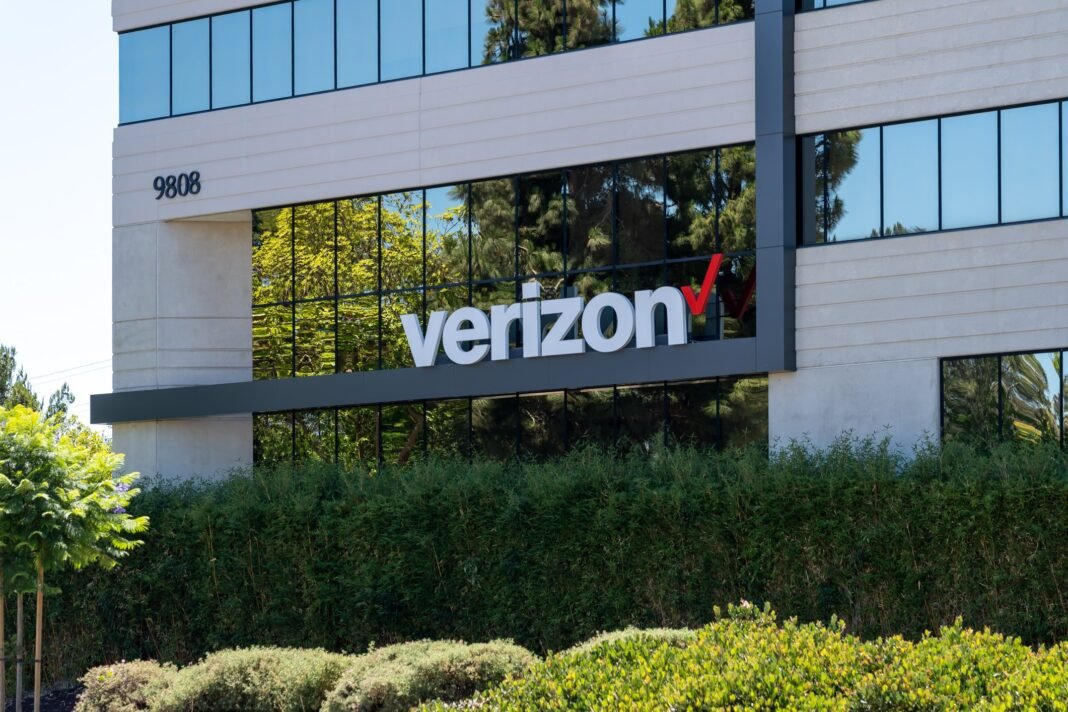
When Verizon confirmed plans to cut thousands of jobs —its largest workforce reduction in modern history, CEO Dan Schulman told employees on Thursday, Nov. 20.
In a memo sent to staff Schulman announced that more than 13,000 positions will be eliminated as the company moves to address what he described as “cost structure limits.”
According to spokesperson Kevin Israel, the reduction represents about 20% of Verizon’s non-union management workforce, a group of roughly 70,000 employees. Israel noted that the layoffs are not concentrated in any particular department and will be felt across the organization.
Telecom companies have restructured before, but the scale, timing, and nature of these layoffs suggest something deeper: a fundamental shift in how white-collar work is valued in an age increasingly shaped by artificial intelligence.
Verizon’s move isn’t just another corporate cost-cutting story. It may be the beginning of a reality that knowledge workers have long believed they were insulated from—automation creeping into roles historically protected by degrees, experience, and strategic thinking.
A New Phase of Corporate Restructuring
The majority of Verizon’s cuts are hitting non-union, corporate, and management roles—jobs once seen as stable and relatively secure.
These positions often carried responsibilities that required decision-making, interpretation of data, and coordination across teams.
But AI is now performing many of these functions faster, at scale, and with fewer errors.
Companies like Verizon are no longer asking:
“Which departments can we shrink?”
They’re asking:
“Which roles can AI do better or cheaper?”
This shift represents a new phase of restructuring—one driven less by economic downturns and more by digital transformation strategies.
AI Is Flattening Traditional Corporate Hierarchies
One of the under-reported aspects of Verizon’s strategy is how AI-enabled systems are making middle-management layers less necessary.
Tasks that once required entire teams—performance tracking, customer analytics, workflow coordination, HR documentation—can now be done by integrated AI platforms.
This trend is significant because white-collar job security has long been built on the need to manage information flows. But AI thrives on exactly that: processing large amounts of data and producing intelligent outputs at astonishing speeds.
In effect, AI is flattening hierarchies that dominated corporate structures for decades.
The Illusion of White-Collar Safety Is Cracking
Blue-collar workers felt the impact of automation long before office workers did. Robots entered factories in the 1970s. Automated kiosks and self-checkout systems reshaped retail in the 2000s.
Throughout these transformations, a common belief persisted:
White-collar jobs would remain safe because they required human judgment and communication.
But that wall is now crumbling.
AI is no longer just generating reports or answering customer queries. It’s participating in decision-making, optimizing budgets, analyzing networks, forecasting demand, and recommending strategic shifts—tasks many assumed only human managers could perform.
Verizon’s layoffs are a wake-up call: even industries built on complex infrastructure and customer data are rethinking traditional office roles.
Cost Pressures Are Accelerating the Trend
The telecom sector, already squeezed by slow subscriber growth and intense price competition, faces massive capital investments in 5G and fiber networks. Reducing labor costs—especially high-paid managerial roles—is one of the fastest ways to free up funding.
AI provides the perfect justification:
Cut staff today, automate workflows tomorrow.
This isn’t unique to Verizon. The same pressures are visible across banking, logistics, insurance, and healthcare administration. Companies under strain are looking at artificial intelligence not as an innovation tool, but as an economic lifeline.
The AI Era Demands a Different Kind of White-Collar Worker
While some roles are being automated, new ones are emerging. The safest white-collar jobs now share three characteristics:
1. High Creativity and Strategy
AI can process data but struggles with long-term vision, brand strategy, complex negotiations, and original problem-solving.
2. Deep Technical Literacy
Workers who understand AI systems—even at a basic level—will have an advantage. Employers value those who can collaborate with, rather than compete against, automation tools.
3. Human-centric Skills
Leadership, emotional intelligence, and relationship-building are still firmly human domains.
The future belongs to those who can combine human strengths with AI-assisted productivity.
Is This the New Normal?
Verizon may be one company, but its layoffs symbolize something much bigger:
We are entering an era where white-collar work is being reshaped at the same speed that manufacturing work was transformed decades ago.
AI is no longer a tool that sits at the edges of the enterprise—it is moving into the core of business operations.
For companies, that means greater efficiency.
For workers, it means rethinking career paths and investing in future-proof skills.
The Verizon layoffs might not be the final warning—but they are one of the clearest signs yet that the AI future has arrived, and it’s rewriting the rules of white-collar employment.
Frequently Asked Questions (FAQ) – Verizon Layoffs 2025
Q1: How many employees is Verizon laying off in 2025?
A1: Verizon has not disclosed exact numbers, but analysts estimate that several thousand positions across corporate, marketing, IT, and customer service departments are affected.
Q2: Which U.S. departments are most impacted by Verizon layoffs?
A2: The most affected areas include corporate strategy, marketing, customer support, and IT roles that are increasingly being automated or AI-supported.
Q3: Are Verizon layoffs part of a broader U.S. trend?
A3: Yes. Many U.S. telecom and tech companies, including AT&T, T-Mobile, and major tech firms, have announced layoffs due to automation, AI integration, and cost-cutting strategies.
Q4: Are AI technologies causing Verizon to cut white-collar jobs?
A4: AI and automation are contributing factors. Roles that involve repetitive tasks, data analysis, or routine decision-making are increasingly being handled by AI systems, leading to workforce restructuring.
Q5: How can U.S. workers protect themselves from AI-driven layoffs?
A5: Focus on upskilling in AI literacy, developing creative and strategic problem-solving skills, and staying informed on industry trends. Positions that require human judgment and oversight are less likely to be replaced.
Q6: Will Verizon layoffs affect the rollout of 5G in the U.S.?
A6: Verizon has stated that its 5G expansion and operations will continue as planned. The layoffs mainly affect corporate and support functions, not network infrastructure teams.
Q7: What other U.S. companies are implementing AI-driven workforce changes?
A7: In addition to Verizon, AT&T, T-Mobile, Google, Microsoft, and Meta have all executed layoffs partially linked to AI and automation initiatives.
Q8: Where can I find resources to learn AI skills relevant to U.S. white-collar jobs?
A8: Online platforms such as Coursera, LinkedIn Learning, Udacity, and edX offer courses on AI, machine learning, and data analytics tailored for professionals.
Also Read
BBAI Stock Soars 20%: Is This the Beginning of BigBear.ai’s AI Defense Era?
How Much Is My Personal Injury Case Worth? A Complete Guide to Calculating Your Claim

